| Author |
 Replies: 8 / Views: 1,356 Replies: 8 / Views: 1,356 |
|
|
Valued Member
United States
76 Posts |
|
|
|
|
Bedrock of the Community
United States
62064 Posts |
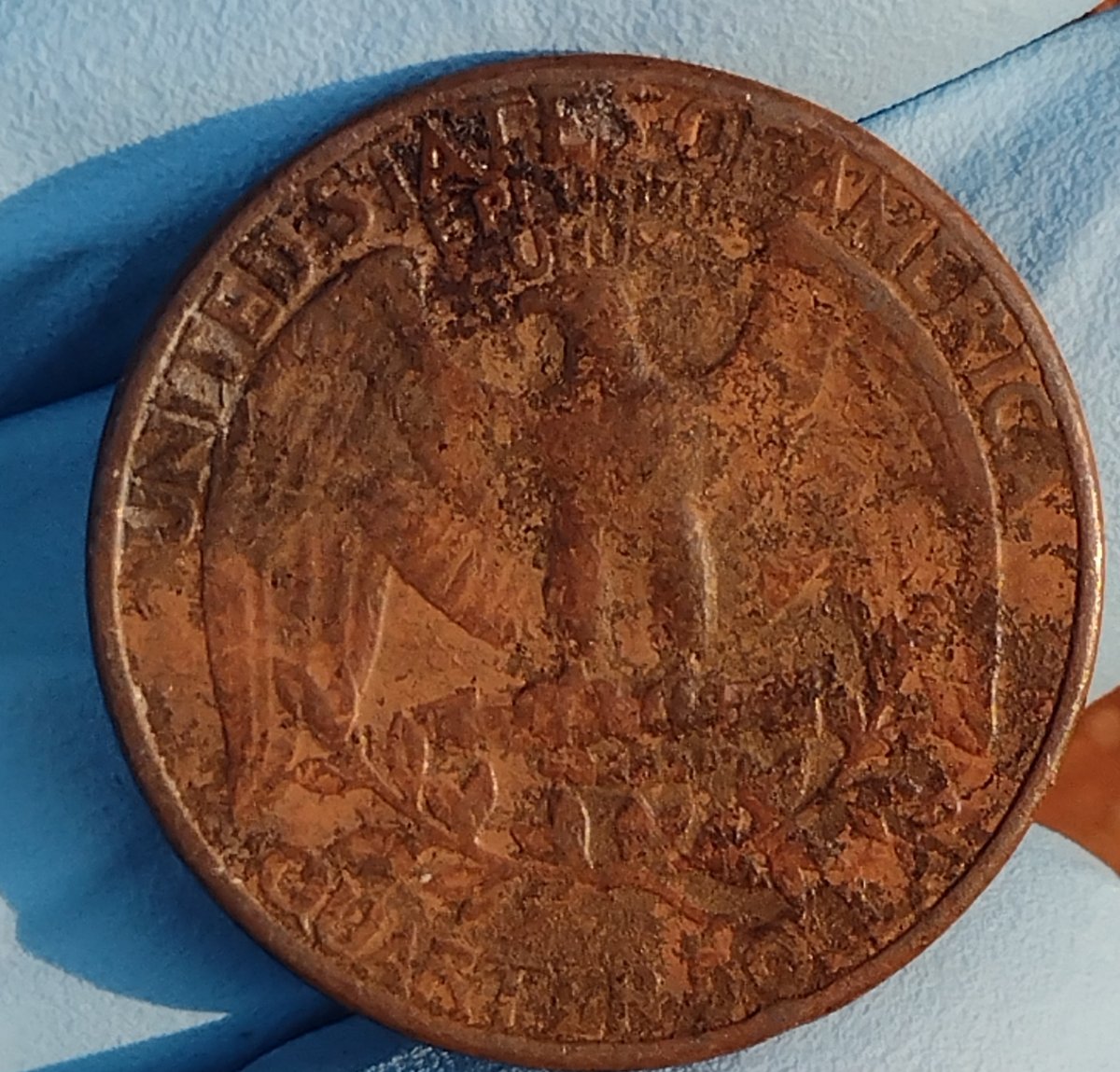
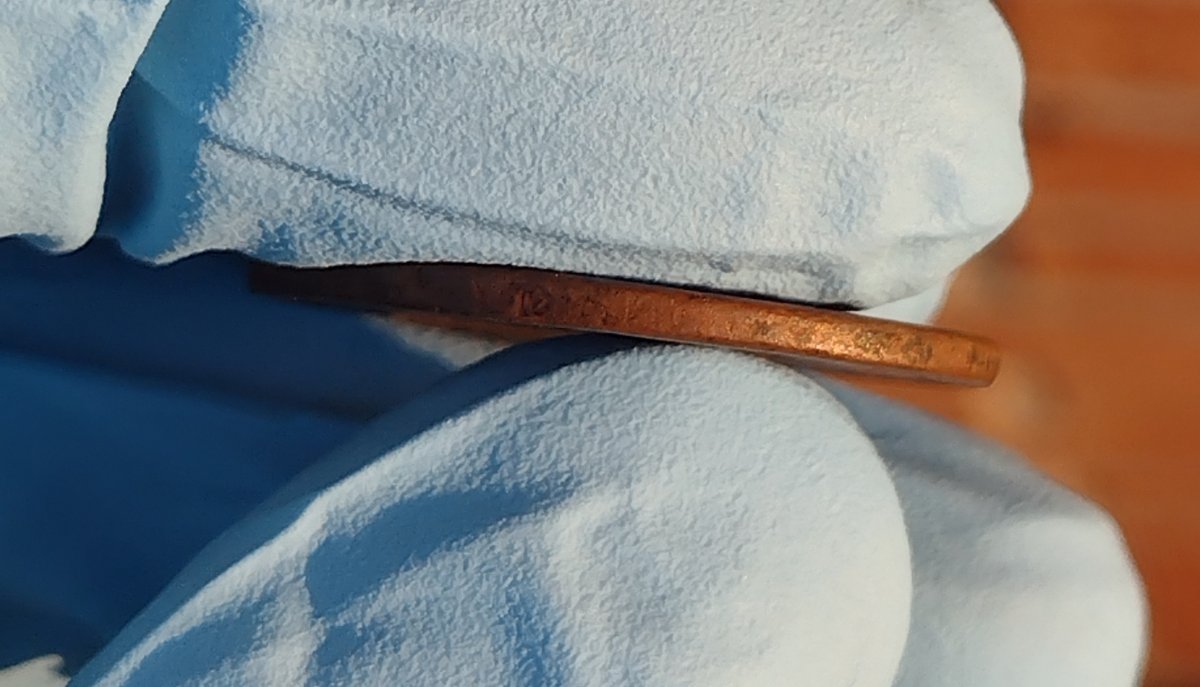
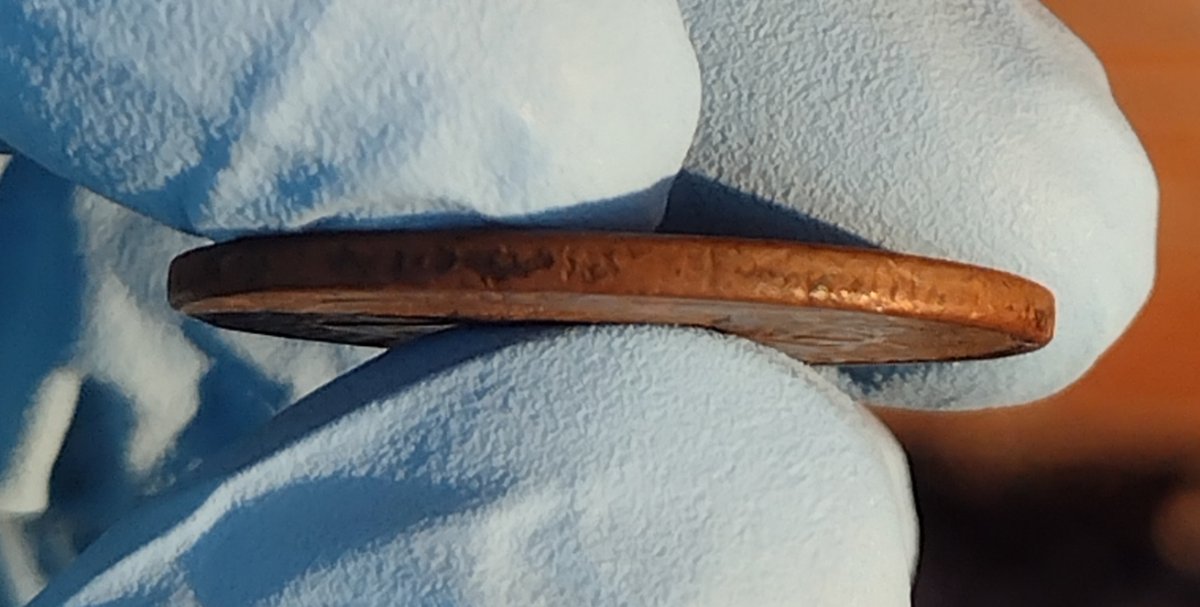
Looks like a metal detector find. On way to check is to moisten a cloth and wipe on the rim of the coin. If the color rubs off, it is an outdoor find. If it doesn't, it might need a closer look. I feel it is what I described. If a coin was missing the cladding, the strike would be weakened because of the missing height of the planchet: 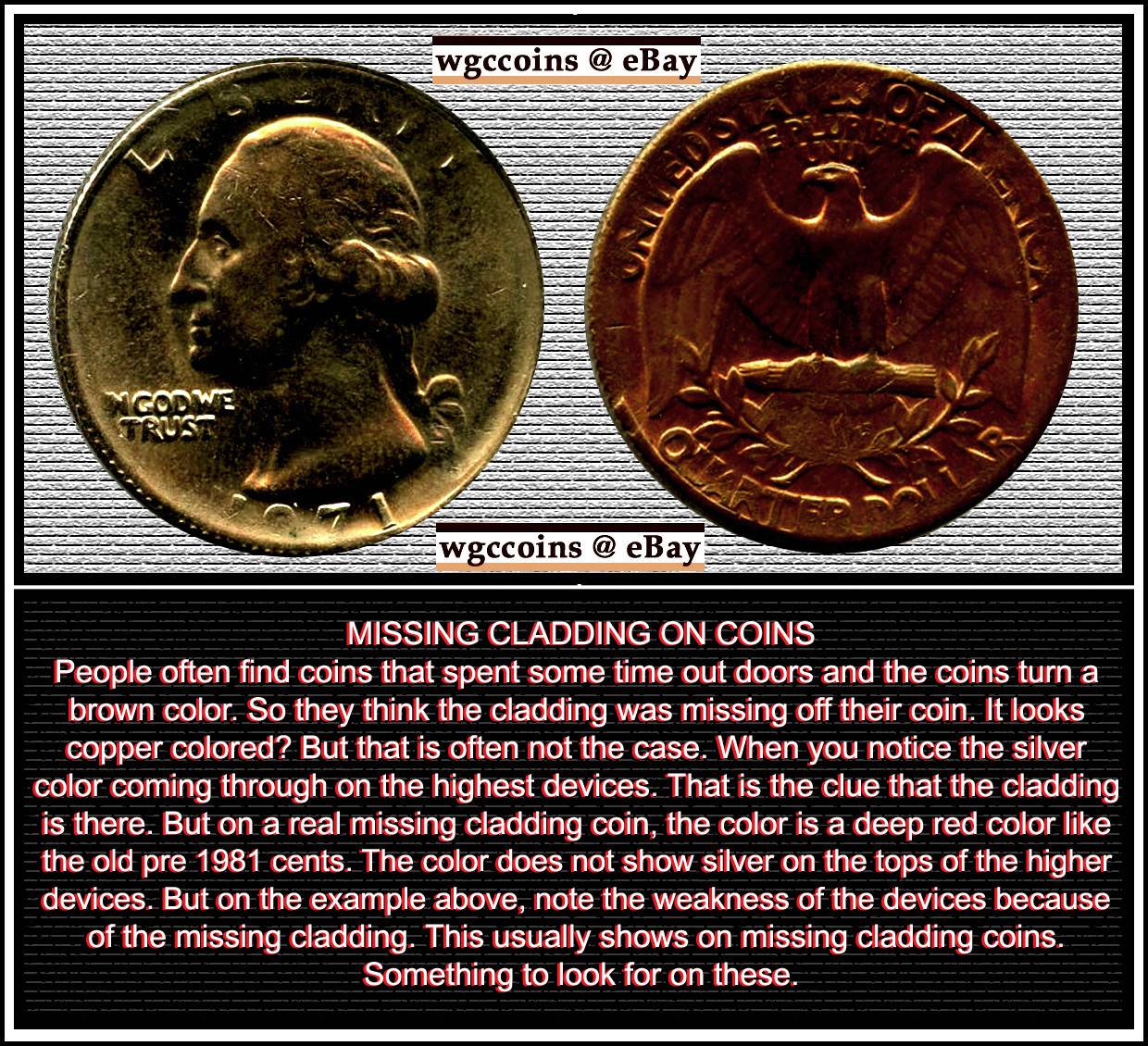 Note the weak strike on this coin? 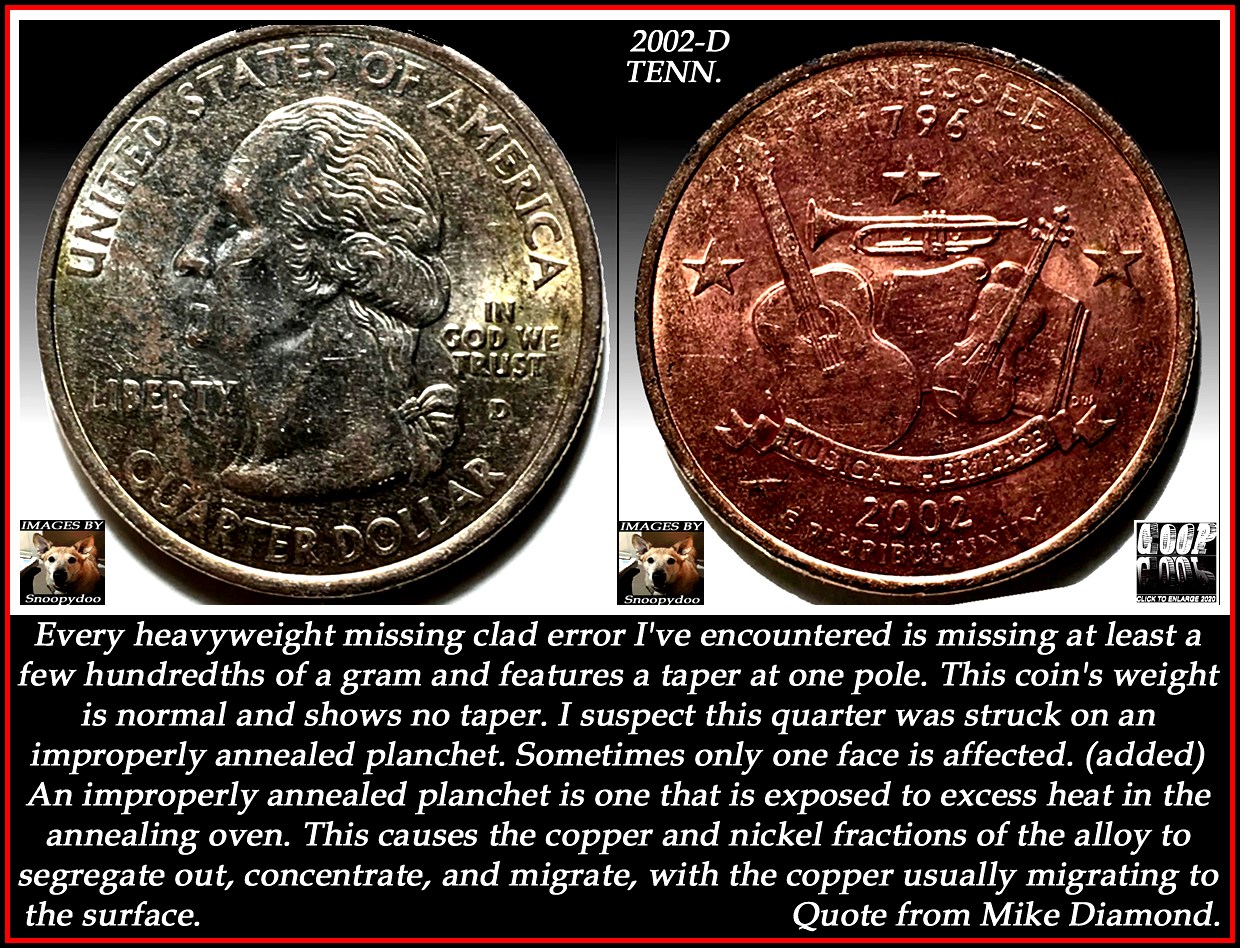 These are just missing cladding on one side: 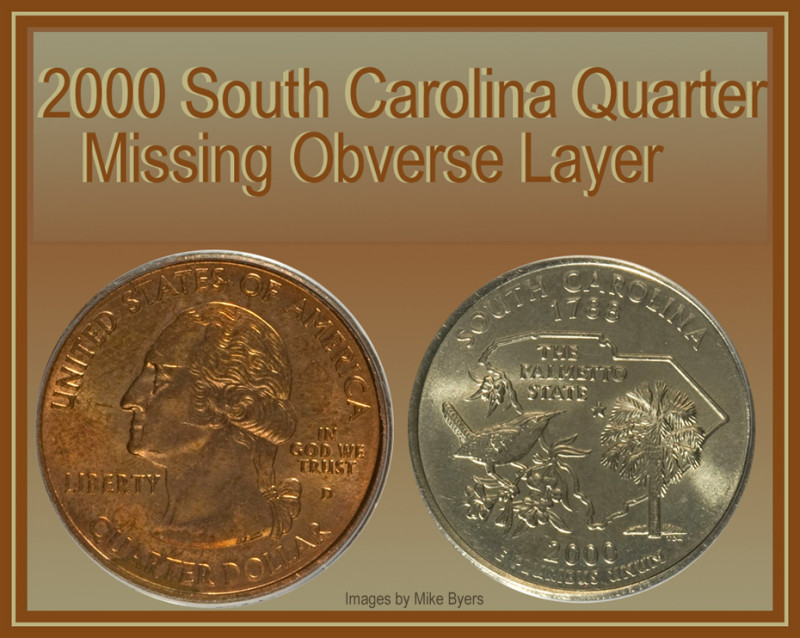 But even that much missing thickness, leaves the strike weak on both sides of the coin. |
|
Moderator
 United States
56855 Posts |
Agreed, environmental damage like from a once buried coin. John1  |
|
Valued Member
 United States
76 Posts |
I believe you're probably right there Coop... Thank you for the added pictures for reference,I appreciate that!
|
|
Bedrock of the Community
United States
10635 Posts |
I agree, environmental damage, probably from being buried in soil for a long time.  |
|
Pillar of the Community
United States
2869 Posts |
|
|
Valued Member
United States
76 Posts |
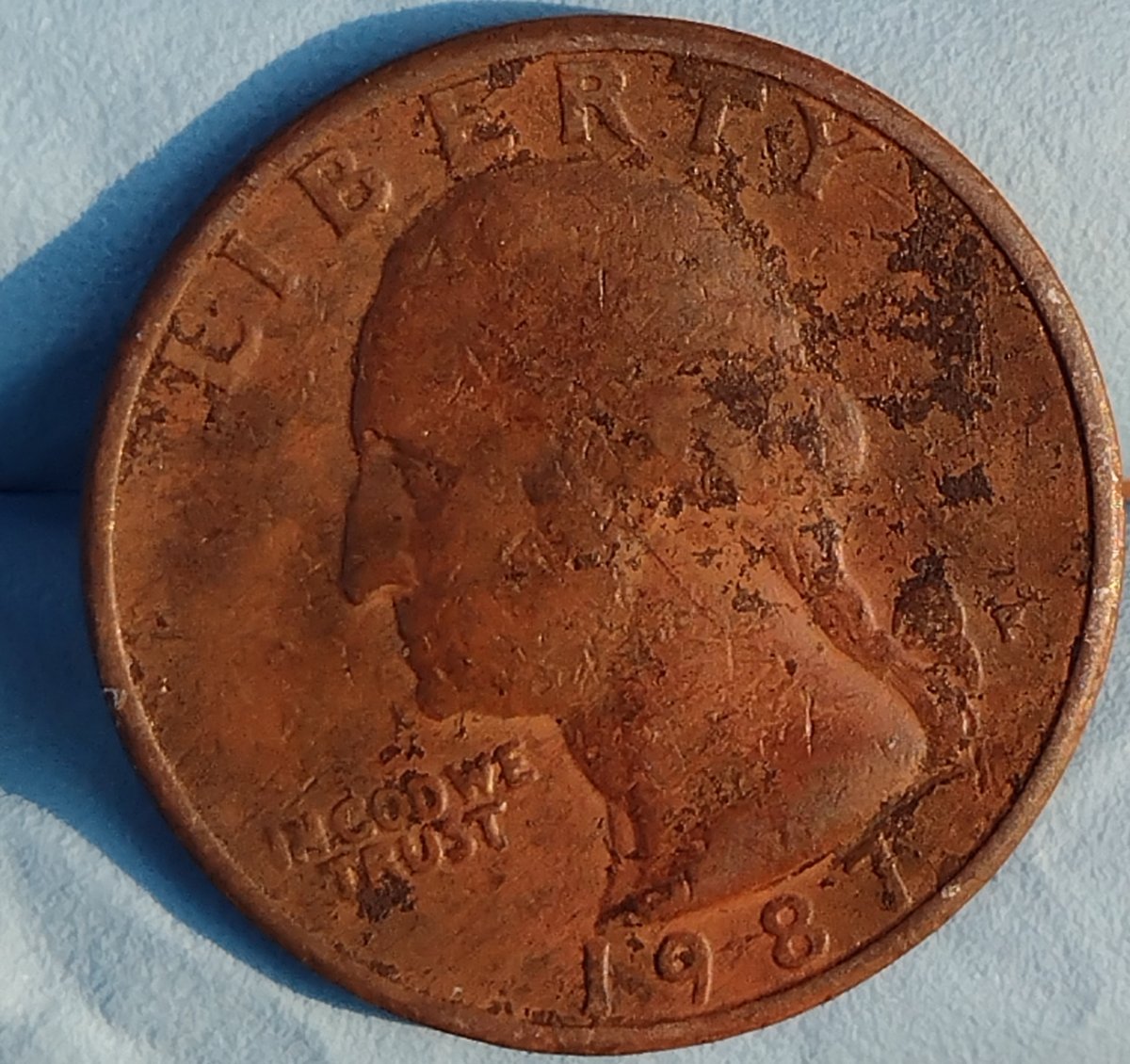
So I kinda stumbled back across this coin and decided to weigh it and it came up 5.4 grams...Coop I did what you said with wiping the edge and I didn't get anything...I really think it might be missing the clad layer but I don't know if the weight difference matches up? Any other ideas?  Edited by SmackRampage
09/13/2021 02:23 am
|
|
Pillar of the Community
United States
1677 Posts |
It is environmental damage. As a metal detectorist, I can tell you that the coloring will not easily wipe off. Metal detected coins are very difficult to clean up, the copperish layer is very deep and hard to remove.
|
|
Bedrock of the Community
United States
62064 Posts |
On the image with the scale, you can see to the closest rim a spot where the coating is showing through the coating. You would not see that on a missing clad.
|
| |
Replies: 8 / Views: 1,356 |
|











 Posted 07/28/2021 04:57 am


