| Author |
 Replies: 13 / Views: 1,690 Replies: 13 / Views: 1,690 |
|
|
Pillar of the Community
 United States
3778 Posts |
|
|
|
|
Pillar of the Community
 United States
3778 Posts |
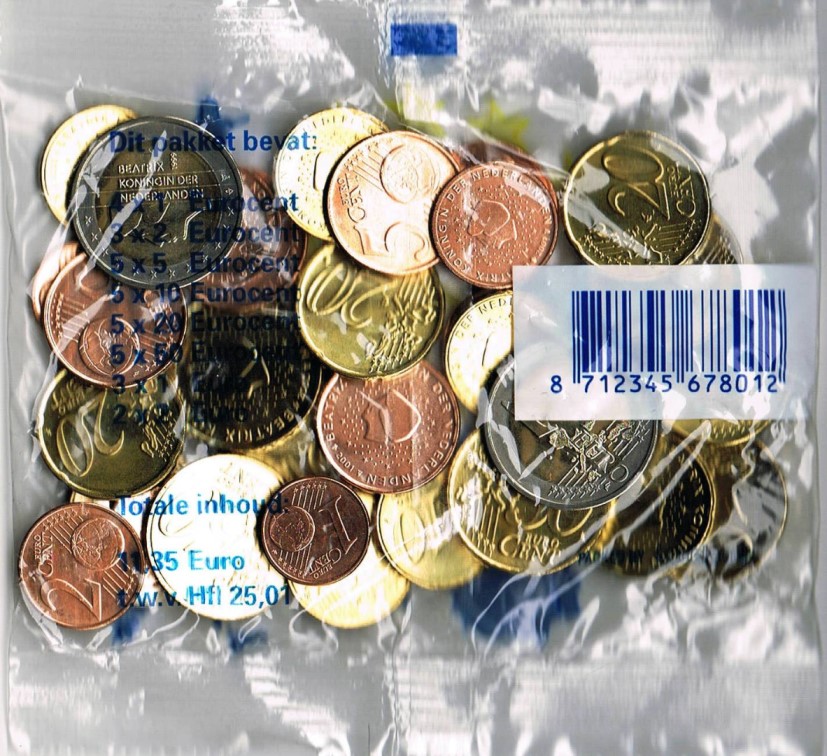
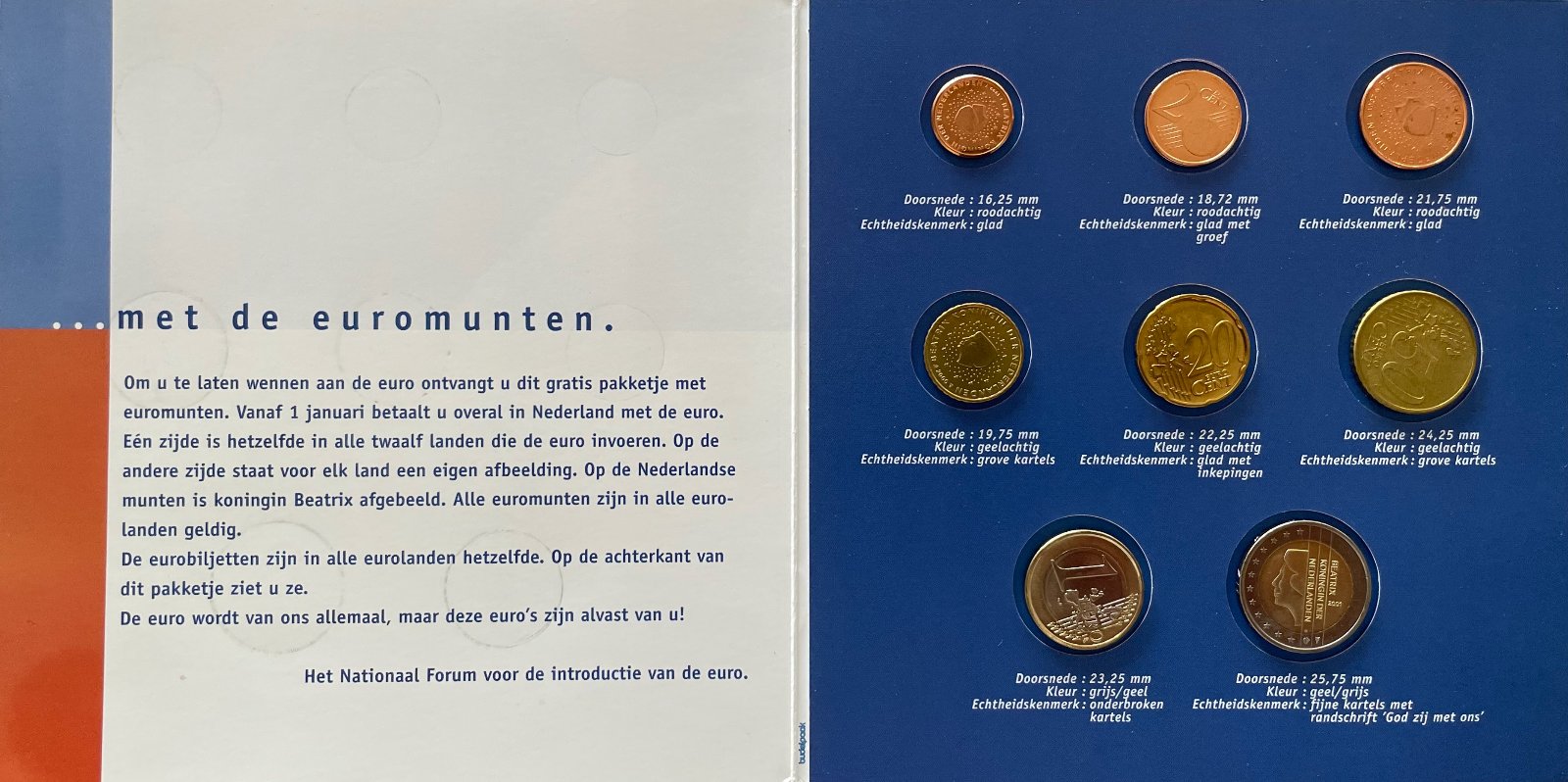
FYI, the translation of the text on the folder is as follows -
"A first introduction to the euro coins. To get used to the euro, you will receive this free package with euro coins. From 1 January you can pay everywhere in the Netherlands with the euro. One side is the same in all twelve countries adopting the euro. The other side has its own image for each country. Queen Beatrix is depicted on the Dutch coins.
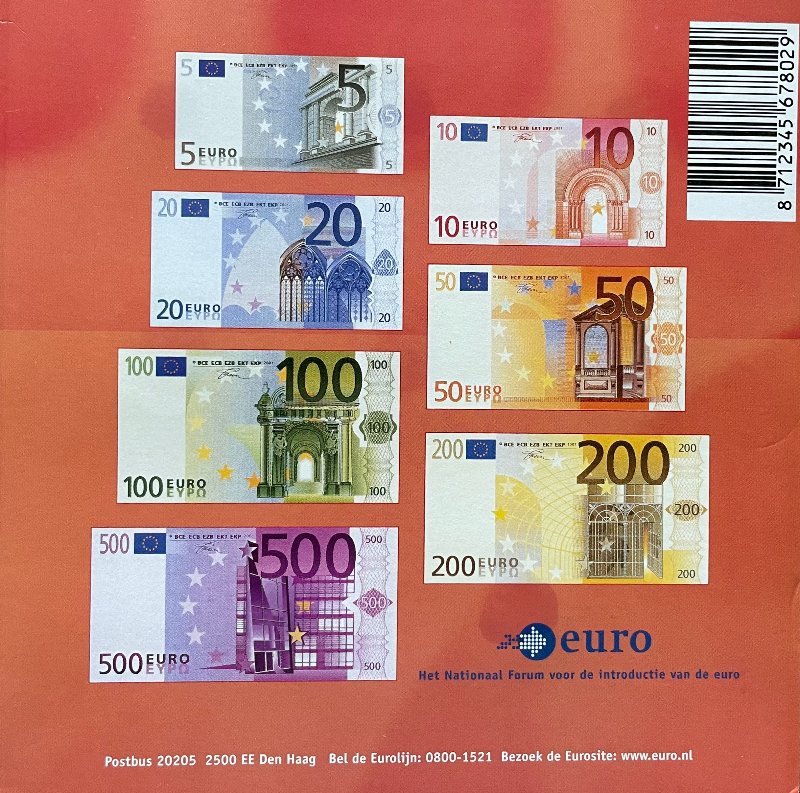
All euro coins are valid in all euro countries. The euro notes are the same in all euro countries. You can see them on the back of this package.
The euro belongs to all of us, but these euros are already yours!
The National Forum for the introduction of the euro."
Edited by hokiefan_82
08/14/2021 6:09 pm
|
|
Moderator
United States
195045 Posts |
Very interesting!  |
|
Valued Member
United States
66 Posts |
Very cool. Thanks for sharing.
We moved to Germany in 2019 for two years and unfortunately I picked up collecting the Euro. With soooo many countries in the EU and so many coin denominations the process was endless with my pocket change. It was almost impossible NOT to get a coin on a daily basis that was missing from my collection.
The pride and joy of my collection are my 5 and 10 Euro coins issued by Germany from the years 2019 and 2020. Most EU residents don't realize their countries issue these denominations.
Unfortunately I was not made aware that the Vatican EU coins are the rarest EU coins until after my trip to the Vatican (not sure if I could have scored any but still would have tried). And for those questioning, no, the Vatican is not part of the EU however they use the EU as their currency.
|
|
Pillar of the Community
United States
3778 Posts |
Quote:
I was not made aware that the Vatican EU coins are the rarest EU coins There are far more countries now that use the euro than when we lived there, but even then I was always putting away examples from different countries as I found them in circulation. I never found any euro coinage from the Vatican in circulation, but when they were first issued I did pick up a 2002 mint set from the Vatican as well as San Marino and Monaco, which are also not members of the EU but use the euro. Member of SPMC, FCCB, ANA and ANS. My U.S. Classic Commemorative Complete Set: https://www.NGCcoin.com/registry/co...sets/278741/ |
|
Valued Member
Netherlands
177 Posts |
The folder was indeed distributed for free but to every citizen aged 6 or over, not one to each household. Every eligible person received a card that could be exchanged in selected shops for such a set.
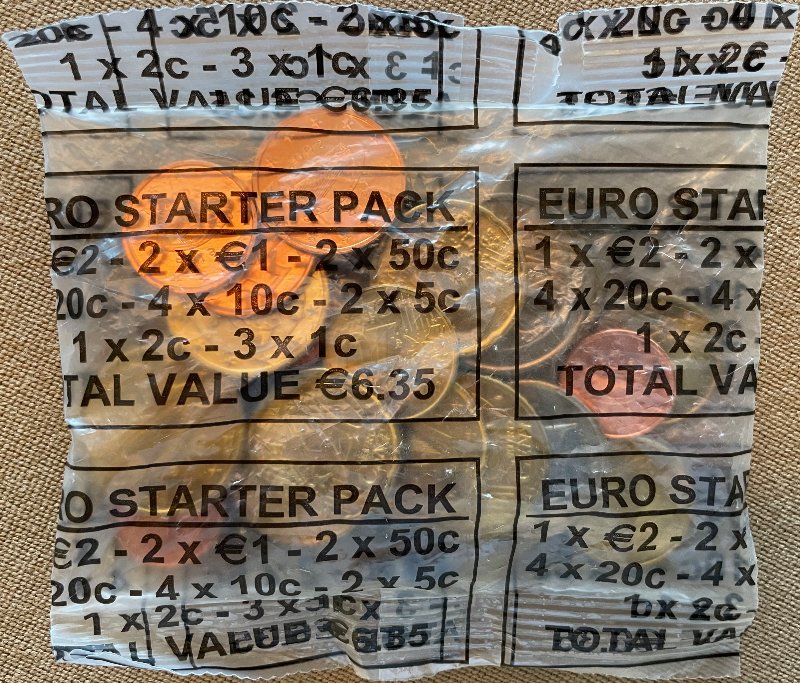
The starter bag you show is not from the Netherlands but from Ireland. It contained € 6.35 worth of Euro coins and could be bought for 5 Irish Pounds, the exact equivalent. The Dutch starter bags contained € 11.35 worht of Euro coins and could be bought for 25 Dutch Guilders, the equivalent value.
Photo of Dutch Starter Kit is attached.
|
|
Valued Member
Netherlands
177 Posts |
|
|
Pillar of the Community
United States
3778 Posts |
Quote:
The starter bag you show is not from the Netherlands but from Ireland. @Eligius - Thanks for refreshing my memory on how the folders and starter packs were handled. Also, I had noticed after I made the post that the starter pack was actually from Ireland (I should remember to wear my reading glasses doing stuff like this!). I have no idea how I ended up with an Irish set, as we have never even visited there. I assume a friend must have given that to me... Now, I need to find where my Dutch starter pack is, as I had one of those at some point. My memory seems to have taken a vacation  . Edited by hokiefan_82
08/15/2021 1:18 pm
|
|
Valued Member
United States
66 Posts |
Jealous Hokie Fan.
To have those 2002 sets. Wow.
Our fellow American collectors really have no idea how insane it is being a collector in the EU. Roll hunting was impossible!
35 countries currently use the Euro! Some go back to 1999! So getting a roll of 1 or 2 cent pieces inevitably led to half of them filling holes in my collection. It almost drove me into the asylum.
I missed those early sets but I tried picking up commemorative ones while I was there. Let me see if I have pictures of my 5 and 10 Euros from Deutschland.
|
|
Pillar of the Community
United States
3778 Posts |
@Slappywhyte - it was fun after the first euros came out, as any change I got seemed to have coins I needed to fill my euro set! I can't imagine trying to complete a set from circulation today with so many countries being EU members now.
Look forward to seeing your commemorative issues...
|
|
Pillar of the Community
United Kingdom
2928 Posts |
"35 countries currently use the Euro!"
I thought it was only 19 - though a couple of others might use it unofficially?
|
|
Bedrock of the Community
United Kingdom
18654 Posts |
I was probably one of the first British people to see euro coins, as I was on holiday on the French island of Reunion on the day the starter kits were made available at the Banque de France. I bought two but opened them long ago - the coins were a mixture of 1999, 2000 and 2001 dates. Reunion, owing to its location vis-a-vis the International Date Line, was the first place in the world to use the Euro! hokiefan and slappywhyte - the only coins the Vatican tends to issue for circulation are 50-cent pieces. If you go on a tour of the Vatican Museums and purchase a postcard or stamp, you may get one in change. I've only once had a Vatican coin in change outside the Vatican - I got this 2011 50-cent coin in change in a road toll machine in France! 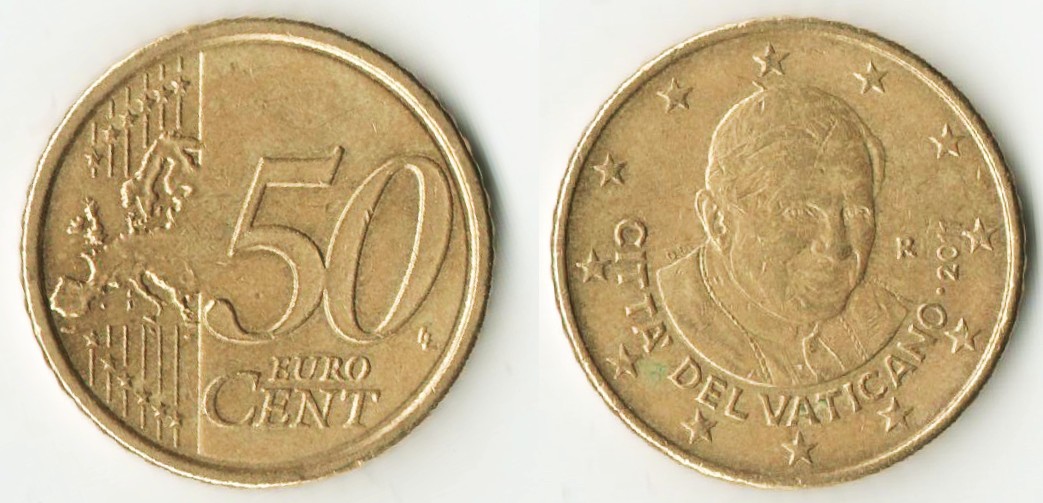 |
|
Pillar of the Community
Germany
994 Posts |
Quote:
I thought it was only 19 - though a couple of others might use it unofficially? Yes, the Euro is the official currency in 19 of the 27 countries in the European Union. The Euro is also the official currency in 4 countries that are not members of the EU (Vatican, San Marino, Monaco, Andorra). These four countries are allowed to issue their own Euro coins which are valid in the entire Eurozone. And then there are some (small) countries that use the Euro although they are neither a member of the official Eurozone or the EU. By the way, keep a very close eye on the introduction plastic bags. They were not made for eternity. I have seen introduction bags from Germany which were in very bad shape around 2010/2012. The coins turned ugly. |
|
Pillar of the Community
4628 Posts |
I had big fun in Europe on my tour in 2014 picking up coins all over Europe. As I thought, 90% of the coins were French, German, Italian, Dutch or Spanish! (We went to France, Spain, Italy, Greece and Austria, Germany and Netherlands). I kept notes - In France, mostly French ones with some German and Spanish Spain - Spanish, Portuguese, Italian and a few French Italy - Nearly all Italian and that included San Marino and Vatican, in SM one guy made a big deal of giving me a SM 2 Euro piece as San Marion Euros attracted a premium. Some Greek, Austrian and French Greece, mostly Greek but a lot of Italian, Finnish, one Slovenian and ironically a lot of Irish coins. Austria - Here it changed, Austrian, German, Slovenian and some Italian Switzerland - Swiss Francs  , they don't use it but Liechtenstein and border areas like Basel had Euro prices at Petrol stations. Germany - not surprisingly 90% German and there are a lot of German minted coins, some Dutch, French, Belgian and Austrian. Netherlands - Mostly Dutch, Belgian, a couple of Luxembourg and French My favourite set is this! 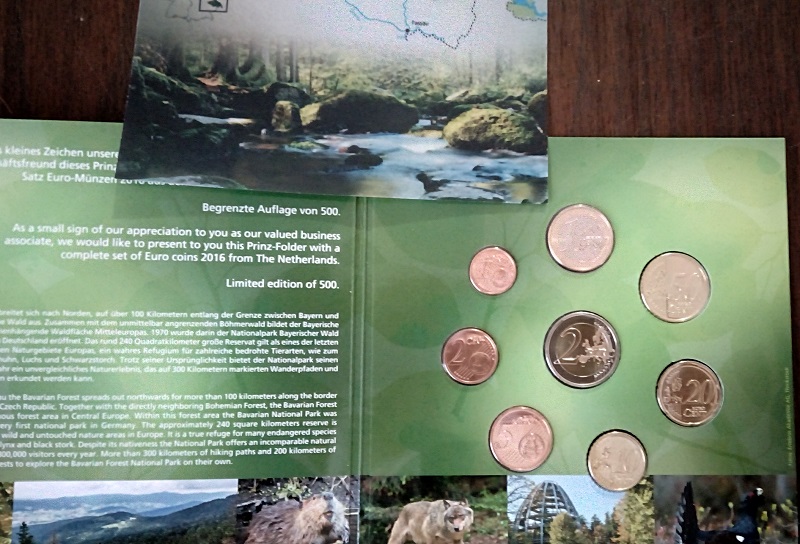 A Dutch set in a folder I brought glamorising a German/Czech border park! |
| |
Replies: 13 / Views: 1,690 |
|









 Posted 08/14/2021 10:55 pm