| Author |
 Replies: 9 / Views: 4,294 Replies: 9 / Views: 4,294 |
|
|
New Member
Canada
12 Posts |
|
|
|
|
Bedrock of the Community
Australia
21789 Posts |
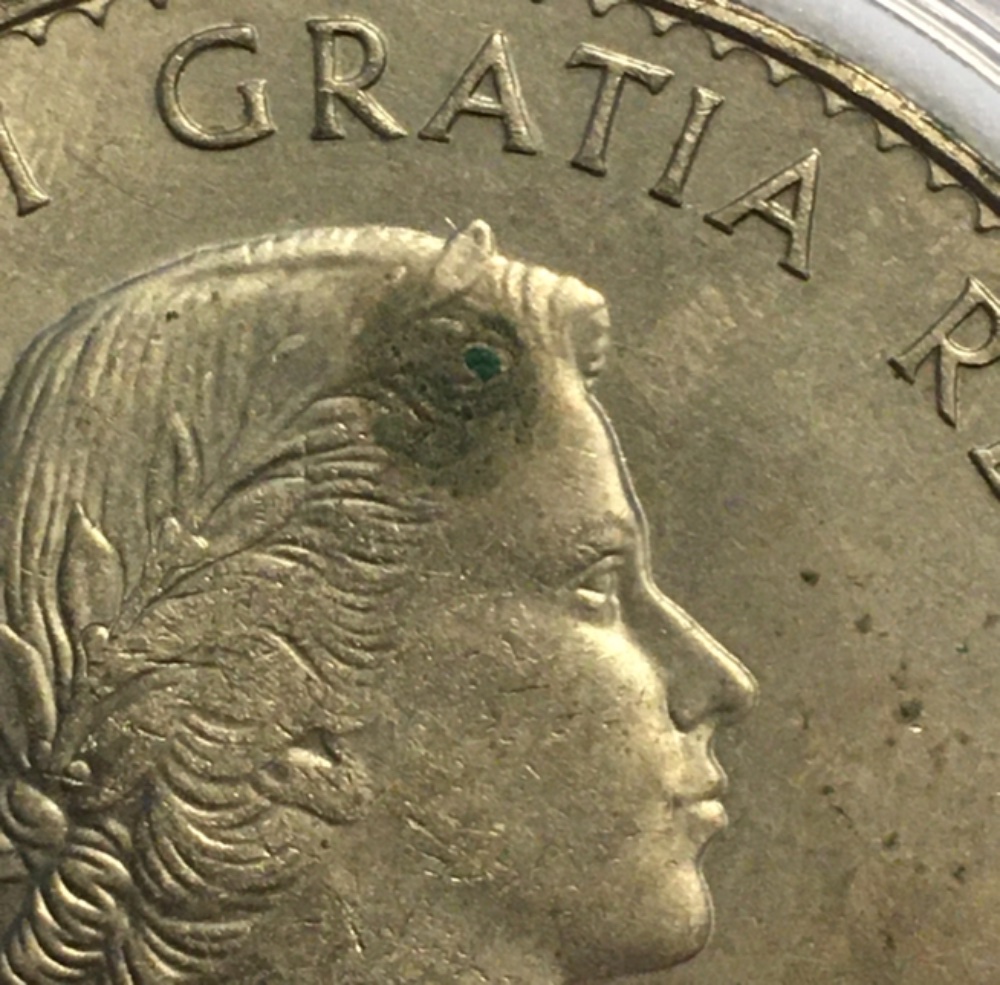
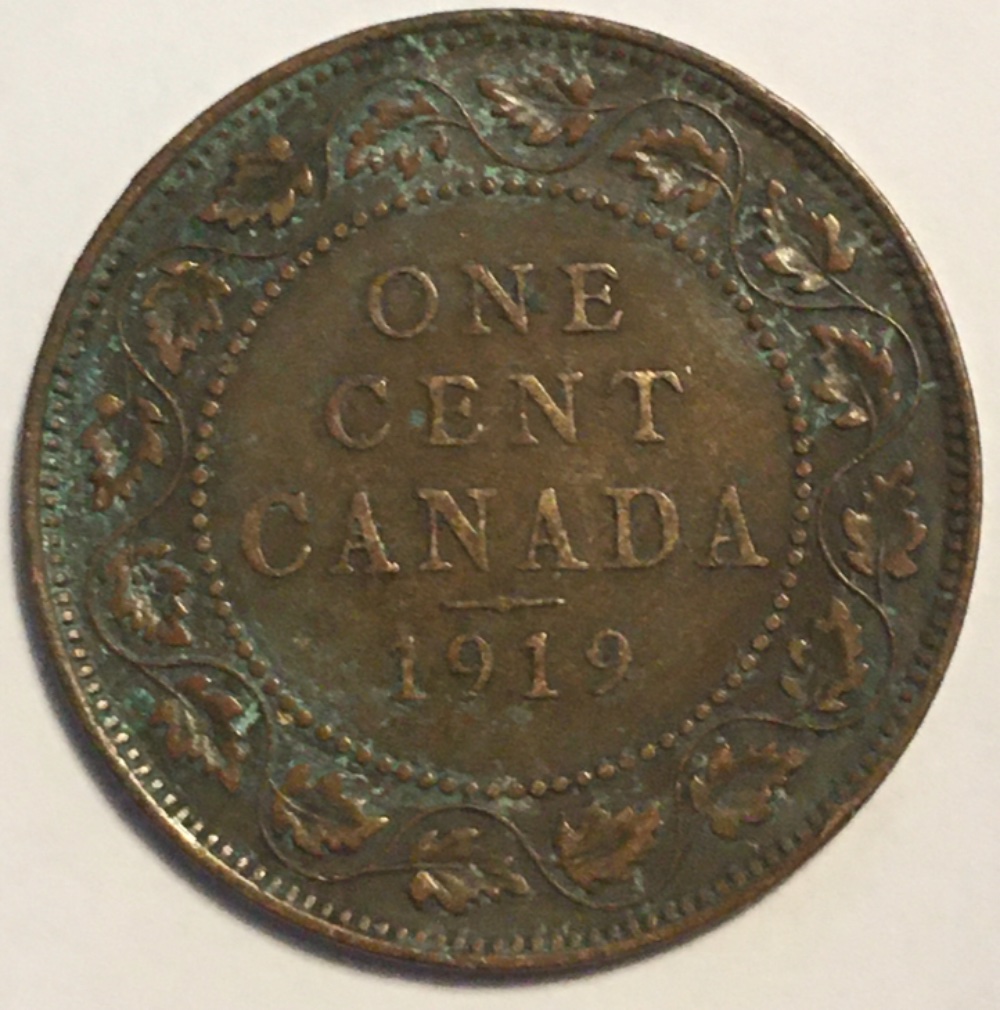
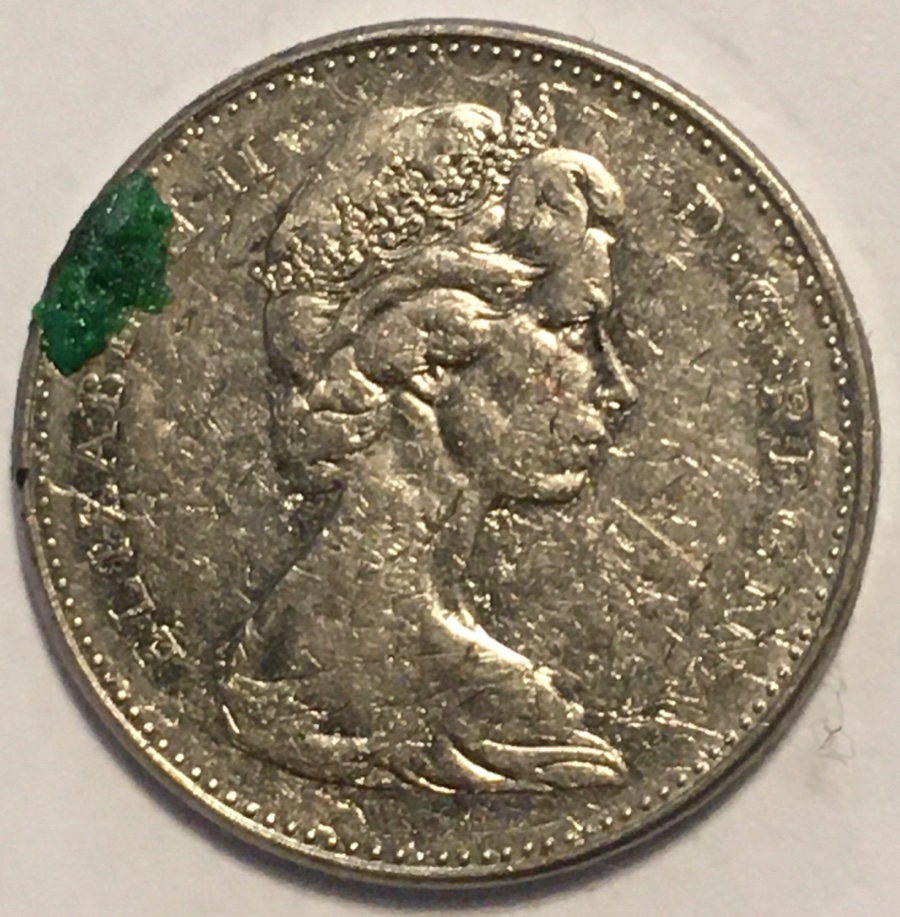
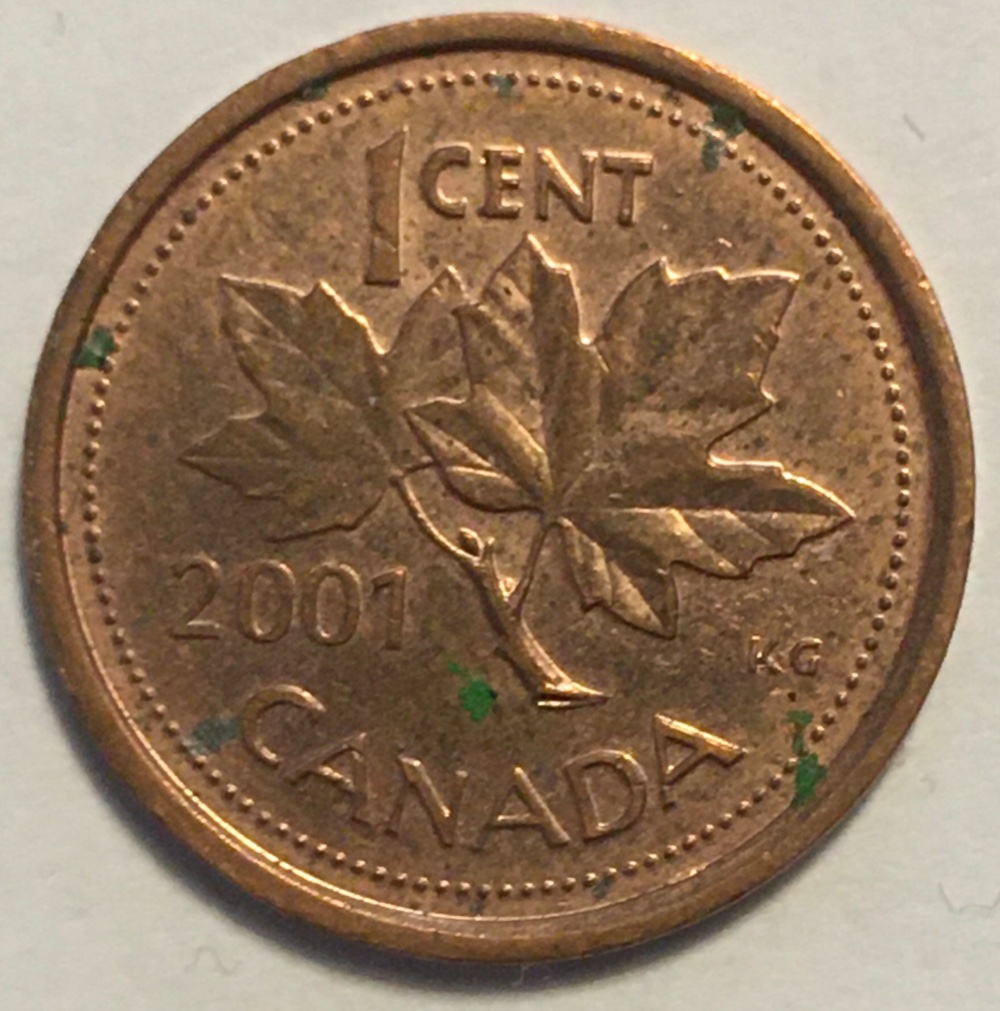
Except for the 1919 One Cent, none of the coins pictured are likely to have corrosion pits in them.
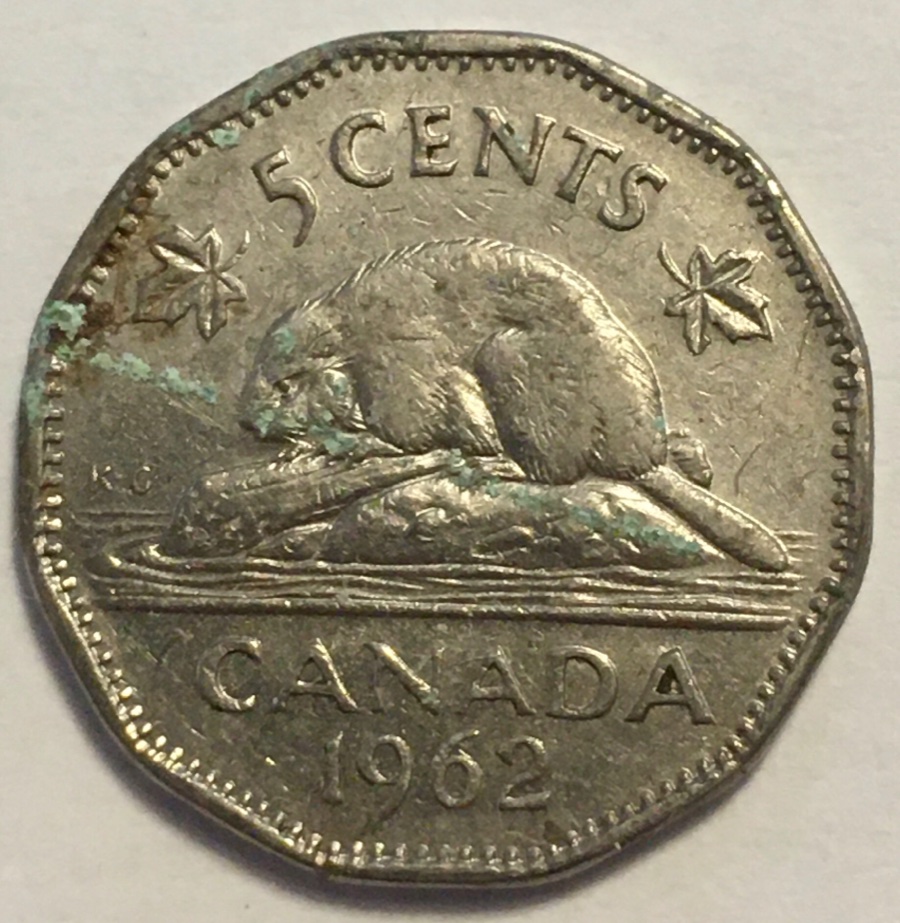
The nickel alloy in the other coins has somewhat protected them.
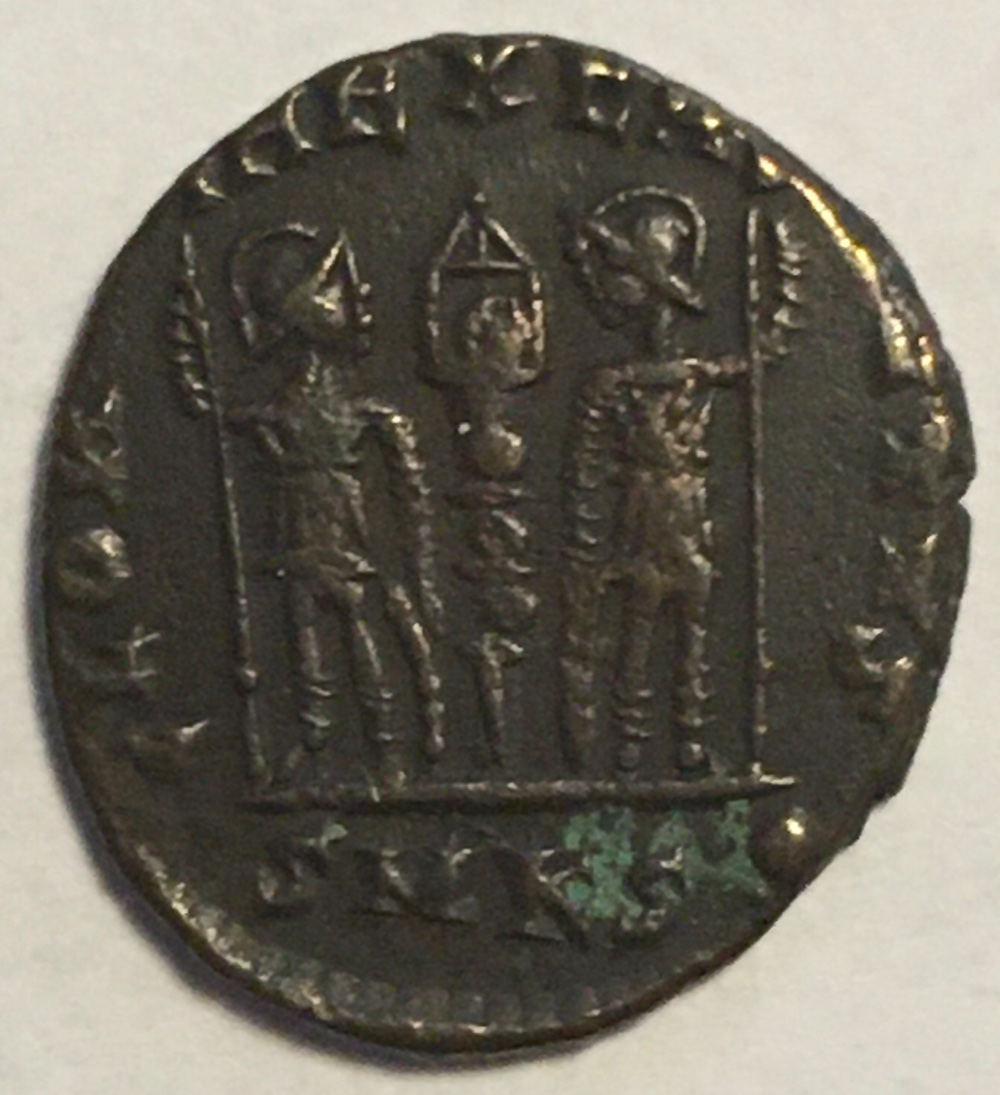
Nevertheless, the green stuff is indeed copper hydroxycarbonate, otherwise known as verdigris.
On Roman bronze and orichalcum (brass) coins, a thin, but rich green patina (which is a thin film of verdigris) can enhance eye appeal, if the coin is in otherwise VF or better condition, and as a result, can actually command a higher price at auction. The very obvious proviso is that there are no corrosion pits.
Red flags arise when the green is in spots, and is deep and powdery, because it is almost certain that there is corrosion pits beneath them.
Museums are obliged to try to save and conserve valuable copper, bronze and brass exhibits for display, and have developed a number of processes to passivate the verdigris, and conserve them to prevent further damage.
Some of those processes are also applicable to coin conservation. Chemistry is used in the passivation process, but coverings such as Renwax is somes used for conservation. Renwax is also used for furniture conservation
|
|
Bedrock of the Community
United States
94367 Posts |
That says it well!  to the CCF! |
|
Moderator
 Australia
16971 Posts |
Verdigris is the pale green, powdery form of corrosion that is also known as "bronze disease". It typically only occurs on copper, bronze and brass coins; cupronickel coins don't have enough copper in then to qualify.
My observations on what's happening with these coins:
1. possibly PVC damage, possibly a corrosion spot.
2. Verdigris. Yep, this is the one. Make it wear a mask, put it in quarantine and send contact tracers to find its close contacts, because this one's got The Disease.
3. Looks like a blob of sticky goo has got stuck there; can't tell if it's solid corrosion byproducts or just goo. Acetone would tell.
4. It's an ancient, so it would have come up out of the ground looking like a little green rock. I can't tell if the green patch is simply a small untreated part of the surface or if it's subsequent corrosion. The colour is a match for verdigris, so I'd carefully monitor it.
5. Environment damage, by the looks of it. These things are copper-plated, and copper-plated things don't get verdigris and survive to tell about it. Conditions harsh enough to give a solid copper coin verdigris will likely make a plated coin corrode into rubble.
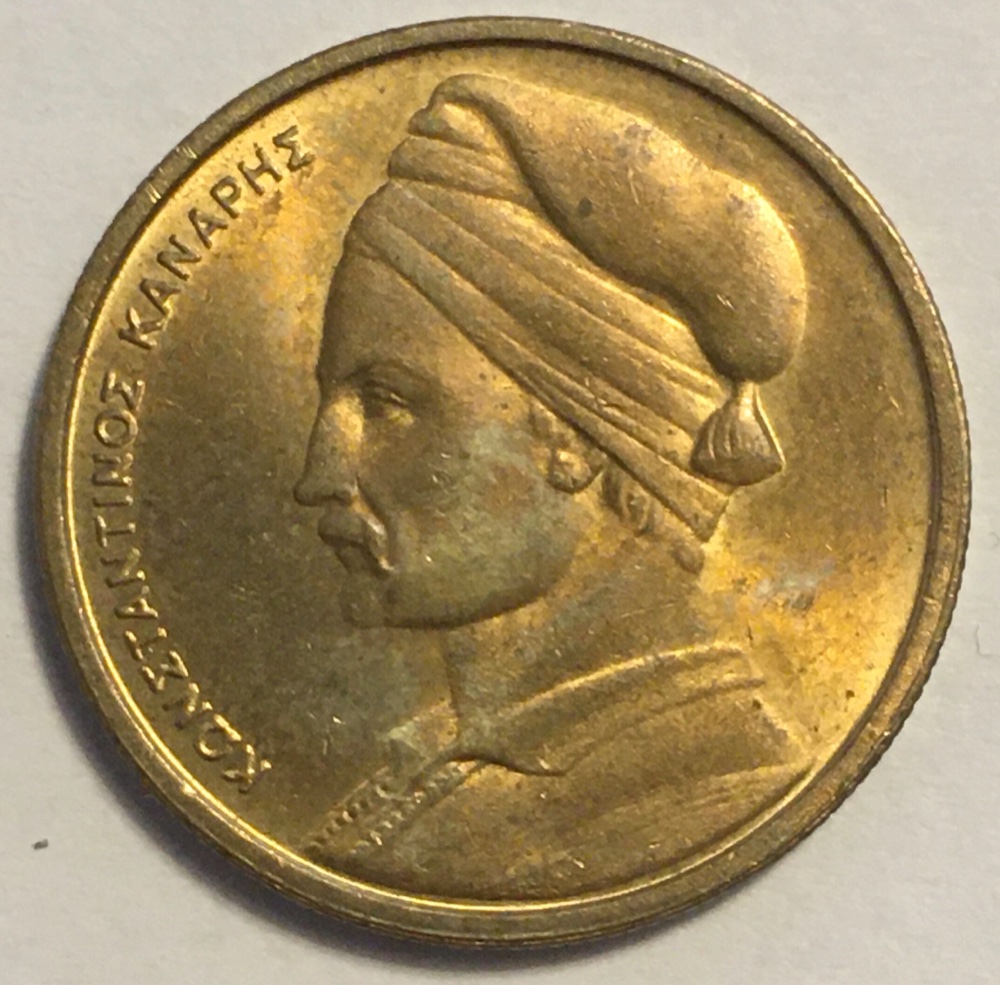
6. This Greek brass one looks like classic PVC damage, from sitting in a cheap'n'nasty coin album.
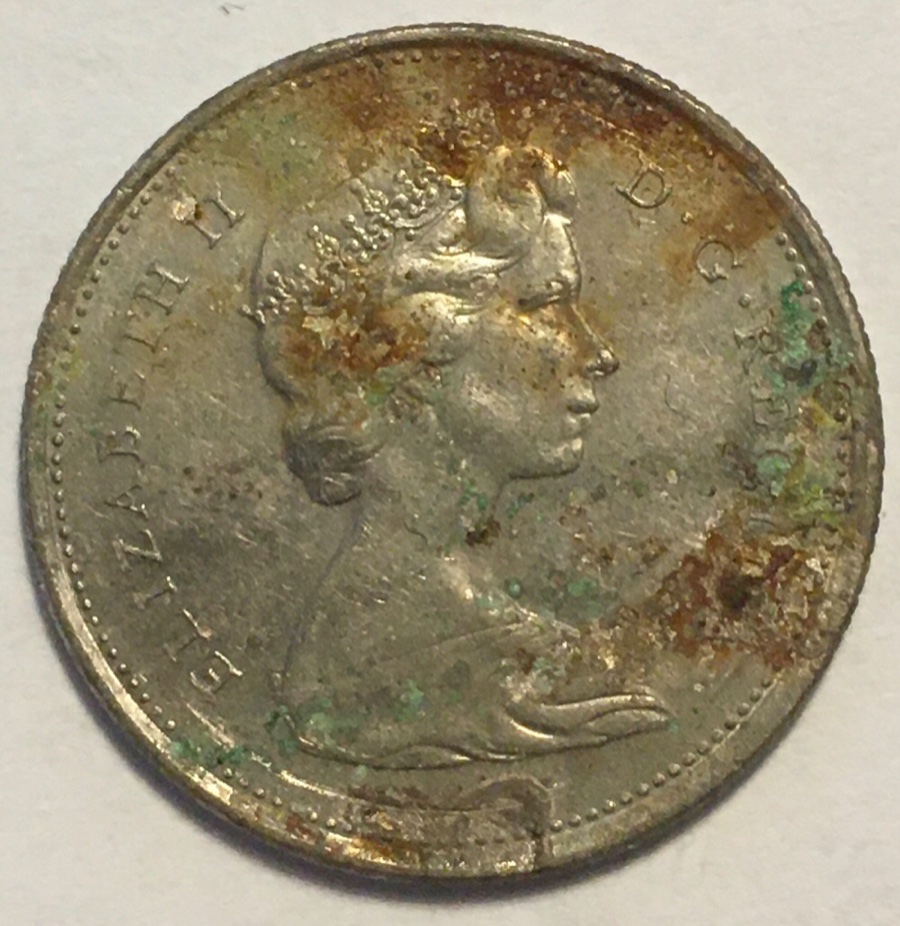
7. Aiee. Cupronickel ain't supposed to do that, captain. Some serious environmental damage here. It's the "right colour" for verdigris, but the nickel prevents it from spreading or turning more serious like actual verdigris would be doing at that stage.
8. This here's a typical "metal detecting find" environmental damage. It might devolve into verdigris, but it hasn't yet.
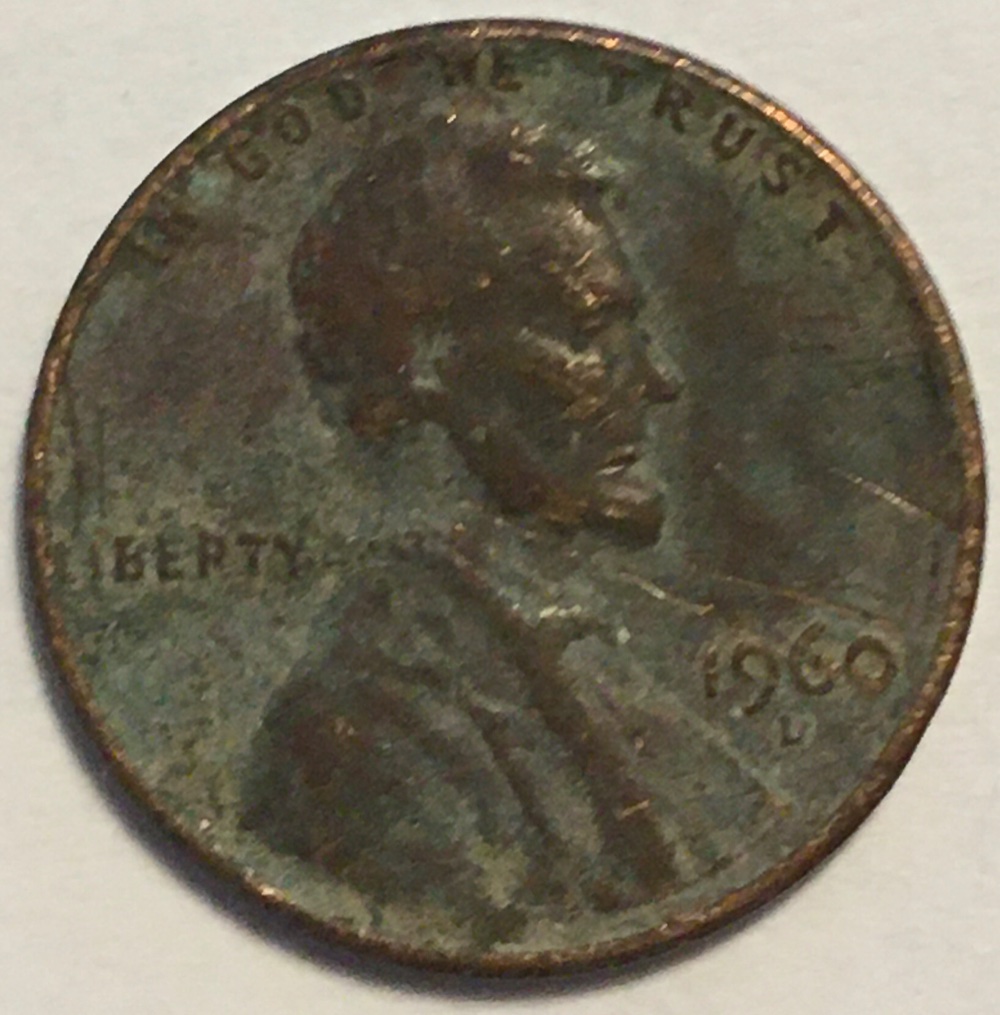
9. Not sure what's caused this, probably severe environmental damage, maybe even a bad case of "1960s RCM-packaged coins being sent to a humid environment". Judging by the exposed pits of raw metal (like above the "II"), it looks like someone's already had a go at trying to clean it; without before-and-after pics, it's hard to say if it's an improvement.
Don't say "infinitely" when you mean "very"; otherwise, you'll have no word left when you want to talk about something really infinite. - C. S. Lewis
|
|
Bedrock of the Community
United States
20753 Posts |
Also what is in the air could cause what is called Verdigris In many areas where Sulfur rich coal is burned and the air gets a dose of Sulfur that combines with the Oxygen in the air creating Sulfur Oxide or Sulfur Dioxide all which apparently attack Copper to create Copper Oxide which is sort of greenish. Almost anything made of Copper could have a problem. In many areas where the air gets this way and then mixed with rain, it is called acid rain and does lots of damage to Copper. Many companies today use Lead covered Copper wire o solve this problem. Unfortunately this does not work with coins. |
|
New Member
 Canada
12 Posts |
Thanks everyone for the help and for the welcome. Quote:
coverings such as Renwax is somes used for conservation. I'll look into Renwax and see where I can get it. Does it have any side-effects on coins? Quote:
Make it wear a mask, put it in quarantine and send contact tracers to find its close contacts, because this one's got The Disease.  Covid jokes aside, can verdigris spread to other coins if I don't "quarantine" it? Quote:
can't tell if it's solid corrosion byproducts or just goo. It's definitely something solid and hard, although I agree that it doesn't look like it. It was hard enough to tear the cotton off of my q-tip when I tried to get it off with it (I know, I know, don't clean coins, but this is only worth 5 cents anyway), and I was able to chip off flakes of it when I took a screwdriver to it. I'll try using acetone anyway just to see what, if anything, will happen. |
|
Bedrock of the Community
Australia
21789 Posts |
Sap is correct. it is necessary to quarantine coins that have bronze disease, until the verdigris is passivated.
|
|
New Member
Canada
12 Posts |
|
|
Moderator
Australia
16971 Posts |
Quote:
Covid jokes aside, can verdigris spread to other coins if I don't "quarantine" it? Yes, That's why it's called "bronze disease". It can not only spread across a coin, but it can jump from coin to coin if kept in close contact, or if a bag of joins are jumbled around together and verdigris dust breaks off an infected coin and lands on another. A hundred years ago, its biological-like behaviour (its ability to spread and grow, plus the observation that cooking it in an oven at over 100 deg C seemed to "kill" it) led people to believe it actually was biological in origin, some kind of copper-eating lichen or something. But it's not biology; it's just chemistry. And yes, baking a coin with verdigris hot enough to evaporate off all the water of hydration will stop the spread, at least until the copper compounds re-hydrate (which might take years or decades, depending on the local humidity). But the coin will still look ugly and green. Don't say "infinitely" when you mean "very"; otherwise, you'll have no word left when you want to talk about something really infinite. - C. S. Lewis
|
|
New Member
Canada
12 Posts |
Interesting. Thanks for the info!
|
| |
Replies: 9 / Views: 4,294 |
|
To participate in the forum you must log in or register.
 
- Need Help Identifying This Ancient Nummus, Follis, Ae4?
- 1955 Lebanon - 10 Piastres W/Peeled Lamination
- 1945 S LWC Improper Alloy Mix And Rim Ding Or Cud?
- Wilma Mankiller P 2022
- Token: The E S CO One S
- Brass Token: 6 (Or 9) Star And Arch
- 1976 Bicentennial Half Dollar Struck On Fragment, 1.61 Grams, CAC MS-63
- Video ANA Academy: Amazing Morgan 1878 By Victor J. Michonski | Dwight N. Manley Numismatic Library
- When You See Your Favorite Bank Teller's Number Flash Across Your Cell Phone
- 1967 Lincoln Cent - Memorial Has A Curtain?
- What Are The Grades Of Thes Three Dimes?
- Constantius II With Write Up From Seller.
- US Mint Releases Special Enduring Liberty Half Dollars With "09-11-01" Privy Mark Into Circulation
- 1799 Draped Bust Dollar, PCGS MS-66, Top Pop
- Undated Jefferson Nickel, 95% Off Center Error, NGC MS-66
- Found Two Morgans This Weekend, Couldn't Find Any Mint Marks?
- Could This Be A 1922 Lincoln Cent Without D?
- Seriously . Why Do I Torture Myself Thus ?
- Circulated Rhode Island Half - Grade Help?
- 1862 One Centime Napoleon III, Laureate Head Bordeaux Fake?
Disclaimer: While a tremendous amount of effort goes into ensuring the accuracy of the information contained in this site, Coin Community assumes no liability for errors. Copyright 2005 - 2026 Coin Community Family- all rights reserved worldwide. Use of any images or content on this website without prior written permission of Coin Community or the original lender is strictly prohibited.
Contact Us | Advertise Here | Privacy Policy / Terms of Use
|
| Coin Community Forum |
© 2005 - 2026 Coin Community Forums |
| It took 0.31 seconds to rattle this change. |
 |
|









 Posted 08/16/2021 08:47 am





