| Author |
 Replies: 15 / Views: 2,741 Replies: 15 / Views: 2,741 |
|
|
New Member
United Kingdom
32 Posts |
Hello again, I came across this coin in a thrift shop in the south of England, being sold as a "love token". I remembered having seen a similar mutilated coin being used in the carribean in islands that were not established enough to mint their own coinage. I would consider myself to be a novice but my passion for coins is immense. I saw that Bob Lyall had a collection he sold on the Dix Noonan website. The coin is non magnetic, weighs 4.8 grams on my dodgy scale and is 27mm across. Can anyone tell me if I should try and authenicate this or have I finally trully lost my mind? I have never graded a coin. I wish you all the best and I am grateful for all your skills and knowledge, Thanks in advance, Xavi PS: I did not pay much for the coin. They claimed it was a love token from Madrid and I spotted the mint mark as Sevilla. 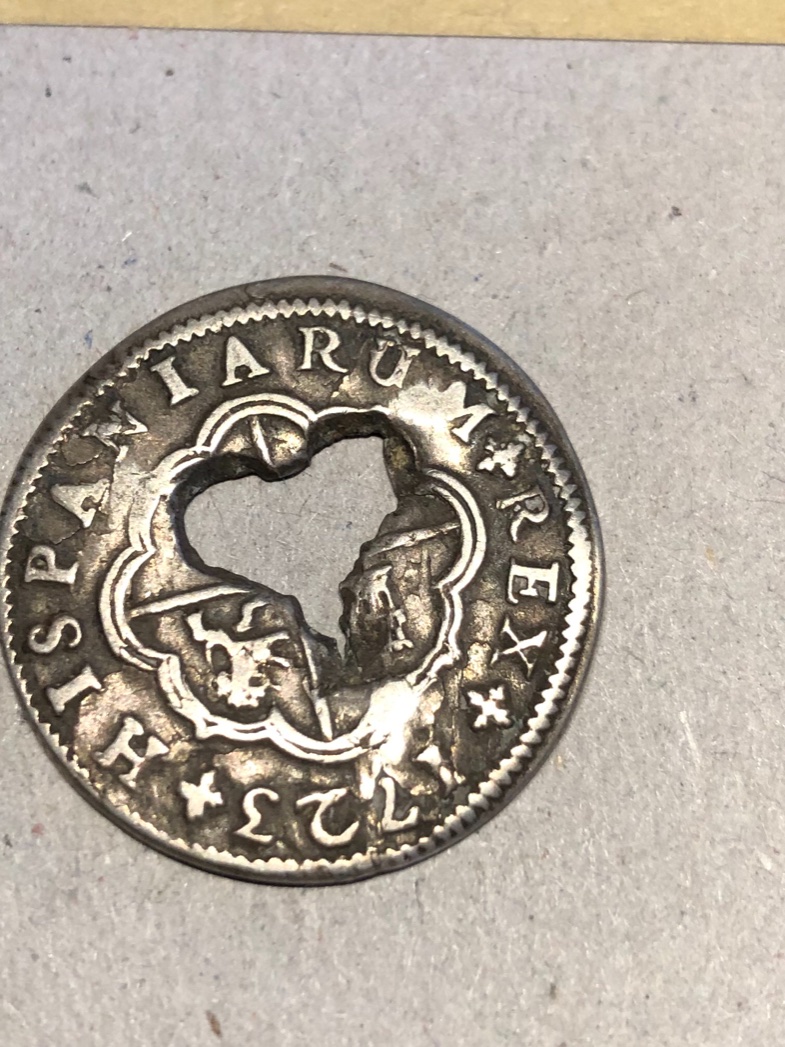 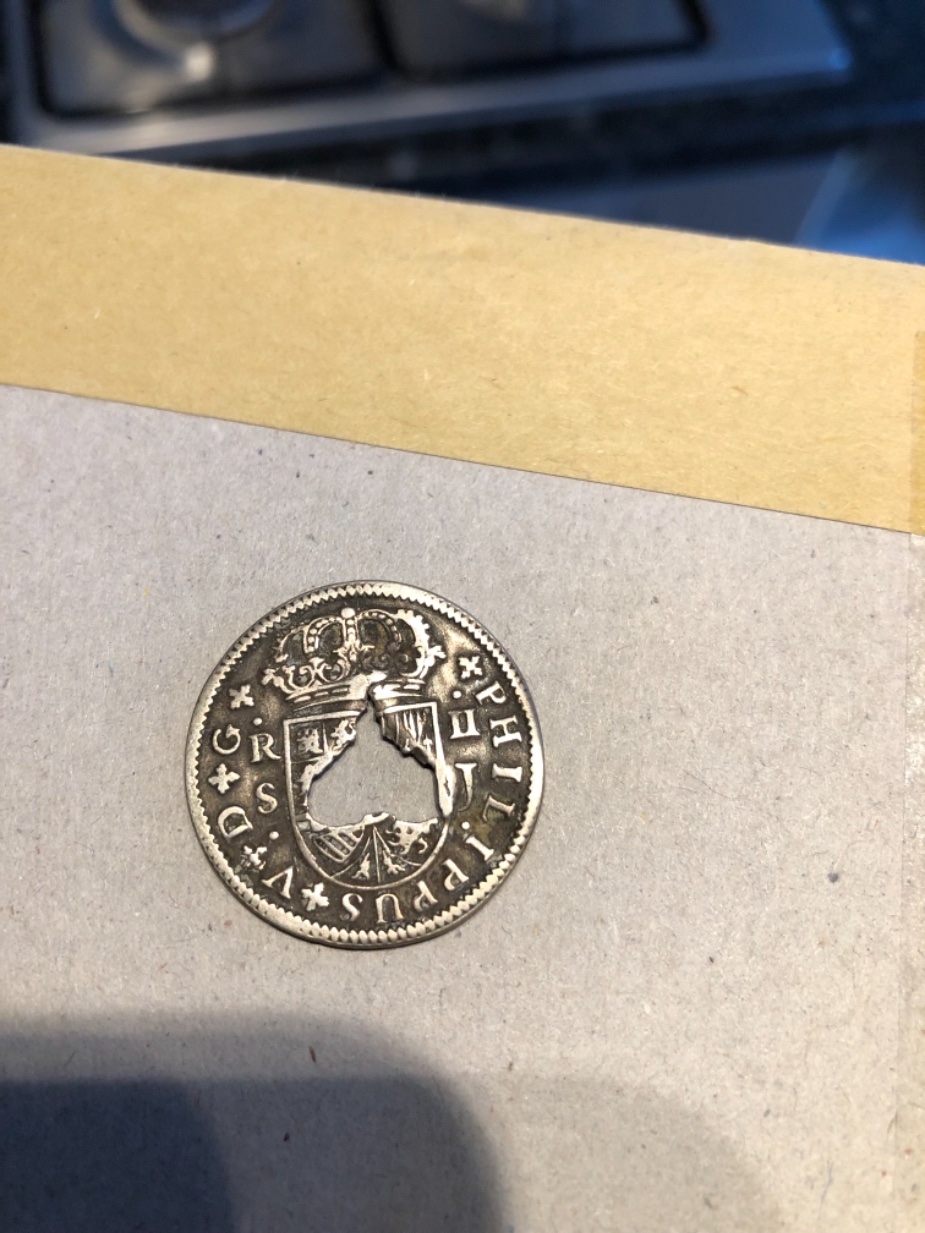 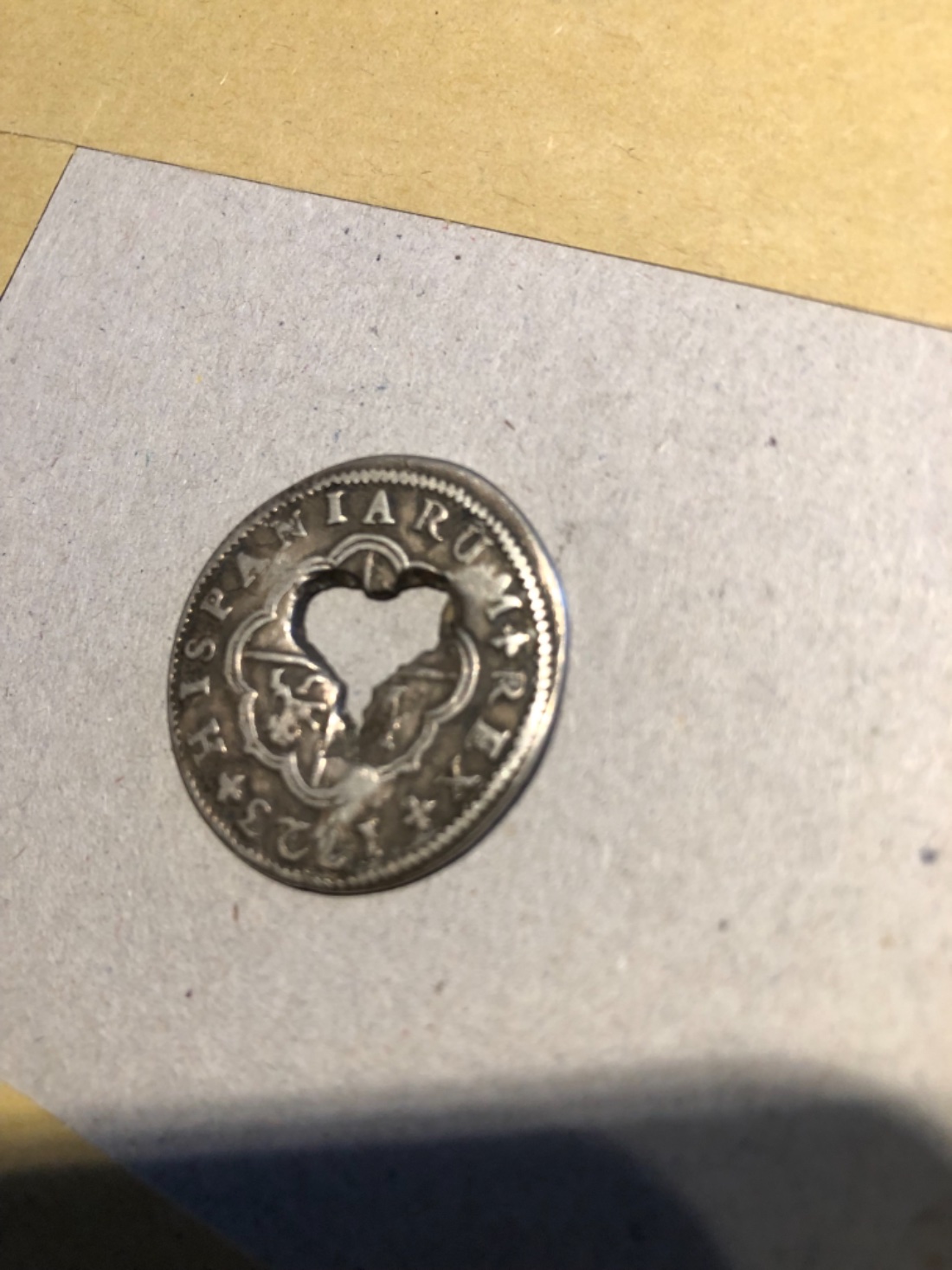 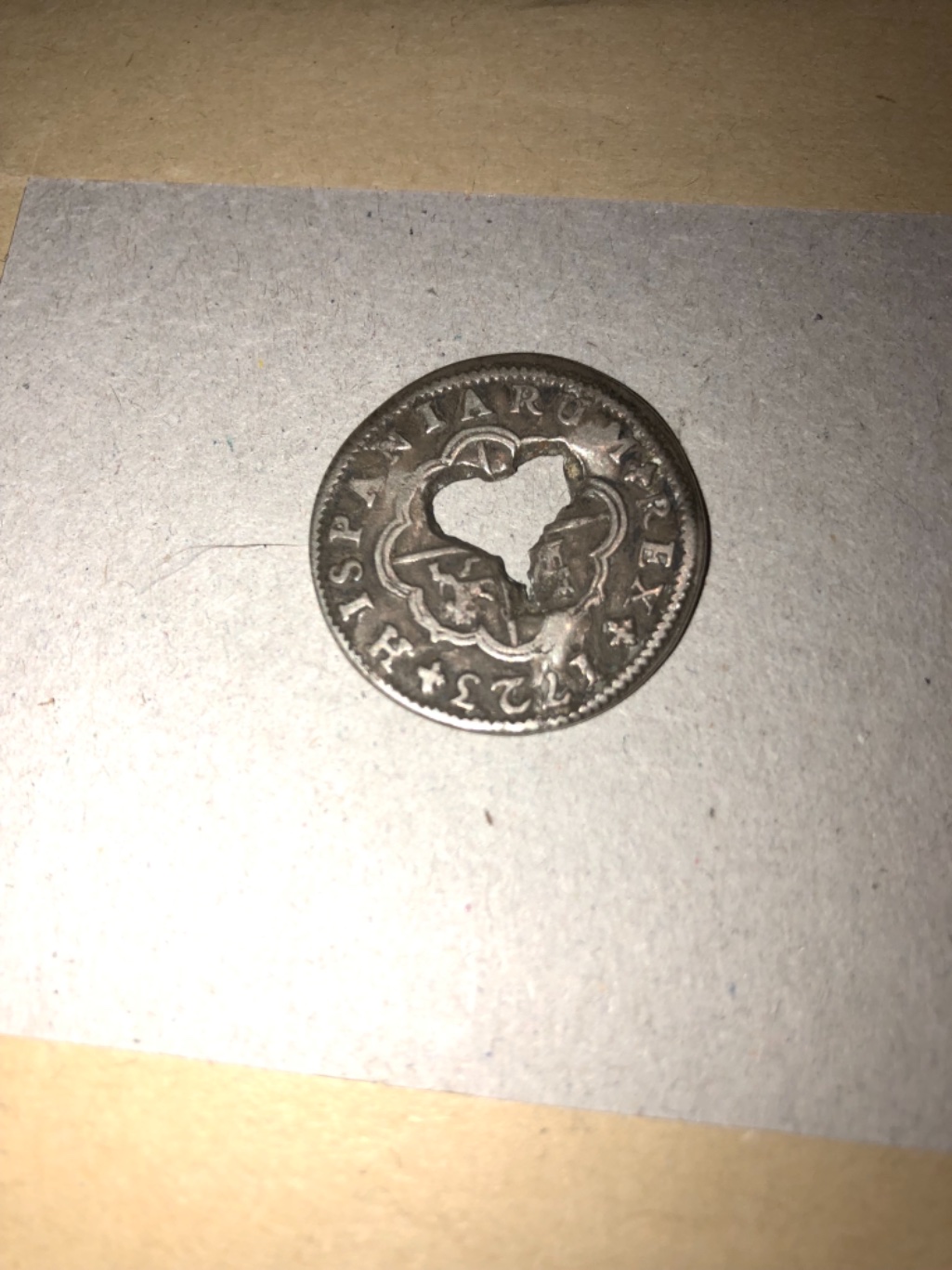 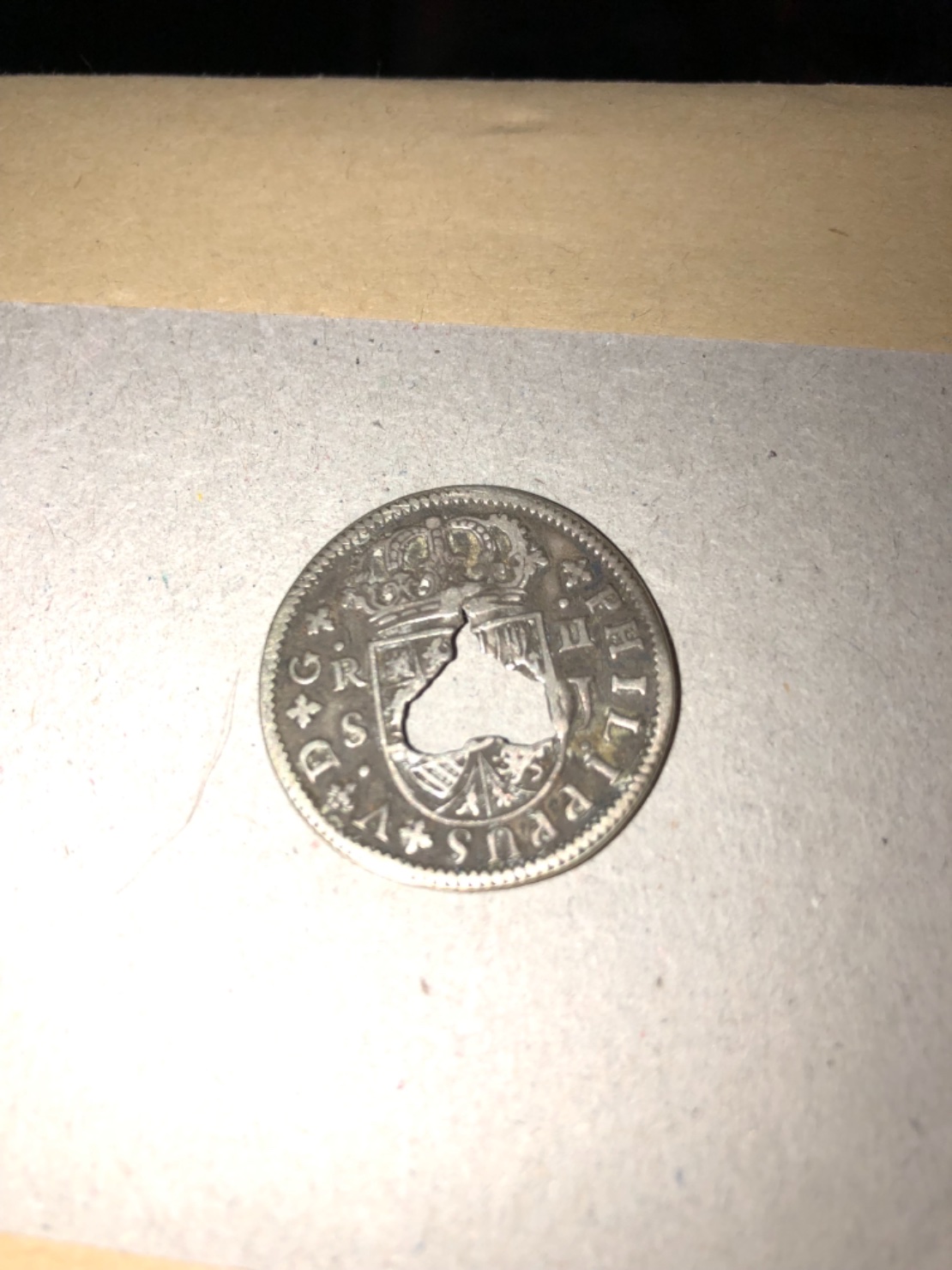 |
|
|
|
Valued Member
United States
309 Posts |
According to the Pridmore book,Coins of the British Commonwealth of Nations, Part 3, West Indies, page 159, this is a coin used in Dominica, an island between Martinique and Guadeloupe that was mutilated and devalued to keep it in local commerce. It has a type I, Heart Shape Piercing, likely done circa 1761-1764, hosted on a 1723 Spanish pistareen of Philip V. Pridmore explains this was done following possession of the island of Dominica by British Forces in June 1761. This coin would still have been worth two bits in local commerce and likely stayed in circulation in Dominica with the center piece discount making export unprofitable. If genuine this is a very scarce coin. Modern fabrications do exist.
|
|
New Member
 United Kingdom
32 Posts |
Wow Pistareen. That is fascinating. I guess it is not too far fetched that this coin could have made its way back to England but the chances are that it is a modern fabrication. Even so, it seems like someone went to great lengths to make a decent copy of it. It makes me wonder what time period would have made it lucrative to fake such a coin. Feels like a lot of work.
Thanks for the reply Pistareen
|
|
New Member
United Kingdom
32 Posts |
Hi Pistareen,
Does this coin scream modern fabrication to you? I noticed the obverse has what look like lamination lines and it seems generally more battered than the reverse. I am just wondering what is the tell tale sign of a reproduction or forgery.
Cheers
|
|
Pillar of the Community
United States
3357 Posts |
"Two minutes ago I would have sold my chances for a tired dime." Fred Astaire
Edited by thq
09/23/2021 08:14 am
|
|
New Member
United Kingdom
32 Posts |
|
|
New Member
United Kingdom
32 Posts |
I also found this 2 reales coin, (in great condition) from 1724 that appears to have some similarities with my coin. It appears to have small cracks on the Obverse and imperfections in some of the letters. Especially the letter U at the end of HISPANIARUM https://filateliaarias.com/es/luis-...sevilla.html |
|
Pillar of the Community
United States
1962 Posts |
There are many variations in the milled shield ("pistareen") coins of these 1710s-1720s years, even with genuine "regal" pieces (they get better from the late 1720s on through the rest of the series) - high variance in weight, planchet issues, wavy flans from how they were made, etc. In addition, there were A TON of contemporary counterfeits of varying quality.
Don't get caught up on that. This looks to be a genuine host coin. The issue, as THQ sort of alluded to, is that there seem to be many contemporary "unofficial" cutouts. The UK auctions you see with a good number of these present (the DNW Roehrs and Lyall sales come to mind) deem many to be so.
The cut looks old, not recent. I would guess it is of that time. As to whether this or any given cutout is "official"... who knows. I mean, these "used to be" attributed to Dominica or Martinique and the latest research says they're Gibraltar so... there's some room for uncertainty and debate. There seem to be a LARGE amount of different shapes observed, from my casual observation.
Who knows... maybe in fact this COULD have been done in several colonies, which perhaps could partly account for the varying shapes.
Also, this popping up in the UK is quite sensible considering the location(s) to which these are attributed... and indeed, I've seen a few instances of these surfacing "in the wild" out of Britain.
Edited by realeswatcher
09/24/2021 01:17 am
|
|
Pillar of the Community
United States
1962 Posts |
BTW... regarding: Quote:
It makes me wonder what time period would have made it lucrative to fake such a coin. Um, how about right now? Take a $30-40 coin (or better yet, a really low-grade, cull bin example), cut some metal out, hide your work well and you have a several hundred dollar piece. They've been doing this for decades of milled shield 1/2R, 1R, and 2R with fake Azores "GP" counterstamps - and that's a much less valuable issue (the genuine ones). ------------------------ Anyway, back on point, just look at the variety in stamps (and auction attributions). Note that ACsearch doesn't capture the category AKA country... you can search Heritage's archives directly under each country - Gibraltar, Dominica, Martinique, to see how they have been catalogued: https://www.acsearch.info/search.ht...category=1-2So there are versions with a larger cutout displaying a distinct patterned-border... and others with (generally smaller, though the size varies) simpler cutouts of varying quality. Pridmore apparently catalogues two observed variants of the latter as Type I and Type II, and then two obvserved variants of the former as Type III and Type IV. Pistareen noted in his post that this piece in question would fit under Type I. It seems that the Type III and IV pieces with the larger, more intricate patterned-border cutouts seen in the archives are consistently COLONIAL reales... while "most" with the smaller, simpler Type I or II cutouts are homeland shield types (though a few Colonial types with these are observed, interestingly). The simpler Type I and Type II cutouts in particular are really ALL over the place in terms of shape and workmanship. Truthfully, no two of them look identically done to my eyes. The DNW site is, of course, down for maintenance right now. Their two auctions I mentioned above (Roehrs and Lyall) are useful references, along with of course Ford, Pridmore, etc. However, here are some auction descriptions that provide info on the most current thoughts on these... Lyall (of collection noted above) seems to be running point on this: https://www.acsearch.info/search.html?id=7290952(CNG auction) Quote:
Bob Lyall ("Gibraltar Hearts," in NumCirc XCV.6 [December 2007], pp. 306-308) reattributes the Type I and II heart-shaped cut coins, previously assigned to Dominica or Martinique, to the British possession of Gibraltar. Two particular pieces of textual evidence inform this reattribution - a 1748 first-hand account of circulating silver coins with a heart shaped bit removed, and a 1749 order prohibiting the circulation of cut or damaged Spanish coins. Lyall also notes that the dates appearing on the Type III and IV issues are too late for the same attribution to Gibraltar, and the author initially confirmed their attribution to Dominica. Private communication with the author indicates that newly uncovered documentary evidence suggests these later types were also struck in Gibraltar circa 1760. https://coins.ha.com/itm/dominica/w...ption-071515Quote:
An issue traditionally attributed to Martinique (as in the Standard Catalog of World Coins) and Dominica (Pridmore pp. 308-309 describes an act of 1798 raising the value of the "Old Spanish milled dollar with a hole in the shape of a heart" from 10 to 11 bits), heart-shaped pierced coins of Pridmore Types I and II are now solidly attributed to Gibraltar following Bob Lyall's research. It is probable that the Type IV cut, as upon the present example, also originated from Gibraltar. Then from a Stack's example: https://auctions.stacksbowers.com/l...ptember-1798Quote:
Recent research published in 2007-2008 by Bob Lyall suggests reclassification of this issue as originating in Gibraltar. In 1762 upon their withdrawal from circulation in Gibraltar, it is believed a portion of this emission was exported to Dominica and entered circulation there. In thinking about this - and I'm guessing Lyall has noted this - it would make a heck of lot of sense if the Type I and II pieces were in fact done in Gibraltar, given that most are on homeland Spain issues (which obviously would have been very common in Gibraltar, an enclave attached to Spain... but not used nearly as much in the West Indies, particularly any coins dated after 1725 or so). However, to me, the Type III and IV cutouts, appearing seemingly exclusively on Colonial issues, would perhaps more sensibly have originated in the Americas... but that's pure speculation. Edited by realeswatcher
09/24/2021 03:47 am
|
|
Pillar of the Community
United States
1962 Posts |
Here, BTW, is one example courtesy of Heritage showing a rather "pointy" heart somewhat similar to the example discussed here: https://coins.ha.com/itm/martinique...ption-071515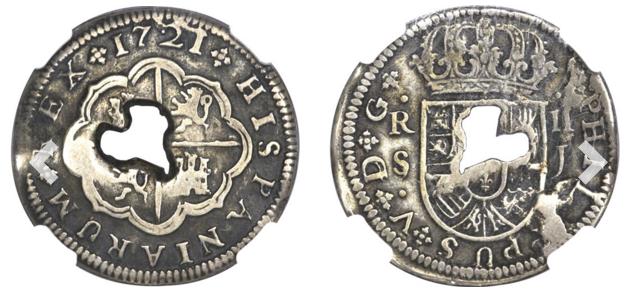 Most specimens of the simpler Type I or Type II style don't present like this pointy heart... but again, to my eyes, almost ALL examples seem to have varying shape/quality cutouts. Aside from looking for clear signs of modern fabrication, I would take any one of these with a grain of salt when it comes to figuring out what may be "official" vs. contemporary imitation cutouts. Anybody have access to the Lyall article referenced in the CNG auction - Bob Lyall "Gibraltar Hearts" in NumCirc XCV.6 [December 2007], pp. 306-308 ----------------------- EDIT: The DNW catalogs for the Roehrs (Part I) and Lyall sales: https://www.dnw.co.uk/media/auction...Sep%2010.pdfhttps://www.dnw.co.uk/media/auction...Sep%2018.pdfSearch (CTRL + F) for "Gibraltar" for commentary. What a mess!! Interesting, by the way, that in these sales and a few sales elsewhere, the heart cutout occurs on a few examples also bearing one of the enigmatic numeral counterstamps that there's no real consensus on (3,4, etc.) Edited by realeswatcher
09/24/2021 04:16 am
|
|
New Member
United Kingdom
32 Posts |
Thanks Reales Watcher,
It is a very interesting piece. I will look into sending it off. I paid around 80 dollars for it and it has already awarded me with more than 80 dollars worth of "wonder" :-)
Makes sense to me to mutilate a 2reales that was of bad quality to begin with.
Even though the heart looks rough in the photos, in hand it looks quite well executed. The angle of the cut gives wuite a nice effect.
I was hoping someone would have a copy of the same coin to verify that it is a modern fabrication. Starting to feel like it may be a genuine example. Happy days
|
|
New Member
United Kingdom
32 Posts |
Thank you for all your research and links. I will look into getting a loupe because I have stared at this coin for way too long.
I wonder if Bob Lyall is still with us. He seems to be the man with the answer.
|
|
New Member
United Kingdom
32 Posts |
Just encase you had any doubts, you ARE a legend Sir Reales Watcher!
|
|
Pillar of the Community
United States
1962 Posts |
I mean, no guarantees, I'm not the most studied eye when it comes to Caribbean counterstamps and modifications... but the host looks fine and the cutout seems of the period. At the very least, it's not a screamingly modern job. Perhaps try contacting DNW. They're a business, not a free information service, but since they've handled two good collections involving these, including that of an acknowledged researcher, they might help. The thing I find amusing here is how there are all manner of really crude and variant cutouts of the general type that DNW in the Lyall sale now calls "First Series" (plus contemporary counterfeits thereof) over the past decade-plus from Heritage and Stack's here in the States, often certified by NGC (some PCGS)... These often seem very much like what DNW (in conjunction with Lyall) called "contemporary counterfeits" - yet there's no mention of that off-putting term. Selective omission? Look at what these first two 2R sold for in the Lyall sale - apparently what would be considered "official" and not contemporary counterfeit (Lots 5269, 5270): https://www.dnw.co.uk/auction-archi...o&offset=192and compare to the prices of the lots immediately after branded as contemporary counterfeit... |
|
New Member
United Kingdom
32 Posts |
Great idea with emailing DNW. It is worth a shot.
I am also baffled that just by finding one old document, the back story of these coins is changed forever.
Must be difficult to authenticate these pieces with any high level of certainty. They should write "it is most likely this." on the coin slabs.
|
|
New Member
United Kingdom
32 Posts |
The coin is now being looked at by the people at DNW.
Initially it was seen as too crudely cut but a colleague seemed to feel it was worth researching further. I left it with the professionals to appraise. The host coin was fine.
Thanks again for all of your help, I will let you know when I hear back from them.
|
| |
Replies: 15 / Views: 2,741 |
|









 Posted 09/10/2021 01:16 am


