| Author |
 Replies: 13 / Views: 1,013 Replies: 13 / Views: 1,013 |
|
|
Pillar of the Community
United States
524 Posts |
Slabbed and graded. Also, any thoughts on the grading of this pattern from a technical perspective. Is grading focused on the devices close to the rims and not the center such as eye and US. In hand, the coin does not have any marks suggesting the US was ever there? 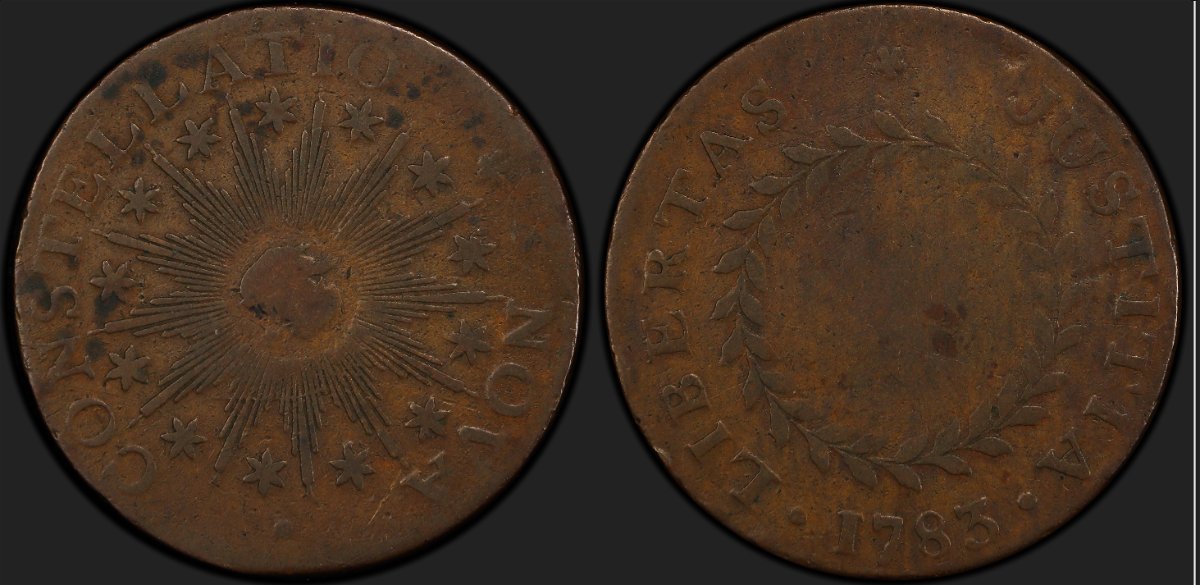 |
|
|
|
Pillar of the Community
United States
3013 Posts |
I am not an expert in any early coppers, but I'll swing a guess of a F-12.
|
|
Bedrock of the Community
United States
94367 Posts |
I'm not qualified to offer a grade opinion, but it's a handsome example.
|
|
Pillar of the Community
United States
3848 Posts |
I don't have the slightest clue, but I have to learn somehow. VG-8.
Suffering from bust half fever. Want to learn how to attribute early half dollars by die variety? Click Here: http://goccf.com/t/434955Shoot me a PM if you are looking to sell bust halves. |
|
Pillar of the Community
United States
1694 Posts |
wow pretty sweet thats my grade
|
|
Rest in Peace
United States
10625 Posts |
It is much nicer than the example I don't have... Congrats on a gorgeous example!!!  |
|
Pillar of the Community
Germany
1856 Posts |
It's an interesting example due to the weakness of the devices: is it caused by striking, or by wear? In this case, there is also peripheral weakness so I'm tending more towards wear. All in all, I would grade it about F12-F15. By the way, this example in my collection shows something similar: sharp reverse and all peripheral devices, but very weak central obverse. How would one grade such an example? 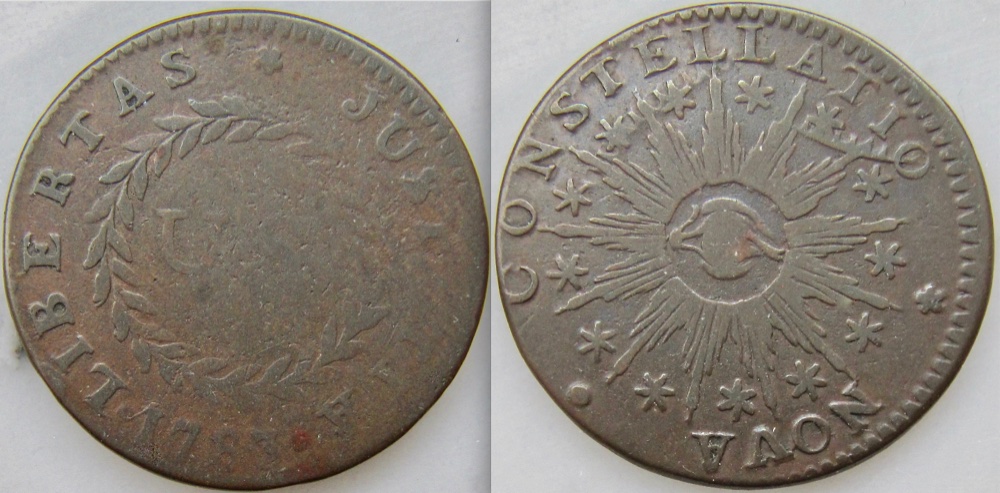 |
|
Pillar of the Community
United States
2327 Posts |
This coin is pretty kool. I wont even take a stab at it seeing as I have no idea. Curious to see what it graded.  You realize when you know how to think, it empowers you far beyond those who know only what to think.
-Neil deGrasse Tyson
|
|
Bedrock of the Community
United States
11982 Posts |
I think that both coins are fairly nice because both coins show planchets largely devoid of corrosion. There is discoloration but the pitting is very limited. Germanicvs' coin also shows very pleasing natural color. OP's coin looks a little red but that may be from the lighting.
The issue in both coins is that the US in the reverse is largely missing - completely in the first example and half in the second. If we think about why these coins are collected, the US in the design is generally the most important. 1783 was when the American Revolutionary War ended and this is generally the first coin, albeit a private issue, that showed the name of the new country after the War. This coin is dated four years before the Fugio cents. The 1776 continental currency coin, widely collected for its 1776 date shows a chain uniting the states by name but does not refer to the new country by name.
It is also interesting that one of the private issuers of the coin was Robert Morris who was the Superintendent of Finance of the United States from 1781 to 1784, a signer of the Declaration of Independence and a founder of the US financial system. This was the first commercial issue that bore the name of the new, fledgling United States copying the first US patterns, the nova constellatio patterns made in Philadelphia.
For this reason, having coins with the US inscription is a big deal and collectors will seek and pay a good premium for coins with that device prominently showing.
|
|
Pillar of the Community
 United States
524 Posts |
Great comments, the US is important, wish it was there. This pattern is notable also because the decimal notation to currency where a dollar is made of 100 units originated with this patter, of which this copper is one of three, where the other two are silver, with fractional amounts greater than the 5 units which this copper represents. Grade is PCGS VG 8, and its a variety, Crosby - 2 . Low from a TPG, but in terms of collectability for the planchet quality and the color, and not having been cleaned for more than 220 years, is pretty cool |
|
Bedrock of the Community
United States
11982 Posts |
shantiom, this coin is not one of the Philadelphia Nova Constellatio patterns. This is the Crosby 2-B with pointed rays and the small US. These issues were struck in Birmingham, England not Philadelphia and were commissioned by NY firm Constable, Rucker and Co. William Constable was one of the wealthiest traders in NY commissioning ships to China and India in the 18th and 19th centuries. Here is a letter from Robert Morris to George Washington introducing William Constable and John Rucker as honest and able businessmen. This probably was written as Robert Morris was leaving his post as Superintendent of Finance in the new U.S. Government and letting Washington know of his intent to join Constable and Rucker in a new business venture which eventually commissioned these coppers in England. https://founders.archives.gov/docum...02-0315-0001 |
|
Pillar of the Community
United States
524 Posts |
@numismaticstudent Thank you for this great resource and history! I did now know specifically this was minted outside the US. Any other resources you are aware of that can provide history on the nova c from Philadelphia and England?
|
|
Bedrock of the Community
United States
11982 Posts |
|
|
Pillar of the Community
United States
524 Posts |
Interesting, the information on the NYC website states the dies taken to England were fairly worn. May account for the missing US in the center and suggest that coins from the first dies are poorly struck/
|
| |
Replies: 13 / Views: 1,013 |
|




 Posted 11/15/2021 7:10 pm





