| Author |
 Replies: 11 / Views: 1,081 Replies: 11 / Views: 1,081 |
|
|
New Member
United States
14 Posts |
|
|
|
|
Moderator
 United States
56855 Posts |
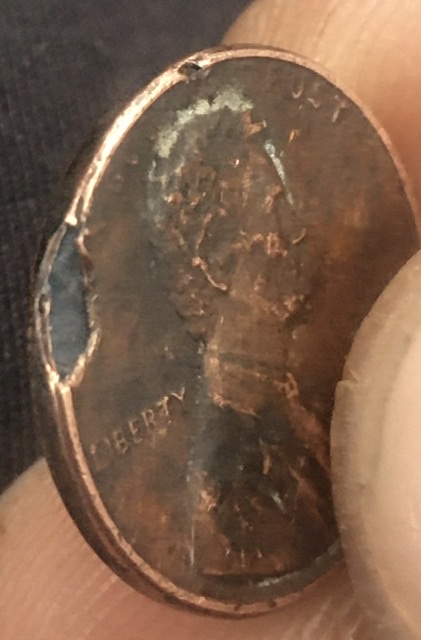
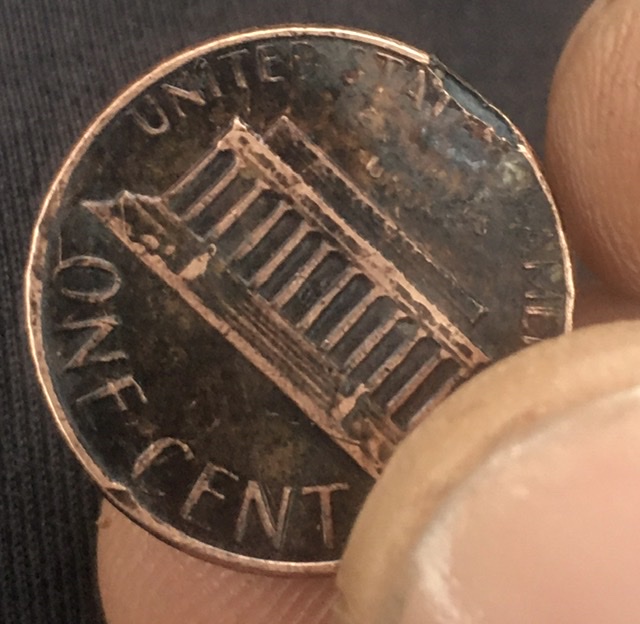
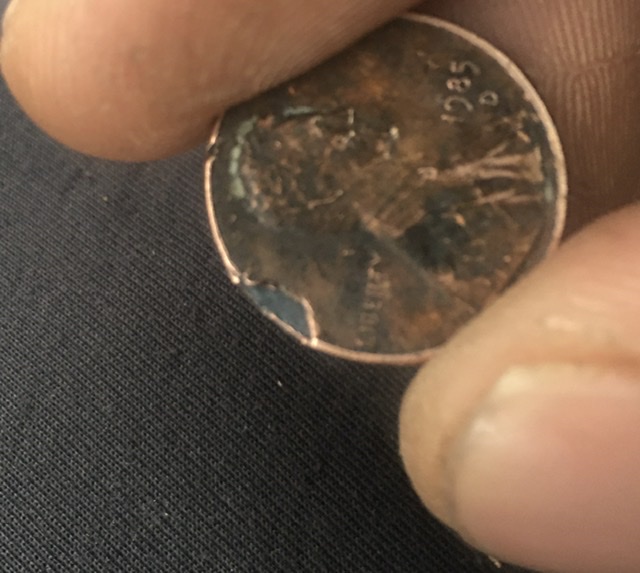
 . Not acid. The copper plating got broken some how and now the zinc core is being espoused to the air causing zinc rot. John1  |
|
Moderator
United States
34542 Posts |
Regardless of how it was damaged, this is definitely not a mint error though.
"If you climb a good tree, you get a push."
-----Ghanaian proverb
"The danger we all now face is distinguishing between what is authentic and what is performed."
-----King Adz
|
|
Bedrock of the Community
Canada
21877 Posts |
It's known as zinc rot which is self explanatory.
|
|
Moderator
United States
106396 Posts |
Yep, no acid used on this coin. Just extreme and advanced zinc rot.
|
|
Bedrock of the Community
United States
94367 Posts |
 to the CCF! |
|
Valued Member
United States
221 Posts |
Could have been acid induced corrosion. Could be the corrosion due to the exposure of the zinc core and the copper which forms a galvanic couple that ends badly for the zinc. I think this is what some members refer to as "zinc rot." It is corrosion either way. Jumping on the OP is not fair or reasonable, because:
Unfortunately, zinc rot is a confusing term. It is not self explanatory. It is not at all related to biological decay. It is not even listed in the index of my 1415 page ASM corrosion handbook. According to some online sources, the term originated from deterioration of zinc die cast models due to intergranular corrosion. I doubt that has anything to do with the way the term is used by most here.
|
|
Bedrock of the Community
United States
10635 Posts |
Regardless if listed in a book or not, zinc rot IS a real thing, and it IS real deterioration of the zinc core, and it IS detrimental to ALL post '82 cents. Countless examples of zinc rot can be found through out pages here on CCF. This coin posted was damaged not by acid (acid leaves its own traces), but how it happened is not important, as damage is damage however done. Zinc rot HAS set in to the exposed zinc core and that spells DOOM for this cent. Once started, there is no reversal.  |
|
Valued Member
United States
221 Posts |
Merclover,
"Zinc rot" may be real, but when people knowledgeable in corrosion don't commonly use the term, that is probably a sign that it doesn't have the meaning that you think it does. Some members throw words around like "zinc rot" or "staining " as if they have profound technical meaning. They don't. Often, it is hand waving nods to various forms of corrosion that they perhaps don't have the time or background to explain.
As I said, the term itself is misleading and confusing. It is far more cringeworthy than a newbie saying doubled die minus a d. .
And I do see signs of brightening on that cent. That might be from acid. The dissolution of the zinc as well. The end result of your so called "zinc rot" or acid attack is oxidation of zinc metal.
I hope you appreciate that I am trying to elevate the level of technical discourse here, while also pointing out that I felt a newb might have been jumped on a harshly.
|
|
Valued Member
United States
221 Posts |
Quote:
Regardless if listed in a book or not I cited a first rate reference. It outranks you as an authority in that field. Tossing it out as meaningless? That sounds just like someone who has posted a PMD coin that they believe is a valuable error, and after consulting authoritative references like error-ref.com, saying they don't care and that they will stick with what they want to believe. If I had written papers for my PhD thesis—which covered some aspects of corrosion prevention—that way, my committee would have eaten me for lunch. |
|
Bedrock of the Community
United States
10635 Posts |
Quote:
If I had written papers for my PhD thesis—which covered some aspects of corrosion prevention Sounds as if the mint missed its chance in early '82 to have you fix the zinc rot problem before it started! |
|
Valued Member
United States
221 Posts |
Nope. In grade school at the time. Plus, zinc corrodes easily. Copper makes an excellent cathode. Tiny hole in the copper plating means that there is a huge cathode area relative to the anode area. It is an example of an extremely destructive galvanic couple (why you try to avoid connecting dissimilar metals in corrode environments). The thing is prone to fail because of its design. The historical origin of the term "zinc rot" seems to be old, and related to intergranular corrosion of die cast. One reference mentioned lead or other impurities. I would not think we would allow much lead in our one cent planchets, so maybe this type of corrosion is not so important in our cents. Why is it important to use more exact language? There are multiple reasons, but for one, if you understand how and why a coin is degrading, you might have a chance of slowing or stopping the process. I am still learning about some of the details about corrosion in coinage metals. One of the areas that I really want to learn more about is what has been called "bronze disease" in some other disciplines. I once saw that BadThad threatened to write a book on it. I've been looking. And while that term is more broadly used, it does seem that once again, a word that implies a biological cause generates some confusion. If you have some science or engineering based references discussing zinc rot, please send them to me. I have looked for corrosion studies related to coins, but without much success regarding modern coinage. In fact, one promising paper I found on denickelification of cupronickel alloys specifically and deliberately excluded coinage metals. As I have joked before, apparently there's not enough money in this topic for the corrosion scientists and engineers. Another reason to think about what we say? When some new poster thinks they have a missing clad coin, for example, what they are told is a "stain" sometimes is probably a copper enriched surface. It looks to them like copper on top, because it is. We often can rule out the missing clad hypothesis for numerous other factors, but they haven't seen enough coins or read enough to accept what we do. If they struggle to believe us, you have to have a bit of patience sometimes, because yes, that "stain" looks like copper to them because it is. I could see where a newb would think that it is us veterans (I am using that term loosely by including myself, but I don't recall questioning PMD coins even when I was 14. Usually, that seemed easy to identify, to me.) who are in denial if we aren't careful when dismissing something as a "stain." |
| |
Replies: 11 / Views: 1,081 |
|











 Posted 11/16/2021 06:49 am


