| Author |
 Replies: 10 / Views: 1,777 Replies: 10 / Views: 1,777 |
|
|
New Member
United States
39 Posts |
I am suddenly realizing that I prefer a naturally toned or "contrasty" coin rather than a blast-white example. I feel like maybe toning and coloration and contrast add to the history, aesthetic and mystique of a specimen, where the blast-white specimen, although maybe more perfect, feels like it lacks a little character. Maybe deeper strike plays into this as well. Sometimes, "perfect" coins feel flat to me. Maybe just an aesthetic thing. I don't know. What are your thoughts on crisp white coins vs. naturally contrasted pieces whether it be due to strike, toning or texture? What is your preference? Why? What is the motivation of one type of collector over the other? Jeffies I guess are a good neutral type to exemplify this phenomenon, but I feel this is a generality rather than applicable to a specific type. <both are MS66 examples from ebay although photo quality might differ> 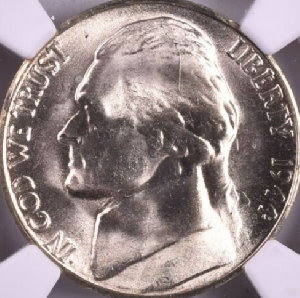 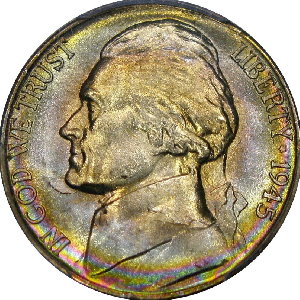 Edited by aceman920
12/21/2021 11:47 pm
|
|
|
|
Pillar of the Community
United States
3848 Posts |
I have to agree with your preferences. I prefer a toned, original example as opposed to a blast white coin that seems to lack character. Let's do a first impression test. Coin #1: 1814 Bust Half 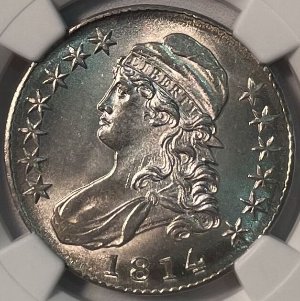 Hmmm, looks dipped. Hmmm, looks dipped. I'll wait for a better example. I'll wait for a better example.Coin #2: 1817 Bust Half 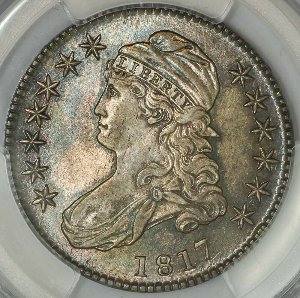 Wow! Where was this stored to develop this neat toning over 204 years? This was made before Mary Shelley wrote Frankenstein. I can't afford this!! If coins could talk... Wow! Where was this stored to develop this neat toning over 204 years? This was made before Mary Shelley wrote Frankenstein. I can't afford this!! If coins could talk...I learned that toning subdues luster and can sometimes make it difficult to see a coin's potential brilliance. But a brilliant coin can be hard to see small details because the coin is so bright you may have to squint to look at it.  Suffering from bust half fever. Want to learn how to attribute early half dollars by die variety? Click Here: http://goccf.com/t/434955Shoot me a PM if you are looking to sell bust halves. |
|
Moderator
 United States
56855 Posts |
IMHO: If you like to collect toned coins you will need to learn the difference between natural and artificial toned coins and that is not easy. If I collected toned coins, I would only want NT coins in my collection. John1 |
|
Bedrock of the Community
United States
19531 Posts |
I collect them all--except those clearly (and badly) dipped, and those clearly (and horribly) toned as a direct result of deliberate human intervention.
|
|
Bedrock of the Community
Australia
21789 Posts |
Toning is an attractive form of mild surface corrosion, that can contribute eye appeal, saleability and value.
Due to the fact that toning is, in fact, actually a form of corrosion,
I strongly prefer blast white silver coins in high MS grades because
that is the top condition in which they first left the coining press.
----------------------------------------------------------------------------------------------------------------------------------------------------
No collector would deliberately induce artificial toning on a blast white silver coin, just to increase it's eye appeal. So how do you tell the difference between artificial and natural toning? The answer could be unprovable. Thus, I would never try to induce artificial toning on a high MS grade coin, no matter how skillful I may be.
|
|
Bedrock of the Community
United States
20753 Posts |
I just want coins that appear to have just been made.
|
|
Pillar of the Community
United States
1613 Posts |
I let the coin speak to me. For the classic designs, that usually leans towards toning.
ANA member - PAN Member - BCCS Member There are no problems only solutions - the late, great John Lennon
|
|
Moderator
United States
105745 Posts |
my preference to coins is blast white, nice and clear. That said, Some toning is nice, but far too easy to fake these days.
Edited by Dearborn
12/24/2021 06:19 am
|
|
Pillar of the Community
Russian Federation
5186 Posts |
Quote:
But a brilliant coin can be hard to see small details because the coin is so bright you may have to squint to look at it.  Then again, the same is even more true of strong toning - it can hide the details under the splotches of color... That said, for the most part I don't collect MS coins (can't afford it, and/or don't want to afford it when I can find a just-as-pretty example in AU or XF for a small fraction of the price), and AFAIK for AU-to-XF grades blast white usually implies dipped, while toning can still occur naturally. I do agree that I like "contrasty" coins, to use the OP's terminology. Unfortunately some of the most "contrasty" coins I've seen are stuff like desert patinas and circulation cameos, i.e. they don't even qualify as XF. As it gets to XF and up it becomes much harder to find a specimen that isn't either mostly all the same color, or has a color distribution mostly unrelated to the actual relief details. |
|
Bedrock of the Community
Australia
21789 Posts |
Beautiful rainbow toning is far too easy to fake with careful heat treatment, and almost impossible to differentiate from naturally toned coins.
That is why I prefer blast white coins.
I know.
I have very successfully heat treated current freshly minted MS++ coins to achieve attractive results. These coins I have simply released back into circulation.
That is why completely ignore implied added value, when it comes to attractively toned coins.
I concentrate on the grading only,
despite the fact that nicely rainbow toned coins may be easier to sell to some prospective buyers.
Rainbow toning is unstable over the long term, unless such coins are preserved in air-tight containers.
|
|
New Member
 United States
39 Posts |
Interesting that the opinions vary even with experienced collectors. Maybe beauty is in the eye of the beholder. Thanks to all for the thoughtful discussion.
|
| |
Replies: 10 / Views: 1,777 |
|










 Posted 12/22/2021 04:29 am


