| Author |
 Replies: 42 / Views: 4,134 Replies: 42 / Views: 4,134 |
|
|
|
Moderator
 United States
23731 Posts |
|
|
Pillar of the Community
  Spain
2752 Posts |
Wow what a piece Bob?...What type of animals are depicted? Buffalo, cows, deer? Lovely example at 6 BC!....That's older than me!  |
|
Pillar of the Community
United States
7067 Posts |
Thanks, Ron and Paul. Quote:
What type of animals are depicted? Your guess is as good as mine. Novicius is the resident zookeeper. Perhaps he'll enlighten us. |
|
Pillar of the Community
United States
7067 Posts |
Studying it a bit more, Paul, I do wonder if that might be a chimera bottom row, center. I also suspect that the upper left animal is the same as the lower right, and the upper right is the same as the lower left. I think there may have been four animals in a row, in a mold used repeatedly around each row.
|
|
Pillar of the Community
United States
1122 Posts |
Very cool Bob. Well, I guess horses would we too easy of a guess. This one looks like a Meerkat or possibly some sort of weasel/ferret. 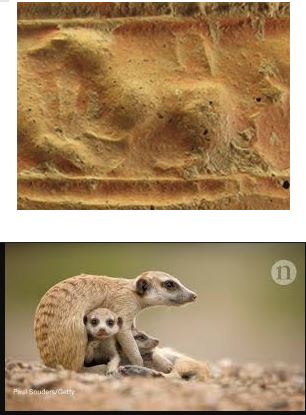 |
|
Pillar of the Community
United Kingdom
1168 Posts |
Quote:
Novicius, the legend is nice and clear on your Anastasius I, getting an example of a nice portrait to match is very difficult. It's usually either or, unless you want to pay $$$$ I agree 100% travelcoin/Gerry. These large Byzantine bronzes don't seem to weather the ravages of time very well, and so far I haven't managed to get a coin with a legible legend and good portrait for a reasonable price. Big bucks indeed. I do like your nicely detailed Maxentius follis, and it's great that Paul's specimen appears to have solved the mintmark problem.  Jim That is a very attractive Etruscan fragment, Bob. You do find some really nice pieces. I did wonder if the animals depicted were domestic animals, as I see a horse and a bull, and the elongated muzzle on the animal in the image that Gerry posted does look like a meerkat, but it also reminds me of the stylised stag (without horns) on some Ephesos coins, or the Segesta hound. However the appearance on the bottom row of what does indeed appear to be a chimera, nullifies the domestic animals theory. Today the postman dropped off what will definitely be my last coin of 2021. I haven't seen many of this type of coin from Lampsakos for sale, and it's the first coin I have with the head of Priapos and the Phi character in the inscription. 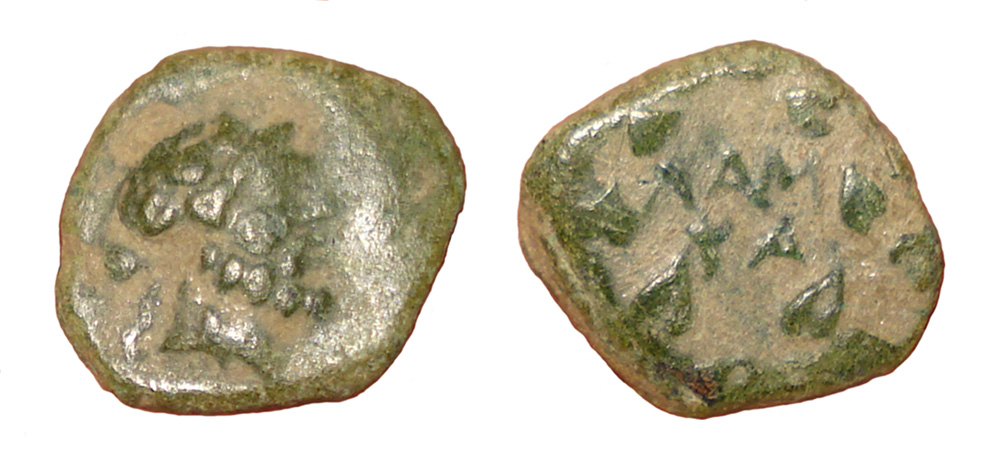 Lampsakos, Mysia. (Priapos) 190-85 BC. Obverse: Head of Priapos right, wreathed with ivy. Reverse: ΛAM-ΨA in two lines within wreath. Bronze. Diameter: 12 mm. Weight: 1,4 gr. Reference: BMC 72; Lindgren I, 258; SNG Cop 223 |
|
Pillar of the Community
United States
8056 Posts |
I like @travelcoin's guess of something in the weasel family ... maybe an ermine? I think the only other December purchase I also received in December was this one from the mid-month CNG e-auction. Archbishopric of Cologne undated (1376) weisspfennig, with St. Peter under a gothic arch. Noss, Koln 193. It came with not just one, but (count 'em!) THREE CNG auction tags, though only going back to 2010. I hope that frequent turnover's not a bad omen! 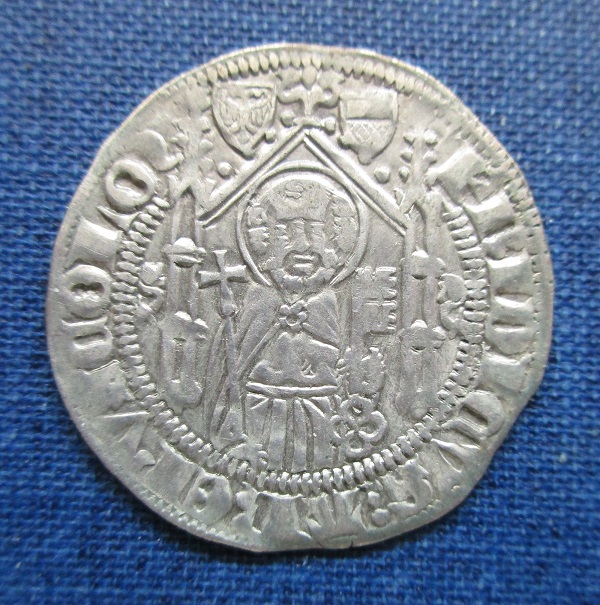 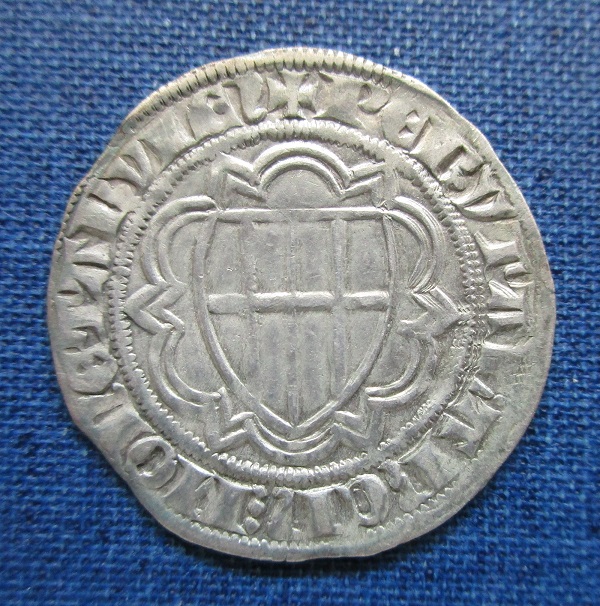 Edited by tdziemia
12/30/2021 07:48 am
|
|
Valued Member
251 Posts |
My very last purchase of the 2021 (it hasn't even arrived yet) is this Golden Horde dang with the name of Muhammed Khan and Ordu mint on this, 775 or 777 AH. It was classified as a local mintage or possibly imitation. Slightly off-centered, but very clear strike! 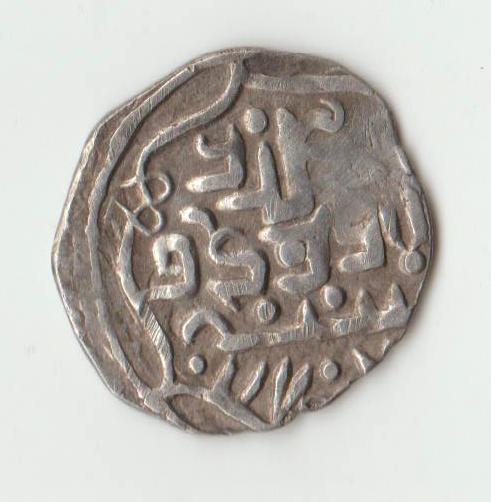 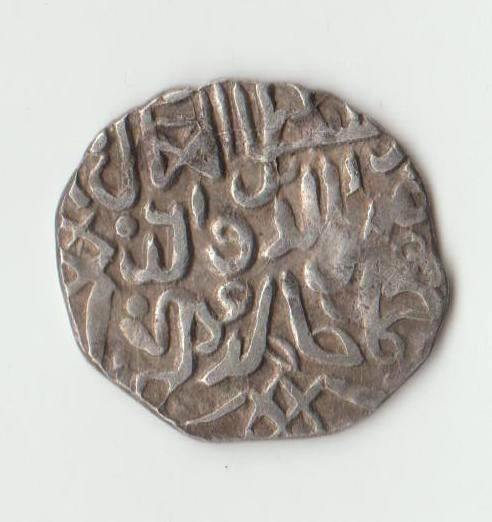 Edited by Grinya
12/30/2021 02:31 am
|
|
Pillar of the Community
United States
5010 Posts |
A nice group of ancient and medieval coins to wrap up 21 guys! That's a very cool piece of Etruscan art Bob. I got one in right before the buzzer went off on 2021. I've had a coin from Persis on my list for quite a while and picked up this neat little double busted example.  Kings of Persis, AR obol, 2nd century AD. Kings of Persis, AR obol, 2nd century AD. O: bust of Manuchihr II R: Manuchihr III 9 mm, 0.7 g Hope everyone has a great '22! |
|
Pillar of the Community
United States
7067 Posts |
Nice additions, all. Love that reverse, Chris.
Turns out I have one more package coming later today, 12/31. Watching out for the mail truck now...
|
|
Pillar of the Community
United States
4883 Posts |
This was my last ancient acquisition for the year, albeit all the way back at the beginning of December. Roughly 10mm across, with the weight coming in at 1.41 grams, which I think would make this a diobol, although I don't see that denomination cataloged. I have it as an issue of Abydos, Troas in a style that's consistent with issues dating from before 480 BC, which I believe qualifies it as archaic. I haven't yet gotten any feedback on whether my interpretation of the incuse reverse as depicting either a tetraskelion or gammadion (both rudimentary forms of a swastika) has any validity. 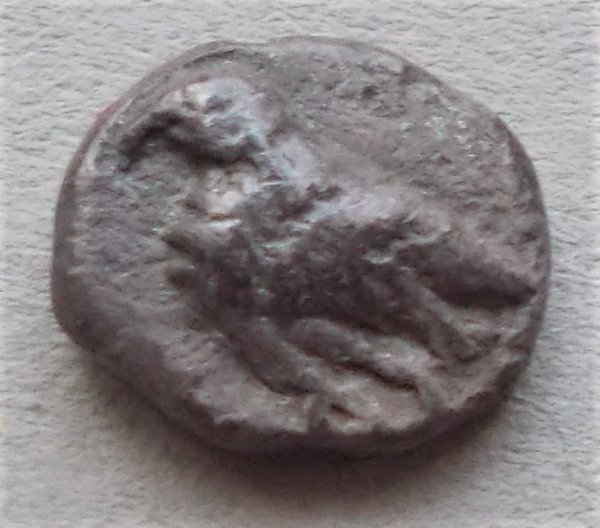 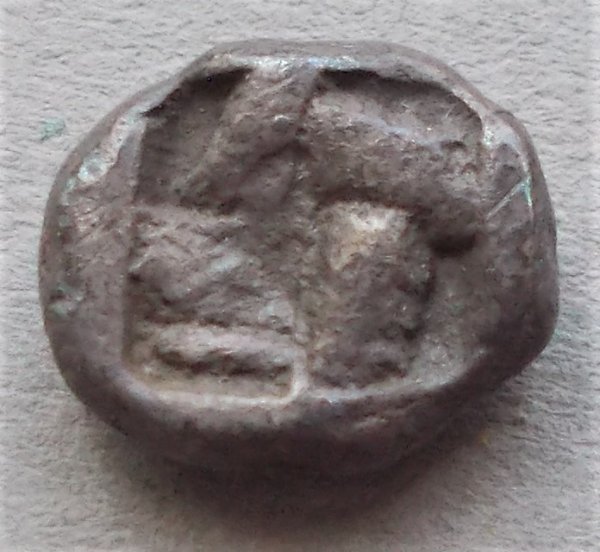 Colligo ergo sum
|
|
Pillar of the Community
United States
7067 Posts |
Quote:
This one looks like a Meerkat Hmmm. A meerkat in ancient Etruria. Perhaps he took a wrong turn at Albuquerque? Surprisingly, remarkably, unexpectedly, I got another package delivered today, the last day of 2021. I had thought this one would take longer. As some of you know, I enjoy purchasing ancient potsherds every once in a while. Here's a newly acquired group of mostly blackware sherds, purchased from a Ukrainian seller who I trust and have purchased from in the past. These are from the ancient Greek colony of Olbia on the northern Black Sea coast in what is today the southern Ukraine. They may date to about the 5th century BC, but given that the colony, founded in the 7th century BC, endured for centuries, I could be off by a couple hundred years. There's nothing particularly earth-shattering about these. (Perhaps I should say "earthenware shattering"? Get it? Pottery sherds? Earthenware shattering? Oh, never mind.) But it is nice to have the location pinned down so precisely - which is often simply impossible with generic sherds. Novicius had a nice writeup about Olbia, along with a map, on page 14 of his "animal" thread: http://goccf.com/t/363454&whichpage=14I have, en route - but not expected until March (ugh!) - what looks to be a much more impressive fragment from Olbia. That one is a partially barnacle-encrusted upper portion of a large amphora, salvaged from off the coast of Koblevo/Kobleve in southern Ukraine - that's right off the coast of Olbia, just below and to the right of the red dot that represents Olbia on Jim's map. Really looking forward to that one's arrival. But, for now, a group of potsherds from Olbia, c. 5th century BC: 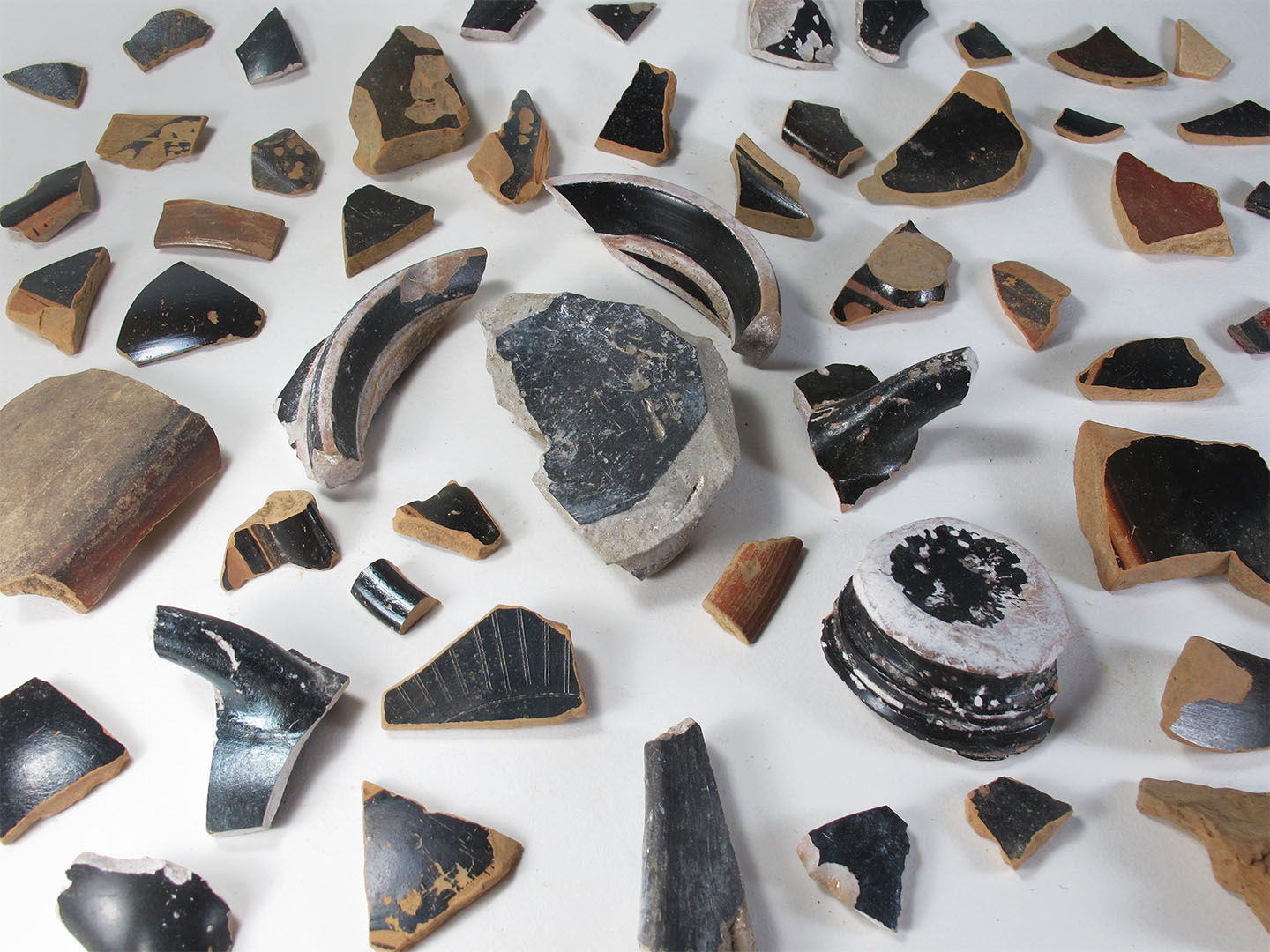 Edited by Kamnaskires
12/31/2021 6:34 pm
|
|
Moderator
United States
23731 Posts |
There are a few there that look like they may be able to be pieced together.
|
|
Pillar of the Community
United States
7067 Posts |
I think you're right, Ron. These all came via two lots, and one of the lots contained some of the larger, deep black pieces. I suspect those were from the same find, and that several of the fragments belonged to the same vessel in antiquity. I only realized, after packing these up after the photo shoot above, that the flipside of one of the blackglaze sherds, below, has these interesting converging lines. Wish I had had this side face up in the original group shot - but, too late. The above pic was already posted to my Forum gallery this evening before I realized. 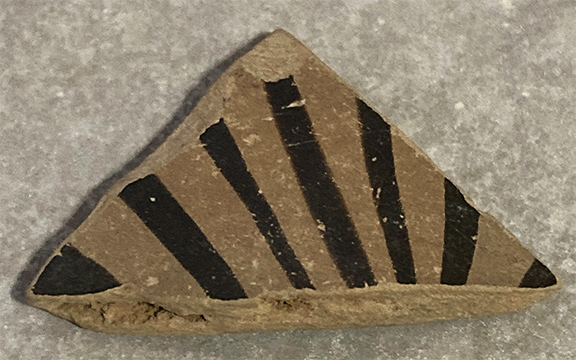 |
|
Pillar of the Community
United States
2703 Posts |
This last one arrived on December 28th. 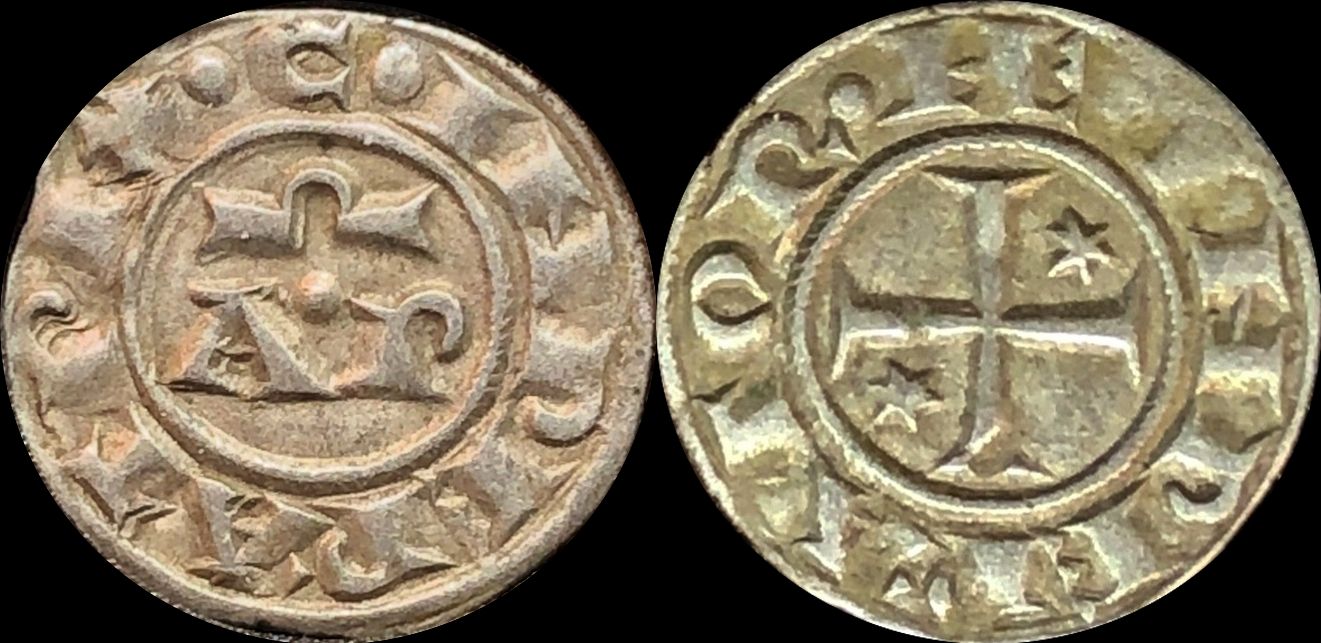 1194-1196 Brindisi and Messina, Italy Denaro of Henry VI and Constance Obv: + HE INPERATOR Rev: C INPERATRIX - Omega over AP Henry VI was Holy Roman Emperor, King of Germany (King of the Romans), King of Italy and King of Sicily (with Constance I). Another example is pictured on Numista. Not sure of the meaning of Omega over AP, perhaps someone can enlighten us. |
| |
Replies: 42 / Views: 4,134 |







 First Page


 Posted 12/28/2021 10:26 pm





