| Author |
 Replies: 11 / Views: 1,271 Replies: 11 / Views: 1,271 |
|
|
Valued Member
United Kingdom
112 Posts |
This "piece of 8" coin was from the 1707 wreck of HMS Association off the Scilly Isles. Unfortunately it was put in a box taped to a piece of card. After many decades that adhesive tape perished but it had damaged the coin taking off a strip of the patina and leaving a yellow film of dried glue. With careful application of acetone I've removed the glue residue but this still leaves an unpleasant contrast between the centre and the sides. The sides are now are much darker than the reverse side of the coin (hard to see in the photos but it is very evident to the naked eye). Bearing in mind that the tape damage can't be undone, I wonder if it is worth putting the coin in olive oil to see if any of the grime beside the old glued area dissolves? It might make the contrast less apparent. Soak or leave? 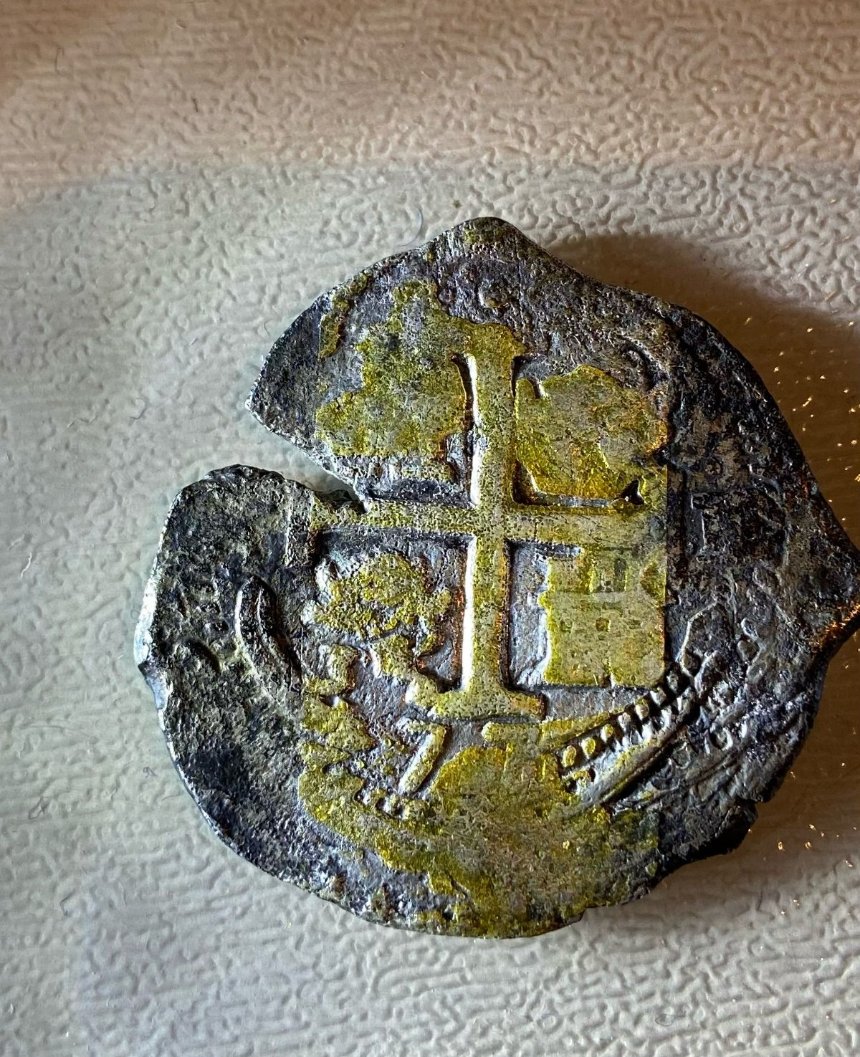 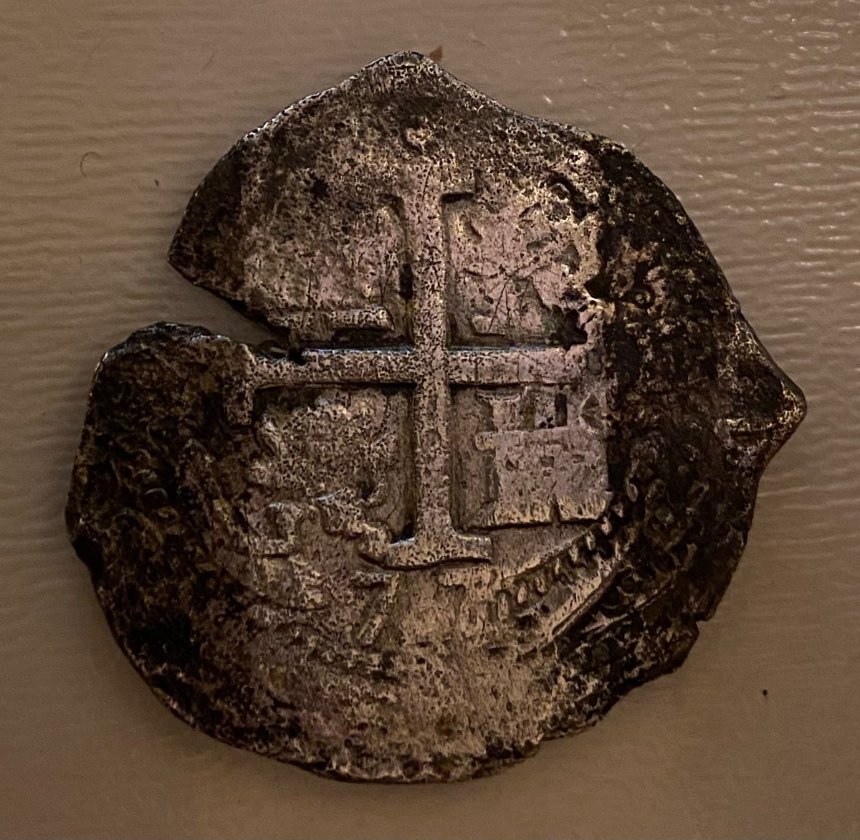 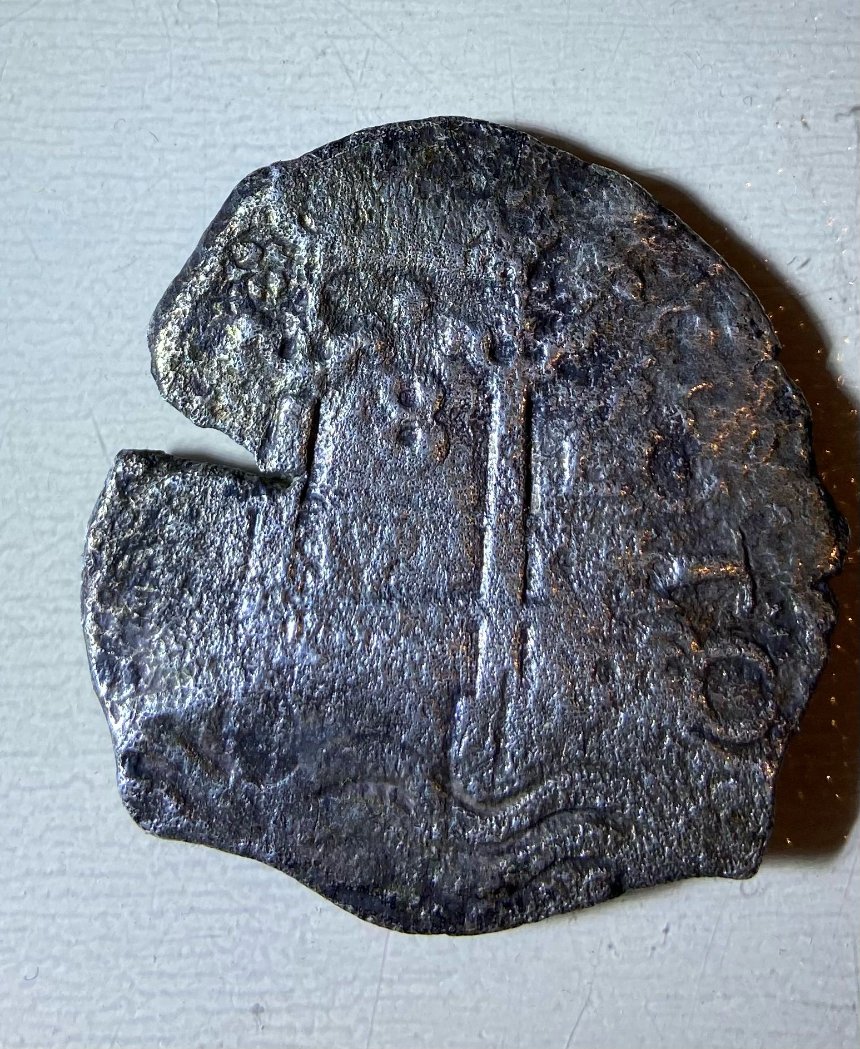 |
|
|
|
Moderator
 United States
34538 Posts |
I don't think that is grime but rather silver tarnish. You could strip off the tarnish and begin the retoning process from an equal footing all around, but my vote is to leave it as is.
"If you climb a good tree, you get a push."
-----Ghanaian proverb
"The danger we all now face is distinguishing between what is authentic and what is performed."
-----King Adz
|
|
Pillar of the Community
United States
2703 Posts |
Looks good after removing the glue! I would leave it alone now.
|
|
Moderator
Australia
16967 Posts |
I'm not entirely sure that "sticky tape damage" is accurate. As a shipwreck coin, it would have originally been cleaned after recovery; the tape would have been placed shortly afterwards. So in effect the tape has "preserved" a piece of how the coin originally looked after restoration; the parts of the coin surrounding the tape have since tarnished/toned.
The result is the same - an unsightly streak across the coin - but the "cause" is the storage conditions of the coin, rather than the actual tape. The "box" and "card" probably contained sulfur, causing the toning.
You could try dipping the coin in tarnish remover, and either leaving it dipped or artificially retoning it. As it always was a "cleaned coin" ever since it was pulled out of the ocean and restored, it probably doesn't really matter either way. But personally, I'd leave it as-is; "being taped to a card" is now part of its history.
Don't say "infinitely" when you mean "very"; otherwise, you'll have no word left when you want to talk about something really infinite. - C. S. Lewis
|
|
Valued Member
 United Kingdom
112 Posts |
Thanks everyone
Sap - I think you are right. It was kept in padded jewellery box and the dark edges where the tape wasn't touching are much darker than what was the underneath side. That would have been more sealed from the air as it was firmly resting on fabric.
And it makes sense too that the tape actually kept it sealed and so that was the original post-wreck cleaned state, before a further 40-50 years of air exposure re-tarnished it.
If you have any links/reports showing the process of cleaning wreck coinage before it's sold I'd be interested to see them.
|
|
Pillar of the Community
United States
3357 Posts |
For what it's worth, here's a side by side of 2 Potosi 4 reales, probably from Seville Harbor recovery, and bought on the cheap. I cleaned the one on the right with kitchen scouring powder. I like it better than the black one. Considering how much damage these coins received over centuries corroding in the mud and in recovery, cleaning one of them didn't bother me at all. I doubt that I lowered its value, and I can see the details now.  "Two minutes ago I would have sold my chances for a tired dime." Fred Astaire
Edited by thq
01/05/2022 12:10 pm
|
|
Valued Member
United Kingdom
112 Posts |
Quote:
You could try dipping the coin in tarnish remover, and either leaving it dipped or artificially retoning it. As it always was a "cleaned coin" ever since it was pulled out of the ocean and restored, it probably doesn't really matter either way. UPDATE (WRITTEN AFTER WRITING THE BIT BELOW): On re-examination, I noticed that the dark strips were a bit sticky too. So I got out the acetone again and something dark dissolved onto my cleaning cloth. The result is that obscured detail has been revealed and the difference between the two areas is far less noticeable. I don't think any further action is needed. The different shading is still there but I can live with this - and its safer to leave it now. SO THIS CAN NOW BE DISREGARDED... I think my view in the light of the above is that 1) as a wreck coin it has been cleaned (aka conserved/restored) already after 280 years on the sea bed - there is no original patina to destroy. 2) the difference between the taped bit and the dark sides is much more pronounced in reality than it seems in my photo. It's quite disturbing to look at 3) I'm not going to sell it and can see myself holding on to it for decades (during which it will tarnish gradually anyway) 4) It would be more enjoyable to own if I did safely bring the dark strips on either side back to being closer to the centre taped portion. Under normal circumstances I would never consider this (I still have a piece of furniture I ruined in my youth trying to improve the top colour!) but I think this is an exception. So... how? The aluminum foil/baking powder method (I don't have all the details) or just a quick dip in tarnish remover. I've read that the former reconverts the silver tarnish to pure silver rather than takes it off which the latter does - though once for a few minutes probably won't matter. Edited by gerio2
01/05/2022 1:25 pm
|
|
Valued Member
United Kingdom
112 Posts |
Quote:
For what it's worth, here's a side by side of 2 Potosi 4 reales, probably from Seville Harbor recovery, and bought on the cheap. Thanks. Makes sense. |
|
Pillar of the Community
 United States
8038 Posts |
In my opinion, either a chemical method (tarnish remover) or an electrochemical method (reduction by aluminum) is likely to leave a difference between the two areas, unless you take it all the way down to bright, white silver or close to it. You can do the experiment and hopefully prove me wrong, but I would leave it. I have a lot of 16th and 17th century coins that have been cleaned all the way to silvery, and it looks very artificial (especially on a coin that is worn or crudely struck) Humorous edit: Here's a thought  : put a small piece of tape over the lightened central area to protect it while you clean the dark area around it  Edited by tdziemia
01/06/2022 10:24 am
|
|
Valued Member
United Kingdom
112 Posts |
Quote:
Humorous edit: Here's a thought... HAHA yes, I could... I'm quite content to leave it now. I don't know what the sticky stuff was on the dark strips but acetone took enough of that off to reveal the detail it obscured and although there's still a difference visible, it's quite good enough for me. I just saw a slabbed one on ebay - obviously completely stripped, bright shiny & new. It looked so unnatural. |
|
Moderator
United States
34538 Posts |
Quote:
The result is that obscured detail has been revealed and the difference between the two areas is far less noticeable. Any chance of you closing the loop and posting final pics? I'd love to see the coin in all its glory. Thx! "If you climb a good tree, you get a push."
-----Ghanaian proverb
"The danger we all now face is distinguishing between what is authentic and what is performed."
-----King Adz
|
|
Pillar of the Community
United States
2703 Posts |
Quote:
I'd love to see the coin in all its glory. indeed  |
| |
Replies: 11 / Views: 1,271 |
|







 Posted 01/04/2022 8:05 pm





