| Author |
 Replies: 16 / Views: 5,273 Replies: 16 / Views: 5,273 |
|
Pillar of the Community
Canada
1166 Posts |
I found a 2001 nickel while searching coin rolls and the background on both the obverse and reverse appears to be a matte or frosted finish, as opposed to the high gloss normally found. What would this be? I checked the Charlton Coins 2009 and couldn't find any mention of this type finish. Need your help, please.
|
|
|
|
Pillar of the Community
Canada
1082 Posts |
This is likely from the Prestige Proof Set, if it is as you say it is. The coins in them are double struck on mirror-like planchets, and the relief is frosted. I'll try and post a picture of what they look like tomorrow morning.
|
|
Pillar of the Community
 Canada
1166 Posts |
Here's a quick pic. I'll try to shoot a couple after work today that shows a side by side with a normal one. 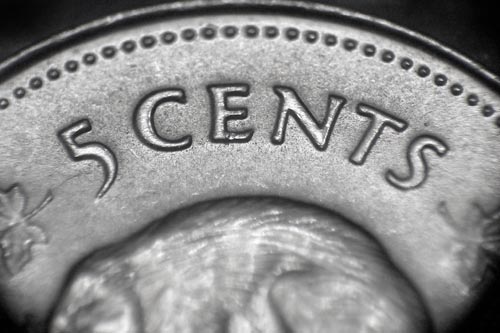 |
|
Pillar of the Community
Canada
1166 Posts |
Here's a side by side with a "normal" nickel: 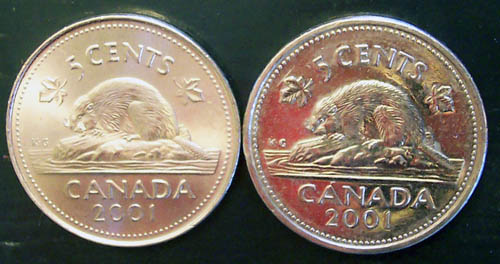 |
|
Valued Member
United States
324 Posts |
I have seen this on occasion before, and the only thing I can figure is that the matte surface came from the blank itself (as part of the metal preparation/rolling process). This is a rare find. Such coins have yet to trade - possibly due to lack of awareness.
|
|
Pillar of the Community
Canada
1082 Posts |
Here's that picture I promised you. You can see how everything on the field that is raised is frosted. The rest of the coin has a mirror-like finish. 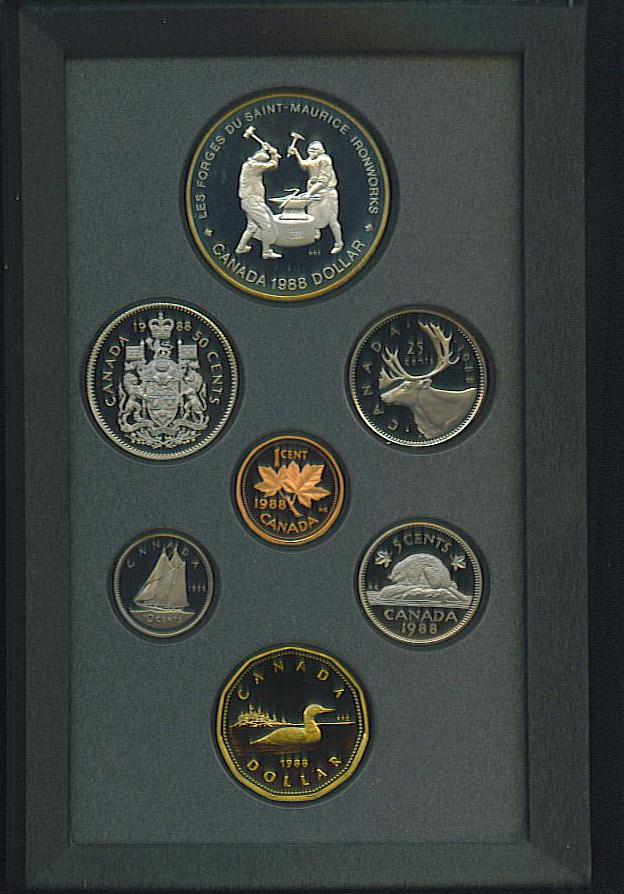 It looks like you were talking about something different -- a coin where everything is "dull", rather than "frosted". I have seen these in circulation also, but I never thought anything about them, assuming that they had gotten dull through exposure to something. I would suggest that the panchet wasn't polished before striking, perhaps. Nothing else makes any sense -- unless the mint is trying out new alloys they're not telling anyone about. Is it a regular 2001 or a 2001P? Edited by WpgLwr
01/27/2009 5:49 pm
|
|
Pillar of the Community
Canada
1166 Posts |
2001 P. When I had come across this type before, I assumed it was wear. I have been at this (coin collecting)only a couple of months and didn't know any better. This particular one made me stop and realize that I've only seen one or two of these before and this one is in very good condition meaning this was minted this way and not a form of damage from wear or abuse. It resembles the finish on some of the Roosevelt dimes that I've seen except that the frosting is much finer on the Canadian nickel. Anyway, I'm saving this one and any others I find. I've gone through about 200 rolls and I think I've seen this maybe two times before. Wish I had hung on to them. |
|
Pillar of the Community
Canada
1082 Posts |
Maybe I should start hanging onto them too; I've seen them, so maybe I should.
I'll raise the issue with a couple of dealers I know at the Charterhouse coin bourse on 8 February -- maybe they know something about it. I doubt that anyone at the Mint would be able to be helpful.
|
|
Pillar of the Community
Canada
1166 Posts |
Thanks, I'd appreciate that.
|
|
Pillar of the Community
Canada
4227 Posts |
It's funny, I have seen it before, but only a couple times at most and I'm pretty certain I've only seen it on the 5 cent piece. I wish I'd have saved mine too.
|
|
Pillar of the Community
Canada
1166 Posts |
I sent the pic to Ken Potter and asked him about the nickel. He wasn't aware of it and is interested in what I can find out about it.
I'll take it to the Charterhouse on the 8th. Been years since I've been there.
|
|
Pillar of the Community
Canada
617 Posts |
Is there a difference between the coins a proof set and a specimen set as far as the quality of the strike and the coin itself is concerned ?
|
|
Pillar of the Community
Canada
650 Posts |
I was thinking it could be from a specimen set they have a brushed look compared to circulation?
|
|
Valued Member
Canada
304 Posts |
Definitely not from a specimen set or any sort of mint error; I've gone through 50,000 nickels since last August and found the "shiny" or matte finished 2001 quite often. My theory is the RCM was experimenting with plating technologies around that time and this type was probably produced in the millions. Officially there were 30 million cupro-nickel (not magnetic, .750 copper, .250 nickel) and 137 million nickel-and-copper-plated steel (magnetic, .945 steel, .035 copper, .020 nickel) nickels produced that year. But there are two finishes on the "p" coin, matte and glossy, and I would guess the ratio to be around 30-70 based on the numbers of each I saw in several hundred 2001's. I am constantly surprised at how the 2001 matte coins hold up; they stay shiny and new-looking much longer than the glossy ones. They are much more attractive after 8 years in circulation than most glossy nickels made after 2001. After 2001 there were no more matte-type "P" nickels so one could conclude the RCM found it was more cost effective to produce the glossy variety. |
|
Pillar of the Community
Canada
1166 Posts |
Thanks for the info! You're right about the condition holding up. I've found another one and with the exception of a couple of minor dings, it's still looks mint. Thought I had a rare one... oh well...the hunt continues  . |
|
Valued Member
Canada
480 Posts |
I would guess that it might be a first strike from a new set of dies that had been prepared for circulation issues, with some sort of cleaning fluid, possibly. I am not sure what is done to coinage dies, but I have been seeing proof-like coinage with frosted letters, and brilliant designs, and even some 50 cents with frosted letters, date, and motto ribbon, and brilliant or light cameo design, sometimes both light cameo and brilliant on diferent parts of the same design. I am still wondering how it is all done.
|
| |
Replies: 16 / Views: 5,273 |







 Posted 01/27/2009 08:22 am





