Quote:
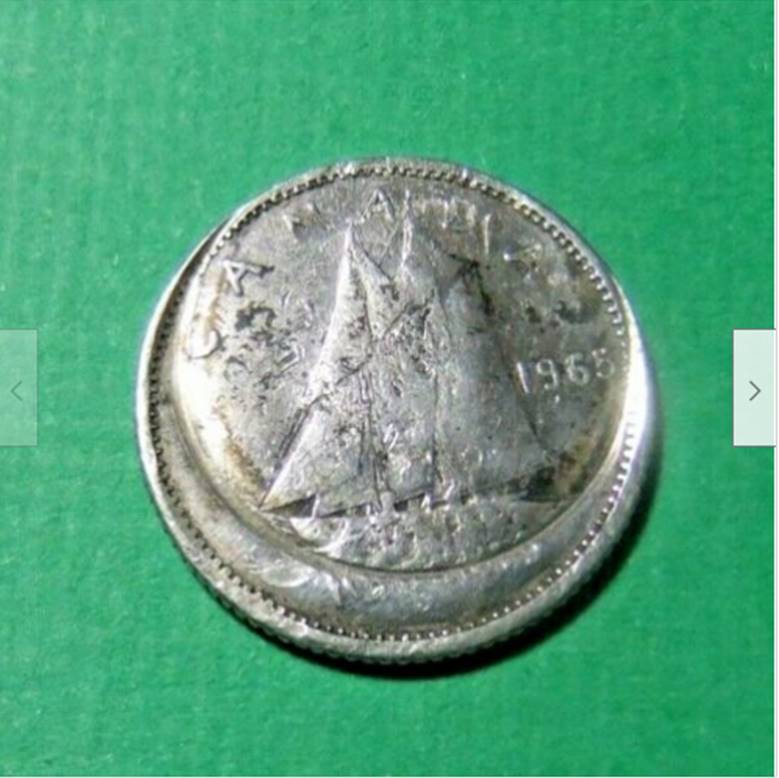
I've often thought that coins like this were used at one point in restaurants to level out the legs on a rickety table or chair.
This is possible - and I have seen so-called-errors where this is very obviously the cause - though if a coin were the only piece of metal handily available for such a "throwaway" purpose, one would logically have tried to use the lowest face value handy. Why waste a whole dime, when a cent would work just as well? Further, the other side also seems to have an indented ring - which is almost always the sign that multiple coins have been stacked together in the hopes of creating just such a "vise job".
Still, it is worth remembering that not all "fake errors" out there on Facebook,
ebay etc are intentionally fraudulent. Coins have weird things happen to them all the time that deform them purely by accident, and if a non-collector (or a keen-but-clueless amateur) happens to stumble upon such a deformed coin, they can readily assume it is some kind of error and they get carried away by the "errors are valuable!!!1!"
ebay tide.
I doubt that a seller of such items is going to pay attention to someone politely telling them their error isn't real. Either they already know it isn't real (because they made it themselves) or they're part of the "keen but clueless" squad - in which case, why should they believe you? They've got lots of friends who would disagree with you that it's just "worthless junk" and would be prepared to pay for such "errors", so you're outvoted.
And while selling actual fake coins on
ebay is against policy, selling fake errors is a grey area. As long as the coin itself is genuine, there's nothing
ebay can do about it.
Don't say "infinitely" when you mean "very"; otherwise, you'll have no word left when you want to talk about something really infinite. - C. S. Lewis










 Posted 01/25/2022 5:15 pm