In March 1940. Joint Resolutions were introduced in the House and Senate proposing a commemorative half dollar be struck "to indicate the interest of the Government of the United States in the ideals and purposes of the Golden Gate International Exposition to be continued in 1940 and to authorize the issue of such coins to the San Francisco Bay Exposition sponsoring said international exposition..."
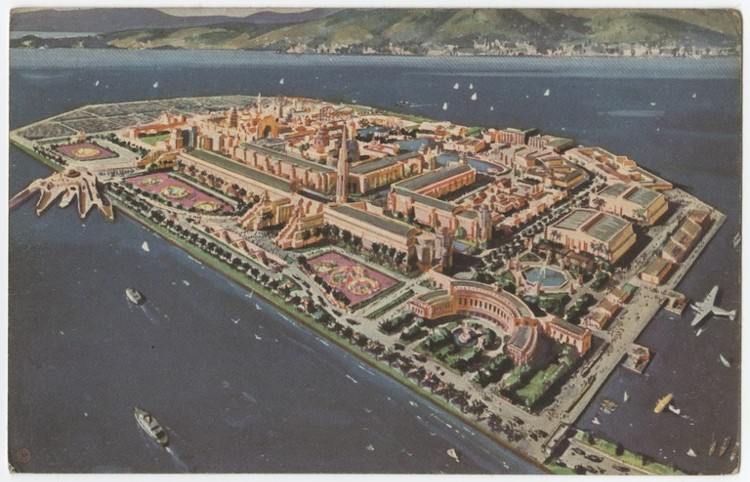
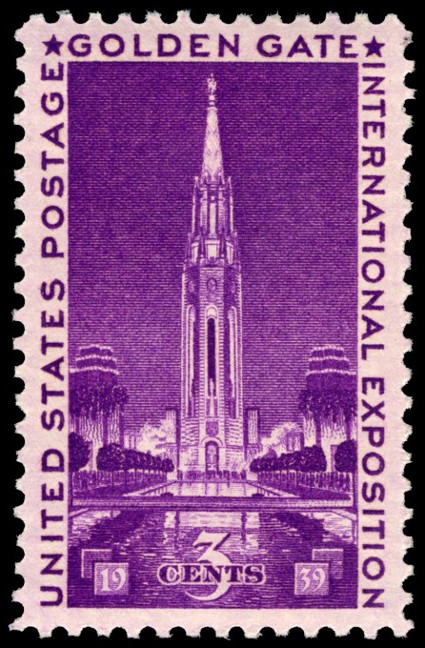
The Golden Gate International Exposition was staged in San Francisco in 1939 and 1940. The Exposition was staged on Treasure Island, a 400-acre, man-made island created specifically for the Exposition (it would later become an airport). It ran from February 18, 1939 through October 29, 1939, and then again from May 25, 1940 through September 29, 1940. The Daily admission fee was %0.50 for adults and $0.25 for kids (ages 5 to 12). In all, 15.63 million people paid to attend the Exposition, plus approximately 1.5 million employees/Exposition participants each year. The Exposition got its international "flavor" from the participation of 23 nations plus four colonies in 1939 and 22 nations plus five colonies in 1940 (the mix was different between the years; not all countries participated both years).
San Francisco Bay Exposition, Inc. was the sponsor of the bill that briefly competed with the Bay Bridge bill that was eventually approved in 1936. The Exposition, Inc. bill looked to commemorate the opening of the San Francisco-Oakland Bay Bride AND the Golden Gate Bridge - it was the "better" bill of the two proposed in 1936, but never received Senate support.
The 1940 Resolutions called for the minting of up to one million (!) silver half dollars of standard specifications; no restriction was placed on the number of Mint facilities that could be used for minting the coins. The Resolutions did specify that the coins would all be dated "1940" regardless of when minted, and that orders for the coins could only be placed in batches of 25,000 or more. Also specified was that "no such coins shall be issued after the expiration of one year after July 1, 1940." Thus, collectors would have been largely protected from abuse but would have had the opportunity to assemble three-coin P/D/S sets!
Neither Resolution was reported out of its respective Committee, and so was never considered by its given chamber. I believe the bill would have received more serious attention if it had been introduced in 1938 or early 1939, prior to the opening of the Exposition. By being introduced in Q1 1940, it was unlikely the first batch of coins could have been designed, reviewed, approved, struck and delivered before mid-year. Considering the Exposition was open from May 25, 1940 through September 29, 1940, not much time would have been available for coin sales at the Exposition.
Whereas the Exposition company's initial, though unsuccessful, commemorative bill in 1936 demonstrated proactive planning ahead of the GGIE, sponsoring legislation in 1940 - the second year of the GGIE - smacks of being an after-thought intended as a money grab (especially considering that an official medal was produced in 1939).
For other of my posts about commemorative coins and medals, including more What If? stories, check out:
Commems Collection. 






 Posted 02/18/2022 12:16 pm