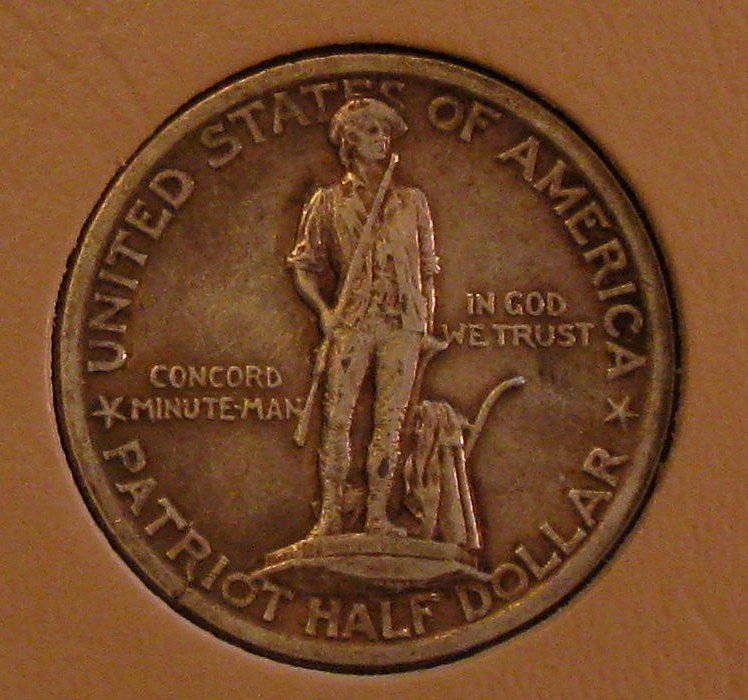
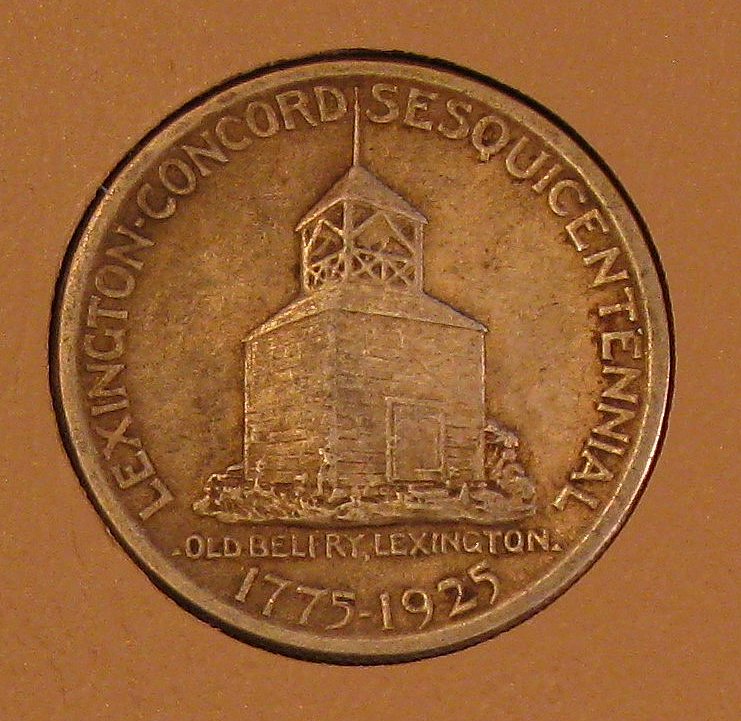
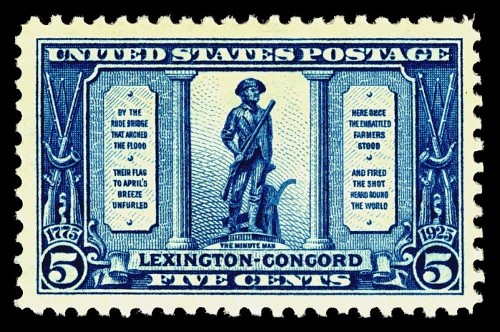
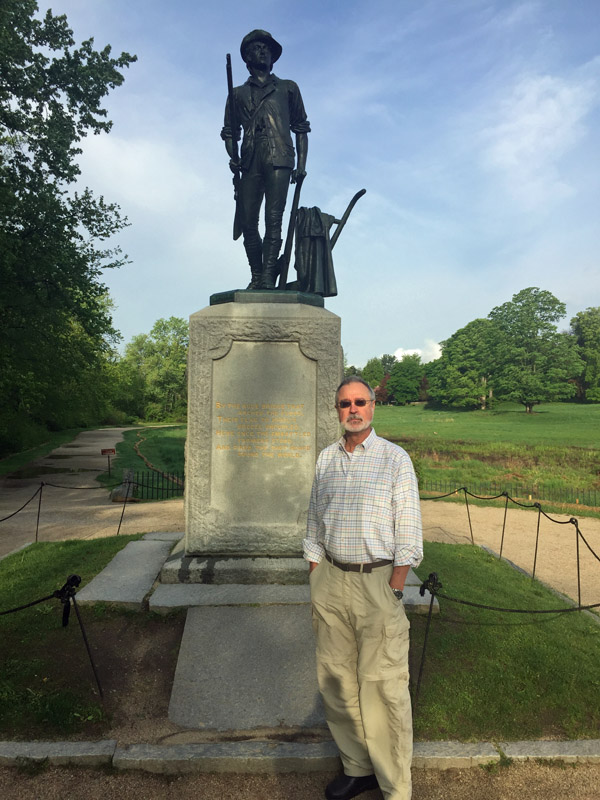
The 1925 Lexington-Concord Sesquicentennial Half Dollar came about as a result of a Public Resolution who's primary objective was to secure participation by the US Government in the 150th anniversary celebrations being planned for the Battles of Lexington and Concord (Massachusetts). Companion House Joint Resolutions were introduced by Representative John Jacob Rogers (R-MA) representing Massachusetts' 5th Congressional District (which included Concord), Representative Frederick William Dallinger (R-MA), representing the 8th Congressional District (which included Lexington) and Representative Robert Luce (R-MA), representing the nearby 13th district.
The Resolutions' titles stated their purpose as "Establishing a commission for the participation of the United States in the observance of the one hundred and fiftieth anniversary of the Battle of Lexington and Concord, authorizing an appropriation to be utilized in connection with such observance, and for other purposes." The commemorative half dollar fell under "other purposes."
A Hearing was held on the Resolutions by the Committee on the Library, during which Representative Rogers stated, "the committees of Concord and Lexington are functioning in liaison with each other, but there is no intention to have a merger of the celebration. There will be two organizations and two sets of events, one in Lexington and one in Concord. Mr. Dallinger [the other Massachusetts Representative who introduced a Joint Resolution calling for the Commission] and I have felt - and I think I can safely speak for the Concord committee in this same direction - that the participation on the part of the United States in the celebration ought to be an equal participation with both towns. This is a single event from the standpoint of the United States."
So, it's clear that while the two communities were cooperating on plans for their shared Sesquicentennial, each was planning on staging its own celebration.
So as not to "play favorites," the District-neutral Joint Resolution of Mr. Luce moved forward in the House (and, eventually, the Senate), It was reported out of Committee favorably, and the Resolution was sent to the Senate for consideration. It was reviewed and reported favorably by the Committee on Appropriations without amendment, and subsequently passed by the Senate without debate.
The Resolution was examined and signed in each chamber and then presented to the President. President Calvin Coolidge signed the Resolution into law on January 14, 1925.
(Side Note: Representative John J. Rogers died while in office, on March 28, 1925 - just two and one-half months after the Joint Resolution was approved and became Public Resolution 68-43. He was succeeded in the House by his wife, who was elected to 18 consecutive terms! Unfortunately, John Jacob Rogers did not live to see the August commemorative celebrations in Lexington-Concord.)How did the parallel celebration Committees impact the coin?
The Committee for each town is known to have desired a commemorative coin and had begun initial work along such lines. The Concord Committee selected a depiction of Daniel Chester French's "The Minute Man" statue for its side of the coin, while the Lexington Committee went with a depiction of the famous belfry (bell tower) that was used to call the local minute men to assemble in order to prepare for the advancing British.
The Lexington Committee and Concord Committee worked together to identify a qualified sculptor for their coin, in the end, they selected Chester Beach. Beach charged $1,250 for his work; the payment for his services was equally divided between the Lexington and Concord Committees, with each paying $625. Committee documents indicate that the local Committees agreed to request an initial order of 100,000 half dollars, though the Mint struck 150,000 coins in April, 1925 and an additional 12,000 in May (neither figure includes the additional coins struck for assay). The authorized maximum mintage for the coin was set at 300,000.
The Lexington-Concord Sesquicentennial Half Dollar has a novel place among the US commemorative coins of the classic era: it was the result of two independent groups working separately and together to achieve a common goal. Each Committee was able to secure a design meaningful to its town and people, while simultaneously being supplemented by a design that helped tell the story of the overall event being commemorated. Kudos to the Committees!
1925 Battle of Lexington-Concord Sesquicentennial Half Dollar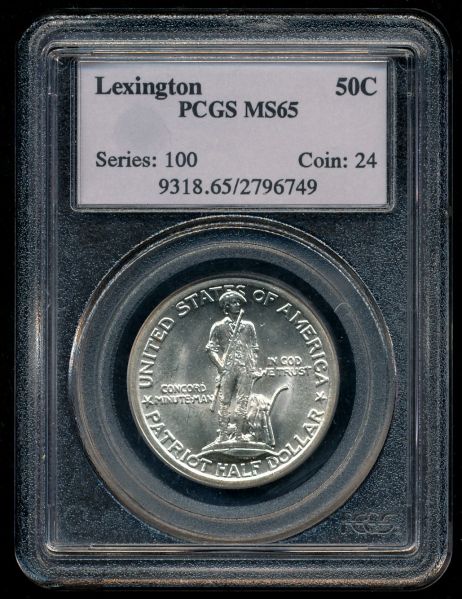

For more on the Joint Resolutions referenced above, see:
-
1925 Battle Of Lexington-Concord Sesquicentennial - Origin StoryFor a look at the other US commemorative coins authorized via Resolution vs. Bill, see:
-
Resolution vs. BillFor other of my posts about commemorative coins and medals, including more on the history of the Lexington-Concord half dollar, see:
Commems Collection.



 Posted 06/01/2022 09:32 am