| Author |
 Replies: 12 / Views: 4,722 Replies: 12 / Views: 4,722 |
|
|
Pillar of the Community
Russian Federation
1561 Posts |
Does anyone know of ways to remove the bends from banknotes that appeared as a result of carrying in a wallet?
I have several banknotes of Thailand and plastic banknotes of Singapore and they have been in circulation. How to restore them ?
Now they are lying under two very thick books.
|
|
|
|
Bedrock of the Community
United States
94367 Posts |
Are you talking about folds and creases when you say "bends"?
|
|
Pillar of the Community
 Russian Federation
1561 Posts |
Yes, it is about them. The bends that appear due to the use.
|
|
Bedrock of the Community
United States
94367 Posts |
Without a pic or two it's difficult to say, but if the notes are fully creased, then even ironing will unlikely remove evidence of them.
|
|
Pillar of the Community
Russian Federation
1561 Posts |
I hope these photos will help 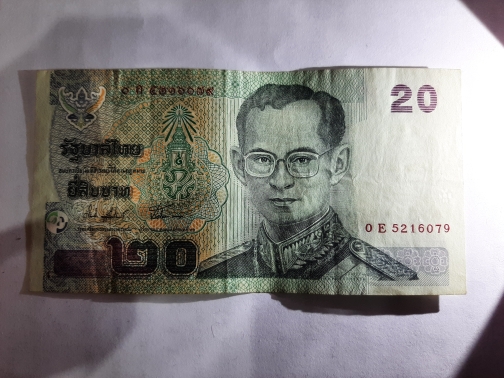 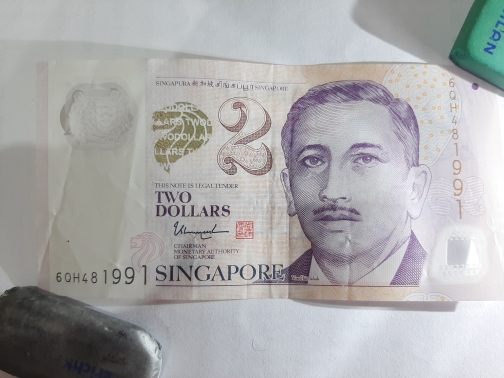 |
|
Pillar of the Community
Canada
1563 Posts |
Once the fibers of the material used for banknotes has been bent or folded so far that it breaks, it is broken for good and impossible to correct the problem.
|
|
Moderator
 Australia
17037 Posts |
Attempting to "restore" a creased and folded banknote is considered a "bad thing" amongst banknote collectors; it is equivalent to the harsh "cleaning" of a coin. The basic problem with cleaned coins and ironed notes is the same: the Law of Entropy. You can't actually make an old thing "look like new again", so you shouldn't try.
You can do what you have already done - flattening beneath heavy weights for several weeks, with no heat or industrial pressure applied - but that's about it.
As you have probably already noticed, polymer notes like your Singapore $2 do not "flatten" as easily as paper money. This is something that folks who live in countries with all-polymer banknotes (like Australia and Canada) have to learn to live with, every day. You definitely don't want to be trying anything involving heat on a polymer note; heating them only makes the problem worse and you will end up with a shrivelled, crinkly mess.
Don't say "infinitely" when you mean "very"; otherwise, you'll have no word left when you want to talk about something really infinite. - C. S. Lewis
|
|
Pillar of the Community
United Kingdom
2624 Posts |
I have to say the polymers used in Australian notes seem superior to the British mayerial when it comes to returning somewhat to flat. Once folded the British notes will never lay flat on a surface again, the auatralian stuff seems a little more elastic.
With regards to pressing paper notes it is seen to drop the value but pressed notes may appear nicer in photographs and it is possibly not a hinderance to online sales. This practice can leave notes appearing washed out and the embossing can be destroyed.
My notes sit in rather full albums which might have the effect of lightly pressing, but recommended practice is not to try restoration.
|
|
Bedrock of the Community
United States
94367 Posts |
From what I can see, these are best left alone.
|
|
Pillar of the Community
Russian Federation
1561 Posts |
Thanks for the tips. I have left these banknotes under several layers of thick books so far. In a month I have a long trip ahead of me and on the way I will be at the airport in Moscow and probably exchange this money for rubles. The only problem is that they will give me a very small amount of rubles, especially when exchanging Thai baht. But this is a trifle, the main problem is that I'm just shy and shy of the look of the cashier who will have to exchange for a change of currency and print checks every time, and I'll get about $10 in total.
For reference, I now have : 9 Singapore dollars, 80 baht and 2 Malaysian Ringgit.
The cashier will have to punch different checks for me every time and count everything.Also, the rate at airports is very low.
|
|
Pillar of the Community
United Kingdom
2624 Posts |
I always change minimal amounts at the airport, just to pay for transport onwards. If you take a taxi the taxi drivers often have a fair idea where a good rate can be had (taxi drivers in Russia seemed to hike fares drastically because of my English accent and internet cost me silly money trying to book Yandex which never showed before I hit data/cost limit on my English sim card)
I dealt with some banks in Moscow, I was told I would only need transaction numbers and amounts to verify transfers. Instead I had several pages of cyrillic to deal with and unfriendly cashiers. #1059;#1076;#1072;#1095;#1080;.
|
|
Pillar of the Community
Canada
2662 Posts |
I'm on the same page as @Sap & @Coinfrog on this. When I saw the title of your thread, I was expecting to see a rare Panamanian Balboa in terrible condition (or something old & super tough like that). True rarities sometimes get restored but the value of these almost always goes down. Sometimes misguided collectors will pay to have a rare note restored for various reasons (I won't get into these). The bottom line is that the restoration usually will give the damaged note better eye appeal (but destroys embossing). Often restoration is carried out with the intention to get a higher price for the note but typically, processing a note has the opposite effect (lowers the value) as most collectors avoid them in favour of original items.
However, with your examples, which are common modern notes, you should ask yourself, "why am I collecting these?" Are they keepsakes from your travels? Do they have some kind of sentimental value? If so, great, knock yourself out. (Flatten all you like). But circulated low denominations like that don't need to have their appearance improved: they're nice the way they are. Circulated notes, printed in the 10's or 100's of millions are just not that collectible anyway so you can melt it- and it doesn't really make much difference (except it might be harder to cash in).
Most currency collectors acquire banknotes for 2 reasons: outstanding condition or. That's why there's a premium on great, crisp, UNC notes.
Then there's the globe-trotter collector who saves worn notes found on one's travels. I know many who collect like this. Great! Most of these guys don't care what kind of condition their note is in (they have them as souvenirs of their trips) & great condition isn't a priority.
|
|
Pillar of the Community
Russian Federation
1561 Posts |
I have some tactics. After I arrive in a new country, I immediately go to the local coin store and buy something there. No matter how much it costs, the main factor for me is the price (I should be able to afford it) and the condition, of course it's better in UNC. I buy a few local coins and banknotes, sometimes I manage to fish something out of circulation and now the souvenir is ready. For example: In Indonesia, I managed to exchange new rolls of coins at the cashiers. I was happy. I also went to a local coin store and bought Indonesia 500 rupiah, 1992 and as many as 2 rolls of Indonesia 50 rupiah, 1998 (I opened one and still can't sell these coins, no one wants to buy them). I bought this banknote in South Korea: 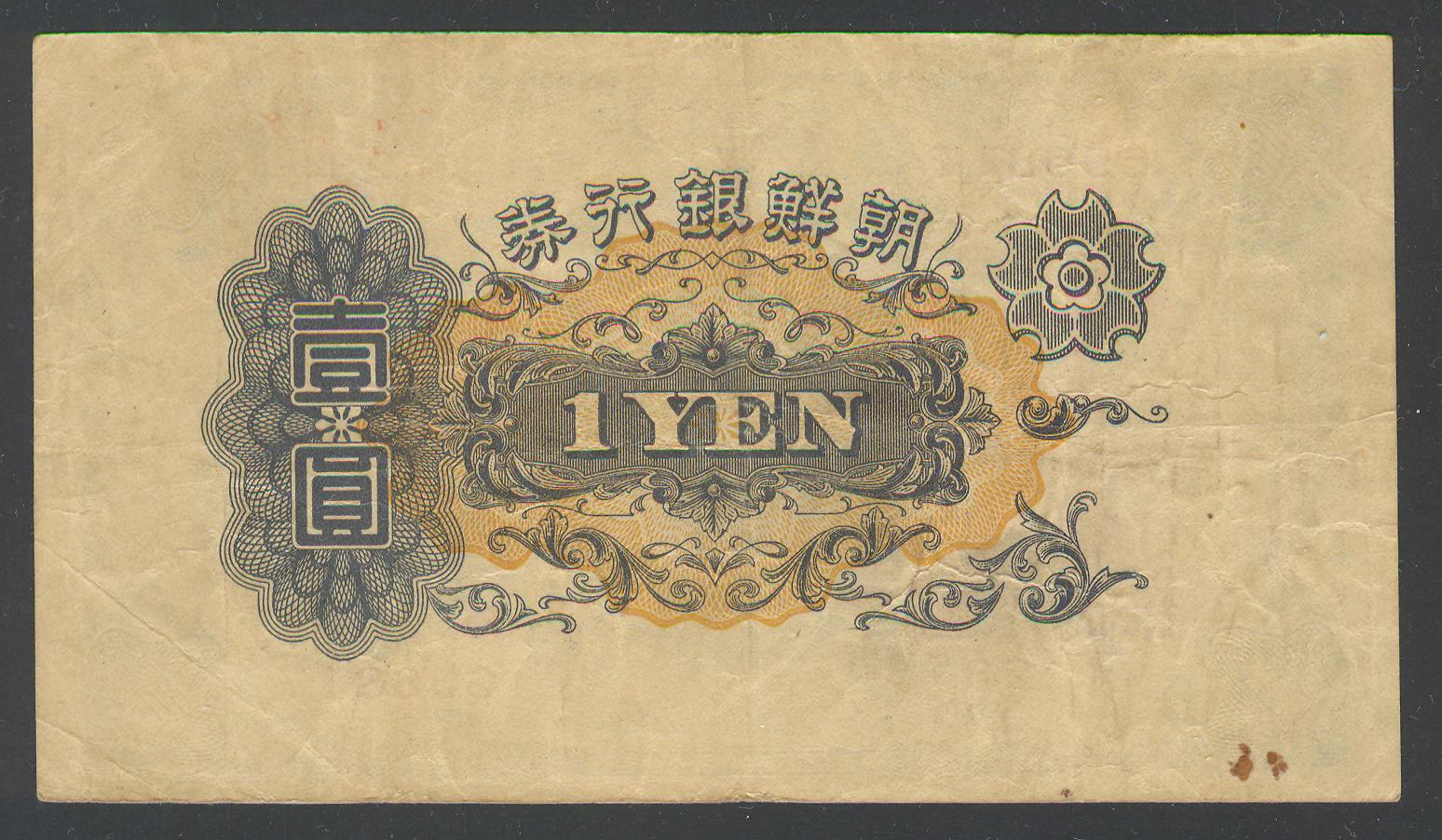 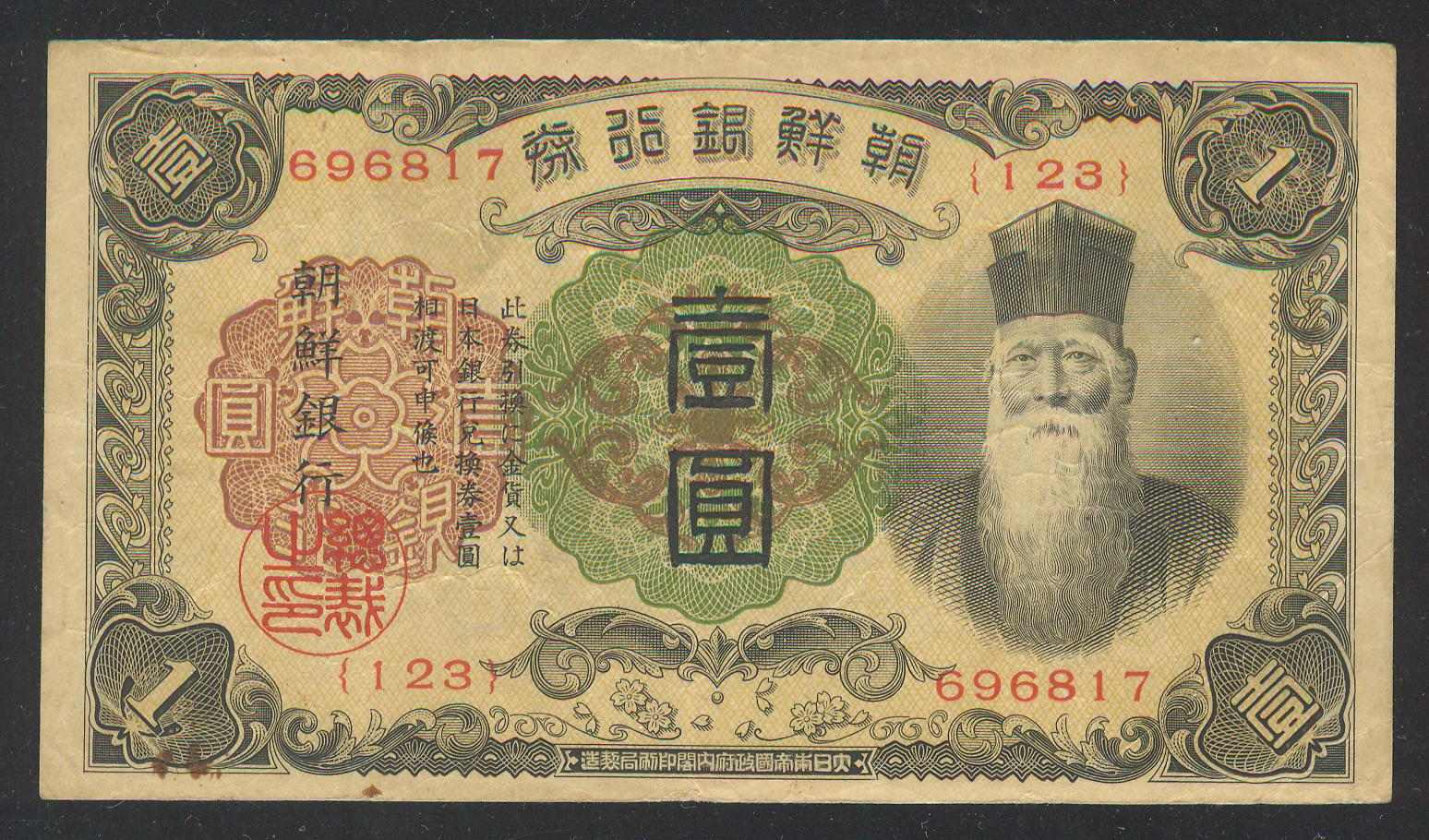 During the 2-3 hours that I stayed at Singapore airport, I managed to exchange a crisp new $5, I also bought 10C rolls at the exchange office. But I still have 5 crumpled dollars and 2 pieces of $2. In Georgia, at a flea market, I also purchased a banknote and collected almost all the coins from circulation, only 1 is missing. But the surpluses, which sometimes happen very much, make me nervous. I have a whole album in South Korea. P.S.Maybe someone wants to exchange for a couple of coins of Indonesia and Korea in exchange for US coins? |
| |
Replies: 12 / Views: 4,722 |
|




 Posted 06/01/2022 09:52 am





