










 Posted 10/09/2022 8:09 pm


ACHAEMENID KINGDOM. PERSIAN SATRAPS.
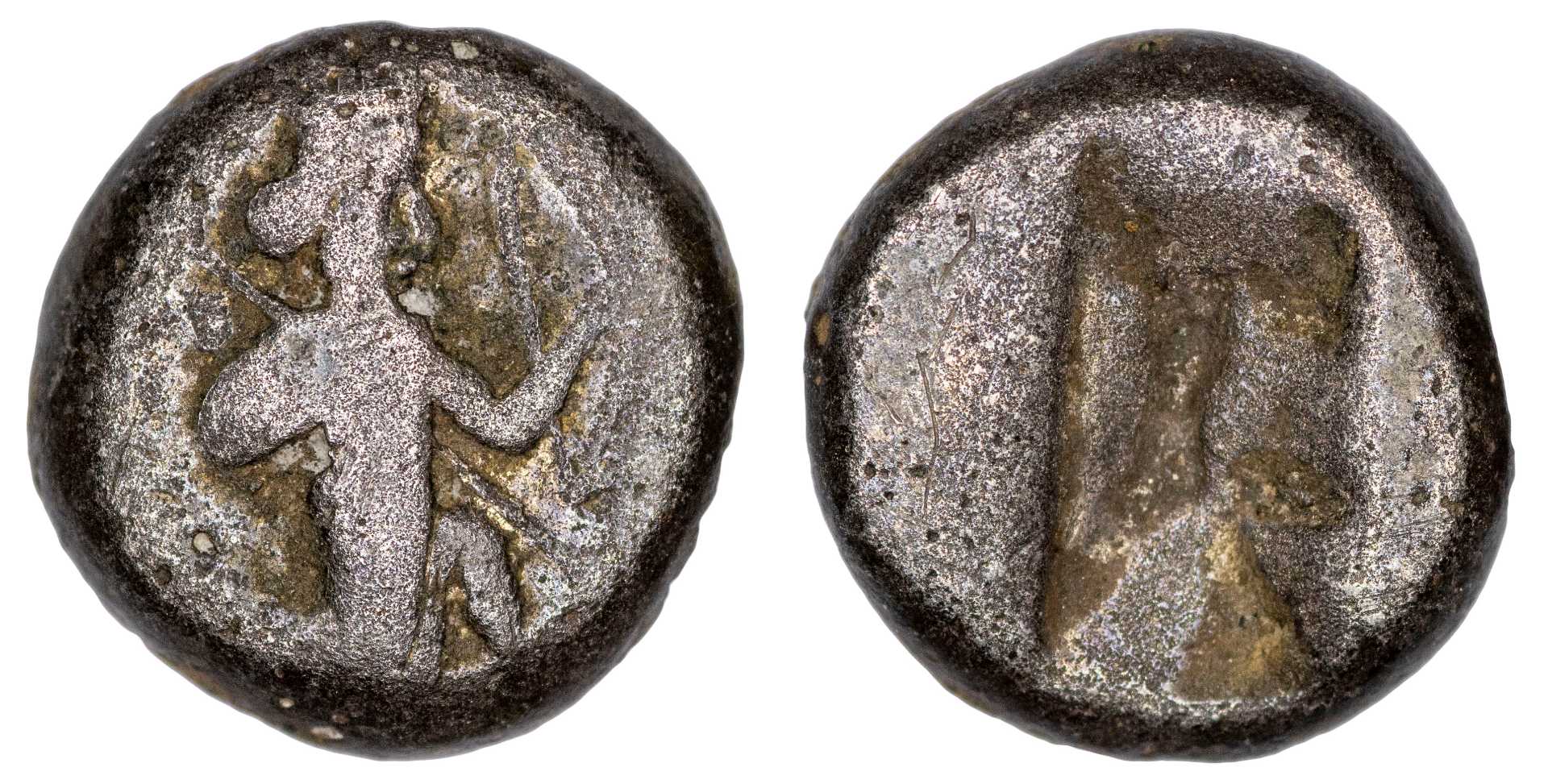
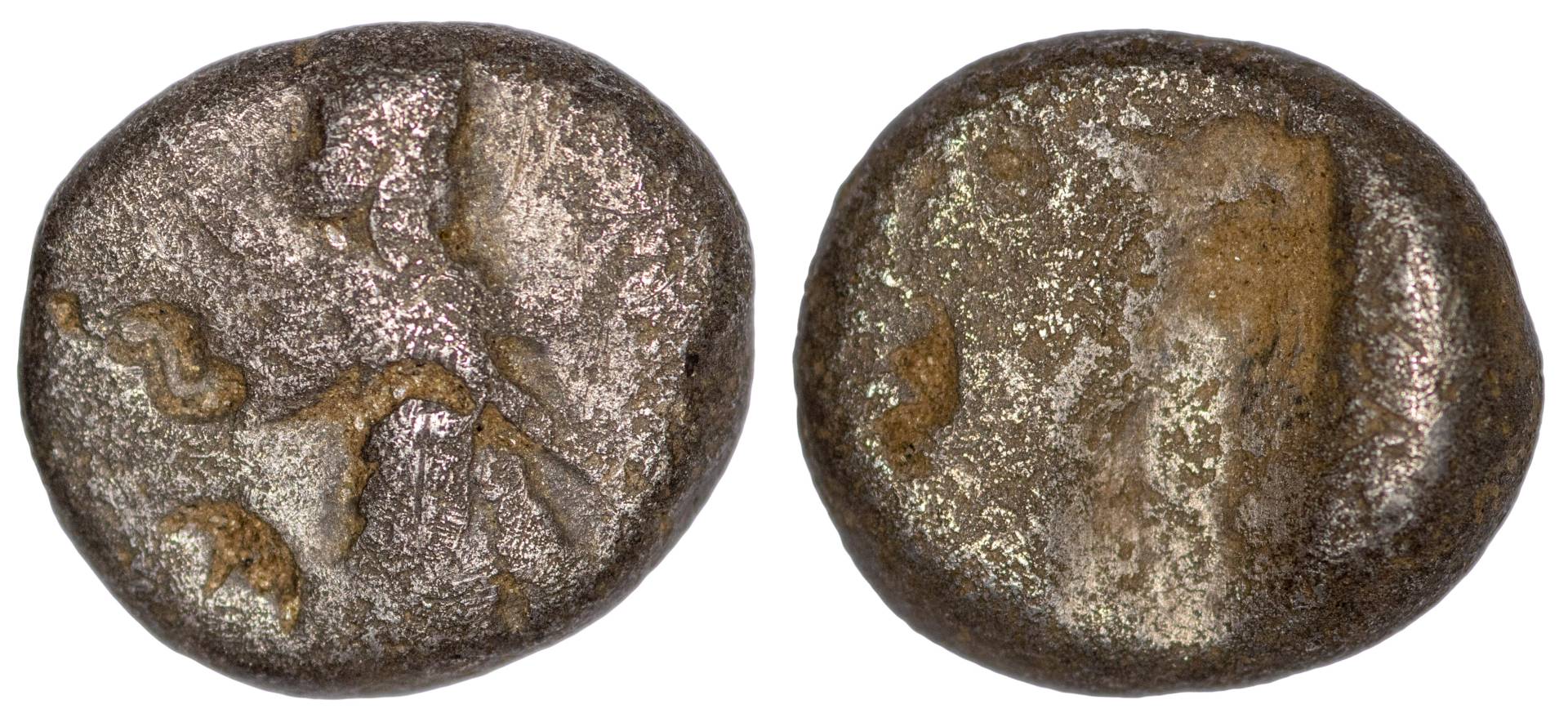
Memnon the Rhodian? Tetradrachm (14.99g). ca. 350 - 333 BC Chr. in Ionia? Obv.: Persian great king with spear and bow. Rev.: Incusum, possibly with the relief map of the hinterland of Ephesos. Traite II, pp. 131, 77 plates 89, 8; Hurter, Pixodaros pl. 32, 34. (var.); Sunrise 70th
R! Dark toning, embossing weaknesses, VF
Ex Collection Gert Cleff, Wuppertal.
Bernhard Weisser recently summarized the state of knowledge on this coinage (Archäologischer Anzeiger 2009, p. 154 ff.). Johnston's interpretation that the ostentatiously designed reverse represents a map of the hinterland of Ephesus is viewed with skepticism today. Apparently the probably Greek die cutter deliberately chose an archaistic design. The attribution to the Persian commander Memnon, which was retained here for the sake of convention, is ultimately arbitrary and probably also stems from the attempt to assign this emergency coinage, which is obvious in terms of its design, to a specific historical personality. However, the typological relationship to the Achaemenid darics and sigloi prompted Mildenberg to to designate these types only as part of the Achaemenid imperial coinage. However, due to the association of this type with coins from the early 4th cent. (Weisser loc. cit.) the running second will probably be corrected upwards again, so that the previously proposed mints Tissaphernes or Pharnabazos are definitely possible again. see: AEM Johnston, The Earliest Preserved Greek Map: A New Ionian Coin Type, JHS 87, 1967, pp. 86-94; L. Mildenberg, On the So-Called Satrapal Coinage, in: O. Casabonne (ed.), Mecanismes et innovations monetaires dans l'Anatolie Achemenide (1977) p. 13; B. Weisser, Archäologischer Anzeiger 2009, p. 154 ff. so that the previously proposed mints Tissaphernes or Pharnabazos are definitely possible again. see: AEM Johnston, The Earliest Preserved Greek Map: A New Ionian Coin Type, JHS 87, 1967, pp. 86-94; L. Mildenberg, On the So-Called Satrapal Coinage, in: O. Casabonne (ed.), Mecanismes et innovations monetaires dans l'Anatolie Achemenide (1977) p. 13; B. Weisser, Archäologischer Anzeiger 2009, p. 154 ff. so that the previously proposed mints Tissaphernes or Pharnabazos are definitely possible again. see: AEM Johnston, The Earliest Preserved Greek Map: A New Ionian Coin Type, JHS 87, 1967, pp. 86-94; L. Mildenberg, On the So-Called Satrapal Coinage, in: O. Casabonne (ed.), Mecanismes et innovations monetaires dans l'Anatolie Achemenide (1977) p. 13; B. Weisser, Archäologischer Anzeiger 2009, p. 154 ff.


