The 1927 Bennington-Vermont half dollar was issued "in commemoration of the one hundred and fiftieth anniversary of the Battle of Bennington and the independence of Vermont." It features a right-facing portrait of Ira Allen on its obverse and a left-facing catamount on its reverse.
Portrait of Ira Allen, Circa 1790s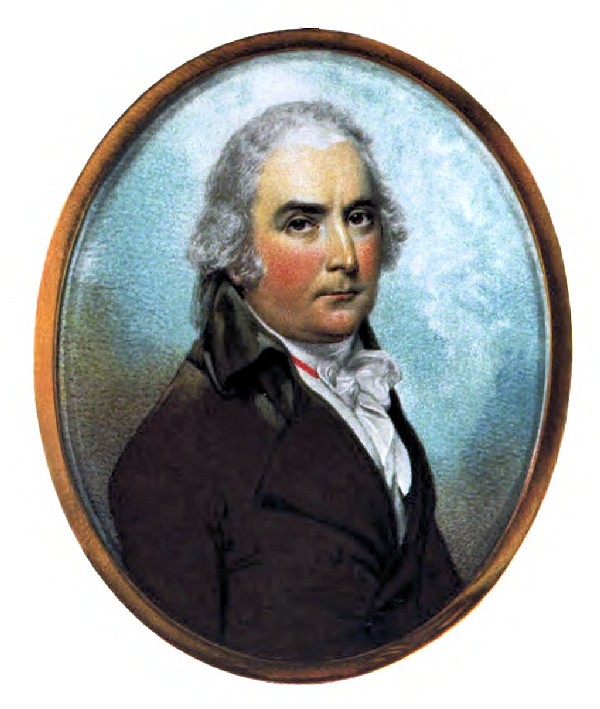 (Image Credit: Wilbur, James Benjamin. Ira Allen, founder of Vermont, 1751-1814. Boston/New York: Houghton Mifflin Company. 1928. Public Domain.)
If proposed today, I wonder if the coin's selection of Allen for the obverse would have passed the "sniff test."
The story certainly begins well...Ira, and his brother Ethan, were key figures in leading Vermont in its fight against the British to achieve independence in 1777. Ira Allen was a member of the Green Mountain Boys, a group of soldiers from Vermont originally formed to fight New York's claims on Vermont, but later a group that fought against the British for the independence of the American Colonies. For his role, Ira is generally referred to as the "Father of Vermont."
Following Vermont's attainment of independence as a Republic, however, things begin to get a bit more questionable. Ira was part of the Vermont Republic's government, serving as its Treasurer from 1778 to 1786. Ira was also a leading member of a group that secretly entered into negotiations with British Canada in 1780 (i.e., the Haldimand Negotiations, after Frederick Haldimand, the Governor-General of Canada) regarding Vermont rejoining the British Empire rather than the fledgling United States. For a variety of reasons, these negotiations did not complete and Vermont continued on as an independent Republic.
Some say the Allen engaged in the discussions with the British to hasten Vermont's admittance into the United States Union as the 14th State, others claim the intent was truly to rejoin the British. To this day, both sides of the argument have proponents.
Far more damning revelations into Allen's "unfriendly-to-the-US" dealings come from records found in French archives regarding clandestine events which initiated in 1796. Allen worked to purchase 20,000 muskets and 24 artillery pieces from the French to ostensibly arm the Vermont militia for protection. In reality, the records indicate that the arms were meant to be used in a revolt in Quebec against the British. The arms were being carried back to Vermont on board the
Olive Branch (ironic, I know) but the ship was stopped by the British and the arms were confiscated.
Though Allen long proclaimed his innocense, the long-lost archive records, written in French, clearly outline his plans to attack the British in Canada, free the predominantly-French Province of Quebec and form the nation of "United Columbia" in union with Vermont. Allen's intent was to maintain the new nation's independence and make it a rival to the US. Records indicate he even designed a flag for the new nation.
United Columbia Flag Designed by Ira Allen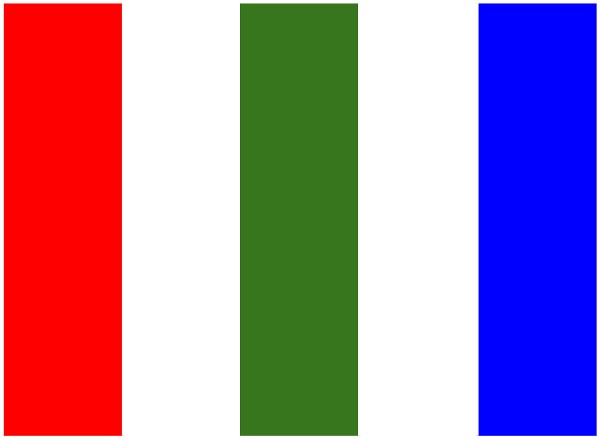 (Image Note: I created this image based on Allen's written description of the flag, and therefore can't assure 100% accuracy in its size ratios.)
The flag was to consist of five vertical stripes: the red, white and blue of France's flag plus green at the center representing Vermont.
Vermont had joined the US Union in 1791, so Allen's efforts, if successful, would have required Vermont to secede from the Union. Allen was unsuccessful, however, to get the people of Vermont to revolt and form a new nation with Quebec, so Vermont continued on as the 14th State. It's hard to imagine that there would be a 1927 Battle of Bennington-Vermont Independence Sesquicentennial half dollar if Ira Allen had succeeded with his United Columbia efforts!
1927 Battle of Bennington-Vermont Independence Sesquicentennial Half Dollar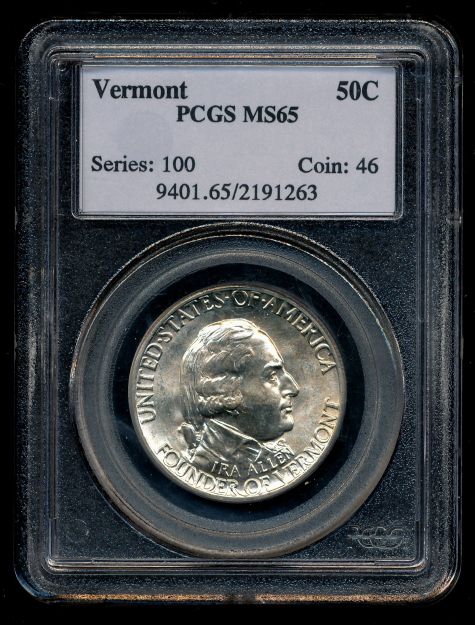

For other of my posts about commemorative coins and medals, including more on the history of the Bennington-Vermont half dollar, see:
Commems Collection.





 Posted 07/18/2022 4:51 pm





