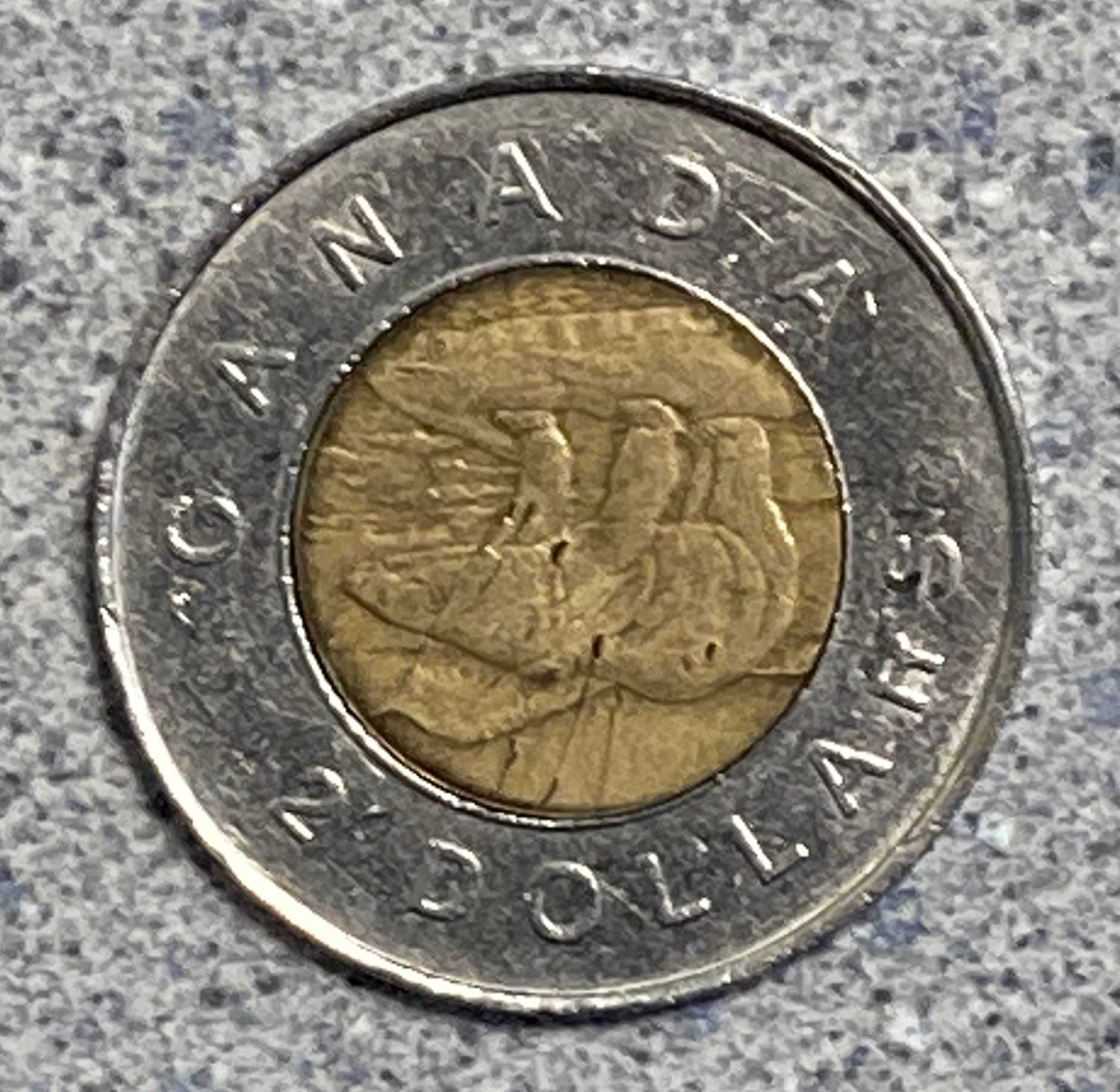
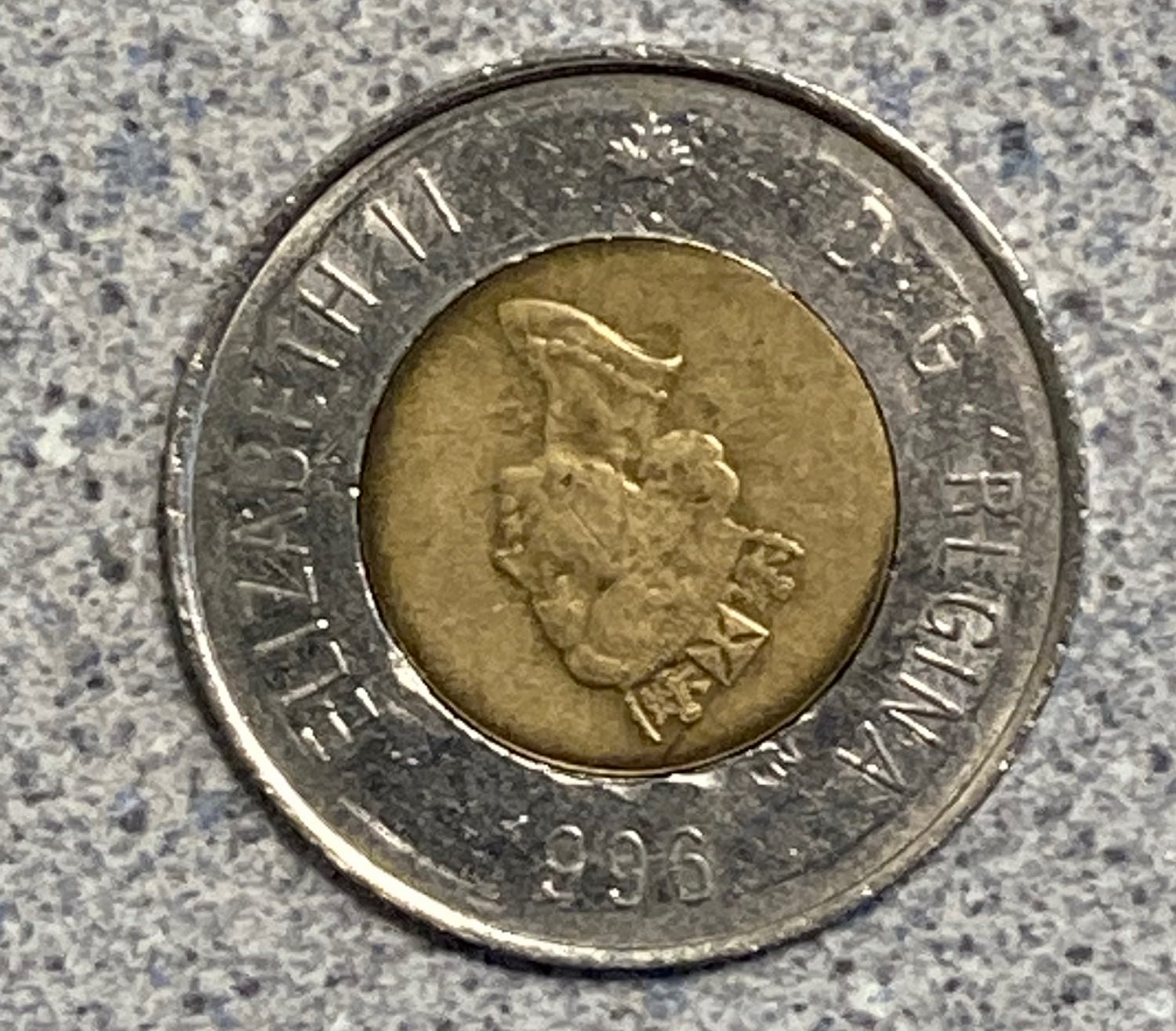
Yep, it's a pop-out. Not a mint error.Was quite the fashionable thing to do to toonies back when they were first introduced.
When a bimetallic coin is made, the two halves are not produced separately. The core and ring are combined before the coin is struck, then both core and ring are struck at the same time, by a single solid die that has no rotating parts. In effect, the bimetallic planchet is treated as if it were a single solid piece of metal. As such, a "rotated core" cannot happen as a result of a mint error, only by post-strike rotation. And, since actually rotating the core while it's sitting inside the ring is really really hard to do, it's much more likely to have been achieved by popping the core out, then pushing it back in again.
I don't even think heat was used in this example; you can see the dugouts and scratches on the inner rim of the ring, above the date, where someone's hacked away at it with somethign sharp and pointy, trying to get the core out. So it's fair to say that this was no accident.
Don't say "infinitely" when you mean "very"; otherwise, you'll have no word left when you want to talk about something really infinite. - C. S. Lewis











 Posted 08/02/2022 7:36 pm


