| Author |
 Replies: 16 / Views: 2,437 Replies: 16 / Views: 2,437 |
|
Valued Member
United States
169 Posts |
Edited by surfacewave
08/05/2022 6:47 pm
|
|
|
|
Pillar of the Community
United States
1147 Posts |
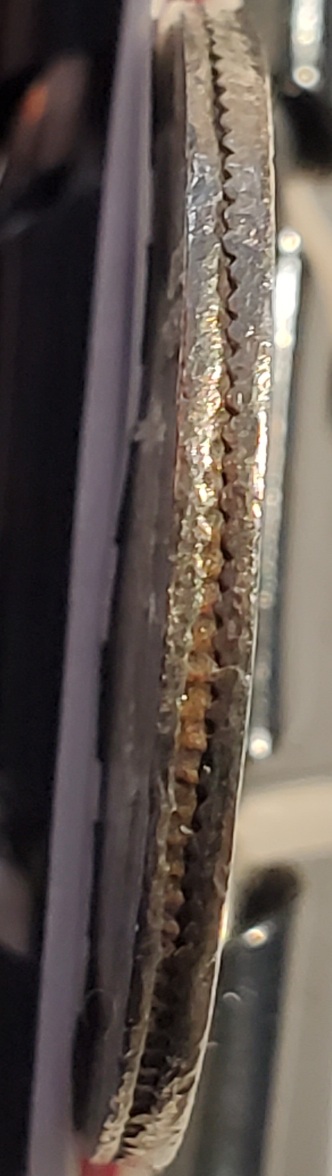
I don't believe the rim was struck that way but has metal wear over time causing metal movement. Something that would happen from being rolled on it's edge such as a dryer could have caused this.
Edited by cointagous
08/05/2022 6:43 pm
|
|
Pillar of the Community
United States
4846 Posts |
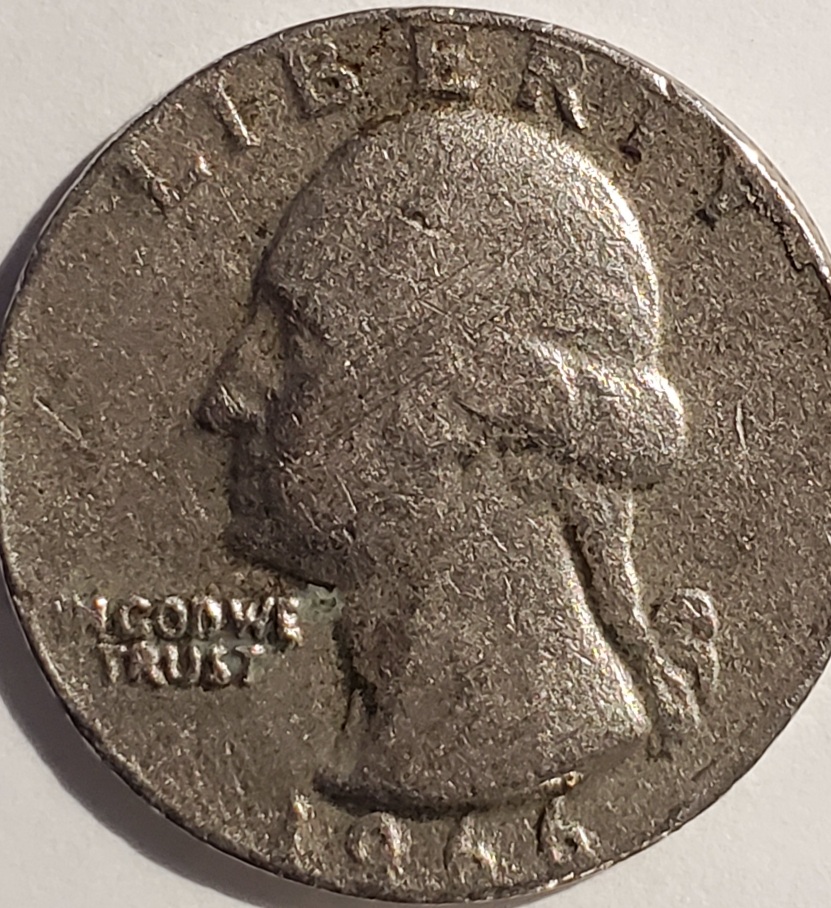
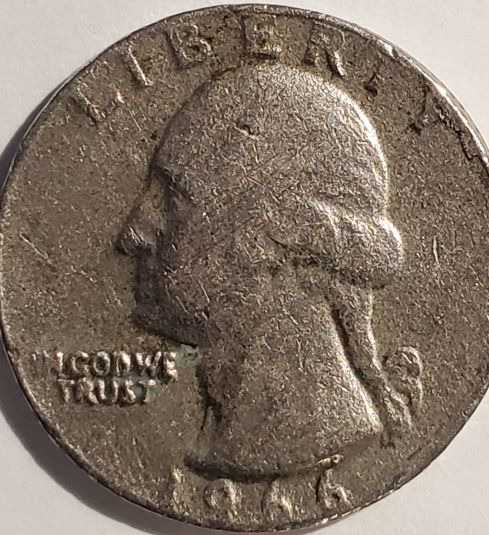
This coin was buried in acidic soil for some time. The acid ate away at the copper more than it did the nickel, so the copper core receded into the coin quicker than the nickel did.
|
|
Pillar of the Community
United States
4136 Posts |
i agree with some sort of acid being in ground or type material.
|
|
Bedrock of the Community
United States
62064 Posts |
The clamshells look more like these coins: 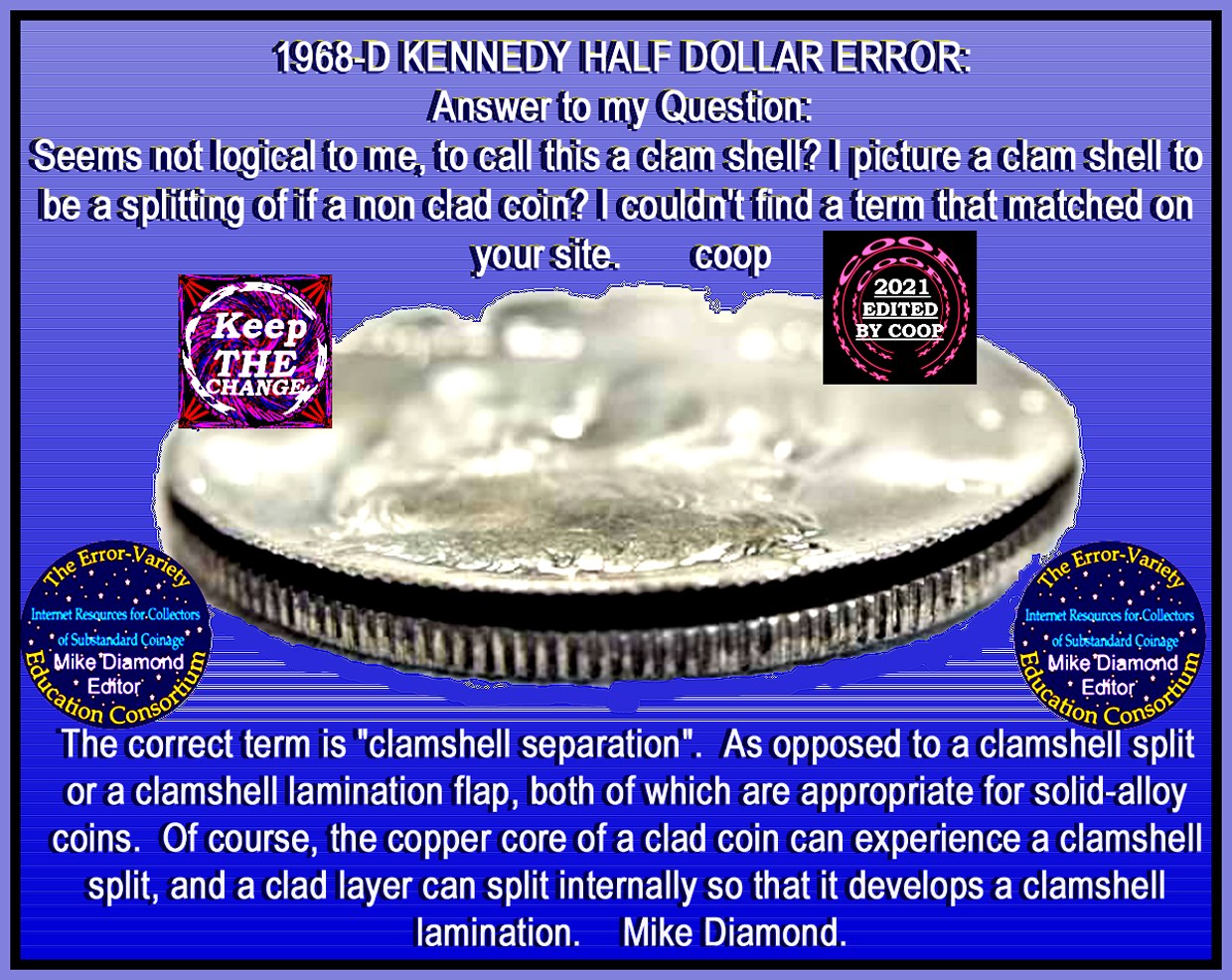 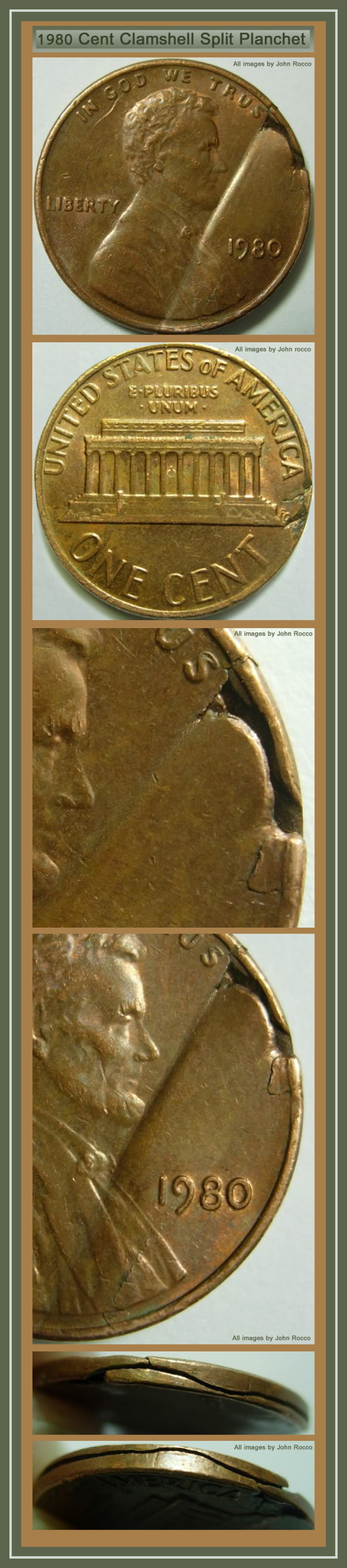 |
|
Pillar of the Community
Canada
6244 Posts |
I do not see clam shell effect here. What I see it is a coin which liked to take a acid bath. Sorry, not clam shell.
|
|
Moderator
 United States
110190 Posts |
looks like a partial collar to me, then buried or placed in some acidic location to get this effect.
|
|
Moderator
United States
56855 Posts |
I think it is acid damage. John1  |
|
Pillar of the Community
United States
3402 Posts |
Nice discussion coin...would acid dissolve copper more efficiently than CN...why would the acid dissolve the copper right in the middle? Any chemists out there?
KK
|
|
Moderator
United States
110190 Posts |
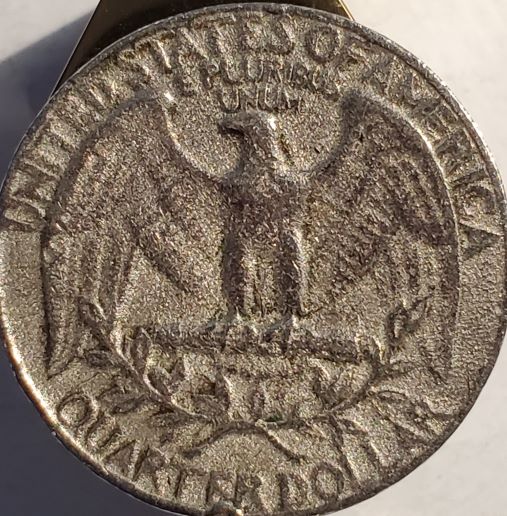
oh, ok, I see it better in the daylight. Not a partial collar. It is an acid dipped quarter.
The copper core is a softer metal than the copper/nickel cladding and will dissolve quicker than the cladding.
|
|
Pillar of the Community
Canada
6244 Posts |
To answer at the KEN question: The cooper dissolve in nitric acid (HNO3) acid solute. But this acid is not easy to have or be find in the nature. When I see the coins like this I go and the studies confirm that the coins was in contact with citric acid.
What happened: The core cooper is in fact an alloy of Cu-Zn. The citric acid dissolve the zinc not the cooper and the clad will be slow corroded.
Manny other reaction could be possible with different bases, acids, in special mild acids. If the coin was in one lab or goldsmith plant could has interferences with potassium chloride or cyan hydrate of potassium.
|
|
Pillar of the Community
United States
5916 Posts |
I'm with Dearborn about this being a tilted partial collar strike as well as having been in a caustic environment (acidic).
Take a look at OP's images 3 & 4.
Words of encouragement are one of the major food groups.
We need to consume them regularly to thrive and grow.
|
|
Pillar of the Community
Canada
6244 Posts |
@Pete: with your permission please. We employ the word caustic for corrosive reactions. Is a popular form to say corrosive environment. The word caustic referee just and limited to organic tissues and not to metals. Hope one day in the future the young generations will be more precise then us now.
|
|
Pillar of the Community
United States
5916 Posts |
That's interesting Silviosi. I didn't realize caustic was a term only for organic tissue but it makes sense. Now I just have to reprogram my POM. (Petespockets Old Memory.  ) Words of encouragement are one of the major food groups.
We need to consume them regularly to thrive and grow.
|
|
Pillar of the Community
Canada
6244 Posts |
in my case I will say SOSM (Silvio Old Stupid Memory). Stupid come from all crazy thinks I do or test. Few days ago I do 'it involuntary Trinitroglycerin and go to smoke near my cigar LOL I neutralized and destroyed now, but I was not far to put 6 neighbor to sleep in the park LOL. |
|
Pillar of the Community
United States
5916 Posts |
After smoking near the nitroglycerin, did you make it onto the local news channel? LOL
Words of encouragement are one of the major food groups.
We need to consume them regularly to thrive and grow.
Edited by Petespockets55
08/07/2022 2:05 pm
|
| |
Replies: 16 / Views: 2,437 |






 Posted 08/05/2022 7:01 pm





