











 Posted 08/07/2022 11:41 pm


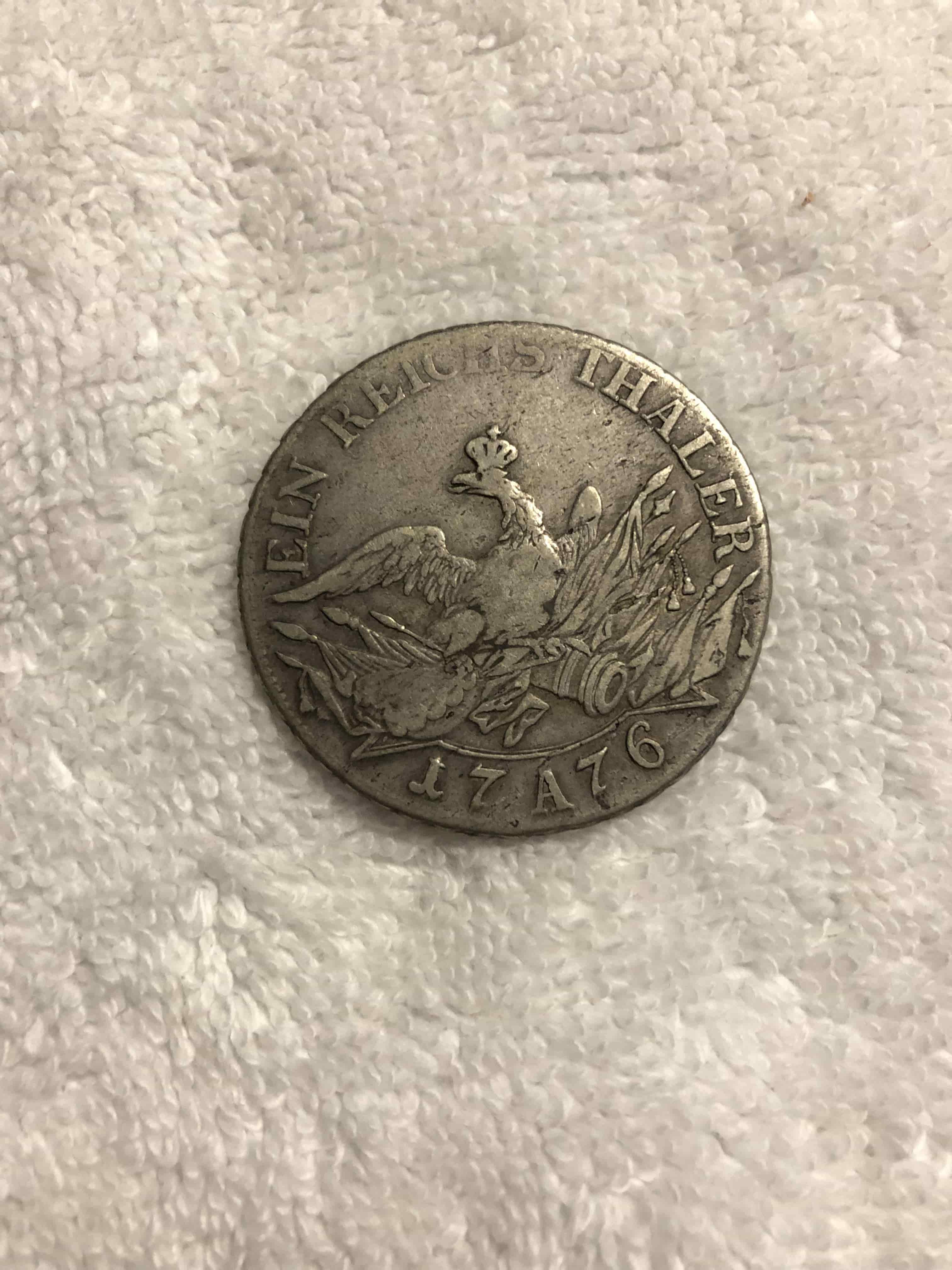
As you can see from the NGC catalogue number, German coin collectors place no especial significance on coins of that date. It's just another year to them.
Let's see, what else is there to say?
The mintmark, "A", is of course Berlin, the capital city of Prussia. Prussian mintmarks, and German mintmarks that followed, were assigned letters in order of acquisition by the Prussian state; Berlin is "A" because it was first.
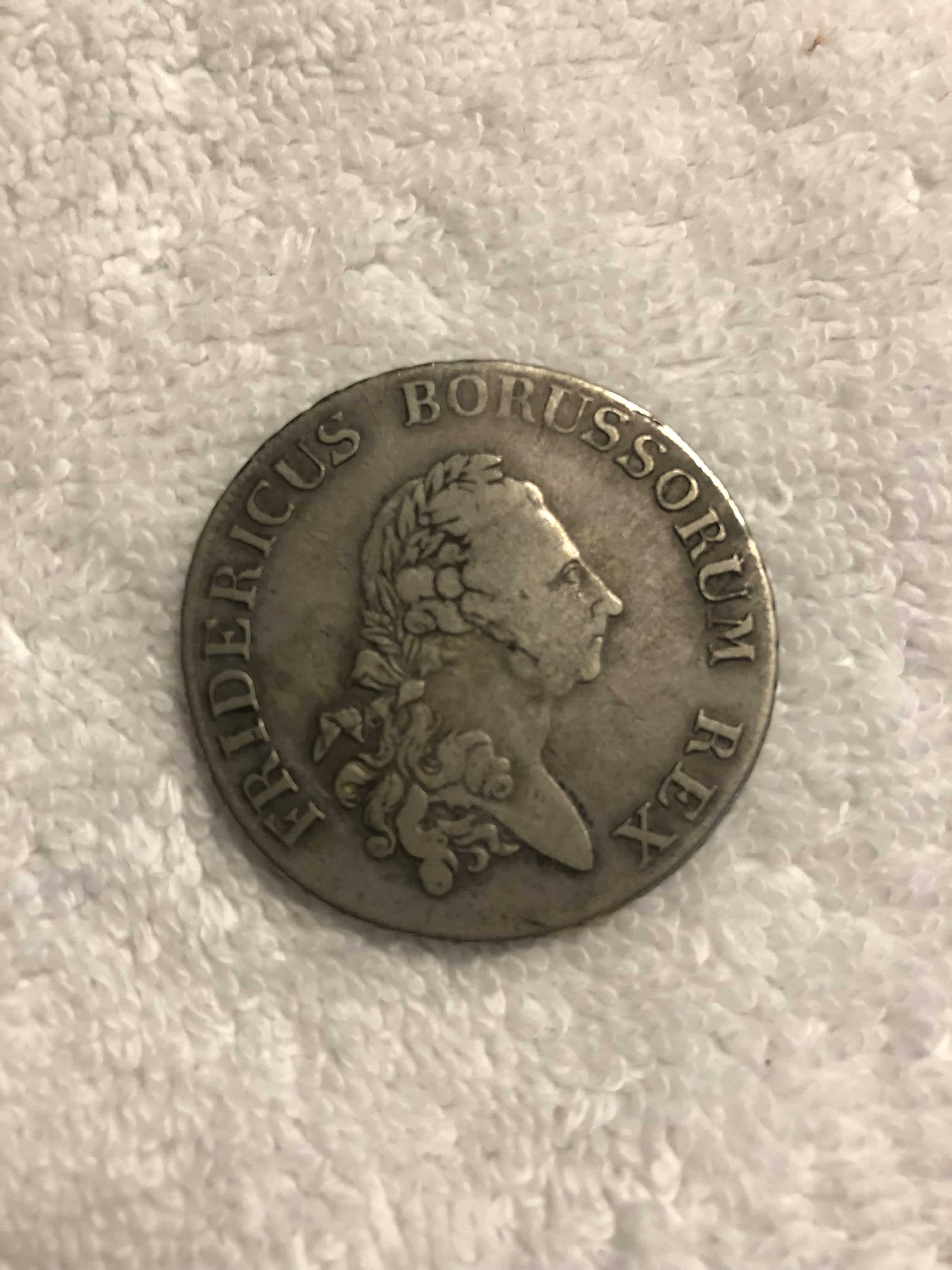
Though the king has no number attached to his title on this coin, this is actually king Friedrich II. Usually spelled "Frederick II" in English. He was the third king of Prussia; his grandfather Frederick I was promoted from "Duke of Prussia" to "King of Prussia" by Holy Roman Emperor Leopold I in 1701. Frederick II was called "Frederick the Great" during his lifetime; the Prussian state had expanded to twice its size during his reign, primarily though military annexation of pieces of Poland.
The language on the obverse is Latin; on the reverse it's German. Neither "Prussia" nor "Frederick" are Latin-derived names, so as is normal in such circumstances, they had to approximate how the names might best translate into Latin.
Frederick II never had children. When he died, his nephew Frederick William II became the next King of Prussia, whose descendants would go on to become the Kaisers of the German Empire.
Let's see, what else is there to say?
The mintmark, "A", is of course Berlin, the capital city of Prussia. Prussian mintmarks, and German mintmarks that followed, were assigned letters in order of acquisition by the Prussian state; Berlin is "A" because it was first.
Though the king has no number attached to his title on this coin, this is actually king Friedrich II. Usually spelled "Frederick II" in English. He was the third king of Prussia; his grandfather Frederick I was promoted from "Duke of Prussia" to "King of Prussia" by Holy Roman Emperor Leopold I in 1701. Frederick II was called "Frederick the Great" during his lifetime; the Prussian state had expanded to twice its size during his reign, primarily though military annexation of pieces of Poland.
The language on the obverse is Latin; on the reverse it's German. Neither "Prussia" nor "Frederick" are Latin-derived names, so as is normal in such circumstances, they had to approximate how the names might best translate into Latin.
Frederick II never had children. When he died, his nephew Frederick William II became the next King of Prussia, whose descendants would go on to become the Kaisers of the German Empire.
Don't say "infinitely" when you mean "very"; otherwise, you'll have no word left when you want to talk about something really infinite. - C. S. Lewis


