| Author |
 Replies: 5 / Views: 1,222 Replies: 5 / Views: 1,222 |
|
|
New Member
United States
2 Posts |
I found a 1943 that also weighs 2.96g the only information I've found close is the 2.9g copper Coated steel planchet 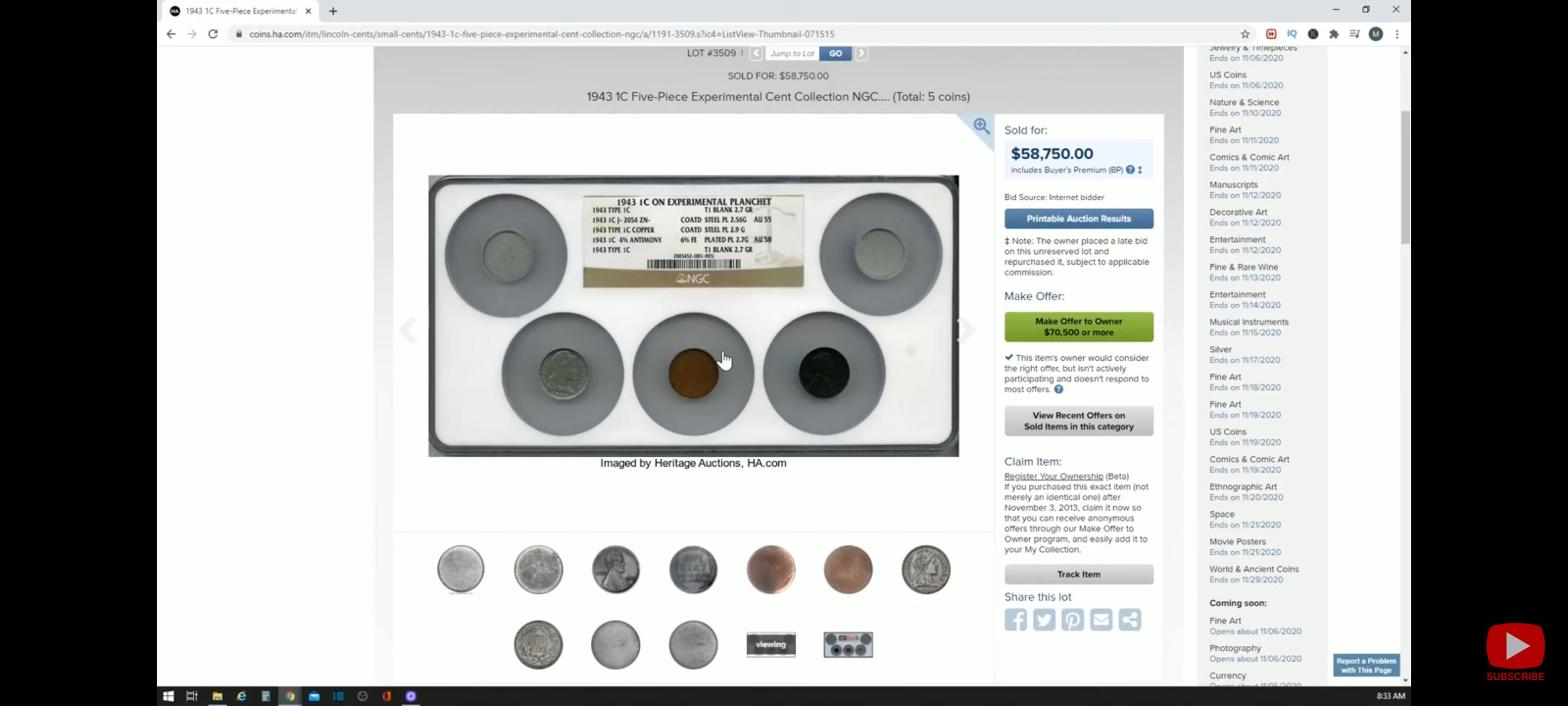 Does anyone know anything about this? |
|
|
|
Pillar of the Community
United States
3360 Posts |
Your coin is just slightly out of tolerance:
Steel cent = 2.689g/2.754g +/- 0.130g (Heavier weight produced in late 1943)
According to Roger Burdette, Cheap steel for 1943 cents was coated with zinc by several processes, depending on which company was supplying planchets. Although the Mint specified thickness of zinc, the reality was that no one much cared. Steel strip was electroplated, hot dipped, hot rolled, heated and sprayed with molten zinc then rolled and just about any inexpensive process available. This inconsistency was also why the weight of 1943 cents was increased by 1-grain. This allowed extreme over- and under-weight planchets to be accepted as legal coins.
Edited by Pete2226
08/13/2022 11:49 am
|
|
Bedrock of the Community
United States
62064 Posts |
If the coin was reprocessed, it could be over weight. A closer view of the coin might show us if it was plated or not: 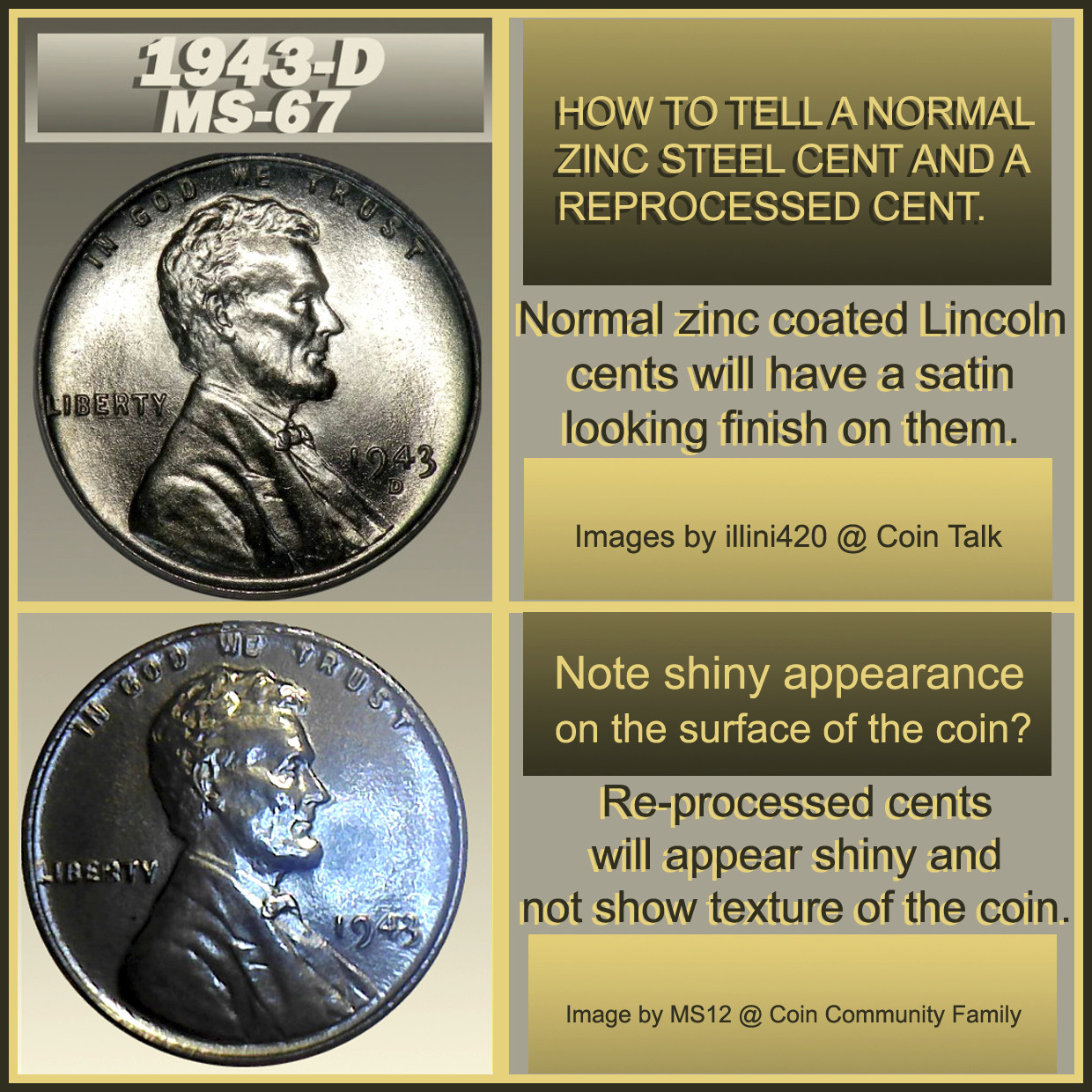 If the coin was reprocessed, it would just be a Wheat cent. How to tell, look at the sheen on the lower coin. It was altered. CoopHome: How can I tell if a Steel cent was reprocessed? too shiny |
|
Pillar of the Community
United States
3360 Posts |
An additional diagnostic for Reprocessed Cents:
When 1943 cents were made the coil stock was plated with zinc before the planchets were punched out. So original coins do not have plated edges and reprocessed coins do.
Reprocessing involves stripping off the old zinc, removing any rust from the surface of the coins, and electroplating them with zinc, giving them a shiny finish.
The color is bluish and extremely shiny on the reprocessed ones. Original 1943 cents have a nice cartwheel luster to them, and if you hold them side by side with a reprocessed one, the difference is readily apparent. Reprocessing plates all surfaces, including the edges.
|
|
Moderator
 United States
34549 Posts |
"If you climb a good tree, you get a push."
-----Ghanaian proverb
"The danger we all now face is distinguishing between what is authentic and what is performed."
-----King Adz
|
|
Pillar of the Community
United States
1648 Posts |
Interesting. a nondestructive metallurgical analysis, an X-ray fluorescence, or XRF, analysis, can be done on a cent if there is no conclusion and you want to know. There are also cents struck on planchets intended to be used for foreign coins that were then being struck by the Philadelphia Mint. On quick glance most appear to be over 3.0g. There was a 1942 cent struck on an Ecuador 20 Centavos planchet 4.0g, which NGC graded MS 63, and a 1943 cent on a Netherlands 25 cent planchet 3.52g that was graded NGC MS 61. 1943 on curacan 25 centstukken planchet 3.6g 1943-s struck on 5c peru centavos planchet 1943 struck on a dime planchet It's unusual to find an experimental alloy piece in pocket change although that has happened as well. https://www.coinworld.com/news/us-c...ntimony.html but the initial thought is always that its just slightly over tolerance and could therefore be nothing more than that since these were strikes for general circulation as well as wartime and was not always in tolerance, or struck on a thick rolled planchet but that also may be higher weight, or possibly one of the other things mentioned already that all needs exploring. Edited by datadragon
08/13/2022 4:56 pm
|
| |
Replies: 5 / Views: 1,222 |
|










 Posted 08/13/2022 11:52 am


