

 Posted 10/03/2022 11:05 pm


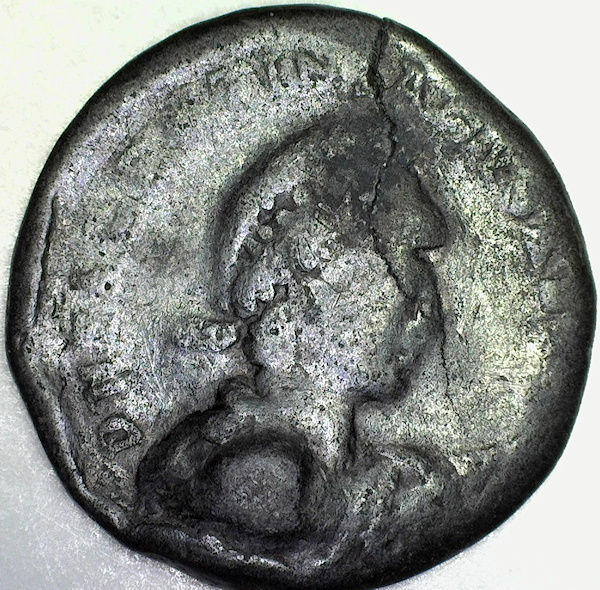
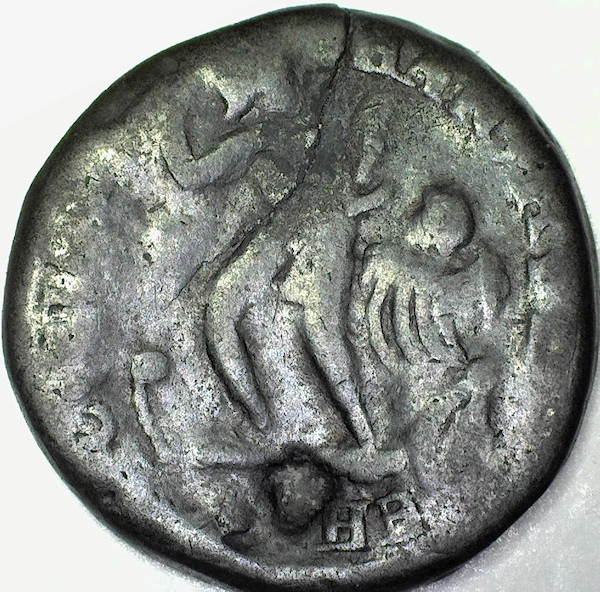
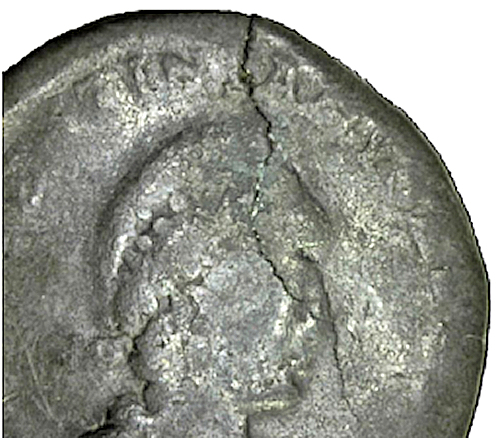
If you're getting into ancient and mediaeval coins, you should be aware of this particular phenomenon of physics: the crystallization embrittlement of metals.
At a microscopic level, a piece of metal alloy is usually crystalline in nature. These crystals are typically very very small, which gives the metal typical "metallic" properties: you can bend it and stretch it and re-shape it, without shattering it. Coin-making would be impossible if this were not the case, as the metal would not "flow" under pressure.
But as a piece of metal gets older, these crystals tend to slowly grow larger. This makes metal more and more brittle as it ages.
Coinage silver is particularly noteworthy for having this effect. Silver is normally quite a malleable metal; if you get a thin piece of silver and try to bend it, it'll bend, no problems. But a thin silver coin that would happily bend or bounce back when it was new, will simply snap in half after a thousand years. Which is also why, if you find a mediaeval silver coin that's been bent (as metal detecting finds often are), you need to be very careful about how you unbend it, as it will very likely simply snap into two pieces, rather than unbend.
It can happen with ancient coins too. I have a little tiny hemiobol from the Greek colony of Selinus, on Sicily. I was putting it back into its plastic flip, when the bottom piece of it simply snapped off. It didn't take all that much force, and that certainly wouldn't have happened if the silver was still "fresh".
So, while ancient coins aren't as "delicate" as mint-state modern coins, they can be fragile in other ways.
At a microscopic level, a piece of metal alloy is usually crystalline in nature. These crystals are typically very very small, which gives the metal typical "metallic" properties: you can bend it and stretch it and re-shape it, without shattering it. Coin-making would be impossible if this were not the case, as the metal would not "flow" under pressure.
But as a piece of metal gets older, these crystals tend to slowly grow larger. This makes metal more and more brittle as it ages.
Coinage silver is particularly noteworthy for having this effect. Silver is normally quite a malleable metal; if you get a thin piece of silver and try to bend it, it'll bend, no problems. But a thin silver coin that would happily bend or bounce back when it was new, will simply snap in half after a thousand years. Which is also why, if you find a mediaeval silver coin that's been bent (as metal detecting finds often are), you need to be very careful about how you unbend it, as it will very likely simply snap into two pieces, rather than unbend.
It can happen with ancient coins too. I have a little tiny hemiobol from the Greek colony of Selinus, on Sicily. I was putting it back into its plastic flip, when the bottom piece of it simply snapped off. It didn't take all that much force, and that certainly wouldn't have happened if the silver was still "fresh".
So, while ancient coins aren't as "delicate" as mint-state modern coins, they can be fragile in other ways.
Don't say "infinitely" when you mean "very"; otherwise, you'll have no word left when you want to talk about something really infinite. - C. S. Lewis