| Author |
 Replies: 22 / Views: 9,054 Replies: 22 / Views: 9,054 |
|
Pillar of the Community
Australia
1513 Posts |
Was checking the 2022 Australian 20 cent is this common on all 2022 Australian 20 cents.  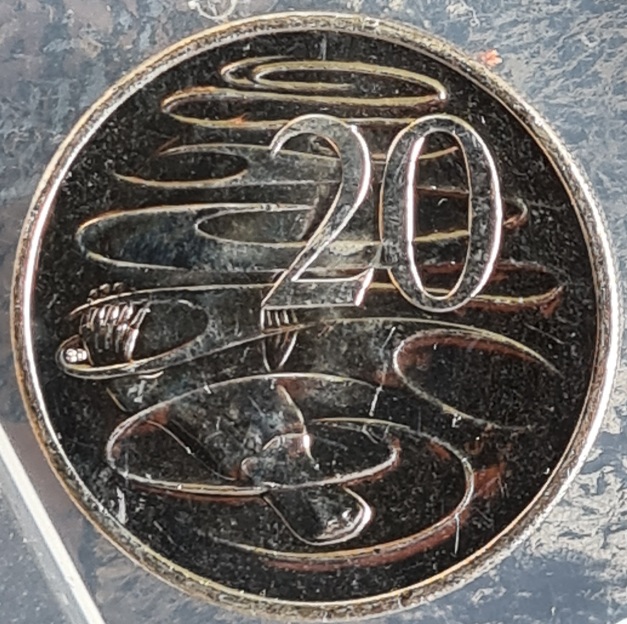 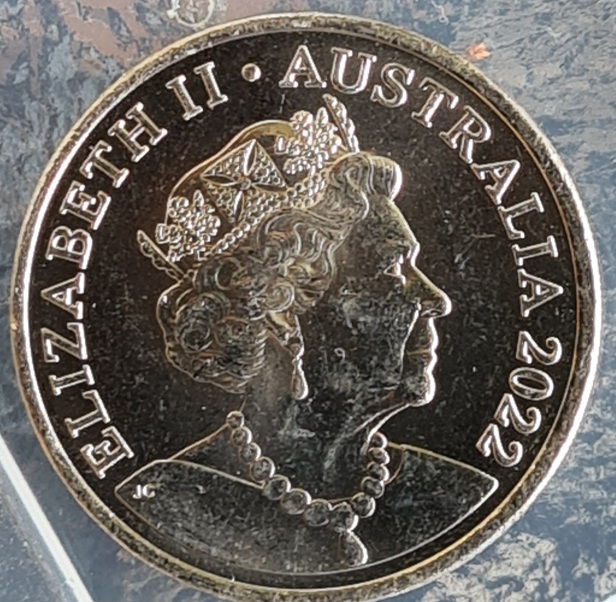 This line goes around whole of rim and is clearly visible. |
|
|
|
Bedrock of the Community
Australia
21789 Posts |
Full unsplit planchet lamination.
|
|
Pillar of the Community
Australia
1366 Posts |
Quote:
This line goes around whole of rim and is clearly visible. Is the reeding on one side of the line around the edge slightly lower than the other side? |
|
Moderator
 Australia
16982 Posts |
That''s an odd effect. I can't really tell from the pic exactly what the "line" is made of; the pic makes it look like a raised ridge going all the way around, almost like a casting seam. I don't think it's a mint error, simply because I can't imagine how a collar die could become sufficiently defective to make a coin look like that, without breaking. If I saw that kind of appearance on an older silver coin, my first instinct would be "It's got a seam? It must be a fake". But who would fake a 2022 20 cents? I don't think even the Chinese fake-masters could make fake 20 cents profitably. My only other suggestion is some kind of post-mint damage - as if the coin were crimped into some kind of case or holder. From certain angles (eg at the extreme left and right), the "top" half of the milling looks kind of squashed. I have no idea how to either accidentally or deliberately make a coin look like that; it doesn't look like typical coin Rolling Machine Damage. I suppose you could do it by rolling the coin repeatedly on a windowsill, or something like that. Don't say "infinitely" when you mean "very"; otherwise, you'll have no word left when you want to talk about something really infinite. - C. S. Lewis
|
|
Bedrock of the Community
Australia
21789 Posts |
I have seen 20 Cent coins of the 1980's, otherwise like the example pictured, that have completely split into two halves.
Very rough surfaces in between.
The best explanation I can come up with is
that a film of oil got included during the strip rolling process before the blanks were punched out of the strip.
|
|
Pillar of the Community
 Australia
1513 Posts |
I have seen similar with baht coins but not on any Australian coins I have come across except this one but I'm open too suggestions.
|
|
Pillar of the Community
Australia
1366 Posts |
Quote:
I have seen 20 Cent coins of the 1980's, otherwise like the example pictured, that have completely split into two halves. Unless I'm mistaken, the picture that the OP posted shows two coins, with the one on top being that one that he is referring to. Maybe Allcoinage could clarify this? |
|
Pillar of the Community
Australia
1513 Posts |
Reeding does look slightly lower than other side of rim.i checked the sites on internet about split planchet, should I weigh this coin wouldn't be much difference if I did weigh it.
|
|
Pillar of the Community
Australia
1513 Posts |
Yes the top one is the coin I'm referring too, both coins in image are 2022 Effigy coins.
Edited by Allcoinage
10/20/2022 07:55 am
|
|
Valued Member
Australia
370 Posts |
Very common across all years and denominations. Something to do with the Collar Die, perhaps wound up too tight creating too much pressure. Not a lot of technical info about collar dies around especially faults.
|
|
Pillar of the Community
Australia
1513 Posts |
Maybe around edge of rim it is common but not the centre of the rim. First one I've seen
|
|
Pillar of the Community
Australia
628 Posts |
Couple of 2001 5 cent coins I just noodled. 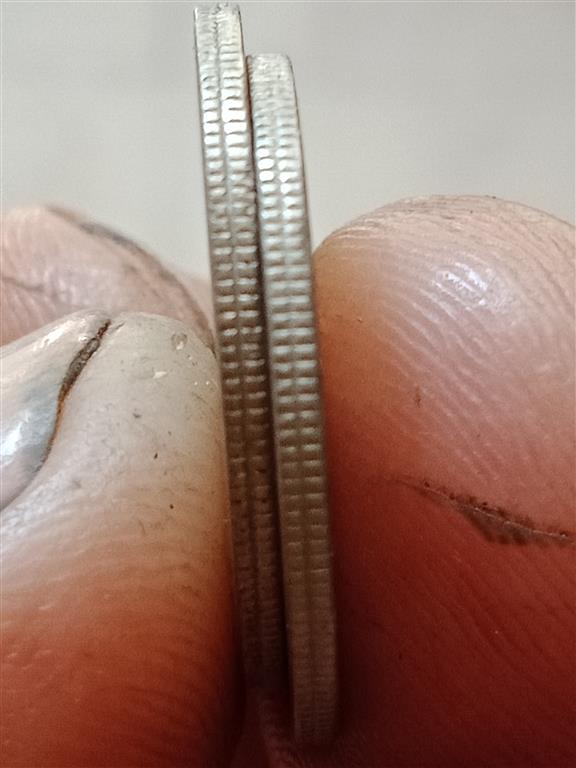 |
|
Pillar of the Community
Australia
2180 Posts |
I've seen a few coins like this and haven't been too sure - partial collar seems like the closest thing but I think that wouldn't be parallel with the rim.
|
|
Pillar of the Community
Australia
1513 Posts |
Now I've seen 3 thank you crabeater, I wonder how many of each denomination are like this full banded split flaw
|
|
Valued Member
Australia
370 Posts |
I don't think there are many collectors who bother checking out the outer rims. There are quite a few subtle differences, like length of reeding, type of reeding, thickness of reeding, Cuds or metal flow between reeding to name a few which I have noticed. These differences are clear mainly on uncirculated coins as circulated examples can be affected by normal wear making it difficult to recognise and a lot of collectors would see this as normal wear, which probably explains why noone bothers. |
|
Pillar of the Community
Australia
1513 Posts |
Well I think that outer rims need to be checked for errors or varietys like the broadstruck coin has no reeded edge and the clamshell coin also it determines wear of coin like you said airgem and now this flaw shown here.which it hasn't been determined how this band got there could be PMD or a mint error. |
| |
Replies: 22 / Views: 9,054 |










 Posted 10/20/2022 03:49 am


