| Author |
 Replies: 14 / Views: 1,431 Replies: 14 / Views: 1,431 |
|
|
Valued Member
Canada
191 Posts |
im not clear why the sac dollar you cant see details from both dollars but the obverse dime, you can see images from both coins. if you stamp one design on another coin, why wouldnt you see both designs? it seems you do in some cases but not in others. is a coin stamp an impression or is it actualy metal that gets deposited on the top of a flat planchet? if you have writing from left to right on a flat planchet for instance, and then strike a head onto that planchet as you would a normal coin, would the head cover the writing and only the writing? or would both head and writing be visible?  |
|
|
|
Moderator
 United States
56855 Posts |
|
|
Pillar of the Community
United States
4618 Posts |
When a coin is struck it makes the metal of the planchet 'flow' into the engraving on the die. If the die hits the surface with enough pressure, it will cause any marks that are incuse or relief on the planchet to be obliterated and become just another part of the final strike.
The Sacagawea may show some details of the first strike under the final strike if you looked at the coin with a microscope.
If the final strike isn't of enough pressure to cause all of the metal to flow into the engraving, you will see details of both strikes.
As for the idea that lettering was applied with a first strike and then the coin was struck again with only the image of the main design, this wouldn't work because whatever stands in relief (lettering) from the first strike would be flattened by the fields that are outside of the portrait.
Dies are design so that all of the surface makes contact with the planchet. Sometimes a strike of too little pressure can cause the details of the engraving not to transfer. This will leave the coin with smooth features where the metal didn't flow into the deep areas of the die.
The pressure used during a (final) strike will determine what features remain from the first strike. The holds true for and marks or scratches on the blank planchet. The metal flow basically erases anything on the surface of the coin or planchet it strikes.
I have no idea if this addresses all of the questions you have or if anyone other than myself can understand what I just said. Let's see what other members say about this and correct any of my statements that I didn't get right.
ANA ID: 3203813 - CONECA ID: N-5637 Clean a coin that may be worth collecting? Please DON'T! When in doubt, leave it dirty!! 
|
|
Valued Member
 Canada
191 Posts |
here is a photo of the coin I saw 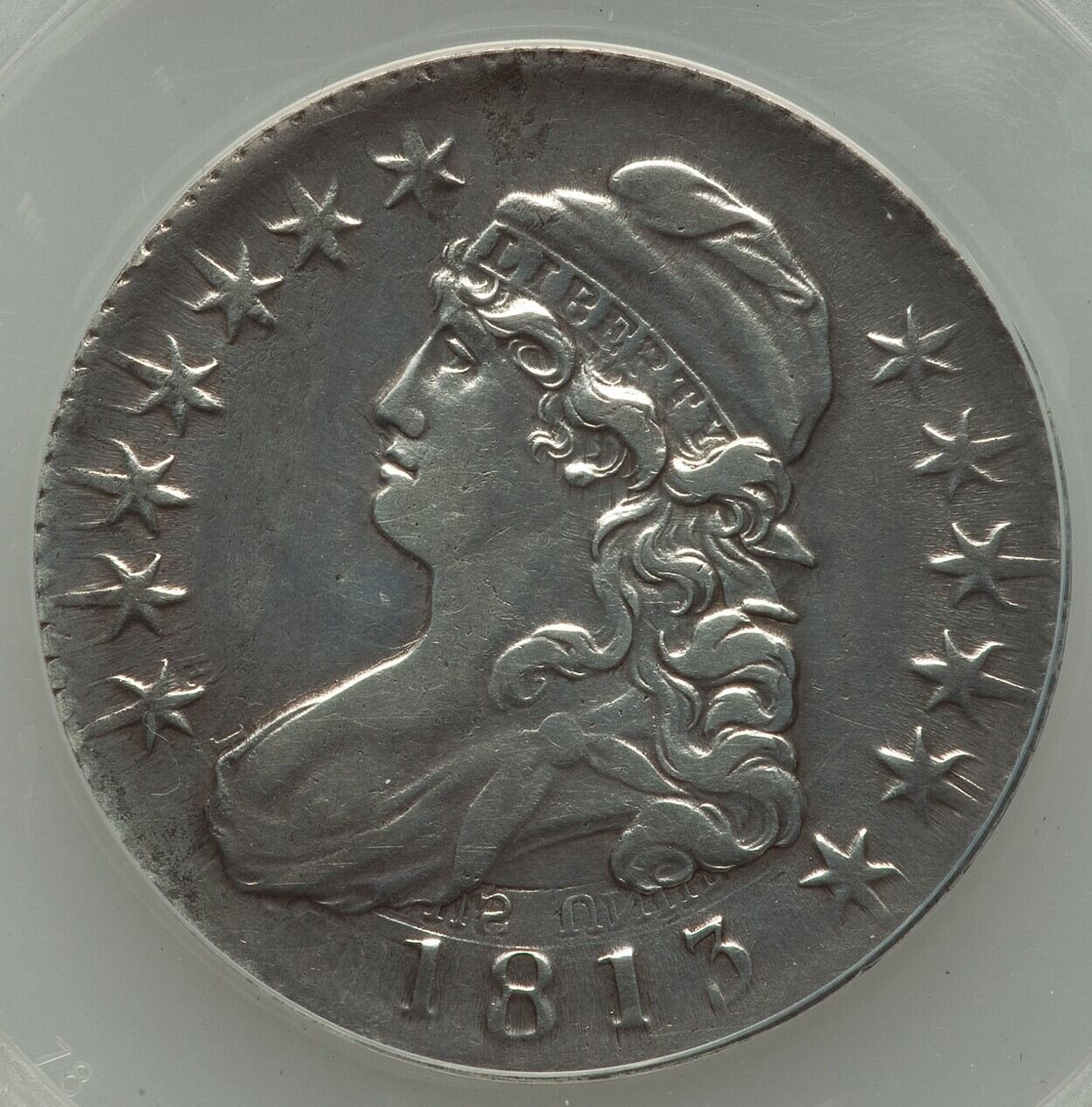 |
|
Pillar of the Community
United States
756 Posts |
this is a clashed die coin. it happens when the dies strike each other without a coin in between. bits of the image are transferred between the dies. the image on a die clash will be the inverse of a double strike. under liberty you are seeing the e pluribus unum from the back. note how the letters are raised here but are incuse on the reverse of the coin.
|
|
Valued Member
Canada
191 Posts |
thank you, do you mean that those letters are on the die itself and were transferred to the planchet along with the normal design? if so, does that mean that many coins will have these reverse letters as long as the same die was used?
|
|
Moderator
Australia
16898 Posts |
A clashed die happens when two dies smash together without a coin blank in between them; One or both of the dies become damaged, with part of the design from one die being transferred to the other die. Coins subsequently struck with that die, show the reverse-incused details from the other die, as a result of the clash. Quote:
thank you, do you mean that those letters are on the die itself and were transferred to the planchet along with the normal design? if so, does that mean that many coins will have these reverse letters as long as the same die was used? Yes, and yes. A clashed die technically is a "variety", rather than an "error", as the error happened to the die rather than to the coin, and multiple examples of coins from that same die are likely to have been made. A double-strike, on the other hand, is an "error". As to the question in the OP, as to what happens during either a double-strike or overstrike and whether or not the details from the original strike are obliterated: "it depends". As a general rule, details from the original strike are more likely to be preserved on the parts of the coin where the pressure is lowest: on the coin's high points. The pressure the coin press is operating at, and the hardness of the metal the coin is made form, also play a role in determining how much detail might be preserved. And just a quick note on my terminology: a "double-strike" happens more or less simultaneously: the coin is struck, then struck again immediately afterwards. An "overstrike" is when a coin is struck, and then some time later is struck again - the overstriking might happen days, weeks, even years later, and even at a different mint to where the coin was originally struck. Regarding the survival of original detail, let's consider two different coins that were made by overstriking older foreign coins: the Brazil 960 reis of the early 1800s, and the Bank of England 1804 dollar. Both coins were produced by overstriking Spanish dollars - in other words, a Spanish dollar was used as the "blank" to make those coins. However, the underlying Spanish dollar design is very often still visible on the Brazilian coins, because these coins were struck under relatively low pressure; the high points in particular often show surviving details. Bank of England dollars, on the other hand, rarely show any trace of the underlying Spanish coin, because the pressure on the coin presses used to make them was much higher, and furthermore, the coins were flattened prior to being fed into the coin press, so in effect two separate attempts at obliterating the old design were made for each coin. Don't say "infinitely" when you mean "very"; otherwise, you'll have no word left when you want to talk about something really infinite. - C. S. Lewis
|
|
Pillar of the Community
United States
756 Posts |
yup. thats exactly it. some people will even go so far as identifying all the different dies from each year of a series and try to collect each of the different die pairings. some of the die marriges can be quite rare and command significant premiums. for bust halves these varieties are called Overton varieties. I think the coin in question is O-110. I'm not positive.
|
|
Pillar of the Community
United States
3848 Posts |
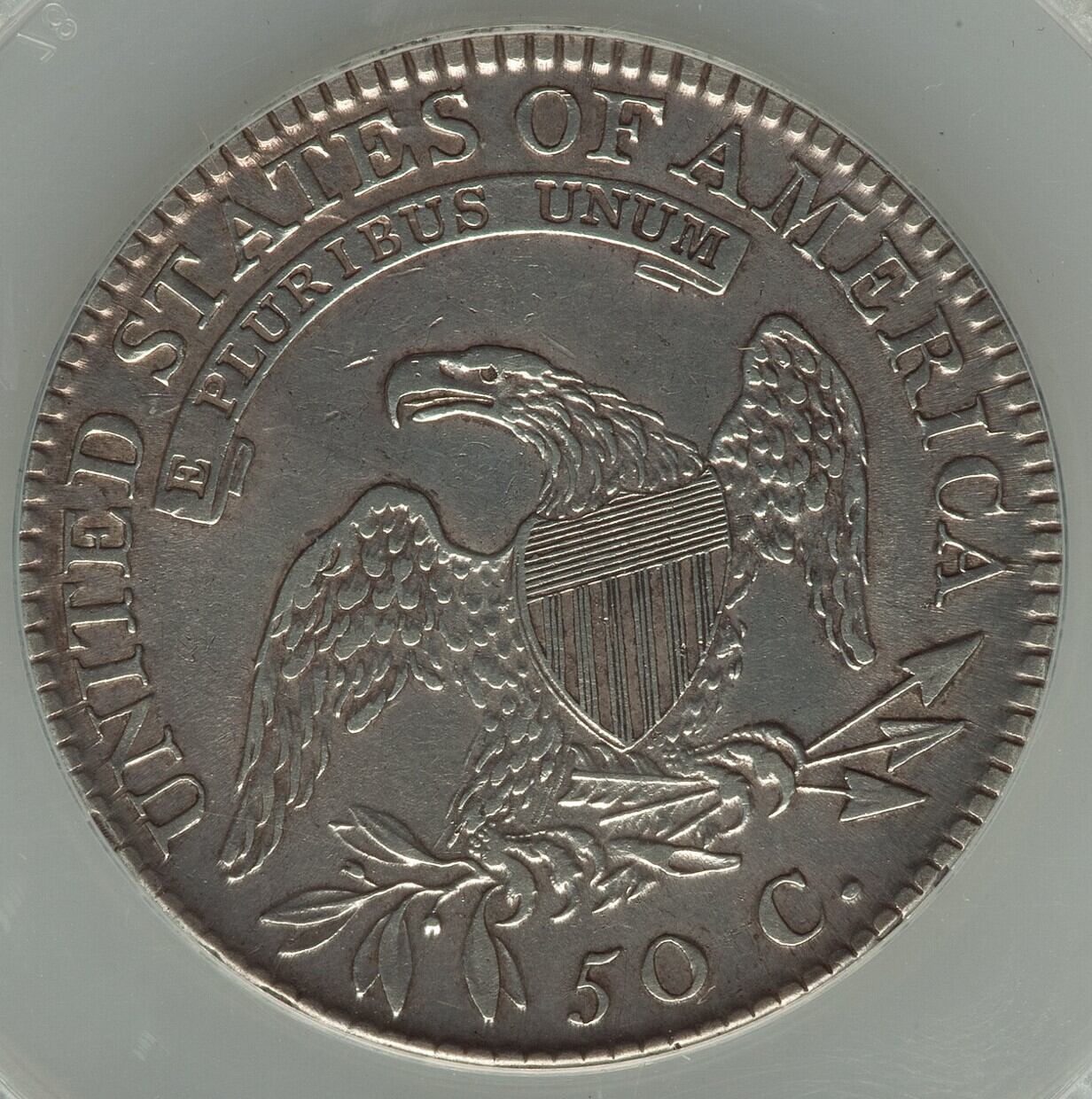
 this is the O-110. This die marriage is extra cool because of the STATES clash visible below star 1. I don't remember seeing that specific clash on any other marriage, although there could be some. The EDS of this same obverse die can be seen on the 1813 O-105. Suffering from bust half fever. Want to learn how to attribute early half dollars by die variety? Click Here: http://goccf.com/t/434955Shoot me a PM if you are looking to sell bust halves. Edited by jacrispies
10/25/2022 02:55 am
|
|
Valued Member
Canada
191 Posts |
|
|
Valued Member
Canada
191 Posts |
|
|
Pillar of the Community
United States
3848 Posts |
Yes, the reverse photo confirms that this is indeed the O-110. This die marriage can be noticed without references because of the difference in die state between the obverse and reverse. The obverse is tired, details are weak, and hardly any dentilation remains. The reverse is sharp with full dentilation. This difference in die wear between both sides of the coin isn't seen very much within the Capped Bust half dollar series. Suffering from bust half fever. Want to learn how to attribute early half dollars by die variety? Click Here: http://goccf.com/t/434955Shoot me a PM if you are looking to sell bust halves. Edited by jacrispies
10/25/2022 02:54 am
|
|
Valued Member
Canada
191 Posts |
how many different dies are there for each year of a coin? is that why the price guides dont list them all, because there are too many?
|
|
Pillar of the Community
United States
3848 Posts |
For the Capped Bust half dollar series, the amount of varieties in a year varies. 1815 has one single variety while 1827 has 49 different varieties. Not every variety is listed because many are common and only bring significant value with a higher rarity or popular variety. Suffering from bust half fever. Want to learn how to attribute early half dollars by die variety? Click Here: http://goccf.com/t/434955Shoot me a PM if you are looking to sell bust halves. |
|
Pillar of the Community
United States
756 Posts |
thanks for double checking my attribution!
|
| |
Replies: 14 / Views: 1,431 |
|










 Posted 10/20/2022 08:12 am