| Author |
 Replies: 7 / Views: 998 Replies: 7 / Views: 998 |
|
|
Pillar of the Community
 Australia
2583 Posts |
Hi again, I purchased these on a whim, to test the water, so price was very reasonable. However, I don't know if these are actually monetary coins or wedding dress baubles (or both). I can work out the dates on some, therefore the rulers, but for the life of me I can't find the number which would show the year of reign. The other puzzle for me is figuring out the denomination. Are they akce, para... or something fractional. Anyway, I know there are many a wise head in this forum and I am hoping someone will point me in the right direction. Here is coin No. 1 Year 1757 A.D. (1171) Tugrah - Ottoman Empire Ruler - Mustafa III billon 11-12mm dia 0.16 grams Regnal year ? Denomination ? A few more to follow tomorrow Thanks in advance TT  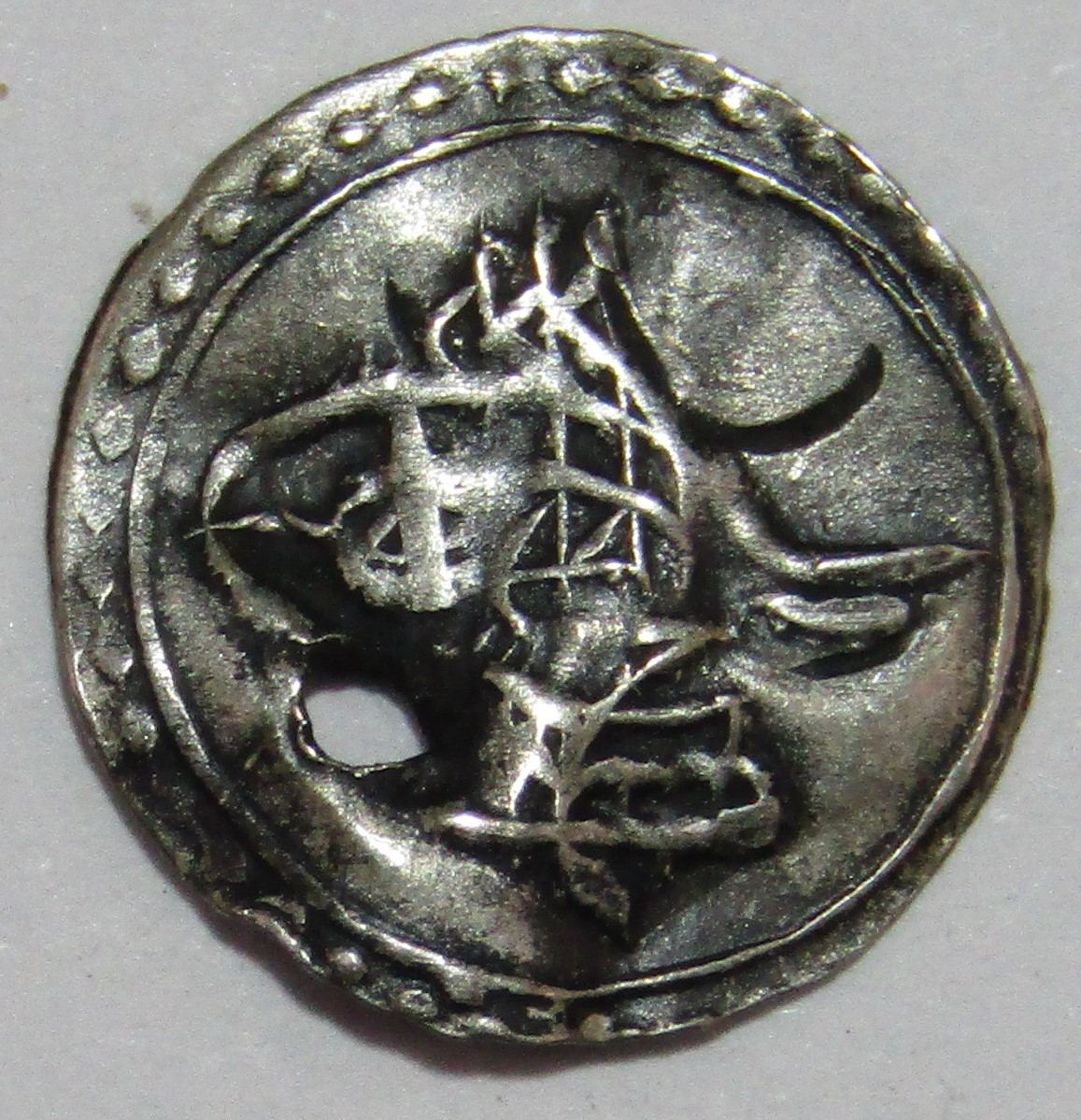 The Ox moves slowly, but the Earth is patient.
|
|
|
|
Pillar of the Community
 United States
8076 Posts |
Edited by tdziemia
12/14/2022 1:23 pm
|
|
Moderator
Australia
17031 Posts |
I would say: Ottoman akce, 1171 Year 86, Islambul (Constantinople) mint. Here's one on Zeno.ru dated Year 80: https://www.zeno.ru/showphoto.php?photo=298248It's got to be "86" rather than "89", since by 1189 the next Sultan was on the throne and the accession date would be 1187, not 1171. AH 1186 would be mostly AD 1772. The weight recorded for the Zeno.ru piece is 0.15 grams, which seems to match up well with yours. On these coins the regnal-date numerals are off to one side, rather than in the centre of the top. I've circled them in the pic below. They're not quite readable, as there seems to be some serious ghosting going on with this coin and it's making the legends pop in and out of view in places. It might actually be "83" rather than "86"; the ghosting across the top of the second digit has made it hard to tell. 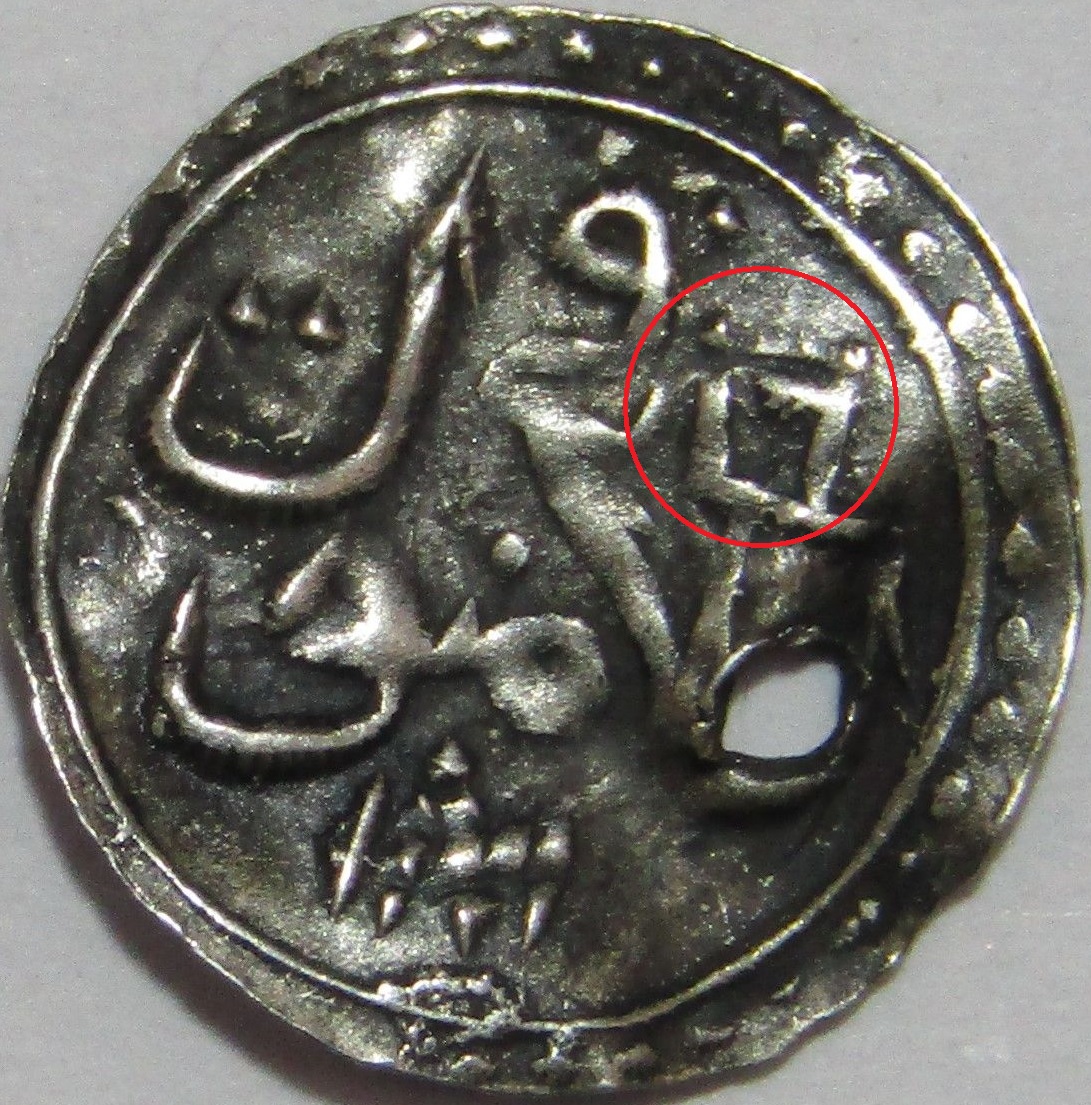 Don't say "infinitely" when you mean "very"; otherwise, you'll have no word left when you want to talk about something really infinite. - C. S. Lewis
|
|
Pillar of the Community
 Australia
2583 Posts |
@ tdziemia, @ Sap Hey, thanks so much for the information on this coin. It has answered some questions and raised some more! Very sneaky of them to put the date off to one side. With the ghosting I missed the 86, and read the date at the top as 89, not realizing that it is actually part of the script. Storing that tit-bit away for future use. BUT, I am now confused with regnal years and how they apply to dating the coin. On other internet searches regarding this, I was led to believe that the regnal year was the amount of years (starting from year 1) that the ruler was the in the top job. So say the regnal year was 12, this would be added to the accession date of 1171 making the date of the coin 1183 AH. From what you are saying, this coin is accession 1171 AH, and the year of the coin is 1186 (substituting the last two digits with 86) making Mustafa's time in the hot seat approx. 15 years give or take. and a late edit. I was just looking for reference to Mustafa's regnal years on Islamic coins and came across this Numista page https://en.numista.com/catalogue/pieces49136.html which talks about the very same issue that I am having and seems like there was a different system at times (thank the Lord, I thought I was going mad!) So it seems that there are at least two ways to date the coin, but the correct answer should be achievable by logically using the information on years of reign. Also thanks for the ref to Zeno.ru, that will be a help in the future with denominations etc. One last question. The Zeno site calls the metal AR, clearly not Argon. Is this referring to silver billon? Cheers TT The Ox moves slowly, but the Earth is patient.
|
|
Moderator
Australia
17031 Posts |
Quote:
The Zeno site calls the metal AR, clearly not Argon. Is this referring to silver billon? "AR" is the ancient and venerable numismatist's shorthand for "silver", a symbolism invented and in use long before those dang scientists first wrote the periodic table and decided to adopt "Ag" for silver instead. "AR" is used for pure silver or any silver-containing alloy, even rather debased silver; in cases where a distinction between silver and billon must be made (eg. for a coin series where both high-purity and low-purity silver coins were issued), the letters BI for billon can be substituted; "EL" (for electrum) can likewise be used for debased gold-silver alloy. AV = gold, AR = silver, and AE = bronze/brass/copper. You can still find these symbols in use in coin catalogues today. Of course, both "AR" and "Ag" originate in the Latin word for silver, argentum, just as AV is derived from aureum and AE from aes. Don't say "infinitely" when you mean "very"; otherwise, you'll have no word left when you want to talk about something really infinite. - C. S. Lewis
|
|
Pillar of the Community
Australia
2583 Posts |
Arrrr.. all clear now. Thanks again, your help is much appreciated.
The Ox moves slowly, but the Earth is patient.
|
|
Bedrock of the Community
Australia
21794 Posts |
The Romans never had 'U''s because it was much easier for them straight cut 'U''s as 'V''s ;than to do curved lettering into stone.
So, whenever you see a 'V' on a Roman monument, read it as a 'U'. Same applies to Roman coins.
Thus 'aureum' is the same as 'avrevm' for gold,
and also
gold as a metal is denoted in numismatics as 'Av', and in the Periodic Table as 'Au'.
----------------------------------------------------------------------------------------------------------------------------------------------------
As an aside,
'W''s and 'Y''s came much later into the Latin Alphabet, and helps to explain how double 'UU' (W) came about, instead of double 'V''s
Also substitute 'J' for 'i' or 'Y' in later Latin scripts.
Edited by sel_69l
12/15/2022 02:02 am
|
|
Pillar of the Community
Australia
2583 Posts |
@sel_69I Thanks for the additional info. I had never considered the double U before.  bing! The Ox moves slowly, but the Earth is patient.
|
| |
Replies: 7 / Views: 998 |
|







 Posted 12/14/2022 7:57 pm


