| Author |
 Replies: 8 / Views: 1,363 Replies: 8 / Views: 1,363 |
|
|
Moderator
 United States
16709 Posts |
The 2 "drill holes" on obverse and reverse. Thank you. Really like this Ancient. [URL="https://ibb.co/qnCSnCY]  [/url] [URL="https://ibb.co/2PSgJKb]  [/url] swcoin.ecrater.com
|
|
|
|
Pillar of the Community
United States
7067 Posts |
If you search on "centration dimple" here at CCF or at other ancients forums, you'll see mention of these in a number of posts. I like Sap's summation in this old thread: http://goccf.com/t/58188 |
|
Pillar of the Community
United States
756 Posts |
learn something new every day. thanks for the link bob
|
|
Moderator
Australia
17030 Posts |
Yep, those there be centration dimples. Ptolemaic bronzes are one of the series they are frequently found on.
Don't say "infinitely" when you mean "very"; otherwise, you'll have no word left when you want to talk about something really infinite. - C. S. Lewis
|
|
Moderator
 United States
16709 Posts |
Makes sense to me that a tool held the planchet prior to being struck, as the 2 indents explain this.
That is if I had to guess on ancient Greek coin striking.
swcoin.ecrater.com
|
|
Moderator
Australia
17030 Posts |
Saw a TV documentary once (might have been Time Team, can't recall now), where some historical re-enactment folks were attempting to recreate ancient bronze coin striking, specifically to try to answer the question whether or not the blanks for bronze coins were routinely pre-heated. So they made some authentic coin dies and tried cold-striking a piece of ancient-grade bronze alloy using the traditional guy-with-a-big-hammer technique - and the dies barely made a dint in the metal. They found they did indeed need to hold the coin blank in the furnace until it was dull-red-hot, before the planchet became soft enough that fine details on the dies would clearly transfer to the coin.
Which calls into question exactly how the ancients might have done it, especially since these coins were pretty low denominations, comparatively speaking - you wouldn't have wanted to put too much time or energy into making each one, as that would eat into your profits per coin and kind of defeat the purpose of making such coins in the first place. My guess is they had some kind of rack of screws, that held a whole bunch of blanks in the fire all at once.
Don't say "infinitely" when you mean "very"; otherwise, you'll have no word left when you want to talk about something really infinite. - C. S. Lewis
|
|
Pillar of the Community
United Kingdom
2121 Posts |
There are ancient coins with weight adjustments mainly from the Republican era. I have a couple of L Papius varieties with what are referred to as Stannard adjustment scoops of Al Marco.... The blanks were deemed over weight and chunks of silver were removed from the blank before striking   |
|
Bedrock of the Community
United States
12008 Posts |
Those look like the pie cutters that housewifes in the 19th century used to fashion out of large cents. 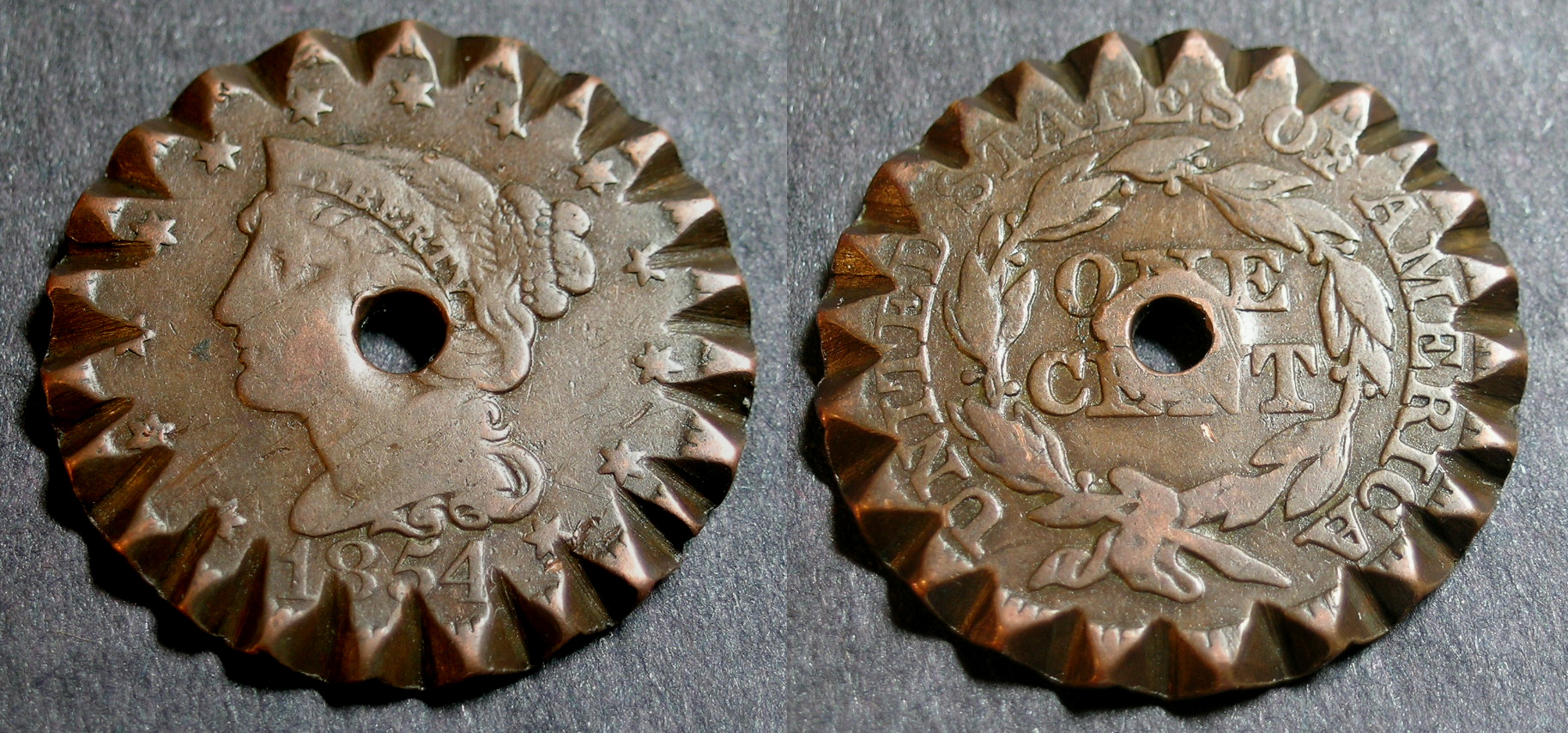 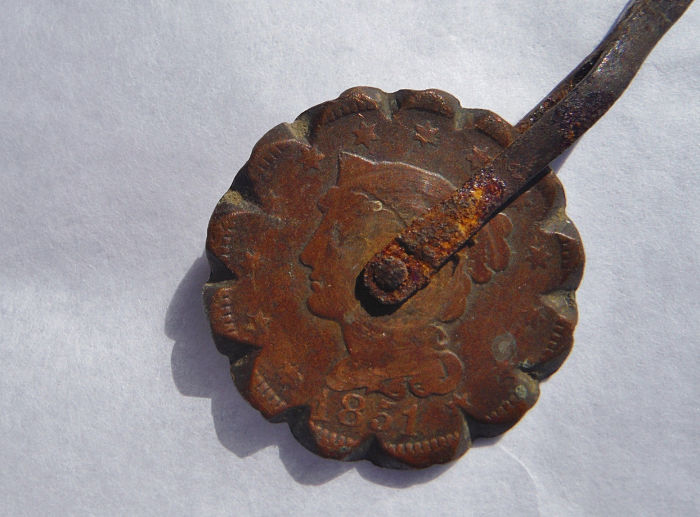 IN NECESSARIIS UNITAS - IN DUBIIS LIBERTAS - IN OMNIBUS CARITAS THE MAN IN THE ARENA, Theodore Roosevelt at the Sorbonne Paris on April 23, 1910: " It is not the critic who counts; not the man who points out how the strong man stumbles or where the doer of deeds could have done better. The credit belongs to the man who is actually in the arena, whose face is marred by dust and sweat and blood, who strives valiantly, who errs and comes up short again and again, because there is no effort without error or shortcoming, but who knows the great enthusiasms, the great devotions, who spends himself in a worthy cause; who, at the best, knows, in the end, the triumph of high achievement, and who, at the worst, if he fails, at least he fails while daring greatly, so that his place shall never be with those cold and timid souls who knew neither victory nor defeat." My coin website: https://fairfaxcoins.com |
|
Pillar of the Community
United Kingdom
2121 Posts |
In this case they are known as denarius serratus. There are a few denarii that were deliberately created with serrated edges probably to prevent clipping though we cannot be certain. We can be sure that the serrations were applied to the blank before striking. I have the following example with an uneven and off-centre strike and we can see the distortions in the serrations cause by the strike.  . |
| |
Replies: 8 / Views: 1,363 |
|




 Posted 12/14/2022 11:10 pm





