| Author |
 Replies: 18 / Views: 2,939 Replies: 18 / Views: 2,939 |
|
Pillar of the Community
 United States
6514 Posts |
What is that called when an entire old coin has a new obverse and reverse stamped onto it?
It doesn't appear to be a restrike from the definitions I've been finding.
Thanks in advance for your help.
|
|
|
|
Pillar of the Community
 United States
6851 Posts |
Edited by Keith67
12/21/2022 5:45 pm
|
|
Pillar of the Community
 United States
6514 Posts |
Oh thank you Keith! I wasn't having any luck finding the answer on my own.
Check out my counterstamped Lincoln Cent collection: http://goccf.com/t/303507 |
|
Pillar of the Community
United States
8047 Posts |
There was a lot of this going on in France in the early 1700s, and in French it is reforme.
|
|
Pillar of the Community
United States
1648 Posts |
 An overstrike occurs when an existing, previously struck coin is used as the planchet (coin blank) for another, different coin strike. In most instances an overstrike is an error when produced by a government mint. However, some people out there, such as Daniel Carr intentionally creates overstrikes as a private mint product. Daniel Carr is perhaps best known for issuing fantasy overstrike coins, which are highly regarded by many coin collectors. It is important to note that the defacing of U.S. coins is legal provided it isn't done for fraudulent purposes. All of Carr's overstrike products fall under this safe-haven provision. Of course there are others you are familiar with. A countermarked, punchmarked or counterstamped coin is a coin that has had some additional mark or symbol punched into it at some point after it was originally produced while in circulation which usually involve an existing fully struck coin. A counterstamp is set into an existing coin usually by a die on a press or other machinery. Counterstamps are similar to but different from countermarks which are handpunched into the coin by a hammer, a simple machine, or the like. Chop marks on coins are characters stamped or embossed onto coins by merchants in order to validate the weight, authenticity and silver content of the coin. https://coins.thefuntimesguide.com/...tamped-coin/Edited by datadragon
12/21/2022 7:58 pm
|
|
Bedrock of the Community
Australia
21789 Posts |
Overstrikes are not necessarily error coins.
Especially with ancient coins,
old worn out coins were occasionally, but deliberately recycled, and so are not error coins.
Some evidence of the original design can often be seen.
|
|
Pillar of the Community
United States
1648 Posts |
Agree @sel_69l And the assumption was that you are not talking about double denomination errors. The mint error type called a "double-denomination" is exactly what the names implies — two different denominations are found on the same coin. Such a coin will have the design of two (or more) different denominations of coins on it. A usually dramatic error type in appearance and popular with collectors, the double-denomination is known among all modern as well as older coin series. https://www.PCGS.com/news/double-de...coins-in-one |
|
Bedrock of the Community
Australia
21789 Posts |
Costa Rica issued into general circulation re denominated counter stamped coins in 1923.
Examples: KM#154 to KM#165.
|
|
Valued Member
Uruguay
153 Posts |
The only ones I know are from Costa Rica!
|
|
Moderator
Australia
16982 Posts |
There are numerous coin series where overstrikes are by far the norm, rather than the exception. Some that come to mind are:
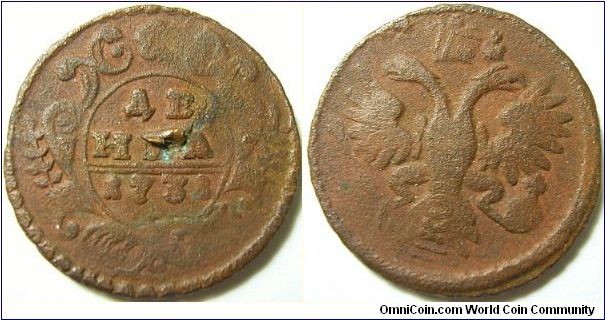
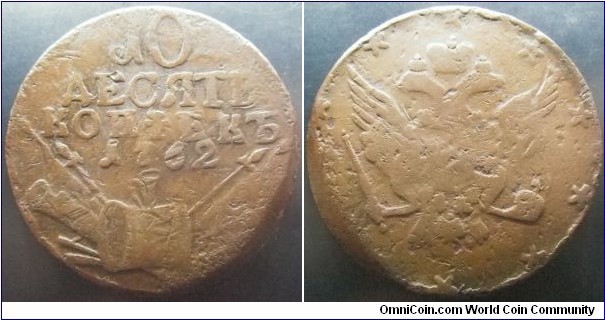
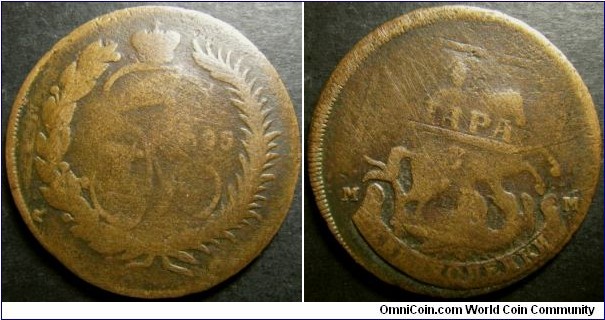
- Certain Russian copper coins from the 1700s. Russia kept redefining the weight of the kopek, both up and down, so old coins would be withdrawn and overstruck with their new values.
- Bank of England 1804 dollars are all overstruck on Spanish and Spanish-colonial 8 reales coins. They might not look like overstrikes, because the coins were flattened prior to being overstruck, so details of the undertype (which is the term use to describe "the original coin that's underneath the overstrike") rarely survived.
- Brazilian 960 reis coins of the 1810s and 1820s were likewise overstruck on Spanish-colonial (and other South American) dollars. The undertypes on these coins are often still clearly visible.
A distinction should be made between "overstrike" and "counterstamp". An overstrike aims to obliterate the entire undertype design and replace it entirely with the new overstrike design. A counterstamped or countermarked coin will only have part of the undertype design obliterated, because the stamp or punch used to make the mark is smaller than the entire coin, so some remnant of the undertype will always be visible.
And finally, don't mix the terminology. A "counterstrike" is retaliatory military action. Do not use "counterstrike" with regard to coins unless your big brother threw a coin at your head, and you're planning to throw one right back at him.
Don't say "infinitely" when you mean "very"; otherwise, you'll have no word left when you want to talk about something really infinite. - C. S. Lewis
|
|
Pillar of the Community
Australia
3841 Posts |
My partial coin collection http://www.omnicoin.com/collection/gxseriesMy numismatics articles and collection: http://www.gxseries.com/numis/numis_index.htmRegularly updated at least once a month. |
|
Pillar of the Community
Russian Federation
5186 Posts |
Quote:
There was a lot of this going on in France in the early 1700s, and in French it is reforme. In Russian it's #1087;#1077;#1088;#1077;#1095;#1077;#1082;#1072;#1085; (perechekan), literally something like "over-minting". Indeed there's a lot of those in 18th century Russia; it was a whole thing. Almost every new emperor - or empress - wanted to introduce a new coinage, and earlier coins provided for convenient planchets. Some types are rare because almost the entire mintage was later overstruck. |
|
Pillar of the Community
Australia
3841 Posts |
My partial coin collection http://www.omnicoin.com/collection/gxseriesMy numismatics articles and collection: http://www.gxseries.com/numis/numis_index.htmRegularly updated at least once a month. |
|
New Member
United States
2 Posts |
So no known coins from the United States, especially modern era?
|
|
Moderator
Australia
16982 Posts |
Warning to everyone: this is a necro-thread from over a year ago.
There are no deliberately overstruck coins in the US series, to my knowledge; some colonial or hard times tokens may be overstruck on someone else's token, you'd have to ask the experts in those series. But for official coins, the US mint has always taken the trouble to melt down old coins before restriking the metal into new coins.
You can very rarely obtain an "overstrike" mint error, where a finished coin has somehow ended up back in the hopper for coin blanks, and fed through the dies again. If the second strike is the exact same denomination, date, mintmark etc as the first strike, then it's more a "double-struck" coin rather than "overstruck". But one would have to question exactly how, say, a 1972-D quarter might happen to get overstruck with a 1998-P quarter design; in such a case, clearly some kind of shenanigans are afoot.
Don't say "infinitely" when you mean "very"; otherwise, you'll have no word left when you want to talk about something really infinite. - C. S. Lewis
|
|
Pillar of the Community
Australia
3841 Posts |
|
| |
Replies: 18 / Views: 2,939 |







 Posted 12/21/2022 7:01 pm