| Author |
 Replies: 8 / Views: 884 Replies: 8 / Views: 884 |
|
|
Valued Member
United Kingdom
112 Posts |
I've acquired an 1879 India rupee. The coin itself is in good condition, hardly worn, but it has clearly been stored alongside bronze coins or in an iron box. One section of the edge has a physical deposit of red/green oxide on top of the milling, thick enough to be rough to the touch. I know coins shouldn't cleaned but the alternative is to leave the disfiguring encrustation in place. Any thoughts about removing it? My guess is that, if it is not too harsh, something that dissolves iron oxide but leaves silver untouched. (UPDATE - Reverse added as image 3) 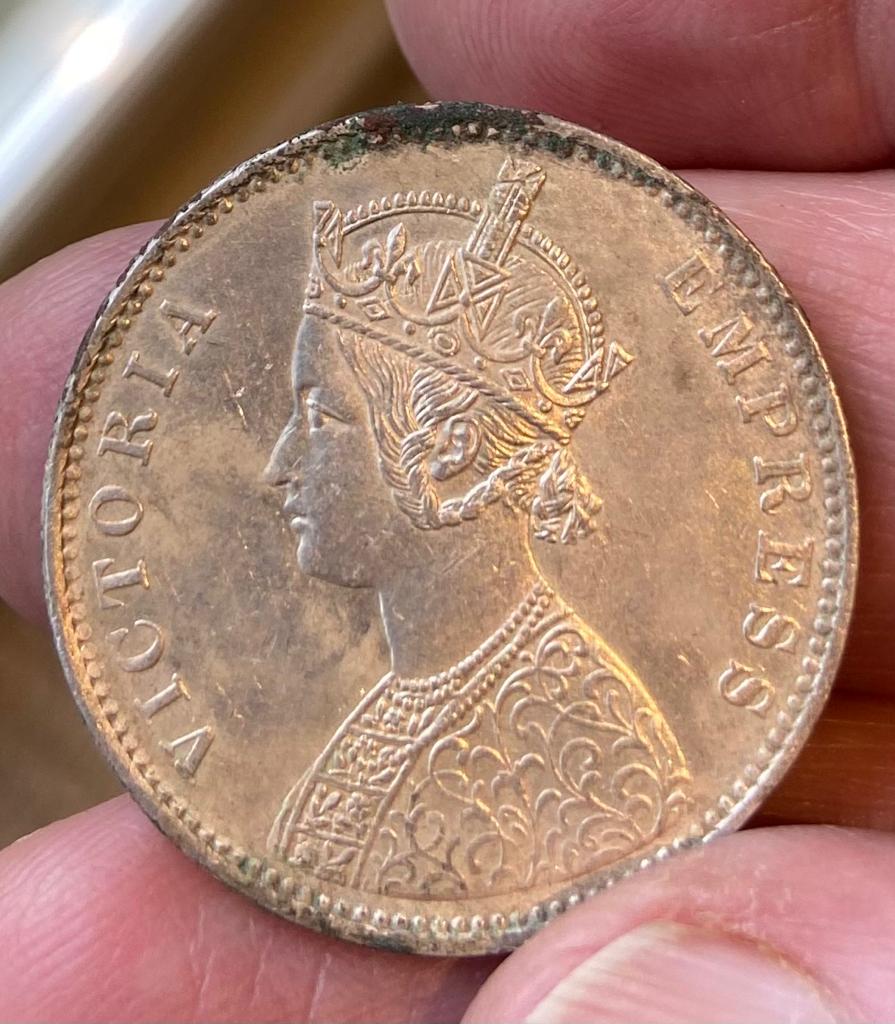 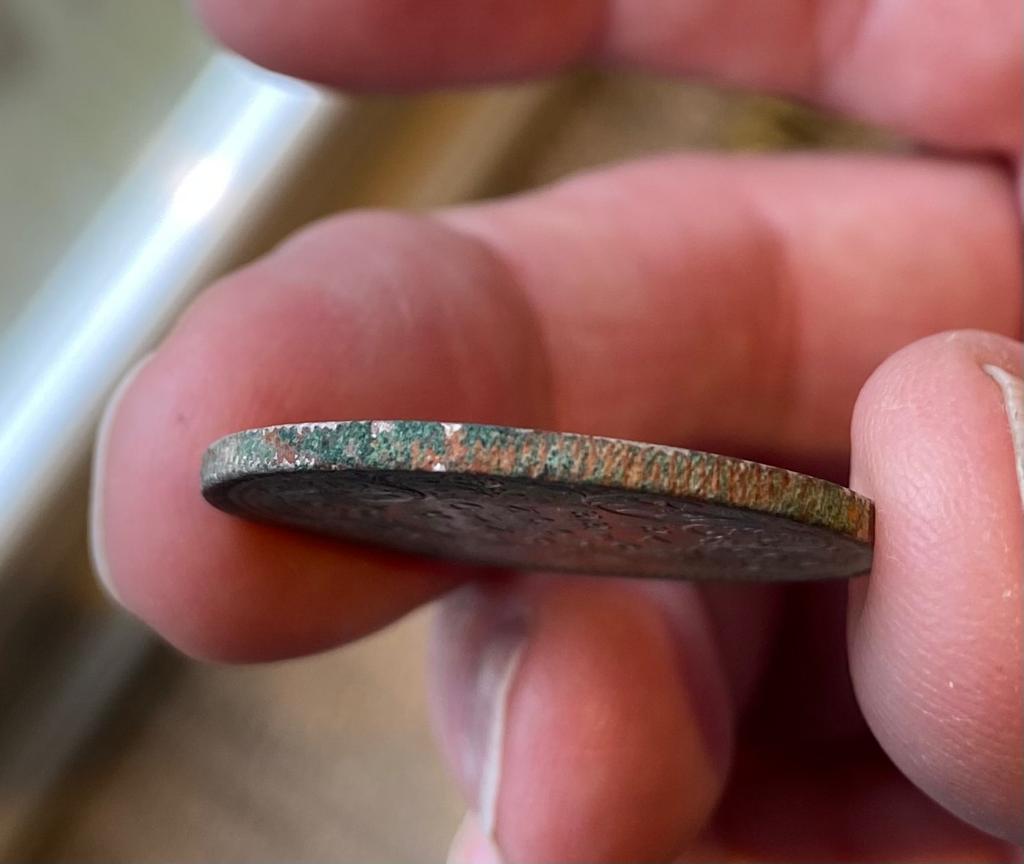 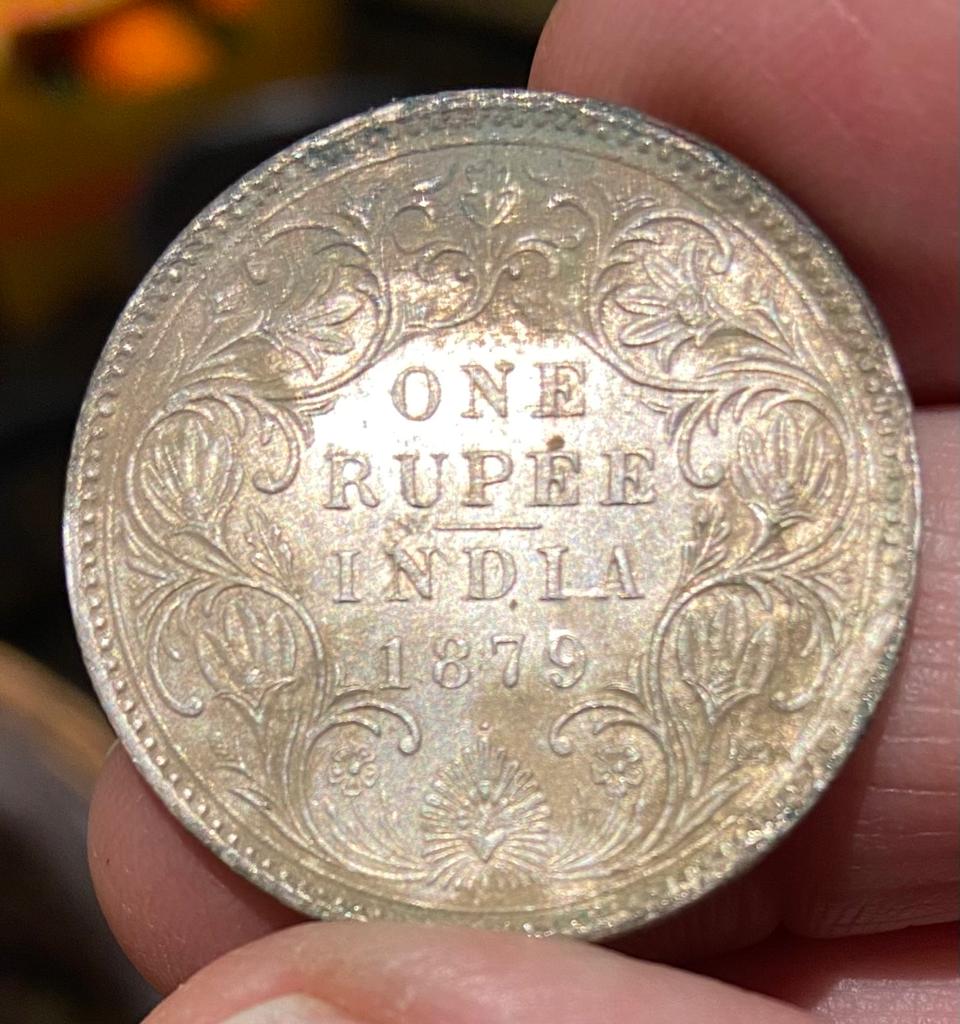 Edited by gerio2
01/15/2023 06:25 am
|
|
|
|
Pillar of the Community
 United States
8056 Posts |
More likely silver sulfide, one of the typical corrosion products of atmospheric exposure of silver.
Given the great condition of the portrait, I can see why it bothers you.
Edited by tdziemia
01/14/2023 09:12 am
|
|
Bedrock of the Community
United States
94367 Posts |
Looks like a candidate for Verdi-care.
|
|
Valued Member
 United Kingdom
112 Posts |
Quote:
More likely silver sulfide, one of the typical corrosion products of atmospheric exposure of silver. I'm not sure. Silver sulfide is black. These deposits are clearly red (iron oxide) and green (copper oxide) Thanks anyway. And, yes, it is a nice coin. Edited by gerio2
01/14/2023 1:56 pm
|
|
Valued Member
United Kingdom
112 Posts |
Quote:
Looks like a candidate for Verdi-Care. Thanks. Not availabe in the UK but I have ordered some from the US. I'll try it on something less special first and only use sparingly, with great care. |
|
Pillar of the Community
United States
878 Posts |
What a crying shame! Please update if the verdi-care improves the situation!
|
|
Valued Member
United Kingdom
112 Posts |
Quote:
What a crying shame! Please update if the Verdi-Care improves the situation! Will do! |
|
Bedrock of the Community
Australia
21792 Posts |
Unfortunately I do not think that the corrosion damage is reversible.
Although I am not a non ferrous metalurgical chemist, I suspect that copper has been involved with what we see here.
My theory is that the silver, and an outside copper source may have combined with the alloyed copper in the coin, to form a complex double salt of copper and silver sulfide / oxide.
This coin may? have spent some considerable time in a damp or humid environment, in direct contact with a copper or brass surface, inside a small box or similar. The physical / chemical result would be something like bronze disease.
Someone may be able to come up with a more plausible theory than mine.
Whatever the case, the corrosion damage seems to be permanent.
I have even seen a 22ct gold coin with pitted corrosion, that at been in direct contact with a damp rusty sheet steel surface in a ground burial environment.
|
|
Valued Member
United Kingdom
112 Posts |
Quote:
Although I am not a non ferrous metalurgical chemist, I suspect that copper has been involved with what we see here.
My theory is that the silver, and an outside copper source may have combined with the alloyed copper in the coin, to form a complex double salt of copper and silver sulfide / oxide. Very interesting! Thank you. I'll report back in due course... |
| |
Replies: 8 / Views: 884 |
|







 Posted 01/14/2023 09:30 am





