I purchased this coin from the Cook collection auction three and a half years ago as a present to myself for a birthday ending in zero. I had dreamed of owning the rare "curved right 7" variety of this coin since I was a kid. PCGS graded it SP, Cleaned - UNC Details. From the auction images the "cleaning" didn't look that bad, so I figured this was a chance to finally get one at a sort-of reasonable price.
When the coin arrived, it looked spectacular to my eyes. I looked at every image I could find online of these. I decided that PCGS had mistaken die polish for cleaning. As you can see in the not-so-TrueView, there are patches of hairlines - diagonally below the chin, vertically behind the head, and a light haze of them around RGIV.
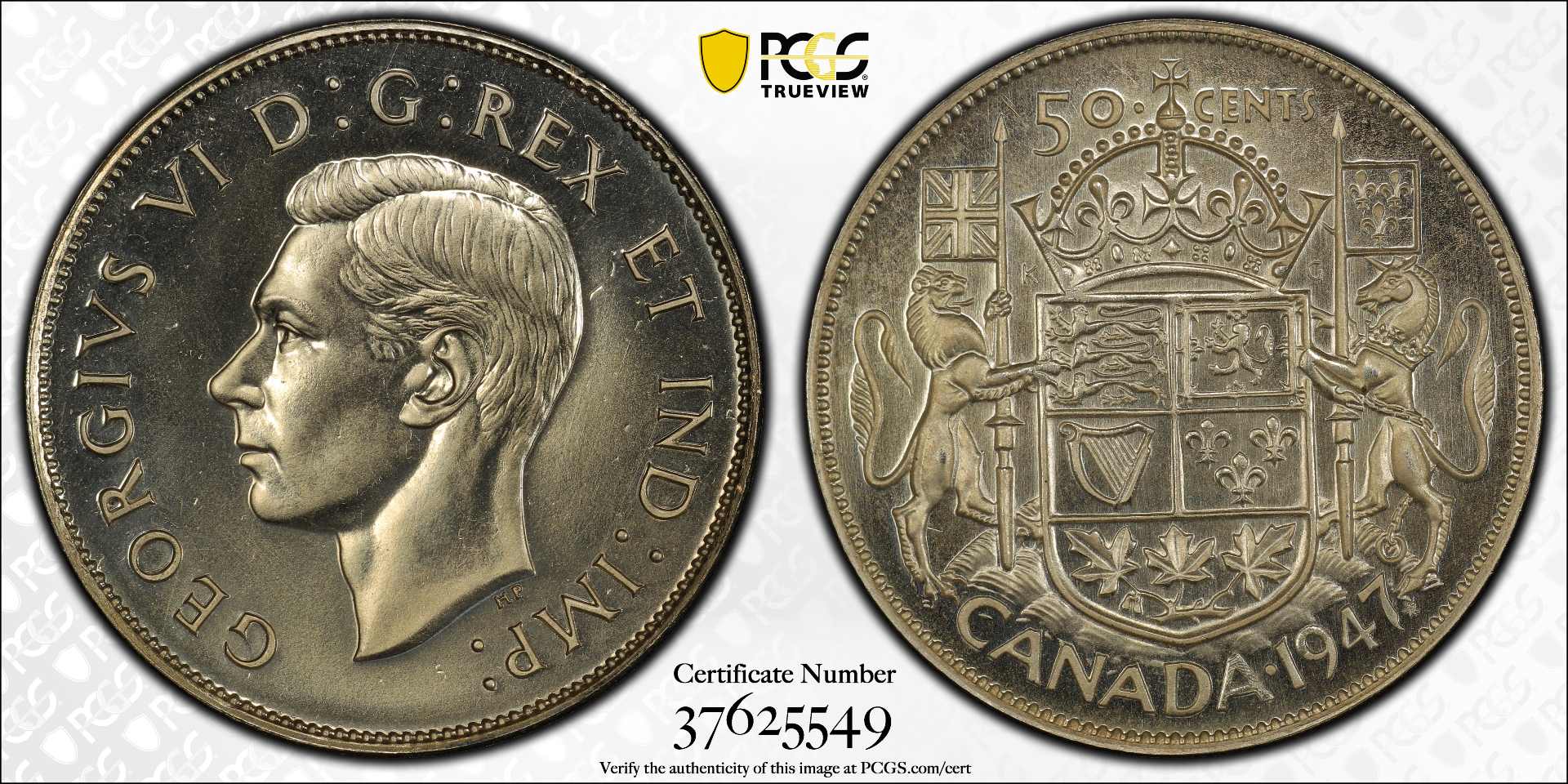
However, images showed that multiple other examples had the same exact hairlines below the chin and behind the head, so these were proven to be die polish. I couldn't prove the light haze ones were die polish from other images, but noted that many straight graded examples had similar hairlines not found elsewhere. I remained convinced that the coin wasn't actually cleaned, but fundamentally I didn't really care what PCGS thought.
Fast forward to Dec 2022, and I finally submitted my better raw Canadian coins at an ANACS table at a local coin show. I had gotten most of the other silver 1947 ML coins from my grandfather 50 years ago, so I included this coin and specified that they crack it out.
I also selected their conservation service. ANACS does a bulk rate conservation for up to 20 coins, they decide which coins might benefit from it, and my goal was to finally get all the raw coins into a better state of preservation. I included this specimen coin because I wanted all the 47's in the same slabs, and their grade opinion wouldn't be any worse than PCGS. It never occurred to me that they would consider it for conservation too.
About a month into the grading process (it was over the holidays, so there was understandable delay), I got a call from Paul at ANACS. In the opinion of their conservation specialist, the 47 CR specimen had a thin layer of lacquer on it. They wanted my permission to remove the lacquer. I was a little floored. I had examined this coin under a microscope and poured over it for hours. I had no clue that there could be lacquer on it.
I asked what the possible outcomes were. Paul said it could straight grade without the lacquer, or get another "cleaned" grade. But their conservation guy is the best, etc. OK, so the worst outcome is the grade it already got. Go ahead and do it.
I was apprehensive for about a week until the grades were finally posted. This one got SP62. I was thrilled, and felt vindicated. I knew it wasn't "cleaned."
Then the coin arrives. At first glance, it looks exactly the same. After a closer look... is this the same coin? You'll note the numerous obverse pits in the PCGS image above, as well as the squiggly things below the bust and next to ET. I was convinced these were all strike-through from die polishing remnants, and under the microscope the larger one even had an embedded piece of bristle.
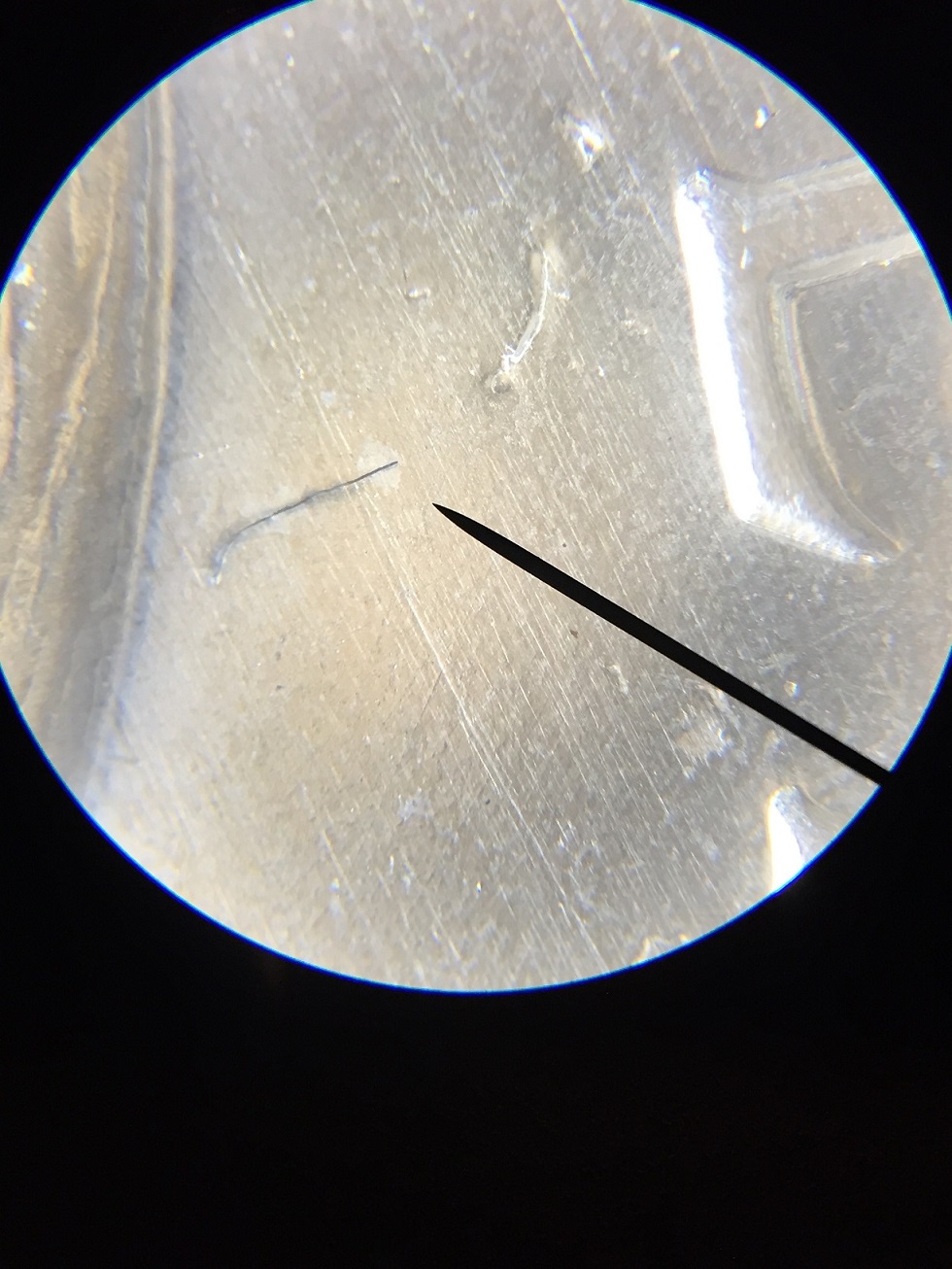
Why did it look like a different coin? Because all that stuff is now GONE!!
(Before, after)
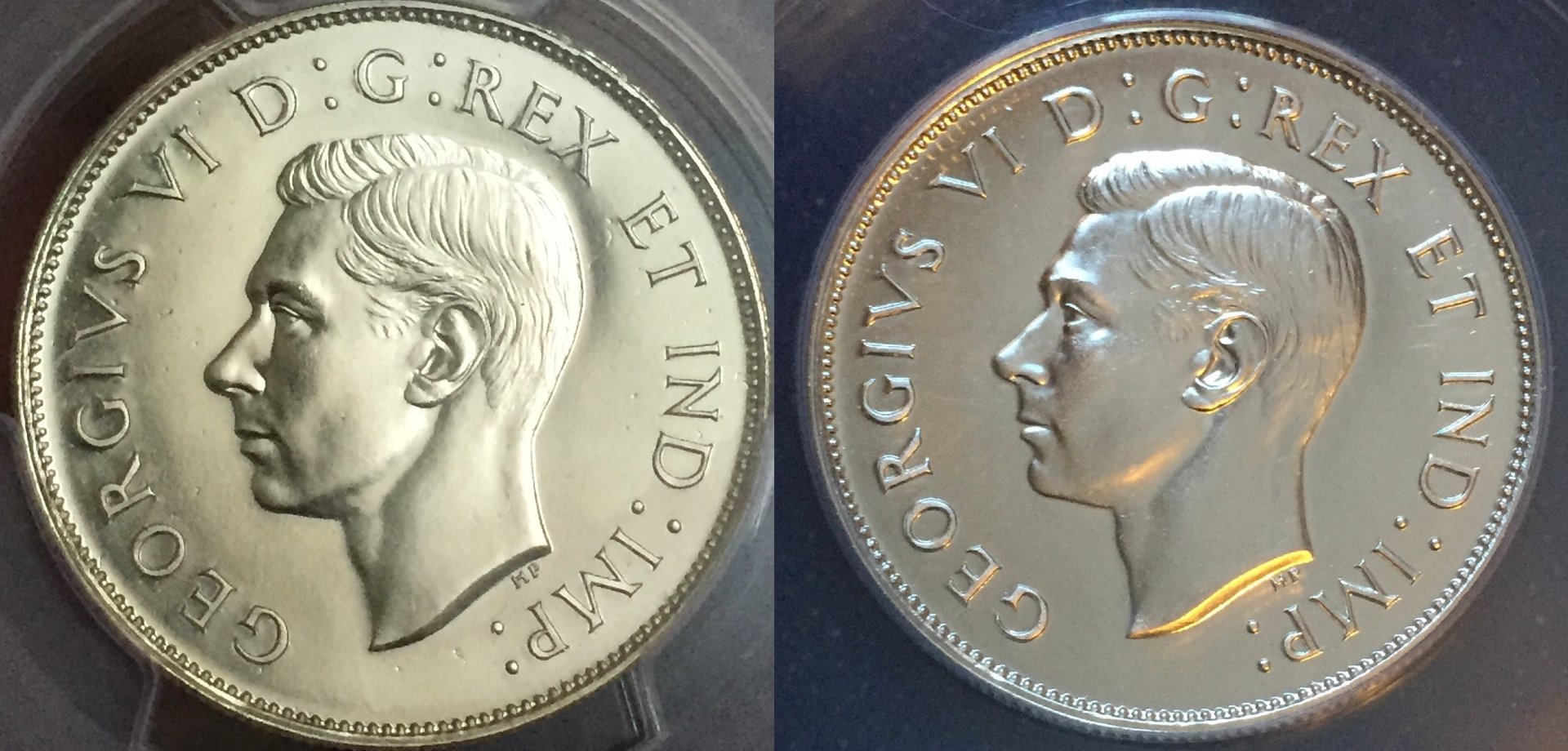
All those pits, the struck-through debris (which admittedly I thought was cool), another one along the rim with a retained piece of debris - I thought it was all struck into the coin. Turns out it was all in the lacquer!
I don't know what ANACS used to remove it, but I can't detect any change to the surface of the coin. Maybe it's just a long soak in acetone or something magical. I suppose the takeaway here is to get a second opinion when it comes to coins like this.
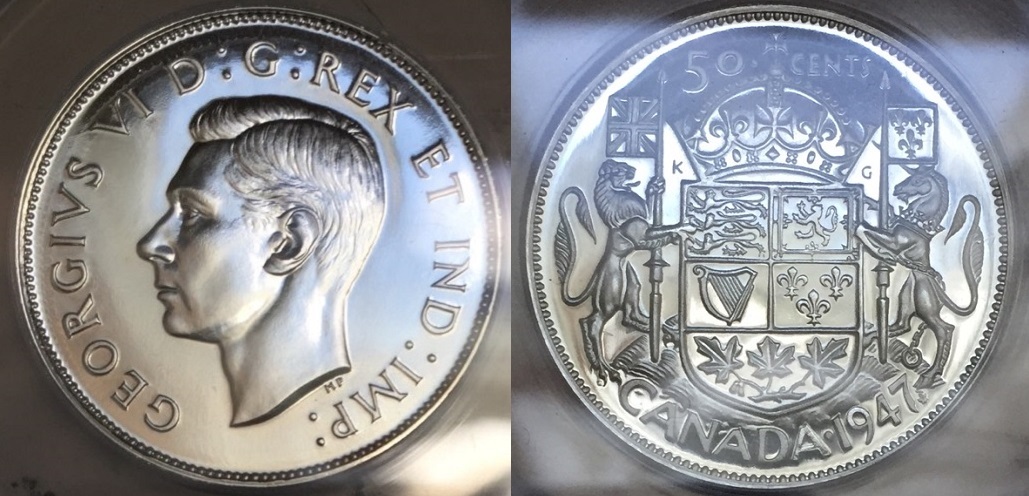
Now my question is why it only got SP62.
(glamour shot)







 Posted 02/14/2023 05:07 am





