












 Posted 04/02/2023 10:06 pm


Hello and 
I am surprised that no one has answered your inquiry.
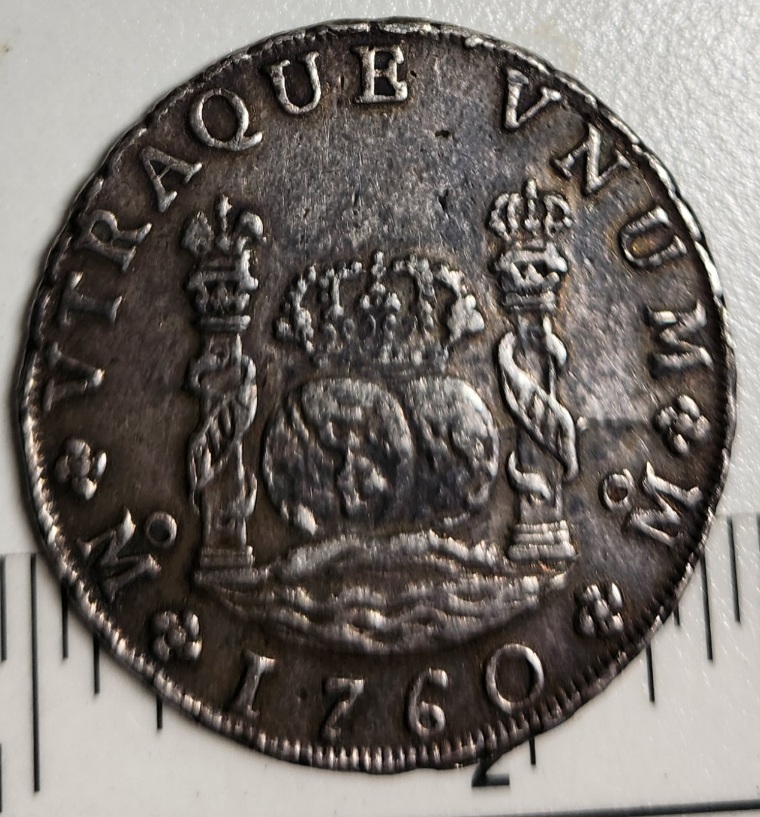
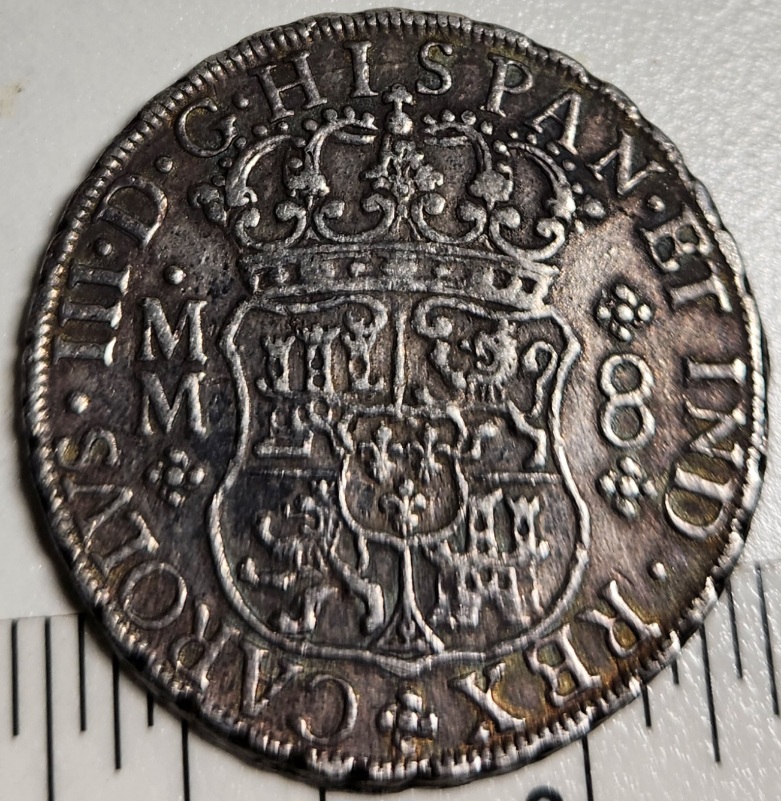
Yours is a very well-known modern COPY. It qualifies as a Numismatic Forgery only when it is passed off as possibly being genuine. I prefer to call it a copy because it was originally made as a souvenir for tourists. It was not made to defraud and was part of a larger set of copies. It is a cast copy of a genuine 8 Reales and it contains no elemental silver, so it is of very minimal value. Normally white metal was used to make them and they are very light weight (around 20 grams).
The feature that readily identifies this coin as a COPY is the displaced crack in the field of the coin running from the Eastern Hemisphere of the "Dos Mundos", through the right Pillar of Hercules, through the rosette above the mint mark to the rim.
I have been a collector of Mexican 8 Reales since 1960, so if you have more questions please do not hesitate to answer.
I am surprised that no one has answered your inquiry.
Yours is a very well-known modern COPY. It qualifies as a Numismatic Forgery only when it is passed off as possibly being genuine. I prefer to call it a copy because it was originally made as a souvenir for tourists. It was not made to defraud and was part of a larger set of copies. It is a cast copy of a genuine 8 Reales and it contains no elemental silver, so it is of very minimal value. Normally white metal was used to make them and they are very light weight (around 20 grams).
The feature that readily identifies this coin as a COPY is the displaced crack in the field of the coin running from the Eastern Hemisphere of the "Dos Mundos", through the right Pillar of Hercules, through the rosette above the mint mark to the rim.
I have been a collector of Mexican 8 Reales since 1960, so if you have more questions please do not hesitate to answer.


