| Author |
 Replies: 10 / Views: 1,764 Replies: 10 / Views: 1,764 |
|
|
New Member
Argentina
44 Posts |
Particularly on the reverse, are those normal stains for an old silver coin, or is it PVC damage? 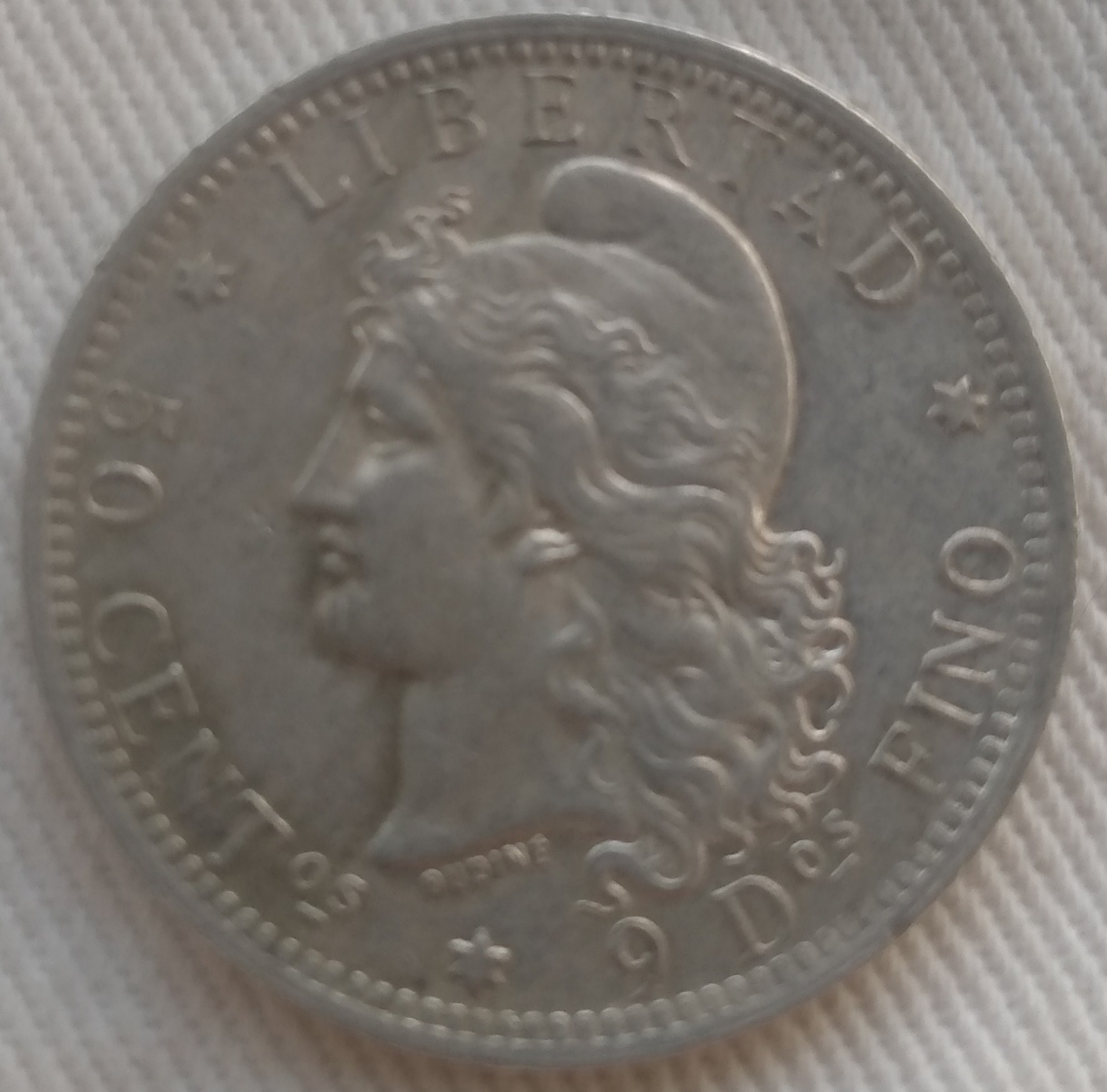  |
|
|
|
New Member
 Argentina
44 Posts |
I forgot to mention that the stain in the reverse between the E and P of REPUBLICA doesn't seem slimy, or something over the coin, but the colour of the silver itself. I think it's not PVC, but I don't know for sure, I don't have much experience with PVC-damaged coins.
|
|
Pillar of the Community
United States
1915 Posts |
PVC damage can often be greenish or slimy and may cover an entire rim plus the high spots 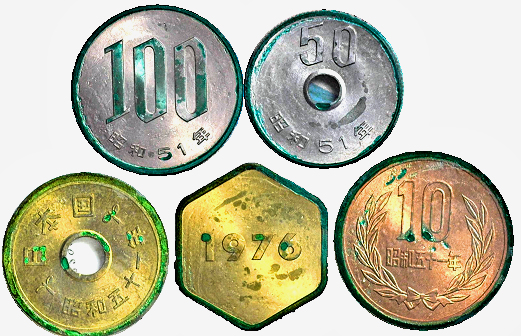 |
|
New Member
Argentina
44 Posts |
So, Albert, do you mean that this single spot I was mentioning is probably not PVC but something perfectly normal with old silver coins?
|
|
Pillar of the Community
United States
9811 Posts |
That doesn't appear to by PVC damage. When PVC turns into the green goop it is in it's destructive stage, the PVC leeches onto the surface of a coin and becomes hydrochloride acid (I'm no chemist so I may be describing this process entirely wrong). That in turn etches the surface of the metal on the coin, causing pits and eaten away surfaces. Acetone should remove any of the organic contaminants including PVC on the surface with a rinse or soak, then re-rinse with some fresh acetone to remove any particles (for stubborn areas I will lightly roll a cotton swab over the area affected (only on circulated coins) never on proof coins. The re-rinse with clean acetone helps to insure the coin is clean, leave out a minute to dry, acetone evaporates quickly. Of course warning acetone is extremely flammable so no open flames around, no smoking and use in a well ventilated area only. Outside in shade is best. Sunlight acetone and copper are not compatible, keep your coins and work away from direct sunlight so as not to cause any discoloring, silver, and gold do not have that same issue with acetone. Xylene can be used in place of acetone, I don't like it as much as it is a known cancer causing agent, but otherwise the properties are similar as are the effects on coins. Here are a few older threads on coin cleaning/conservation here at CCF: Copper coins - http://goccf.com/t/404457Acetone vs. Xylene - http://goccf.com/t/398235&whichpage=2#3412791Distilled Water? NOPE - http://goccf.com/t/398235Acetone general - http://goccf.com/t/174056"Buy the Book Before You Buy the Coin" - Aaron R. Feldman - "And read it" - Me 2013! ANA Life Member #3288 in good standing since 1981, ANS, Early American Coppers Member (EAC), Colonial Coin Collectors Club member (C4), Conder Token Collector Club member (CTCC), Civil War Token Society (CWTS) member, Liberty Seated Collectors Club (LSCC) & Numismatic Bibliomania Society member (NBS), USMex, Member in good standing, 2¢ variety collector. See my want page: http://goccf.com/t/140440 |
|
Rest in Peace
United States
632 Posts |
I'd NEVER use Acetone to remove PVC damage. Try Lighter Fluid: Zippo * Ronsonal * etc.
|
|
Pillar of the Community
United States
9811 Posts |
To be fair, nothing is going to remove the damage caused by PVC. The damage is pitting and etching into the metal, so PVC damage is far beyond any type of "fixing." Acetone will remove PVC slime and sludge and if done before the etching occurs, it is perfectly fine and safe, acetone removes almost all of an organic material like PVC residue, glue, adhesive, etc. from a coin's surface, it doesn't cause damage (that I've ever seen) and doesn't change the coins color nor affect 99.90% of natural toning or patina. Not a fan of any of the lighter fluids as they contain Naptha, benzene and other known cancer causing chemicals. see this safety sheet on Zippo lighter fluid (PDF file). https://ilrc.ucf.edu/documents/ILRC...%20Fluid.pdfOne thing I will say on acetone, is it can certainly cause a drying out of a coin - especially copper, I treat mine with a touch of verdi-care or CARE (old Blue Ribbon) when done. Granted I am talking about only circulated on proof coins. All of my Two Cent coins get treated with acetone after I purchase them. After 30 years none of them show any ill effects from it, of course they are stored properly in a low light, low humidity controlled environment. "Buy the Book Before You Buy the Coin" - Aaron R. Feldman - "And read it" - Me 2013! ANA Life Member #3288 in good standing since 1981, ANS, Early American Coppers Member (EAC), Colonial Coin Collectors Club member (C4), Conder Token Collector Club member (CTCC), Civil War Token Society (CWTS) member, Liberty Seated Collectors Club (LSCC) & Numismatic Bibliomania Society member (NBS), USMex, Member in good standing, 2¢ variety collector. See my want page: http://goccf.com/t/140440 |
|
Moderator
 Australia
17005 Posts |
Quote:
the PVC leeches onto the surface of a coin and becomes hydrochloride acid (I'm no chemist so I may be describing this process entirely wrong). I am a chemist, and yes, sorry, but that description is almost entirely wrong.  PVC itself is not what causes "PVC damage". But PVC, in its "raw" or "pure" state, is a translucent solid and quite brittle; unusable for coins. To make it transparent and soft and flexible (like a coin album page), they have to add plasticizers. The plasticizers used for PVC are phthalates (phthalic acid esters). They need to use sulfuric acid to make the phthalate, and some residual acid is always present in the resultant plasticized PVC. It is this entrapped sulfuric acid that gradually leaches out of the PVC over time, along with the oily phthalates, to create the "goo". Silver is generally quite resistant to attack by sulfuric acid (most "silver dips" are sulfuric-acid-based), but circulating coins aren't made of pure silver. Instead, the sulfuric acid attacks the copper that is alloyed with the silver (which is why PVC "goo" is almost always greenish-blue, because copper compounds are usually green or blue in colour). Don't say "infinitely" when you mean "very"; otherwise, you'll have no word left when you want to talk about something really infinite. - C. S. Lewis
|
|
Rest in Peace
United States
632 Posts |
Westcoin: I find lighter fluid delivers much better results than Acetone, and is MUCH more color-safe. Major Stamp auction houses use lighter fluid to check for watermarks. They do NOT use Acetone for a reason, or two, or three... I used it exclusively to restore some old Baseball Aluminum-bezeled pog premiums (1909-12), and received grades in excess of 9 on just about all of them. Impossible to do with Acetone...
Edited by Oldgrouchyguy
03/08/2023 6:22 pm
|
|
Moderator
Australia
17005 Posts |
And yes, though the pics are a little blurry, we can tell that the black smudge in REPUBLICA is a tarnish spot, not PVC damage. Sometimes called a "carbon spot" because it looks black, but it's not caused by carbon, it's caused by sulfur. Carbon spots are most often caused by somebody sneezing or talking over a coin, and a droplet of saliva lands on the coin. Saliva is both moist, and contains sulfur-based enzymes, causing the blackening over time.
Don't say "infinitely" when you mean "very"; otherwise, you'll have no word left when you want to talk about something really infinite. - C. S. Lewis
|
|
Moderator
Australia
17005 Posts |
Quote:
I find lighter fluid delivers much better results than Acetone, and is MUCH more color-safe. Major Stamp auction houses use lighter fluid to check for watermarks. They do NOT use Acetone for a reason, or two, or three... You don't use acetone on stamps because acetone is very very good at dissolving things, including the ink used to print stamps with. An acetone-washed stamp is likely to come back as a blank piece of paper. That's very very bad for stamps, but it's exactly what you want for goo stuck on coins. Of course, if you have need for both cleaning coins and watermarking stamps, then the lighter fluid is probably good enough as a dual-purpose solvent. No need to have two separate bottles of dangerously flammable liquid sitting around the house, when just the one will work just as well. Don't say "infinitely" when you mean "very"; otherwise, you'll have no word left when you want to talk about something really infinite. - C. S. Lewis
|
| |
Replies: 10 / Views: 1,764 |
|







 Posted 03/08/2023 11:56 am





