| Author |
 Replies: 12 / Views: 1,555 Replies: 12 / Views: 1,555 |
|
|
New Member
United States
20 Posts |
I have the above penny- Large date - I see the same coin with a small date very valuable. Would this coin warrant the same since it's on a copper planchette? Should I send to PCGS? Thanks in advance 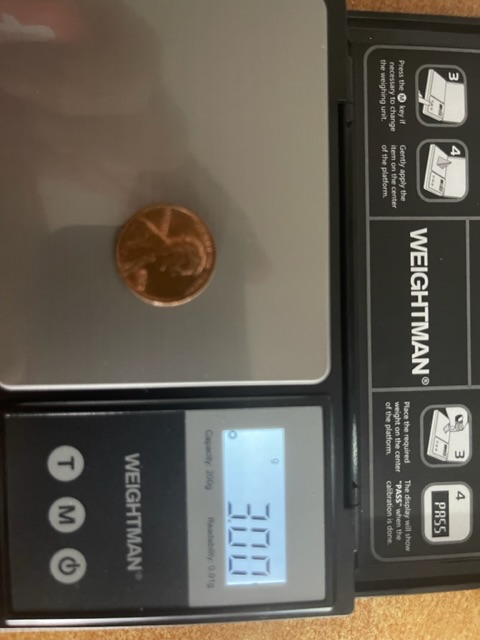 |
|
|
|
Pillar of the Community
United States
1648 Posts |
 There are actually 7 varieties for 1982 Lincoln cents plus the single proof (1982 S) is a Large Date Copper Proof only 3.11g. You will notice from the image that its only the 1982-D small date that is only in zinc, and so if found on copper its a rare error with only two examples found. The others all can be found on BOTH zinc and copper planchets normally and only valuable in certain cases like a very high grade such as if you look at PCGS or NGC website price guide for the highest grades, or has some other reason like its another variety or error. Copper weight around 3.11g while Zinc weight around 2.5g.  It's theorized that the 1982-D Small Date copper penny was created when a brass planchet, or prepared coin blank, was left in the Mint's coin hopper by accident and was inadvertently fed into the coining presses. At least two (and perhaps many more) were unknown — until the first one was discovered by Paul Malone on November 23, 2016. He found it while sorting his 1982 pennies. It was the first-ever reported discovery of a 1982-D Small Date penny. What's amazing about this coin is that it took nearly 35 years for it to be found. And what's even more incredible still is that there are likely more out there just like it waiting to be discovered. |
|
Moderator
 United States
106442 Posts |
Yep, Data, just about explained it pretty good here.
in short - the copper Denver small date, was never meant to be struck up for circulation, but the Large date was. Therefore, the small date is rare and the large date is not.
|
|
Pillar of the Community
United States
1648 Posts |
Yes, thats the short. Heres some more interesting info that is rarely discussed about these 1982 cents from the late David Lange: All planchets for the new cents would be fabricated by outside vendors and delivered ready to coin. A contract was awarded July 22, 1981 to the Ball Corporation of Greenville, Tennessee for press-ready planchets to be delivered no later than November. Production of the copper-plated zinc cents was anticipated to begin in December using dies dated 1982. Since the new cents would not be available in large quantities for another several months, the coining of brass cents was expected to continue throughout much of 1982. Coining of the zinc cents actually commenced on January 7, 1982 at the West Point Mint. (Little remembered today is that this facility produced nearly a billion cents from 1974 to 1985. As these bear no mintmarks, they are indistinguishable from those made at Philadelphia.) Soon thereafter, Philadelphia undertook this coinage, too. Denver continued to produce solely brass cents until October 21, 1982. That was conversion day. After coining brass cents in the morning, an hour's suspension was affected during which time all the remaining brass cents and planchets were cleared away, and the striking of zinc cents began. The first delivery of these from the Coining Division was made on the 27th. The San Francisco Mint struck nearly four million proof cents for collectors, but these were all of the traditional composition. It was found that the underlying zinc broke through its thin copper plating under the repeated impressions given to proof coins. This problem was solved in 1983 and subsequent years by furnishing each proof planchet with a second copper plating. Oddly enough, San Francisco did mint 1,587,245 zinc cents for general circulation in 1982. Like those made at West Point, however, these bear no mintmarks. The coin hobby enjoyed a real windfall when the U.S. Mint decided to make a major revision to the cent's obverse master hub midway through 1982. The new hub is most easily recognized by its much smaller date, and these Small Date cents were first struck September 3. Ultimately, a total of seven different combinations of date size, mint and composition were created for the circulating cent coinage in 1982, only a 1982-D Small Date Brass cent being omitted. https://www.ngccoin.com/news/article/646/ ....So the Small Date Denver as mentioned was just to be zinc. Edited by datadragon
05/18/2023 12:18 pm
|
|
Moderator
United States
106442 Posts |
Quote:
Yes, thats the short Well, I'm a man of few words..  |
|
Pillar of the Community
Canada
6244 Posts |
Excellent explanation DATA. Just you forgot to say that West Point in all those years keep the half of production for Reserve.
What I do not agree with you it is the third party company delivered all the planchets. The Mint receive in 1981 and then they stop this because of the % of the fraud danger. Second, the rolls was not all from the same company.
Rest, excellent teaching.
|
|
New Member
 United States
20 Posts |
Thank you for all the information very valuable. So the weight of a large date makes no difference. I just don't understand why mine weighs exactly 3 g. All the others for the same year weigh 3.11 or 2.5 range. Could this be a mistake as well or is the variance that great?
|
|
Pillar of the Community
Canada
6244 Posts |
On the cents Cu the tolerance it is 0.12gr. So your coin fit the narrative.
|
|
Pillar of the Community
United States
1648 Posts |
Quote:
Thank you for all the information very valuable. So the weight of a large date makes no difference. I just don't understand why mine weighs exactly 3 g. All the others for the same year weigh 3.11 or 2.5 range. Could this be a mistake as well or is the variance that great? The weight can make a difference. There are coins struck on other denominations, and coins struck when the composition of the coin changes like in 1982. There are also foreign planchets etc you can read about in this link, which all would benefit from a weight for help to know what it is. https://varietyerrors.com/wrong-pla...price-guide/For coins there is a tolerance to the weight as this image provides so your coin at 3.0g is within the .12g tolerance for 1982. 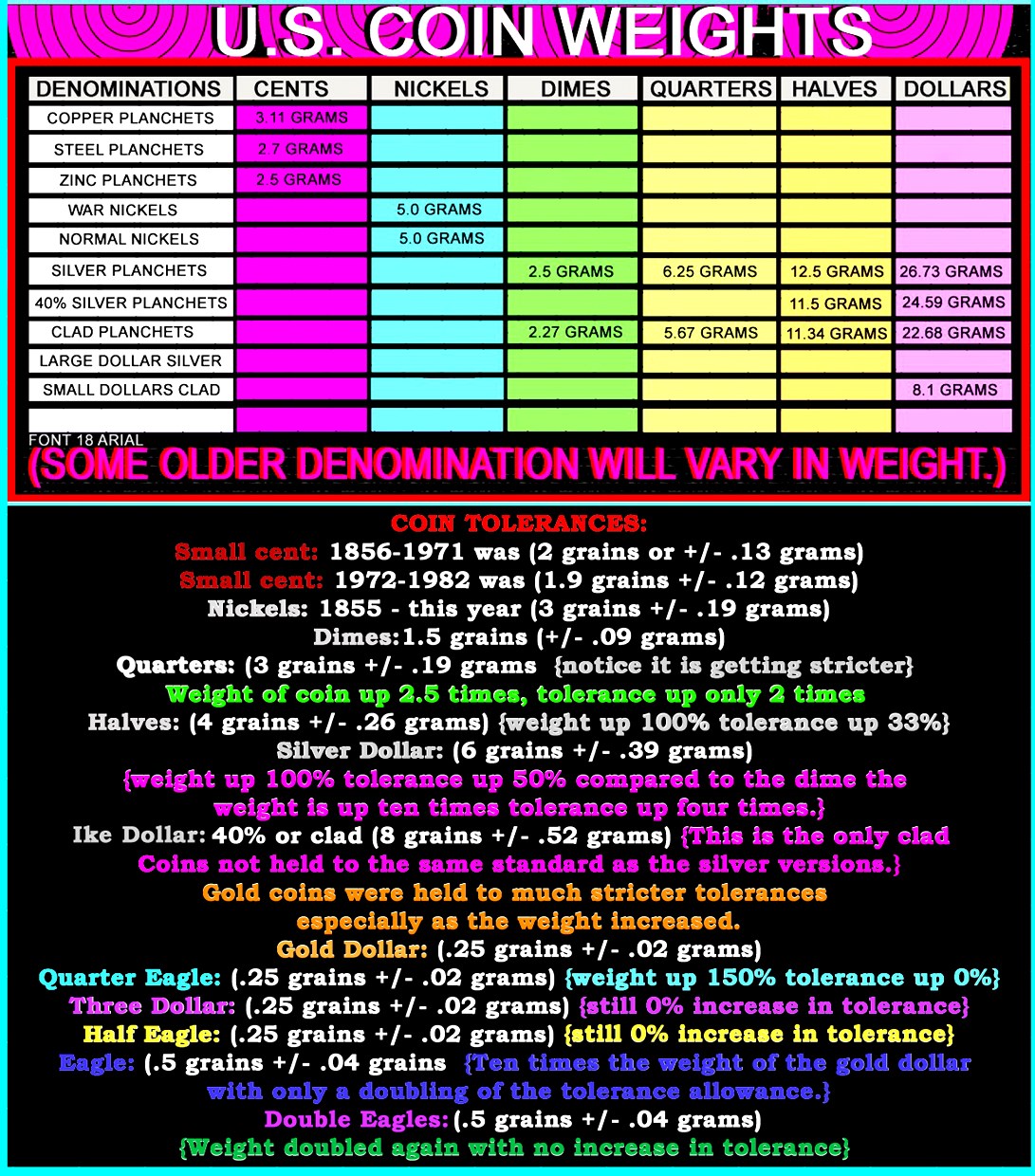 Quote:
What I do not agree with you it is the third party company delivered all the planchets. The Mint receive in 1981 and then they stop this because of the % of the fraud danger. Second, the rolls was not all from the same company. Interesting Silviosi. It does mention vendors meaning more than one but then mentions only the ball corporation contract. It did not go into detail about vendors beyond that in this particular article. "All planchets for the new cents would be fabricated by outside vendors and delivered ready to coin. A contract was awarded July 22, 1981 to the Ball Corporation of Greenville, Tennessee for press-ready planchets to be delivered no later than November." |
|
Pillar of the Community
Canada
6244 Posts |
DATA: I do not go by articles. I go with the Mint in front of the Congress commission. Was awarded in 1980 and contract sign in 1981. The big problem was that in same time many blanks and planchets come in the market. So they just stop. Reserve decision.
PS I have to send you better tables for tolerances.
|
|
Pillar of the Community
United States
1648 Posts |
Quote:
DATA: I do not go by articles. I go with the Mint in front of the Congress commission. Was awarded in 1980 and contract sign in 1981. The big problem was that in same time many blanks and planchets come in the market. So they just stop. Reserve decision. The article mentions the contract was awarded July 22, 1981 to the Ball Corporation of Greenville, Tennessee for press-ready planchets to be delivered no later than November. This New York Times article dated August 29, 1981 says but last month the Treasury went ahead and awarded an $8.75 million one-year contract to the Ball Corporation's Metal and Chemical division for 20.8 million pounds of unstamped zinc pennies, or blanks. So that seems to confirm the date for the actual contract. https://www.nytimes.com/1981/08/29/...ed-soon.html That was a one year contract at that point. Interesting that Jarden Zinc Products, which was spun out of Ball some years ago is still producer of cent blanks the mint buys today. For pennies, numismatic coins, and bullion coins, the Mint buys blanks. https://www.usmint.gov/learn/produc...n-production and https://www.coinbooks.org/v20/esylu...0n48a19.htmlThe U.S. Mint buys a combination of ready-to-use planchets and coinage strip. Currently, it contracts for ready to strike copper-plated zinc cent planchets from Jarden Zinc Products in Greenville, Tennessee. For copper-nickel 5-cent coins, copper-nickel clad dimes, quarter dollars and half dollars, and manganese-brass clad dollar coins, the Mint punches it own blanks from coiled coinage strip and finishes its own planchets. The current coinage strip vendors are Olin Brass in East Alton, Illinois, and PMX Industries in Cedar Rapids, Iowa. https://www.coinworld.com/news/us-c...rnative.html The Mint has also continued to research alternatives to the copper-plated penny. While the alternative metals so far may not yield any cost savings, the current penny composition has only one identified supplier capable of providing planchets for production. Having a single supplier is a significant risk, one the Mint recommends Congress consider when reviewing possible future legislation. https://www.usmint.gov/wordpress/wp...P5_FINAL.pdfEdited by datadragon
05/18/2023 8:55 pm
|
|
Pillar of the Community
Canada
6244 Posts |
DATA you are correct. 1981 was a problem. About alternative metals, is pas the Senate and the House. I already send to Mike. Him can give you this. Was approved in 2020. DATA, welcome to the hide news till implanted if not already. Any ways, the cent will pass from 0.7 cent a coin to 0.45 cent a coin (the most expensive)
|
|
Pillar of the Community
United States
3360 Posts |
I have a vague memory of seeing a report that the reason the mint decided for a new hub (with small date) for 1982 was problems with striking the large date because of the large date. Can anyone confirm?
If so, what exactly was the problem with striking the large date?
|
| |
Replies: 12 / Views: 1,555 |
|










 Posted 05/18/2023 12:03 pm


 Uncirculated American Silver Eagles


