| Author |
 Replies: 23 / Views: 1,594 Replies: 23 / Views: 1,594 |
|
CCF Master Historian of Commemorative Coins
 United States
12636 Posts |
I'm not a dedicated collector of Panama-Pacific International Exposition material, but I have picked up a few items of ephemera (e.g., souvenir booklets, postcards) and exonumia (e.g., buttons, badges, medals) over the years to supplement my "Pan-Pac" coins. Here are a few used to illustrate a brief story about the Exposition itself...Multiple groups in multiple cities looked to host a Fair/Exposition to celebrate the completion and opening of the Panama Canal; the Canal officially opened on August 15, 1914. San Francisco, CA, San Diego, CA and New Orleans, LA were the cities that made the biggest push to serve as host for an Exposition. New Orleans envisioned itself as the primary departure port for ships leaving the US to transit the Canal (East to West), as well as the initial US arrival port for ships traveling through the Canal (West to East). (Technically, the Panama Canal runs North-South, from the Caribbean Sea in the north to the Pacific Ocean in the south. I used the East-West terminology here as it matches common "beliefs" about the Canal's orientation.) New Orleans developed a promotional campaign to compete for the Exposition centered around the slogan "The Logical Point." New Orleans - The Logical Point Pinback Button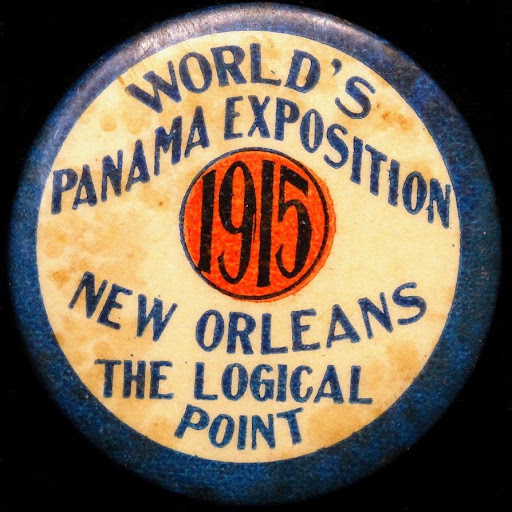 San Diego developed a "First Port" campaign to make its case for the Exposition. San Francisco attempted to get San Diego to drop its efforts, owing to the facts that San Francisco was the larger city and had stronger financial resources to support a large Fair/Exposition. When San Diego refused to back down, San Francisco's political machine activated and lobbied members of the US Congress to make the city's case. Ultimately, the US Congress passed a bill that awarded the Exposition to San Francisco on January 31, 1911; US President Howard Taft signed the bill into Public Law on February 15, 1911. The groundbreaking for the Exposition grounds took place on October 14, 1911 with President Taft turning the first shovel of dirt in front of an estimated crowd of 100,000. After losing out to San Francisco, San Diego decided to host a competing Exposition - the California-Pacific Exposition. It will be the subject of an upcoming post. The Panama-Pacific International Exposition was constructed on ~635 acres of mostly reclaimed waterfront land in north San Francisco. It cost ~$50 million and included: - 11 Exhibition Palaces - 21 Foreign Pavilions - 48 State Buildings - a 65-acre amusement zone The architectural style of the Exposition earned it the nickname "City of Domes." (Multiple domes are seen in the following image.) Aerial View of Panama-Pacific International Exposition Grounds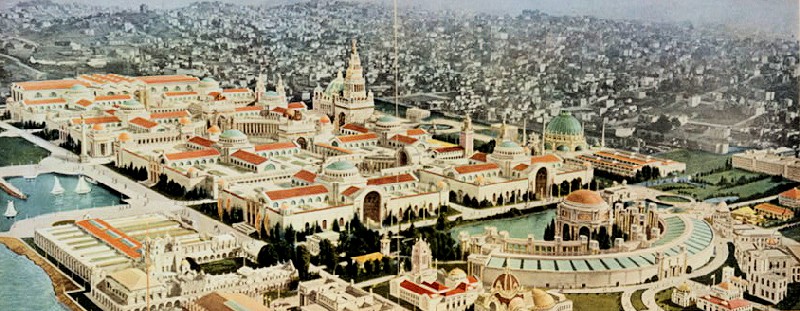 (Image Credit: Library of Congress, Prints and Photographs Division. Public Domain.) (Image Credit: Library of Congress, Prints and Photographs Division. Public Domain.)The Exposition opened to the public on February 20, 1915. The Exposition Company recognized those who participated in Opening Day via a special badge for the day. 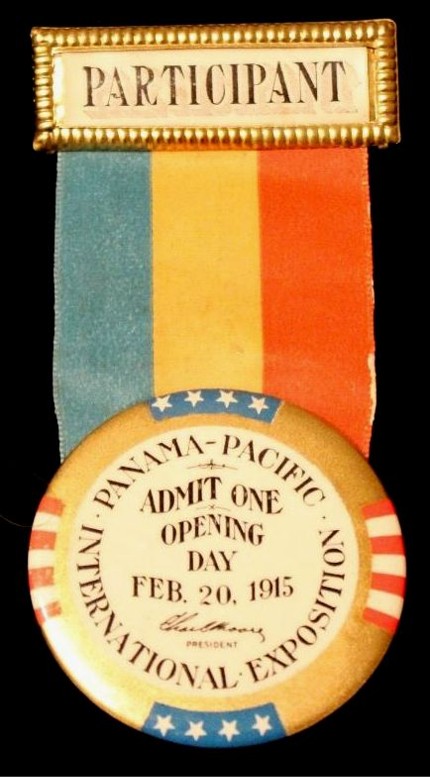 The Exposition ran through December 4, 1915. As a bookend to the "Opening Day" badge, the Exposition Company issued a "Closing Day" badge to those who worked the final day. 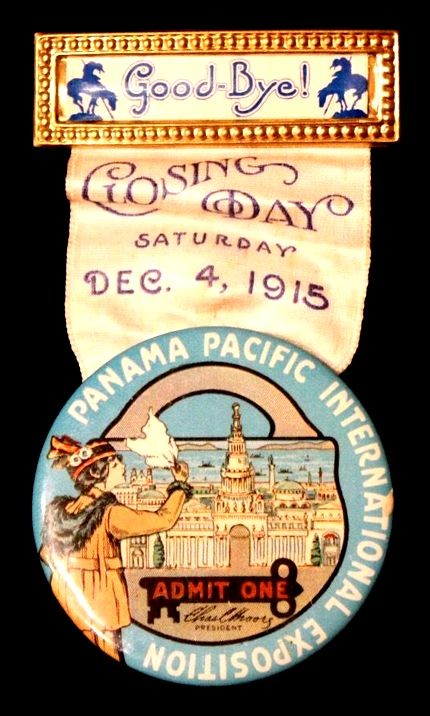 The Exposition was considered a success. Between opening and closing, ~19 million guests attended the Exposition. Overall, a net profit of ~$1 million was realized by the Exposition's organizers. For other of my posts about commemorative coins and medals, including more on the Pan-Pac Expo coins, see: Commems Collection. Collecting history one coin or medal at a time! (c) commems. All rights reserved.
|
|
|
|
CCF Master Historian of Commemorative Coins
 United States
12636 Posts |
Here are a few other views of the Exposition grounds: Tower of Jewels & South Gardens Looking West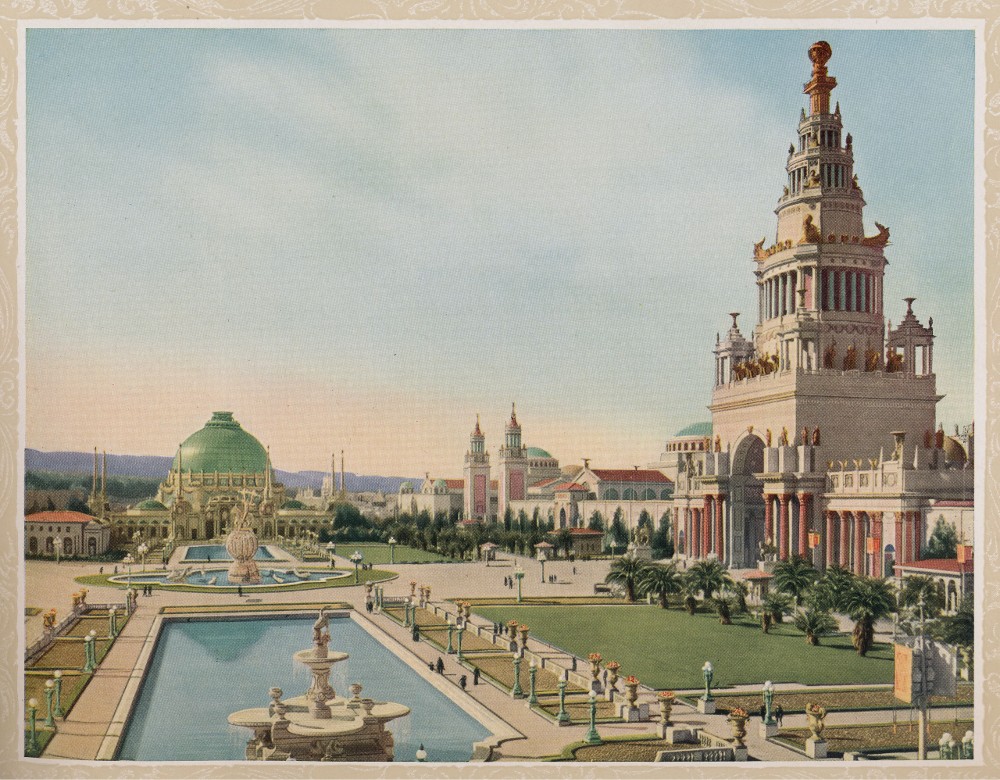 Tower of Jewels Tower of Jewels- 435 feet tall - Covered with more than 100,000 cut glass "jewels" to reflect sunlight and the shining light of 50+ flood lights at night Festival Hall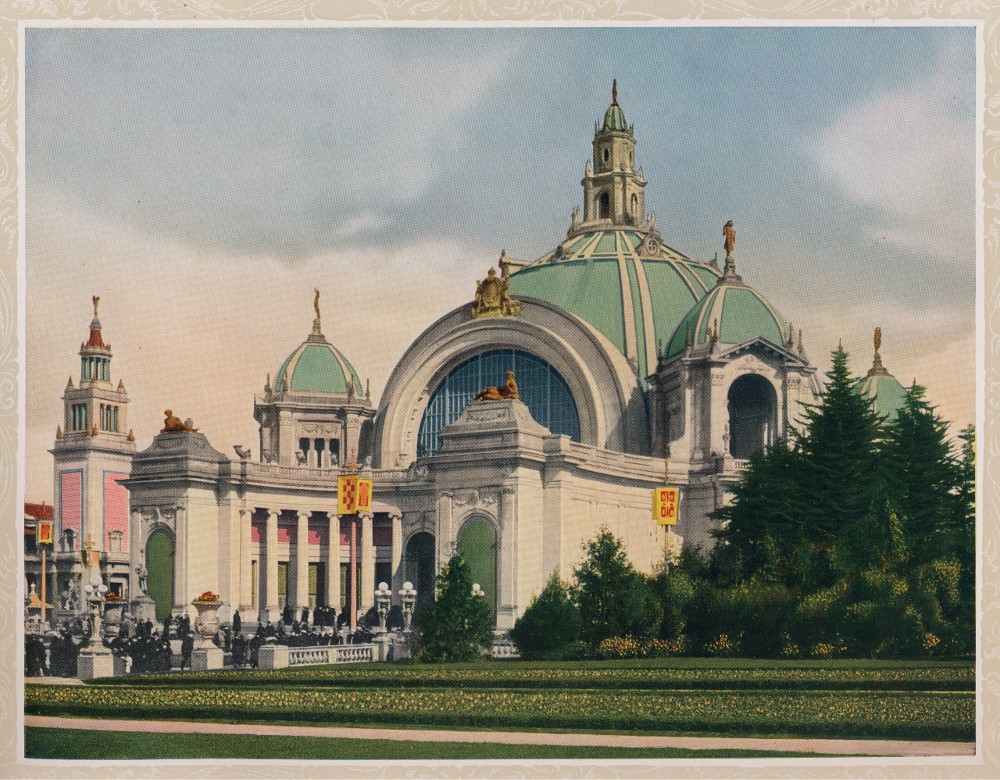 - Was host to musical concerts and recitals Court of Four Seasons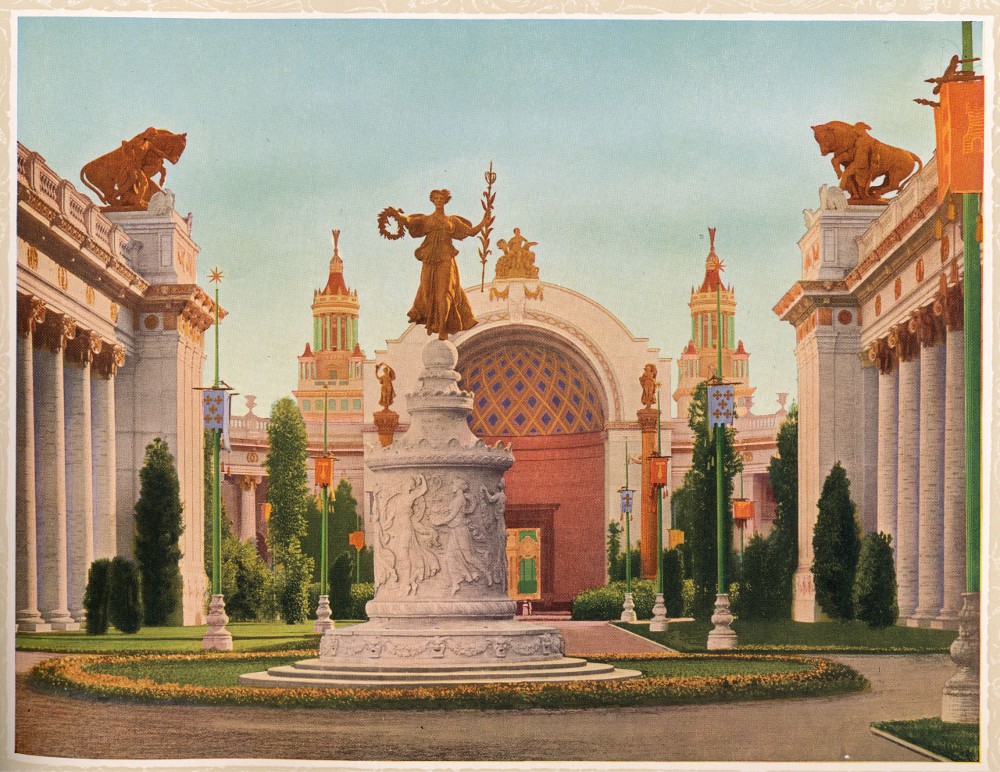 - Designed as a place where guests could enjoy a break from the commotion of the Exposition. Collecting history one coin or medal at a time! (c) commems. All rights reserved.
|
|
Bedrock of the Community
United States
94367 Posts |
Incredible pics, thanks so much. That aerial view prompts the inevitable question - did any of it survive?
|
|
Moderator
United States
16015 Posts |
Great summary and exonumia @commems. I spent a few years actively collecting the So-Called Dollars from the Panama-Pacific International Exposition and came across a few that were obvious pocket pieces. Here is one such pocket piece example: HK-409 Montana Fund SCD - AG03 or so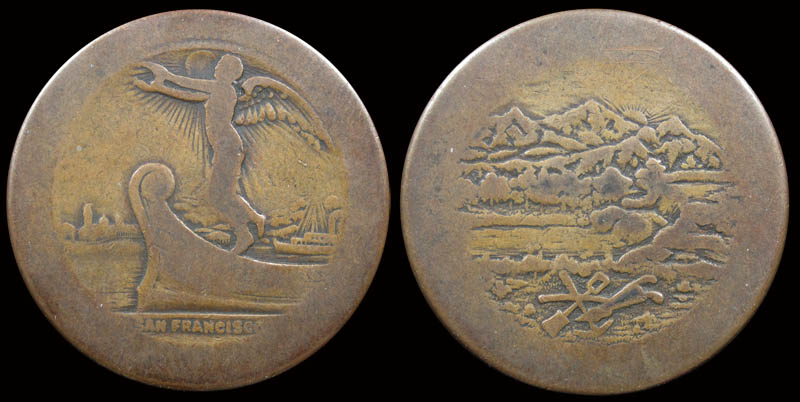 Quote:
did any of it survive? I often wonder the same thing @frog - that is an impressive bunch of construction just to tear it all down at the end. Edited by nickelsearcher
05/31/2023 10:54 am
|
|
Moderator
United States
198007 Posts |
Fantastic!  Quote:
Technically, the Panama Canal runs North-South, from the Caribbean Sea in the north to the Pacific Ocean in the south. I used the East-West terminology here as it matches common "beliefs" about the Canal's orientation. I just looked at the canal on the map. It does run north-south, but it also "tilts" from northwest to southeast. It can really mess with your head. Sort of how Canada is south of Detroit.  |
|
CCF Master Historian of Commemorative Coins
United States
12636 Posts |
Quote:
I just looked at the canal on the map. It does run north-south Would I lie to you?  Of course, I certainly make mistakes from time to time! Collecting history one coin or medal at a time! (c) commems. All rights reserved.
|
|
Bedrock of the Community
United States
27514 Posts |
commems, thank you for another informative post! By the way, you're a bad influence on my budget.
Inordinately fascinated by bits of metal with strange markings and figures
|
|
Moderator
United States
198007 Posts |
Quote:
Would I lie to you? Never! And as I read it, I seemed to recall it being "weird" like that, so I had to look to satisfy the curiosity. I also thought it was on the opposite diagonal! |
|
CCF Master Historian of Commemorative Coins
United States
12636 Posts |
Quote:
That aerial view prompts the inevitable question - did any of it survive? In a word, "No." In the case of the Pan-Pac Exposition, the buildings and interior fixtures were sold and the buildings moved to new locations either in whole or in pieces after being disassembled. As with many other Expositions, the often-elaborate building exteriors were made of plaster over chicken wire and/or other temporary frameworks and were subject to deterioration over time at their new locations. When they got too bad, they were demolished. I don't believe any original structures survive today. Any Pan-Pac Expo historians out there who are aware of any remaining original buildings? Collecting history one coin or medal at a time! (c) commems. All rights reserved.
|
|
CCF Master Historian of Commemorative Coins
United States
12636 Posts |
Quote:
By the way, you're a bad influence on my budget. Music to my ears! Collecting history one coin or medal at a time! (c) commems. All rights reserved.
|
|
Bedrock of the Community
United States
27514 Posts |
This one is on its way to me (seller's pics). NGC MS64. 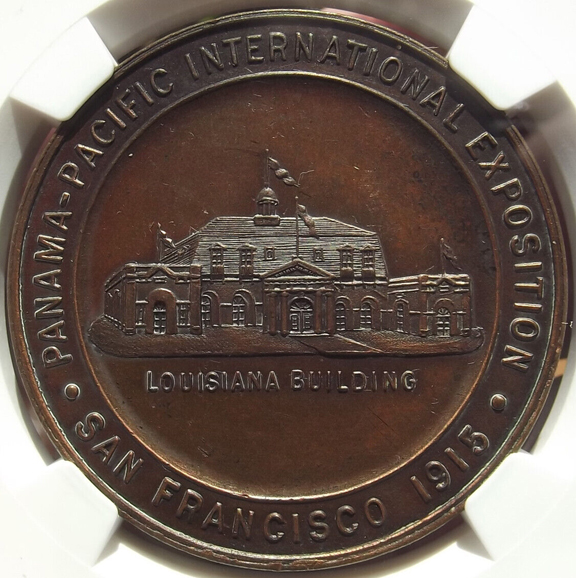 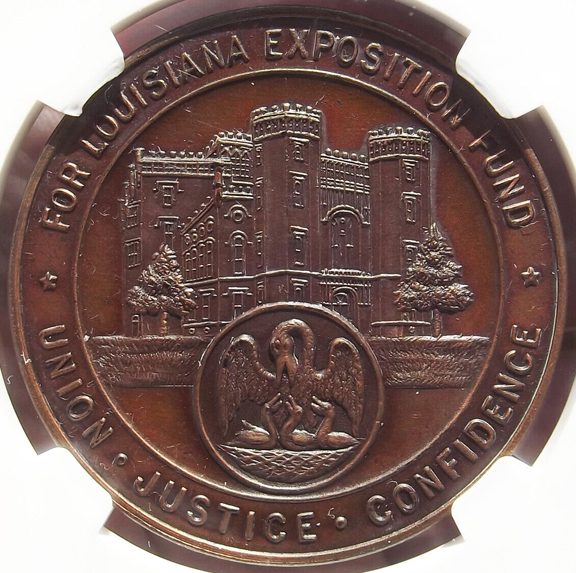 Inordinately fascinated by bits of metal with strange markings and figures
|
|
Bedrock of the Community
United States
94367 Posts |
|
|
Bedrock of the Community
United States
27514 Posts |
Thanks, Coinfrog! By the way, I just saw several listings for 1915-S Pan-Pac gold $50. I'll have to start saving my allowance if I want one of those....
Inordinately fascinated by bits of metal with strange markings and figures
|
|
Bedrock of the Community
United States
10065 Posts |
I have spent hours going through online pictures of the displays at the Pan-Pac. Fascinating what was there including the first coin press used in America.
I remember reading the metal skeleton of the Palace of Fine Arts was stripped and remade in the 60s and redone around 2005 as well.
I really would love to have been able to experience that World Fair first hand. I believe an undertaking of this magnitude would be totally impossible due to costs nowadays.
I also remember reading about a Japanese Tea House that was moved elsewhere and still is in use.
|
|
CCF Master Historian of Commemorative Coins
United States
12636 Posts |
@Hondo_Boguss: Very nice example of the Pan-Pac Expo Louisiana State Dollar. Congrats!
The Pan-Pac Montana Dollar is often available - maybe it could be your next target?!
Collecting history one coin or medal at a time! (c) commems. All rights reserved.
|
|
Moderator
United States
198007 Posts |
Quote:
This one is on its way to me (seller's pics). NGC MS64. That looks fantastic! I know you cannot wait to lay your own eyes on it. |
| |
Replies: 23 / Views: 1,594 |




 Posted 05/31/2023 09:17 am





