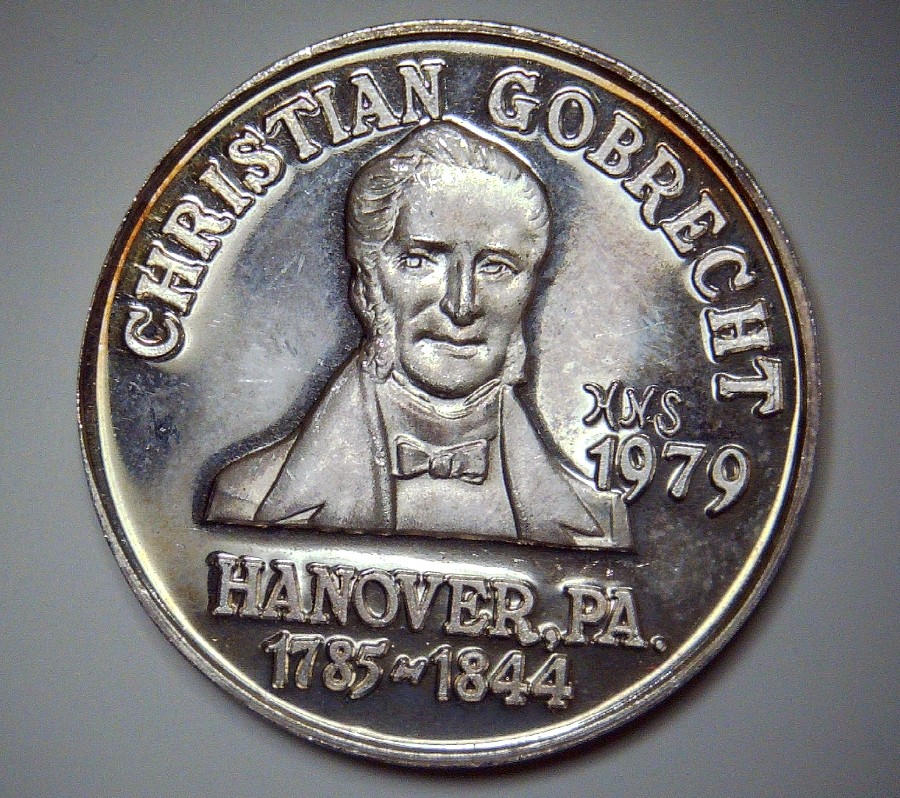
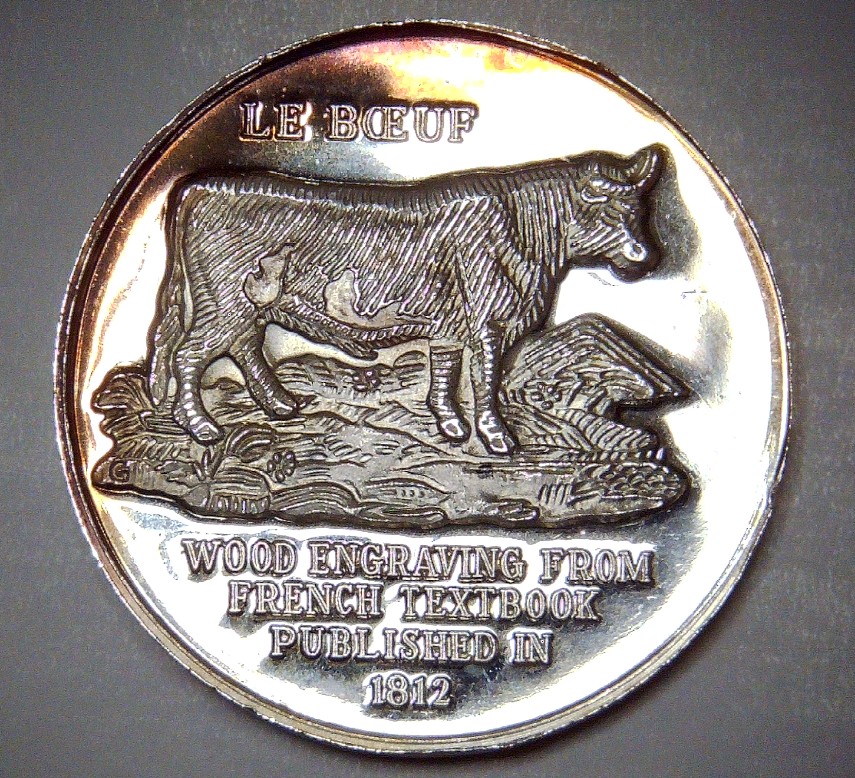
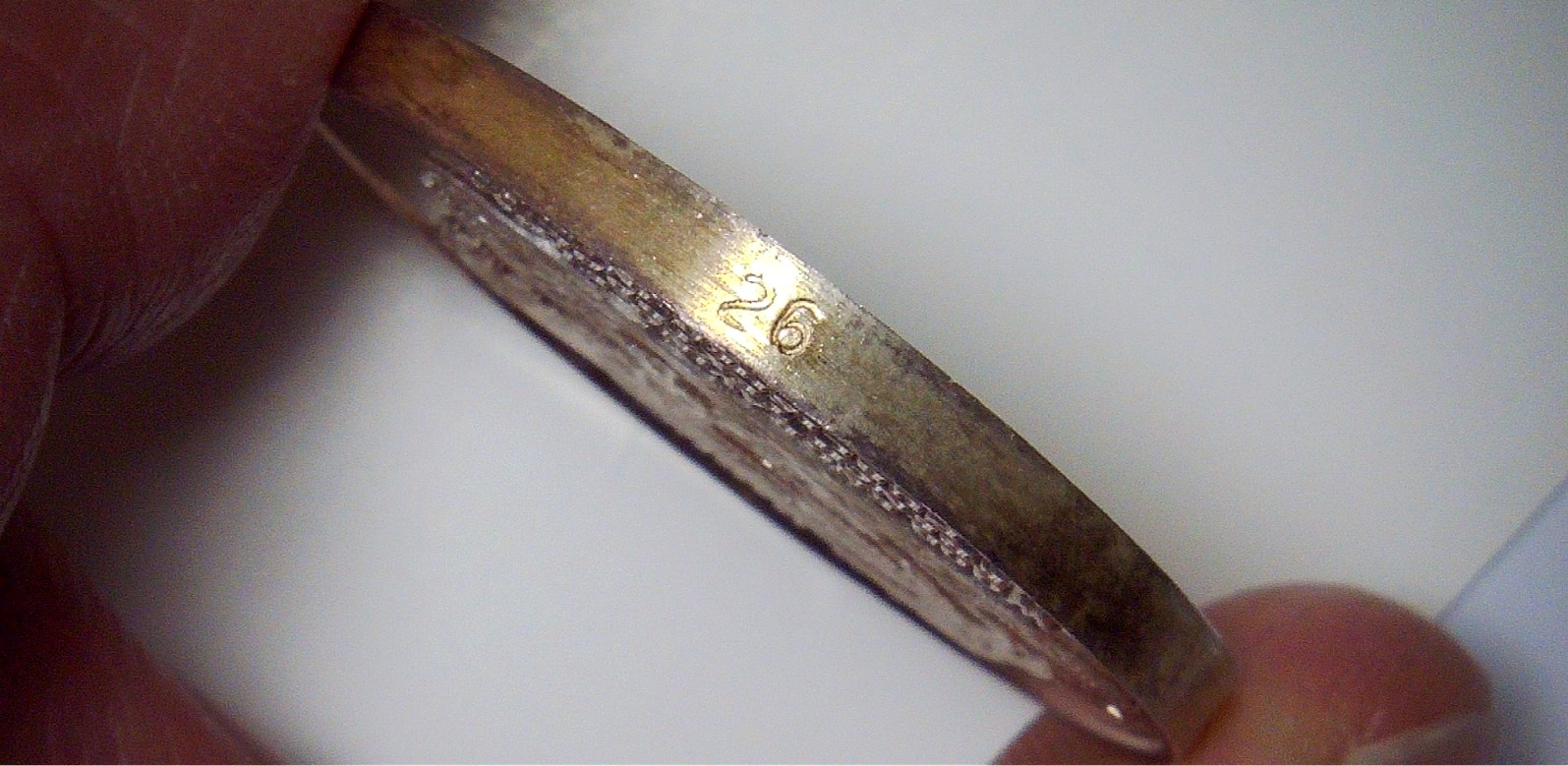
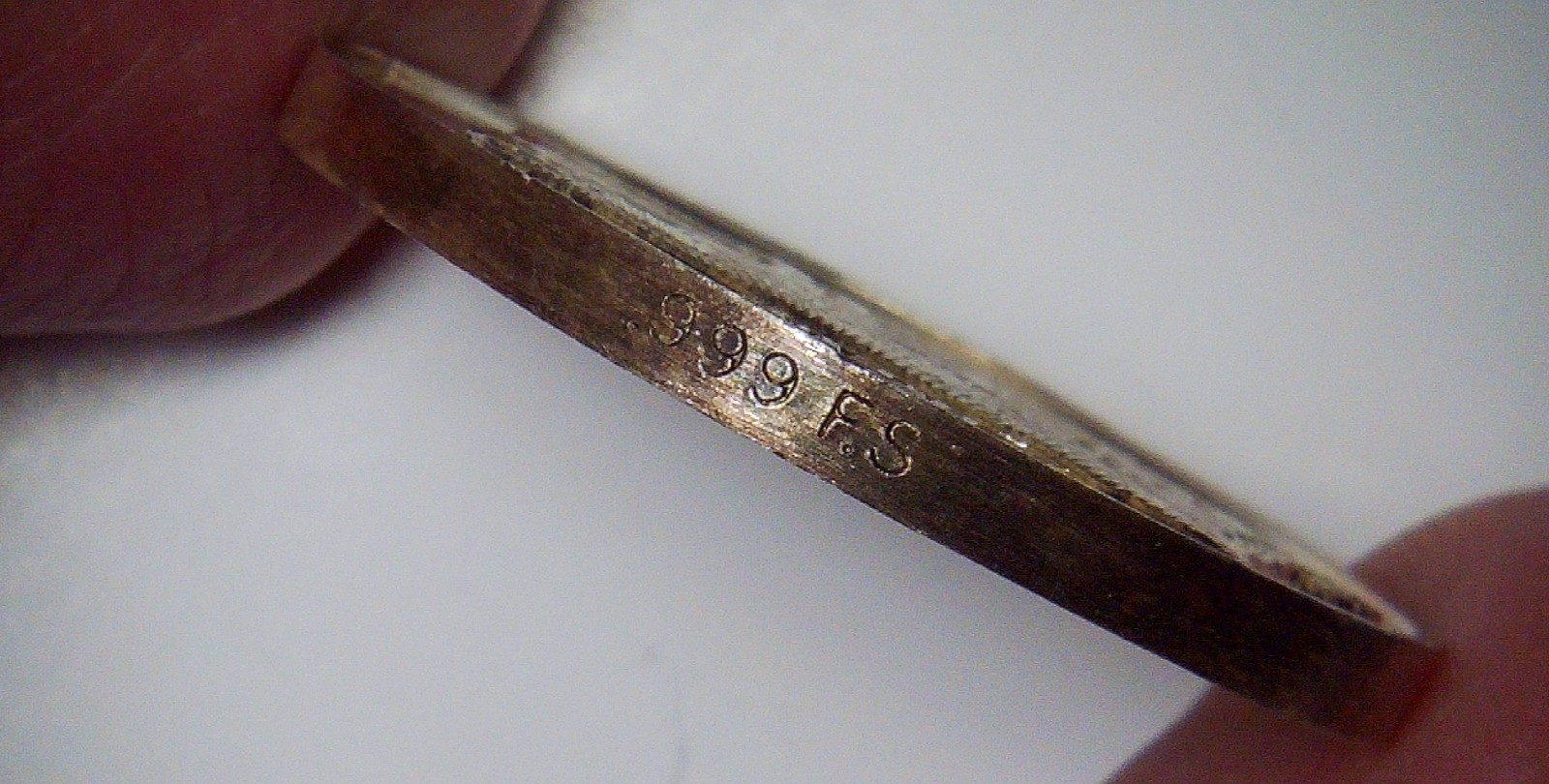
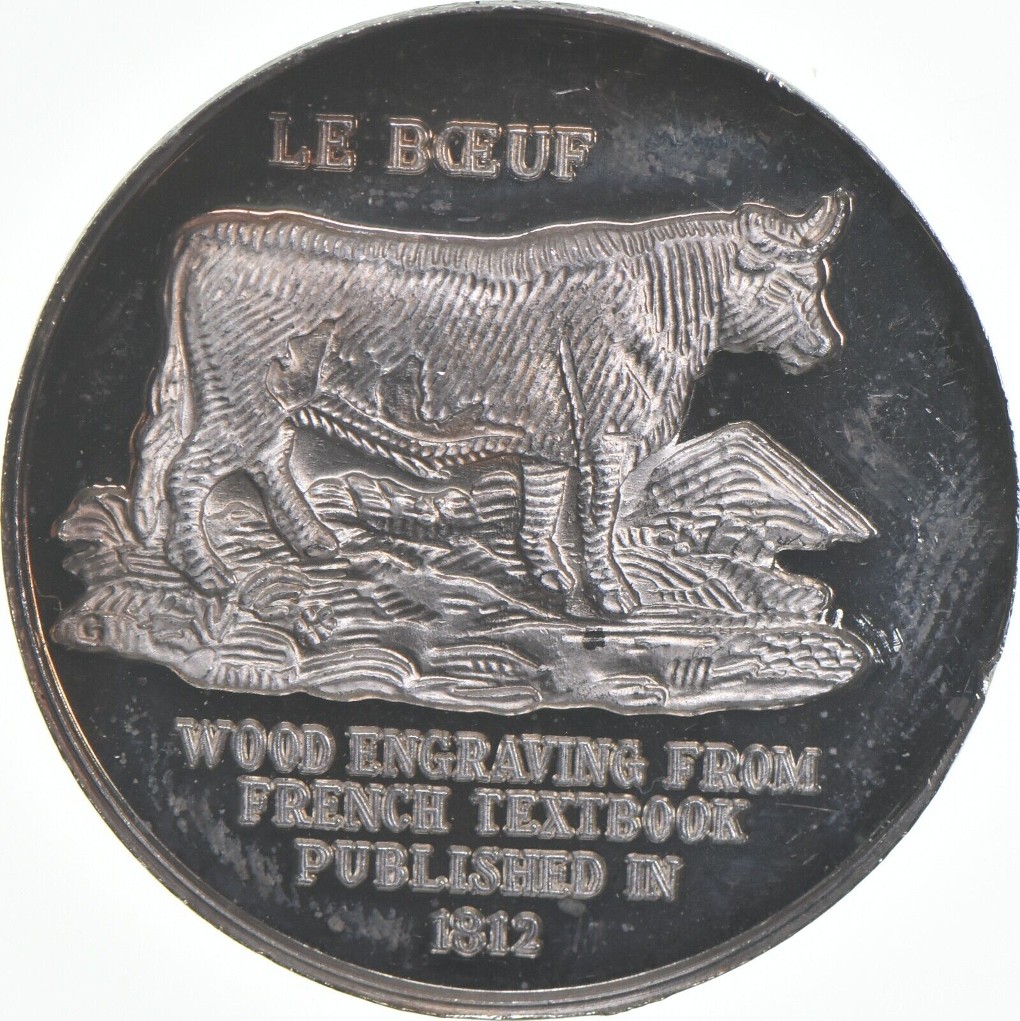
@humble, other than those unfortunate fingerprints, this is a pretty cool medal. The HNS just above the issuing date (1979) stands for the Hanover Numismatic Society. Evidently, this is one of several medals that this group commissioned. There is a nice discussion of this over on the forums, but I have copied some of the salient text below:
Quote:Here's the 2005 article from E-Gobrecht:
http://www.seateddimevarieties.com/E-Gobrecht Volume 1, Issue 5.htm
Hanover Numismatic Society Gobrecht Medals issued from 1966 to 1981 by Len Augsburger.
In 1966, the Hanover Numismatic Society of Hanover, Pennsylvania commissioned a series of medals commemorating the work of
Christian Gobrecht, who was born in Hanover in 1785. Silver and bronze medals were issued annually through 1981. The 1966 medal featured a portrait of Gobrecht on the obverse, while the reverse was a reproduction of the
Gobrecht dollar reverse as first minted in 1836. The reverse included the words "ONE DOLLAR" which quickly attracted the attention of the FBI. Many of the 1966 medals were soon seized, in addition to the reverse die, which was never returned. The medals were returned to collectors with the legend "ONE DOLLAR" effaced. The Hobby Protection Act of 1973, mandating the use of the word "COPY" on reproductions, had not yet clarified the legality of such items as the 1966 Gobrecht medal. The FBI was unable to locate all of the 1966s and many survive today without the reverse effacement.
Sketches of Gobrecht works were provided to a private mint that returned an aluminum trial piece for each year, along with the actual dies after the silver and bronze strikings were complete. These dies remain with the Hanover Numismatic Society. The obverse die remained the same throughout the entire series and many of the Gobrecht medals described in Julian's "Medals of the United States Mint" were used as the basis for the reverse dies. One example is the Charles Carroll medal, Julian PE-6, which was used for the 1976 and 1977 reverses. An original example of this 1826 medal, in gold, appeared in Stack's Ford V 10/2004:220, there illustrated with a full-page color plate.
The Hanover Gobrecht medals were struck to the extent of several hundred each year, this number declining as the price of silver rose in the 1970s. They remain highly collectible today, with specimens frequently appearing on
ebay.com (search for "Gobrecht"). Bronze examples are typically several dollars each, while the silver specimens are in the twenty to thirty dollar range. Medals from the later 1970s are scarce, owing to their diminished mintages and are infrequently seen on
http://www.eBay.com . The
American Numismatic Society collection has a full set of these interesting medals in bronze, along with a silver example from the 1966 inaugural year of the series.
Thanks to Sterling Yost of the Hanover club for supplying much of the above information.









 Posted 08/04/2023 07:56 am