| Author |
 Replies: 2,146 / Views: 75,084 Replies: 2,146 / Views: 75,084 |
|
|
|
Moderator
 United States
197600 Posts |
Very nice!  |
|
Bedrock of the Community
 United Kingdom
19113 Posts |
Rhodesia 25 cents 1964 - the year the country declared UDI (Universal Declaration of Independence). The next coin of this denomination issued in 1975 omitted the Queen's Head: 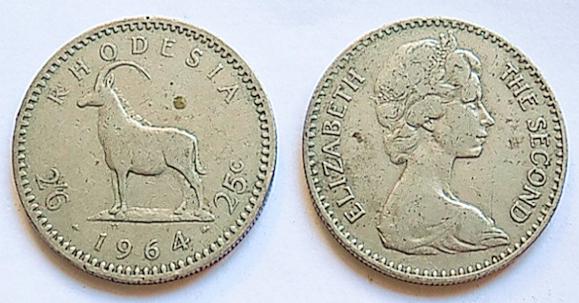 |
|
Pillar of the Community
United States
883 Posts |
Ah, the rare double-denomination "2/6 — 25¢". New Zealand had "One shilling — 10 cents" coins for a few years, but I think only Rhodesia had half-crowns with this transitional denomination. It's also a very early use of that effigy. Possibly the first?
Edited by publius
09/04/2023 12:10 pm
|
|
Moderator
United States
197600 Posts |
Quote:
Rhodesia 25 cents 1964 - the year the country declared UDI (Universal Declaration of Independence). The next coin of this denomination issued in 1975 omitted the Queen's Head: Excellent! |
|
Pillar of the Community
Australia
9888 Posts |
Here's 2 more from Rhodesia 1964. 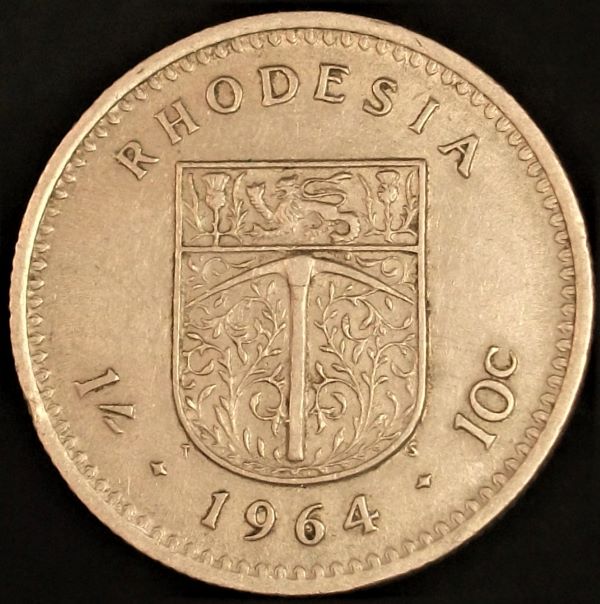 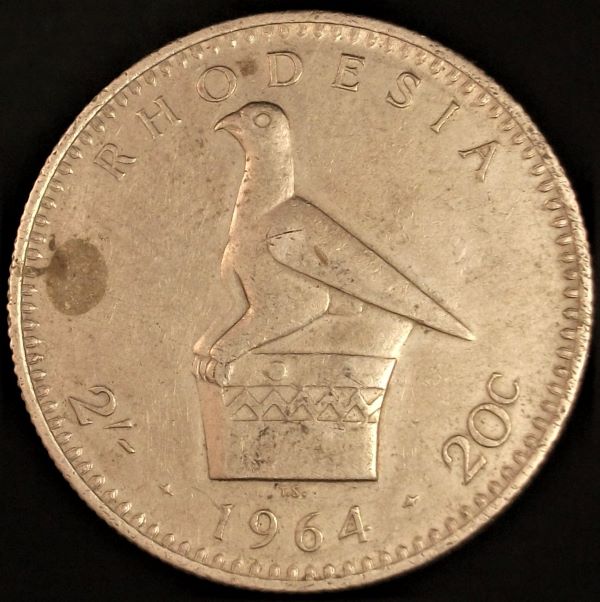 |
|
Moderator
United States
197600 Posts |
Quote:
Here's 2 more from Rhodesia 1964. Very nice! |
|
Bedrock of the Community
United Kingdom
19113 Posts |
Federal Republic of Germany 10 pfennig 1949F (Stuttgart Mint):  The Bank Deutscher Länder (Bank of German States) was set up in what were then the Western Allies' occupation zones of Germany in 1948, and issued new coins to replace the wartime zinc Nazi issues. In 1950 the obverse legend on the coins was changed to Bundesrepublik Deutschland, to reflect that they were now the official currency of the German Federal Republic. 1 pfennig coins with the Bank Deutscher Länder legend were issued in 1948 and 1949, and 50 pfennig coins in 1949 and 1950, but 5 and 10 pfennig coins with this obverse only exist dated 1949. |
|
Moderator
United States
197600 Posts |
Quote:
Federal Republic of Germany 10 pfennig 1949F (Stuttgart Mint): Nice example! |
|
Bedrock of the Community
United Kingdom
19113 Posts |
|
|
Moderator
United States
197600 Posts |
Nice examples! |
|
Bedrock of the Community
United Kingdom
19113 Posts |
Costa Rica has tended to outsource production of its coins to various foreign mints, resulting in occasional slight changes of design and metal content. For some reason the 1954 1- and 2-Colon coins were made of stainless steel rather than the usual cupro-nickel. Subsequent issues of both coins reverted to cupro-nickel, until 1982 when the coins were once again made of steel, but with a reduced size and modified design: 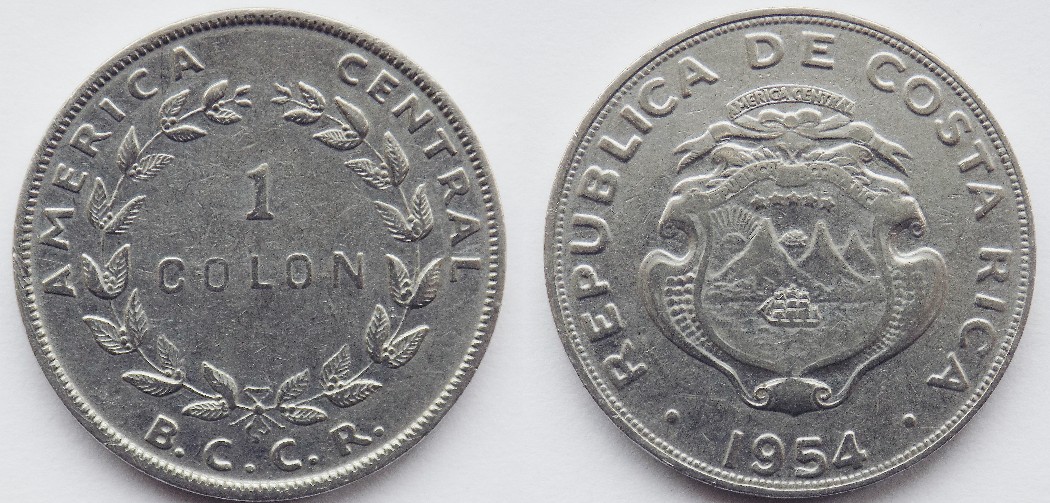 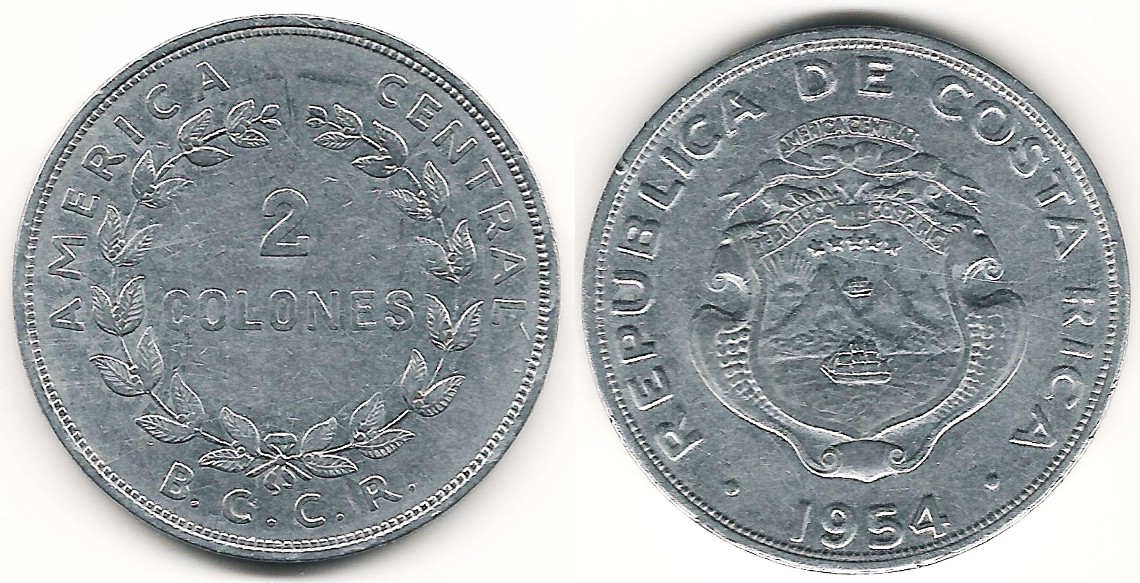 |
|
Valued Member
United States
164 Posts |
How about a coin from Edward VIII? It doesn't get any more "One Year Only" than that! 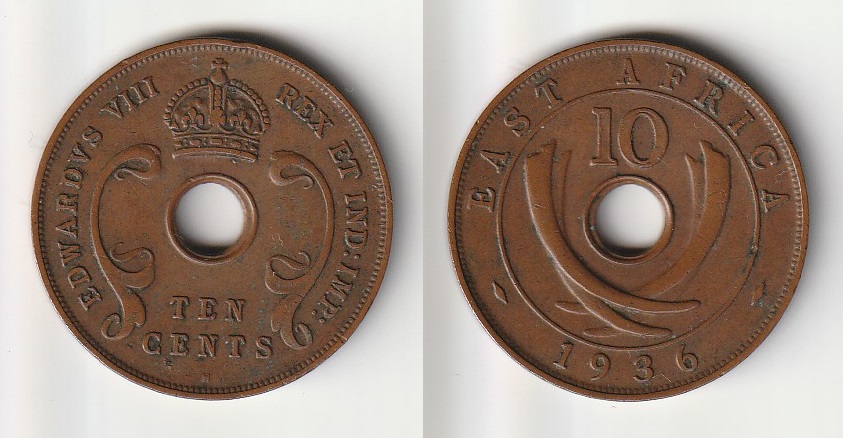 (BTW, I've thought about starting a "Post Your Edward VIII Coins - actual circulation coins only" thread, but I'm not sure how many possible entries there would be.) |
|
Moderator
United States
197600 Posts |
Quote:
How about a coin from Edward VIII? It doesn't get any more "One Year Only" than that! Very nice! Quote:
I've thought about starting a "Post Your Edward VIII Coins - actual circulation coins only" thread, but I'm not sure how many possible entries there would be. Only one way to find out...  |
|
Bedrock of the Community
United States
27514 Posts |
Excellent, triggersmob! WWII was a period when many 1 year issues occurred. 1944 France 2 Francs (minted in Philadelphia): 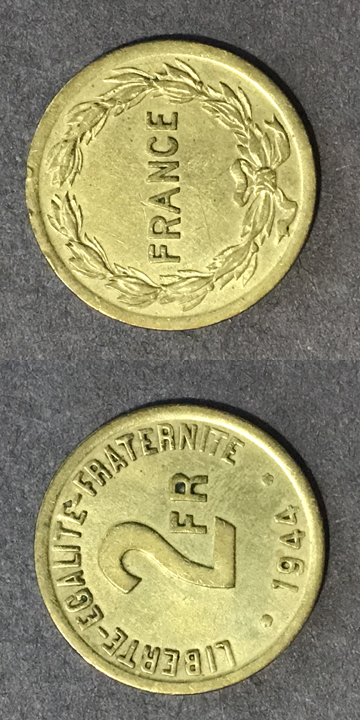 From Numista: Quote:
Soldiers involved in the landing of Provence received these coins, which circulated in the south of France and Algeria. This unofficial coin was regulated by the Minister of Finance on June 25, 1945. Inordinately fascinated by bits of metal with strange markings and figures
|
|
Bedrock of the Community
United States
27514 Posts |
Another WWII 1 year issue: Egypt 1 Qirsh 1944. Silver content was reduced to 50% from 83.3% previously used because of the increased cost of silver due to the war. This may have been the last silver coin Egypt produced for circulation. 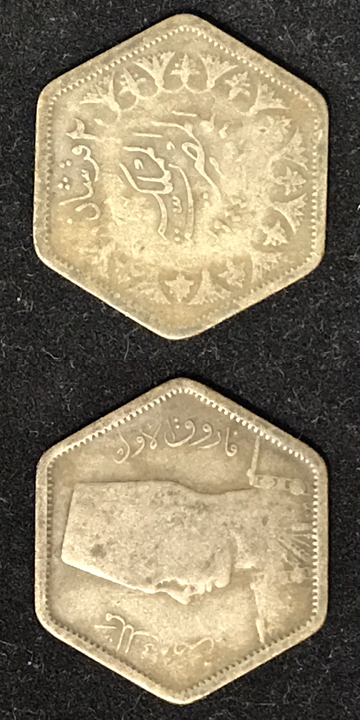 Inordinately fascinated by bits of metal with strange markings and figures
|
| |
Replies: 2,146 / Views: 75,084 |




 First Page
 Previous Page


 Posted 09/04/2023 01:10 am