| Author |
 Replies: 8 / Views: 1,185 Replies: 8 / Views: 1,185 |
|
|
Valued Member
United States
132 Posts |
Edited by threefifty
09/01/2023 4:09 pm
|
|
|
|
Pillar of the Community
United States
1962 Posts |
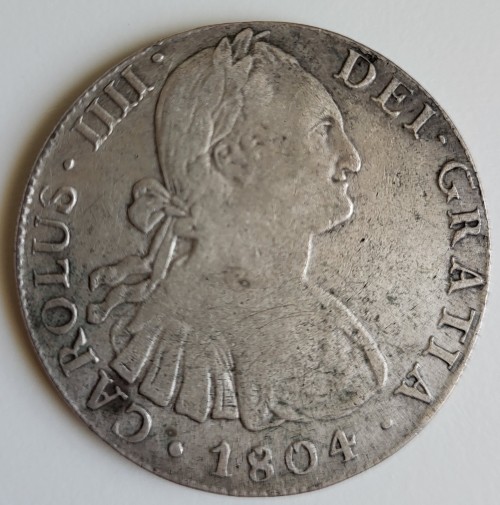
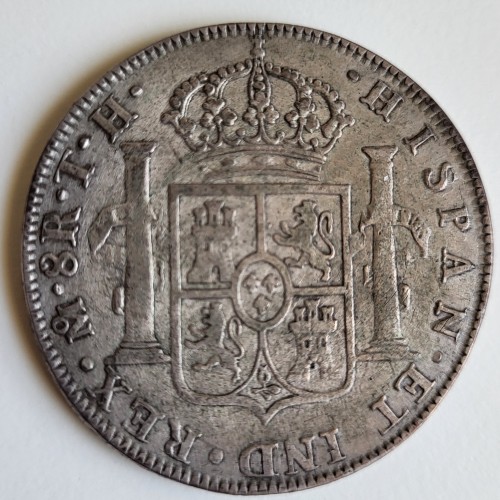
threeffity... that 1804 looks modern.
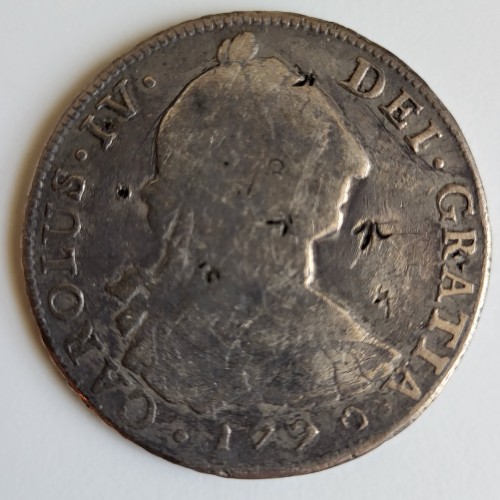
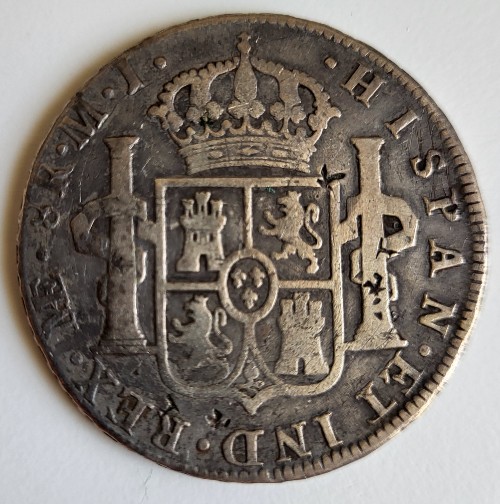
That 1790 Lima... most curious. Everything is "sort of" right, assayer aside. Does have a strange surface/patina - the zapper might be on to something suspecting plating/wash of some sort.
Can you get clear closeups of the date and the assayer area.
|
|
Pillar of the Community
 United States
8031 Posts |
Yeah, if we can believe there is germanium in it, I guess it's modern.
Germanium? Really?
|
|
Bedrock of the Community
 United States
27198 Posts |
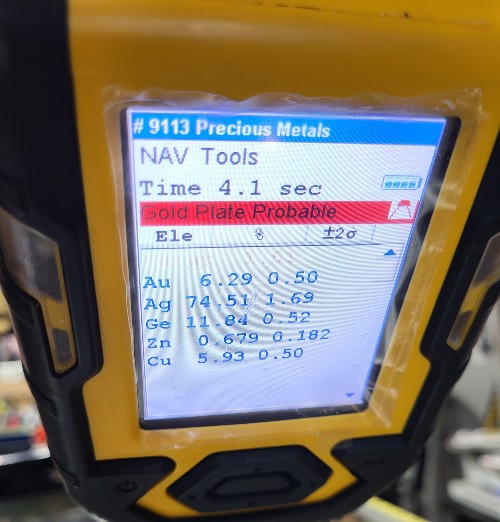
I saw that "Ge" in the XRF analysis and did a double-take. It's more expensive than silver right now!
Inordinately fascinated by bits of metal with strange markings and figures
|
|
Pillar of the Community
United States
5362 Posts |
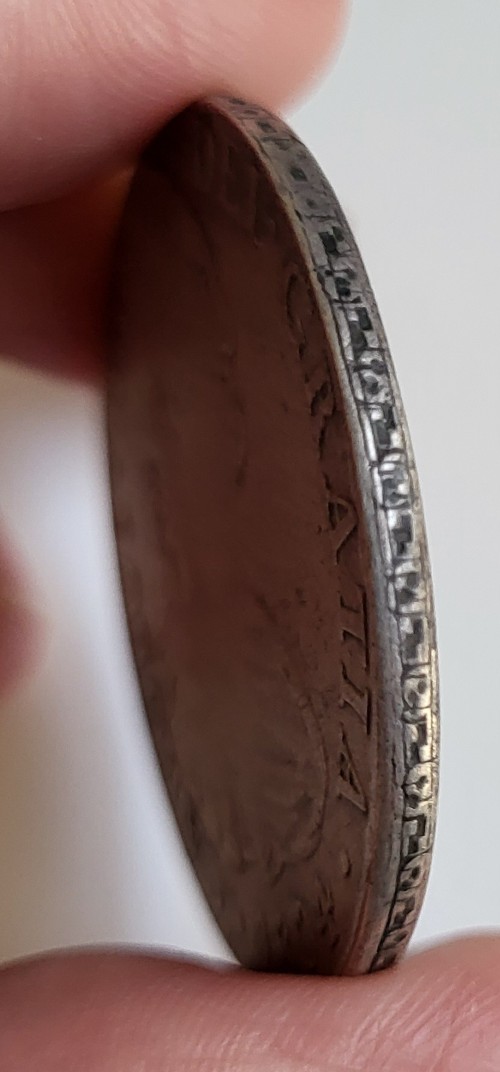
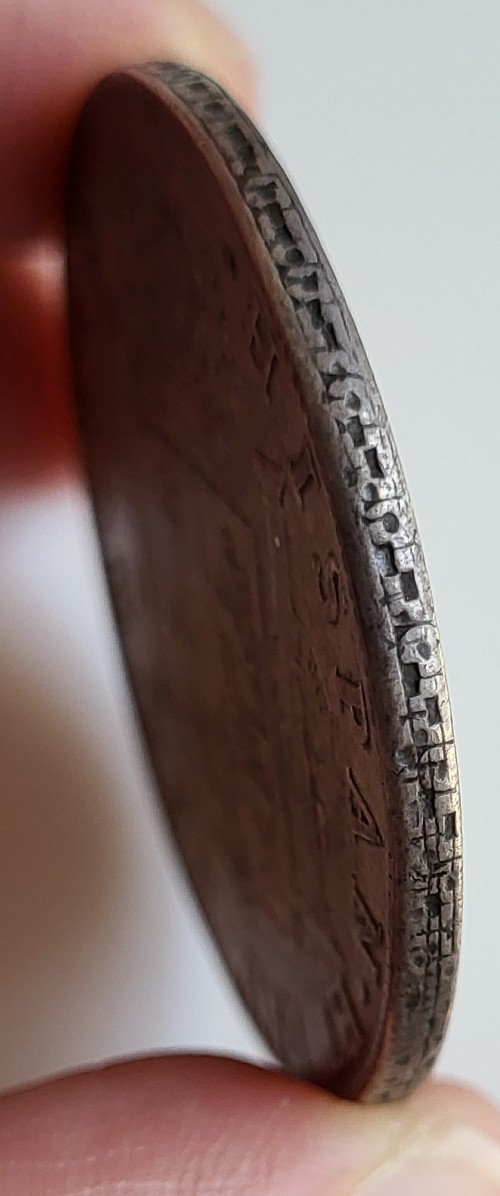
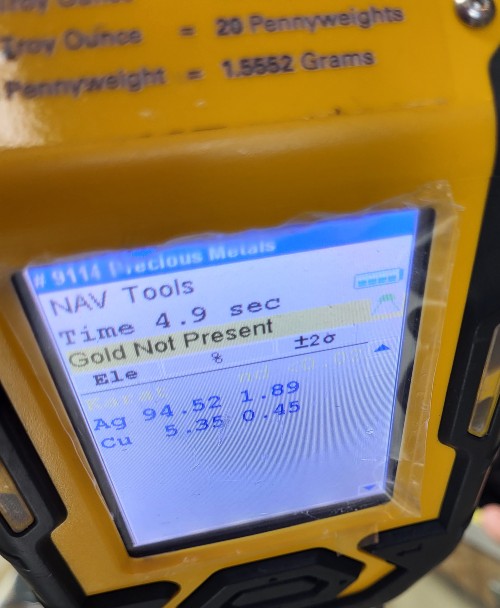
A few comments, first of all the 1804 Mo TH is clearly a counterfeit based on the physical features of the coin. I have one in my collection which uses an edge that is quite similar if I recall correctly. I believe I classified it as a fake but with no final category - I may be incorrect on that because I do not have my book handy to check.
The Germanium is troubling until you do some historic research. I believe the concentration is so high that it needs an explanation. The metal is worth about $ 85 an ounce so I doubt it was added intentionally. Recovery as a byproduct of recycling could be the answer. Ge was used almost exclusively in the first generation of semi-conductors and since that time it has been replaced. It may be possible that some very old electronics was recycled and the Ge was recovered along with the Ag without being parted. They either did not know it was there or could not do it. This finding from the XRF of course means the coin is a Numismatic Forgery not a Class II circulating counterfeit.
Today Ge is used more sparingly due to costs and is found in newer fiber optic systems, but not in great amounts. So, I doubt that such a high concentration would be found today. The gold at the surface is odd but pickling is responsible. Ge is in the same metallic family as Silicon, Copper and Tin but it is only affected by Nitric Acid. Pickling acids typically used to leach Copper out of the surface alloy are sulfuric and hydrochloric not Nitric. So, it is possible that the excess Ge is only a surface effect. Likewise, the very high Au reading is due to pickling. The balance of the alloy would likely read differently but the coin would have to be cored to do that.
XRF at this time does not penetrate more than the thickness of a human hair into metal surfaces and even the best lab XRF would require about a one hour duration to do any better. Perhaps in the future. XRF has come a long way since I first used it in 1991. I expect it will go further faster as time goes on.
The 1790 is not genuine based on the SG at 11.5. I would guess the missing component is platinum. In 1790 platinum was a waste metal. It was often used for a gold substitute. The SG of Platinum is 21.45 so it would be a great additive to make a core with. I wonder if the coin dealer had an XRF that was set to detect Pt? Perhaps it was omitted by the test parameters or capabilities of the unit.
Either way I believe you have confirmed the coins as not genuine - the 1804 as an NF and the 1790 as a CCC.
|
|
Pillar of the Community
United States
807 Posts |
Swamperbob, since (I believe) the middle 1990s, some jewelers have been using an alloy of silver and germanium, known in the trade as "Argentium". The advantage of this alloy is that it doesn't have the fire-scale (surface darkening on heating, due to oxygen dissolving in the silver and then oxidizing the copper) problem that ordinary silver-copper alloys have. So some "Argentium" scrap could get into anything made in the past 20 years or so.
|
|
Pillar of the Community
United States
5362 Posts |
Argentium contains about 1% Germanium so I do not understand how that could be concentrated during the recovery process from scrap to end up with a Ge level of over 10% compared to silver.
Silver recovery from scrap in the past few decades has included some very expensive exotic metals at times. This depends in large measure on the sophistication of the recycling operation. Many of these are only minimally prepared to part the more exotic metals from silver, gold and copper which are the primary metals recovered by recycling.
The issue I am addressing in my comments is the classification of fake coins (specifically distinguishing CCC types from NF types). That methodology usually comes down to a function of the concentration levels of the various trace contaminants. Typical trace contamination from raw silver and gold ores can bring in many of the same elements but in very minute quantities. It is when these "trace" contaminants exist in unnaturally high concentrations that I begin to look toward modern recycling as the source of the silver rather than refineries of the 18th and 19th centuries.
When a trace contaminant can physically remain behind during the process of extracting silver (usually due to specific chemical properties of the contaminant metal) it simply cannot end up in higher concentrations than is found in the ore they start with. It just does not happen.
All ore starts with a known mixture of elements which is usually expressed as weight per ton. Waste quartz can easily be 99% or more of the ore. Refining removes the valuable metals (less than 1% normally) from the waste rock. The processes used in refining will at times leave behind elements that are not wanted in the metal produced. In the period we are interested in (18th and 19th centuries before 1850) most refineries in Mexico produced silver that was only 95-98% pure. The rest was metal that the process they used could not remove (like gold). As time passed and refining techniques improved the levels of trace contaminants fell. But it was not until the 1890s that it was profitable to produce silver that was 99.9% pure. We are interested only in that little remainder.
I am not aware of any process that would occur during refining which would result in an increase in the relative amount of Germanium with respect to Silver in any ore.
It is the contamination that we can use to date approximately when a coin was made. This process will exclude Numismatic Forgeries in many cases because the forgers do not know the metallic signature that is required for the mint at the given date. Even if they do know, it might be too expensive for them to duplicate the alloy used.
|
|
Valued Member
 United States
132 Posts |
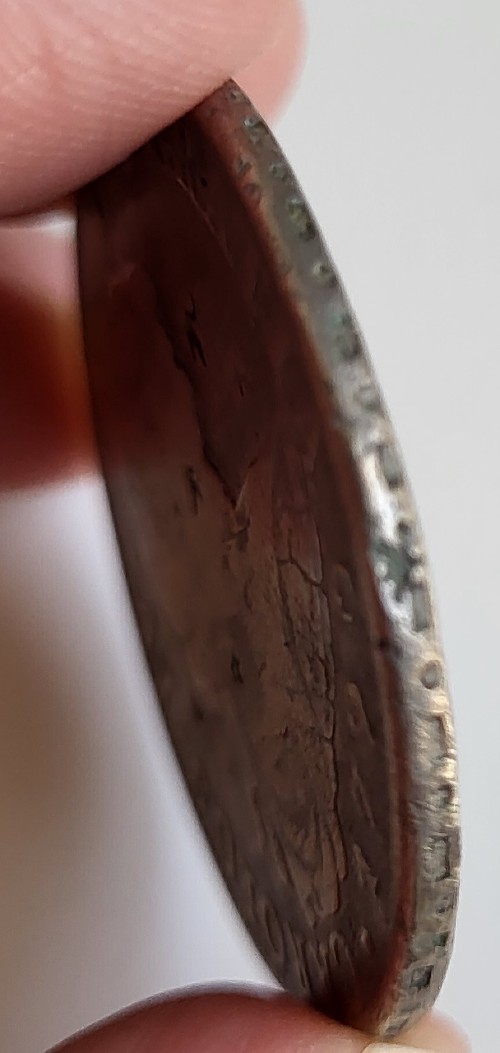
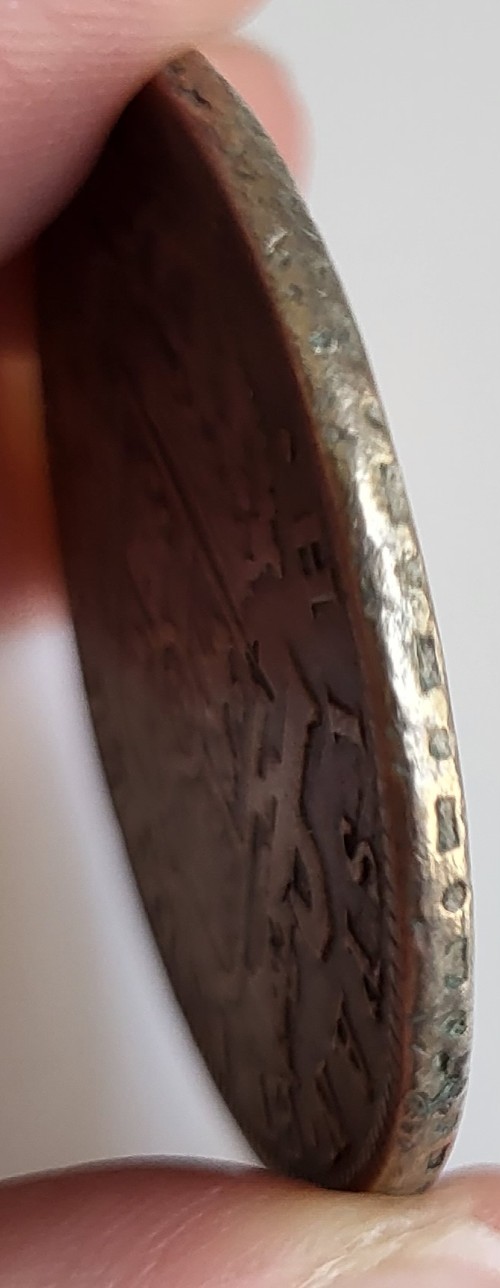
Thank you all for the responses! One thing to note first - I clarified in the post above that the germanium was detected on the surface of the 1790 coin, which clouds things a bit, while the 1804 coin only had silver and copper detected. I also added the SG result I got for the 1804 coin which was 10.5. I thought the 1804 coin could be a Class 2 because it seemed like the fonts were off (meaning a image transfer was not used) and most modern forgeries I have seen posted here have some kind of edge priority problem (cut off dentils) and mostly image transfers. That's just my speculation. The presence of germanium is of course weird on this 1790 counterfeit that has many features of older Class I counterfeits (lowered silver content, wrong assayers, etc.). Realeswatcher - Here are better pictures of the assayers/date. 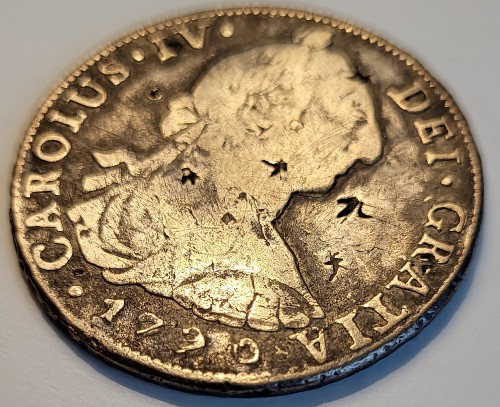 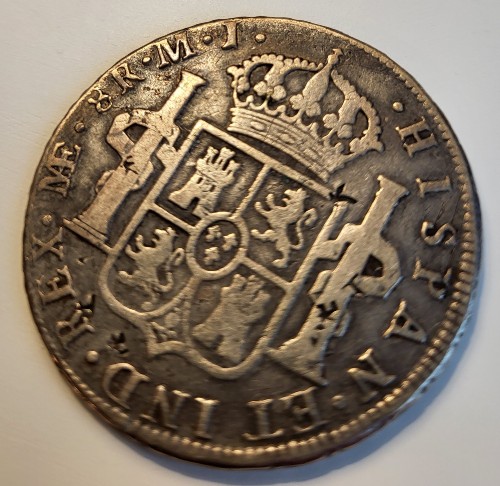 Edited by threefifty
09/01/2023 5:01 pm
|
|
Pillar of the Community
United States
6428 Posts |
My only input to this thread is to note that I've seen bizarre metal content results when using XRF to read slabbed coins. If you try to run XRF testing through plastic you can see high readings for elements that aren't really there.
|
| |
Replies: 8 / Views: 1,185 |
|









 Posted 08/31/2023 10:32 pm





