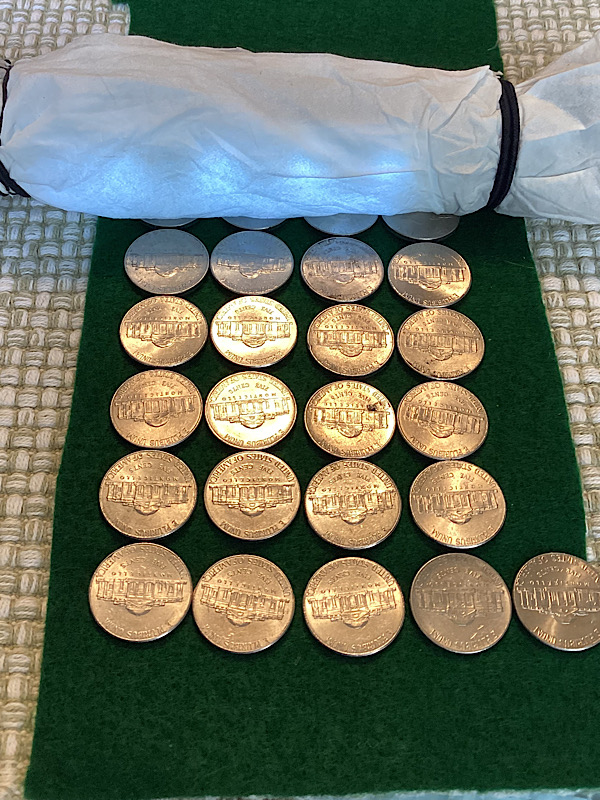
This article is to instruct novice coin roll hunters about a good setup to find Line-in-Door doubled die nickels.
Jefferson nickels from 2006-2023 (and presumably onwards) are known for a series of minor Class VIII/IX doubled die reverses commonly called Lines-in-Doors. As the name suggests, the
DDR features manifest as doubling in the door frames, windows, and portico on the front porch of Monticello. These
DDR are created during the single-squeeze manufacturing process for working dies. The center of the hub briefly makes contact with the tip of the conical blank die. Sometimes the blank die will pop into a slightly different position as the pressure climbs, leaving a partial ghost of the door frame, triangle border, or window frame in the space that will become a flat surface. If you want to read more about that process, I recommend starting with the articles on Wexler's Doubled Dies (
link) and the CONECA web site (
link).
Lines-in-Doors doubles are not particularly expensive, but for coin roll hunting novices, they have several virtues. First, LIDs are relatively common. I find them about 1-in-300 or more frequently for 2006-2023 nickels. Second, the nickels are recent strikes, so the coins tend to be in much better condition than the older and more dramatic doubled die varieties. Third, LIDs are straightforward to identify, assuming you have a good setup, which I will outline below. Fourth, you will have a steady supply of newer nickels from banks. Around 50% of the nickels I receive from my credit union are 2006-2023.
One note before we begin. For whatever reason, LIDs are way, way more common on Philadelphia nickels than Denver nickels. I have not yet stumbled across the reason why that happens, but for now that seems to be a fact of life for CRH.
The key trick to spot Lines-in-Doors is harsh illumination and glare. The coin photography articles on this forum will steer you away from glare (and for good reason), and also recommend that you filter harsh LED lights. However, if you want to quickly scan through 100-200 modern nickels for LIDs then glare is your ally. A bar flashlight works best, so you can line up multiple nickels in rows. For magnification, I use a cheap $8 plastic clip-on magnifier for my iPad (
link).
Place the nickel bottom edge towards the light, top edge away. The light should catch the edge of the
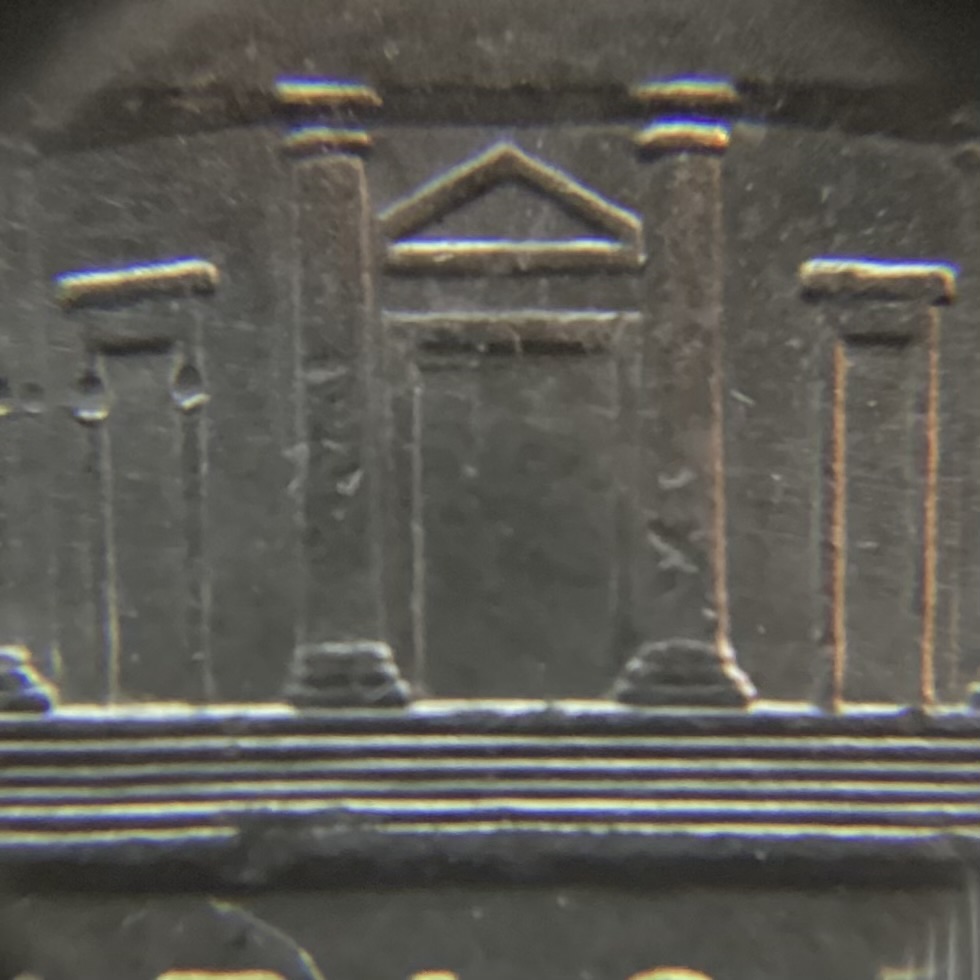
DDR feature in a bright line. If you position the coin top-to-bottom (which is more natural since the text will be right side up), the shadow cast by the door frame and portico elements might conceal the doubled features. The doubling does not stand up from the surface as far as the fully formed doorways and other devices.
In the example below, it is much easier to see the doubling line in the upper left corner of the doorway using the correct setup compared to the usual coin examination setup.
The setup:
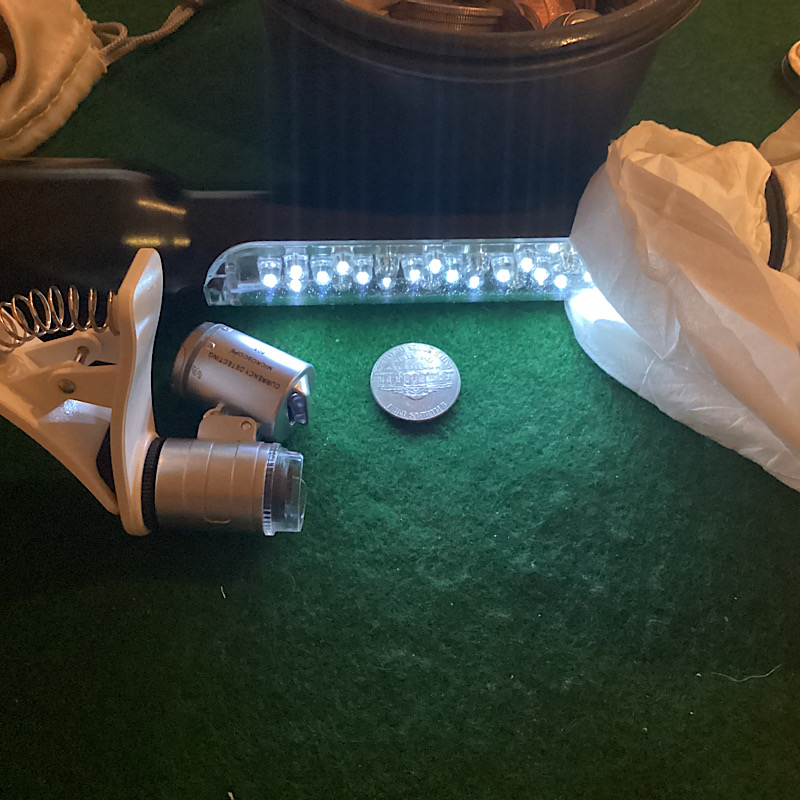
Harsh light bottom-to-top:

Filtered light top-to-bottom:







 Posted 10/05/2023 10:11 am