Coin Community Family of Web Sites
Coin, Banknote and Medal Collectors's Online Mall Royal Canadian Mint products, Canadian, Polish, American, and world coins and banknotes. Shop for APMEX Bullion on eBay!300,000 items to help build your collection! Specializing in Modern Numismatics Vancouvers #1 Coin and Paper Money Dealer Shop CCF Members on eBay!


Username:
Password:
Save Password
Forgot your Password?


This page may contain links that result in small commissions to keep this free site up and running.

Welcome Guest! Registering and/or logging in will remove the anchor (bottom) ads. It's Free!

1858 (Deneshka) Russian Coin

To participate in the forum you must log in or register.
Author Previous TopicReplies: 7 / Views: 723Next Topic  
New Member

United States
24 Posts
 Posted 02/04/2024  6:46 pm Show Profile   Bookmark this topic Add sksvlad to your friends list Get a Link to this Message Number of Subscribers
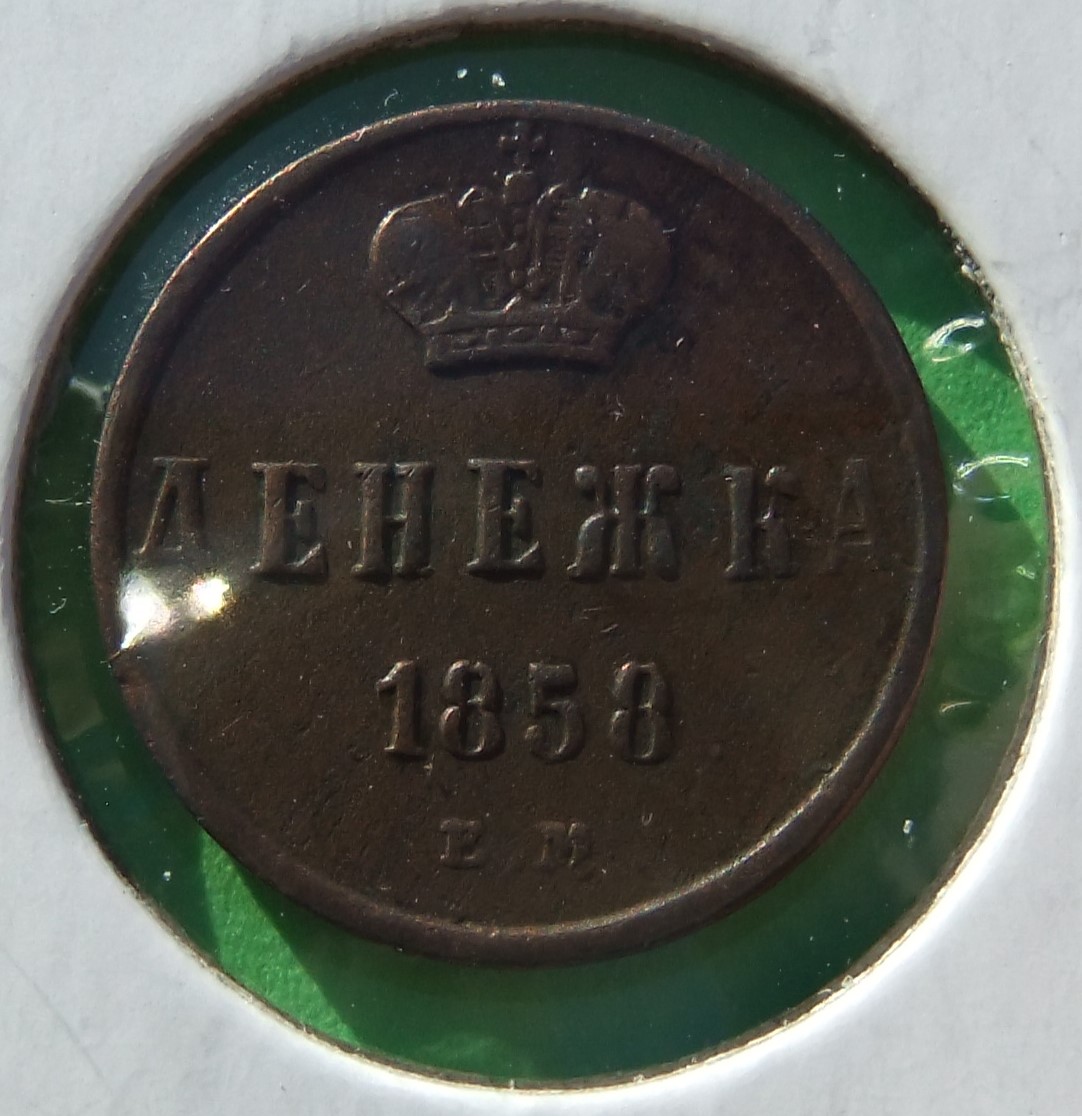
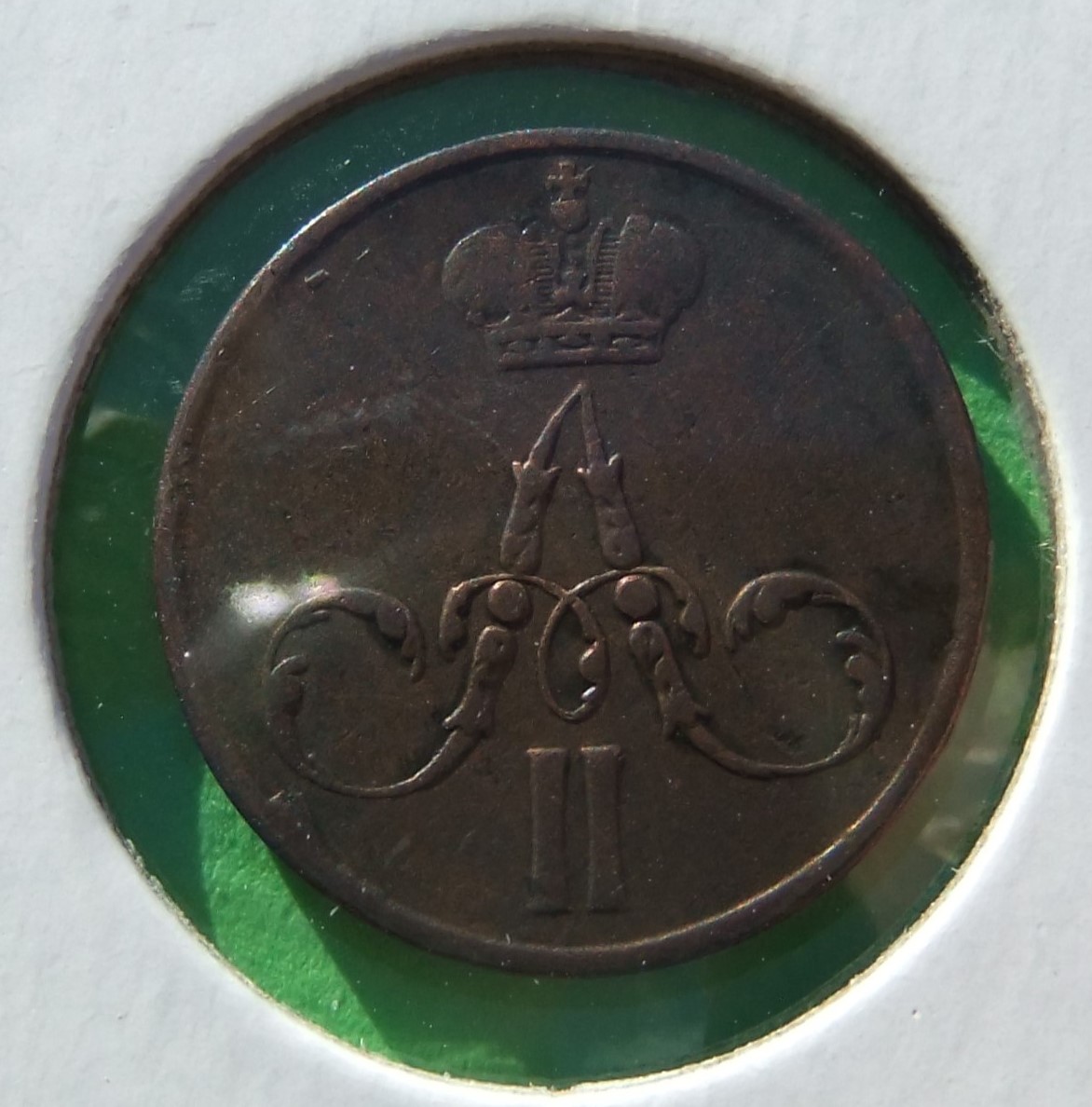
The word "Deneshka" means "little money" to me. I never heard this word being used this way. It is obviously a very archaic Russian. May someone expand/explain the use of this word on this coin to me? Also, what is EM?

1858--Deneshka-Russian-Coin

1858--Deneshka-Russian-Coin
Edited by sksvlad
02/04/2024 6:49 pm
Moderator
Learn More...
Sap's Avatar
Australia
16806 Posts
 Posted 02/04/2024  8:34 pm  Show Profile   Bookmark this reply Add Sap to your friends list Get a Link to this Reply
The denezhka, or denga, was worth half a kopeck. The name on the earlier coins was "denga", but the name changed from 1849 to "denezhka"; I'm not entirely sure why.

German low-face-value coins of the same time period often include the word "scheidemunze", or "small change coin". Perhaps the name change was intended to reflect similar sentiment; that the government was providing these teeny tiny coins for the benefit of the poor. I believe they stopped making them in 1867.

"E.M." is the mintmark, for Ekaterinberg mint.
Don't say "infinitely" when you mean "very"; otherwise, you'll have no word left when you want to talk about something really infinite. - C. S. Lewis
Moderator
Learn More...
Spence's Avatar
United States
34393 Posts
 Posted 02/04/2024  9:22 pm  Show Profile   Bookmark this reply Add Spence to your friends list Get a Link to this Reply

Quote:
I'm not entirely sure why.


I don't know either, but hopefully @j1m will weigh in when they see this thread.
"If you climb a good tree, you get a push."
-----Ghanaian proverb

"The danger we all now face is distinguishing between what is authentic and what is performed."
-----King Adz
Moderator
Learn More...
John1's Avatar
United States
56855 Posts
 Posted 02/05/2024  04:45 am  Show Profile   Bookmark this reply Add John1 to your friends list Get a Link to this Reply
sksvlad,
Always best to remove coins from 2x2 holders before taking photos...always.
John1
Moderator
Learn More...
jbuck's Avatar
United States
187671 Posts
Bedrock of the Community
paralyse's Avatar
United States
12057 Posts
 Posted 02/07/2024  8:04 pm  Show Profile   Bookmark this reply Add paralyse to your friends list Get a Link to this Reply
Possibly to bring it in line with the other names for fractionals which were historically diminutive forms

Denga -> Denezhka to come into line with polushka and kopeyka

Polushka is from polovina or "pol" (half) as in "half denga"; see Polgrosz for an example of this in Polish coinage

This form can be seen also in polupoltinnik (1/4 ruble) = half of a poltinnik (50 kopek or 1/2 ruble)

Kop'jo (spear) -> kopeyka (kopek)
Member ANA - EAC - TNA - SSDC - CCT #890

"Most of the things worth doing in the world had been declared impossible before they were done." -- Louis D. Brandeis
Pillar of the Community
Slerk's Avatar
Russian Federation
1557 Posts
 Posted 02/15/2024  05:04 am  Show Profile   Bookmark this reply Add Slerk to your friends list Get a Link to this Reply
I am glad that my language can help some collectors in finding information.

"E.F. Cancrin's reform and new terminology.
In the early 40s of the XIX century, Finance Minister E. F. Kankrin carried out a monetary reform, as a result of which devalued banknotes gave way to full-fledged credit cards. Therefore, a copper coin of a new weight and type (16 rubles from a po#1086;d) equalized in price with silver. The monument to this was the inscription "in silver", which was placed for ten years after the denomination on all coins of the new series (from 1839 to 1848) from the half to the three-kopeck piece, which appeared then for the first time. The nickel was not minted in this series. But weight gain it was temporary. Since 1849, they switched to coinage of a new type (without the word "silver") in 5, 3, 2, 1, 1/2 and 1/4 kopecks for 32 rubles from a pound, and the face value of the last two coins is indicated by the words money (a new term!) and a polushka; and monograms are placed on them, as well as on a kopeck instead of the state coat of arms on other coins. The emperors are Nicholas I and Alexander II. (On the coins of the previous series, the monogram it was on all denominations)."

Thus, the money is 1/2 kopecks. The emergence of a new term is associated with the weight loss of copper coins. For reference, 1 pood = 16.38 kg
Edited by Slerk
02/15/2024 05:05 am

Pillar of the Community
Russian Federation
5172 Posts
 Posted 02/15/2024  05:45 am  Show Profile   Bookmark this reply Add january1may to your friends list Get a Link to this Reply
I have no idea why they switched from "denga" to "denezhka"; perhaps the diminutive was becoming the more common term for the denomination at the time, as it became an increasingly tiny amount of money.
There were still 1/2 kopek coins after 1867 (indeed the Soviets still issued some in the 1920s) but they said 1/2 kopek, not "denga" or "denezhka".

Historically AFAIK the denomination came first and only became a generic term for money later; it's a borrowing from Golden Horde "dang" and related to the modern Kazakh tenge.
The kopek (kopeyka = the one with the spear) was introduced in 1535 and rapidly became the default denomination, relegating the previously dominant denga to "1/2 kopek".

EM indeed stands for Ekaterinburg mint (in Russian, but the initials are the same).
  Previous TopicReplies: 7 / Views: 723Next Topic  

To participate in the forum you must log in or register.


Disclaimer: While a tremendous amount of effort goes into ensuring the accuracy of the information contained in this site, Coin Community assumes no liability for errors. Copyright 2005 - 2026 Coin Community Family- all rights reserved worldwide. Use of any images or content on this website without prior written permission of Coin Community or the original lender is strictly prohibited.
Contact Us  |  Advertise Here  |  Privacy Policy / Terms of Use

Coin Community Forum © 2005 - 2026 Coin Community Forums
It took 0.28 seconds to rattle this change. Forums