It's a master class in and of itself and could probably take up the better part of a few months of research. I only know the bare minimum needed to attribute the major subtypes, if that.
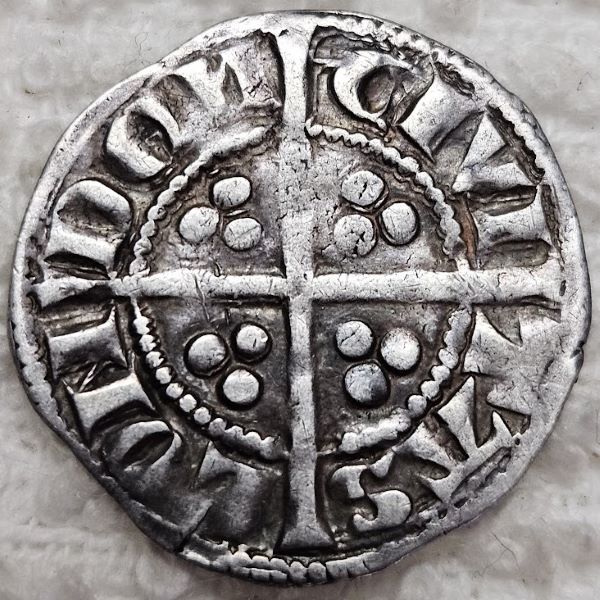
With several distinct classes identified (at least 10 if I recall) and a plethora of subtypes within those classes, it's as much guesswork as anything. New varieties still turn up in detector finds, an amazing thing for an 800 year old coin type. This is aggravated by the fact that coins with similar basic legends and designs were used for both Edward I and Edward II.
One neat thing about these coins is that we can see that the city name was already spelt 'LONDON' in the late 13th c.
Londinium -> Lundenwic -> Lundenburh -> Lundene -> London
How that "u" became an "o" in the city name is one of the more enduring mysteries among scholars of Early Middle English in the years after 1066. The "o" spelling is variously ascribed to influence from Norman French, one of the Brythonic languages, one of the insular Celtic languages, Danish, Norse, or a wide variety of other explanations, some more mythical than historic.
The early Edward coins provide a great glimpse into how the language was evolving at the time via their mints with many spelling varieties. A few examples:
Berewic (Corn Farm) -> Berevici / Berewici (Berwick)
Ceaster (Fort) -> Cestrie (Chester)
Dunham (Hill Village) -> Dureme / Duremie / Dunelm (Durham)
Cyninges tun (King's Hill) - > Kingeston -> Kynceston (Kingston-upon-Thames)
Sometimes the Roman/Latinate names seem to have been more influential than their Anglo-Saxon equivalents:
Cantiacorum (Anglo-Saxon Cantwaraburh) for Canterbury seems to have influenced the spelling of that city on Edward's coins as CANTOR.
Eboracum (Anglo-Saxon Eoforwic) was used for York (as the genitive EBORACI)
The Latin-but-not-Roman Novum Castellum (Anglo-Saxon Munucceaster = Monk Fort) was used for Newcastle-upon-Tyne (as the genitive NOVICASTRI)
Castellum is the diminutive of Castrum (Ceaster)
Member
ANA - EAC - TNA - SSDC - CCT #890
"Most of the things worth doing in the world had been declared impossible before they were done." -- Louis D. Brandeis









 Posted 02/12/2024 12:01 pm


