There are currently three types of UK pound coins which show a Northern Ireland related reverse.
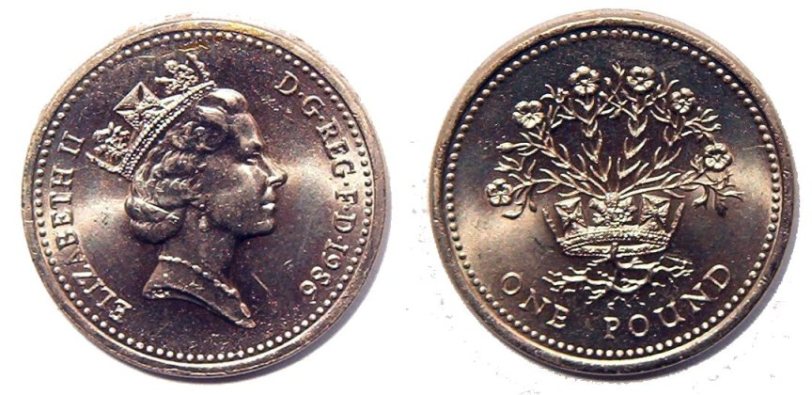
The first one issued was in 1986 as part of the first set of constituent countries of the UK - one that focused on plants. The reverse type attributed to Northern Ireland here was the flax plant. This plant was very important in pre-war industry being used in the manufacture of linen. While the linen industry is still here, in a much reduced form, most of the flax is imported, but the signs of the history are still there if you know where to look. In the countryside it is still common to see a "flax dam" in the corner of a field where the fibres were rotted before processing. Indeed, as part of the more austere 2009 G20 summit goody bag that the various heads of state got, a linen tea towel made in the Banbridge (about 6 miles from me) was included.
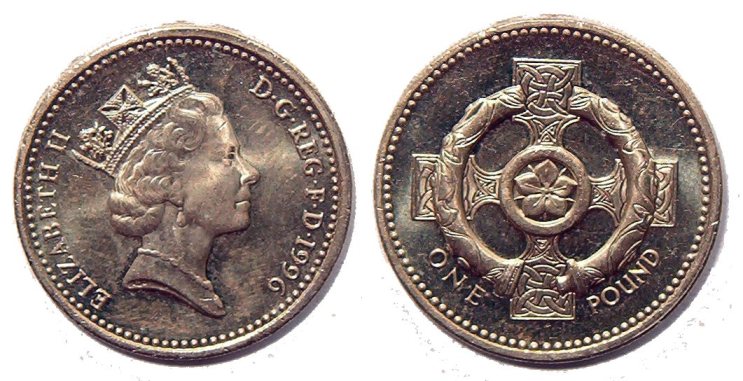
In 1996 (and again in 2001) a more heraldic type reverse was used, as part of the four country set. Northern Ireland (being a recently created Province rather than a historic entity) used a Celtic collar design, noticeably different in style to the lions and dragons of the other three. The design was based on an actual gold collar found in 1896 by a ploughman near a town named Limavady and is of Iron age manufacture (likely 1st Century BC but could be a lot older). The centre of the design shows the pimpernel plant, very common around the shores of Lough Neagh (the UK's largest lake) and it actually has a yellow flower not scarlet! The edge is not only milled but also inscribed. The inscription in Latin reads:- DECUS ET TUTAMEN,
which may be translated as "an ornament and a safeguard". This inscription dates back to the first English machine-struck coins, minted in 1662 and was a device then used to prevent "clipping", it was also used on the first modern pound coin in 1983.
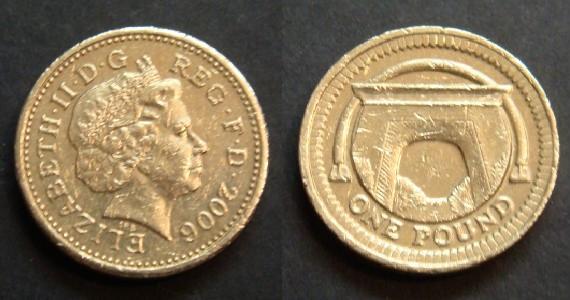
The last of the three Northern Irish coins shows the "Egyptian Bridge" on it's reverse. This bridge is only a few miles from where I live so it is interesting to see it immortalised in the coinage. The actual design of the railway bridge was by an engineer called Sir John MacNeill and it really does look like an Egyptian Pharaoh's headdress - hence the name. Local stories have it that the plans for a bridge in Egypt and this one got confused - and were build in the wrong places - but that is only a story.
I don't actually have one in my change - so I have used this stock photo -- I'll update with a better example when I get one.
I hope this is of interest







 Posted 04/16/2009 1:43 pm





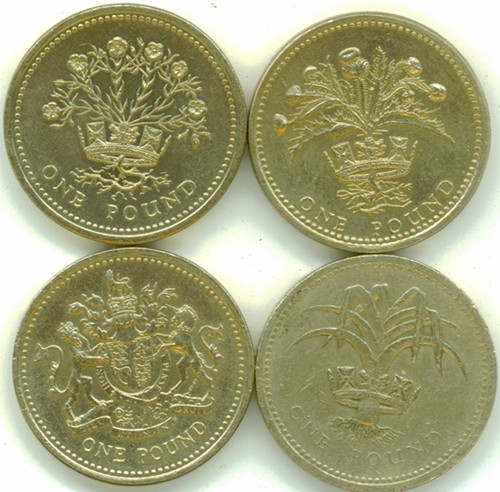 Pounds.jpg


