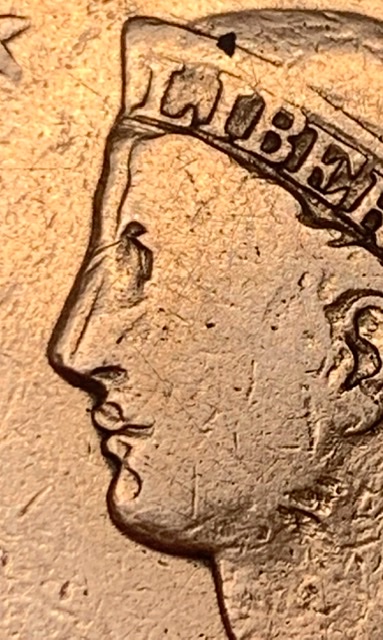
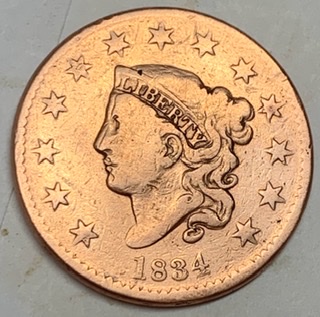
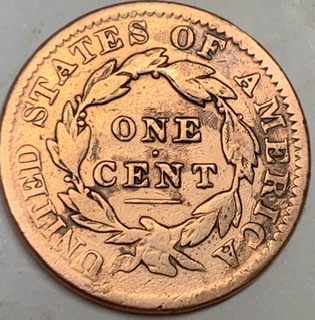
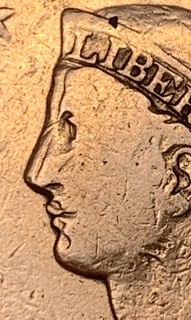
That double profile is a form of Mechanical Doubling, fairly common in large cents in the mid-1830's. Yours has a particularly large spread. I hope that cleaned appearance is just from the lighting and photography.
Dearborn is this pic any better ,can you please explain to me why Mechanical Doubling if been very much trying to learn the difference and this seems the opposite of everything I've looked at and read about Mechanical Doubling
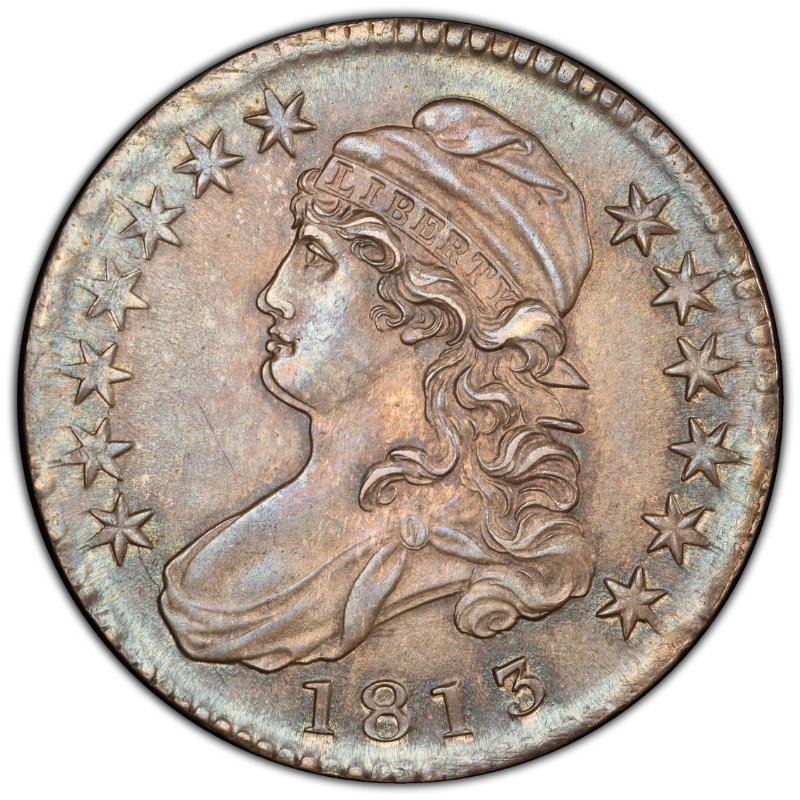
Matron head large cents and bust halves minted before 1836 often had a doubled profile like this, due to shifting of a loose die in the manual screw coin press. When the mint switched to a steam-powered press in 1836, that largely eliminated the problem. The doubling is not found on the die itself, which is the hallmark of a doubled die.
Same gig with bust halves. Classically called a double profile but technically named machine or Strike Doubling.
Suffering from bust half fever. Want to learn how to attribute early half dollars by die variety? Click Here: http://goccf.com/t/434955 Shoot me a PM if you are looking to sell bust halves.
Disclaimer: While a tremendous amount of effort goes into ensuring the accuracy of the information contained in this site, Coin Community assumes no liability for errors. Copyright 2005 - 2026 Coin Community Family- all rights reserved worldwide. Use of any images or content on this website without prior written permission of Coin Community or the original lender is strictly prohibited. Contact Us | Advertise Here | Privacy Policy / Terms of Use












 Posted 05/14/2024 08:30 am


 @Pinkchrome