| Author |
 Replies: 32 / Views: 2,622 Replies: 32 / Views: 2,622 |
|
|
|
Bedrock of the Community
United States
19648 Posts |
Interesting outcome, Thanks for the blow-by-blow discussion.
|
|
Moderator
 United States
196778 Posts |
Thank you for the detailed update.  |
|
Valued Member
United States
104 Posts |
I'm working up the courage to do my first test run using acetone on some really gunky LMC. I've read a ton about do it/don't do it/ how to do it/ safety measures etc. So I think I'm ready. As a general rule on a circulated cent with a glob of gunk stuck to it, do you just dip in and out or let it soak - how long to start? |
|
Bedrock of the Community
United States
19648 Posts |
Liag49...
How long? I'd start with 2-3 hours. Observe what happens closely. The gunk might pop right off, or it could slooooowly be reduced. Be flexible on timing--there is no one solution.
|
|
Bedrock of the Community
 United States
18949 Posts |
Quote:
As a general rule on a circulated cent with a glob of gunk stuck to it, do you just dip in and out or let it soak - how long to start? the only concern with any cleaning whether its acetone or verdicare is what it will uncover underneath. one of the biggest blunders I made in over 55 yrs of collecting was verdicare my 09S vdb prior to slabbing. I don't typically slab any coins but I was considering selling it. there was a small scratch on the obv that really was not easily seen as it had toned over nicely after verdicare it stood out enough that PCGS tagged the coin XF genuine. not happy. so the moral of the story is don't touch anything of value unless it has something like PVC, verdigris or anything thats going to hurt the coin over time heres the before and after. it probably reduced the value of this coin by about $400 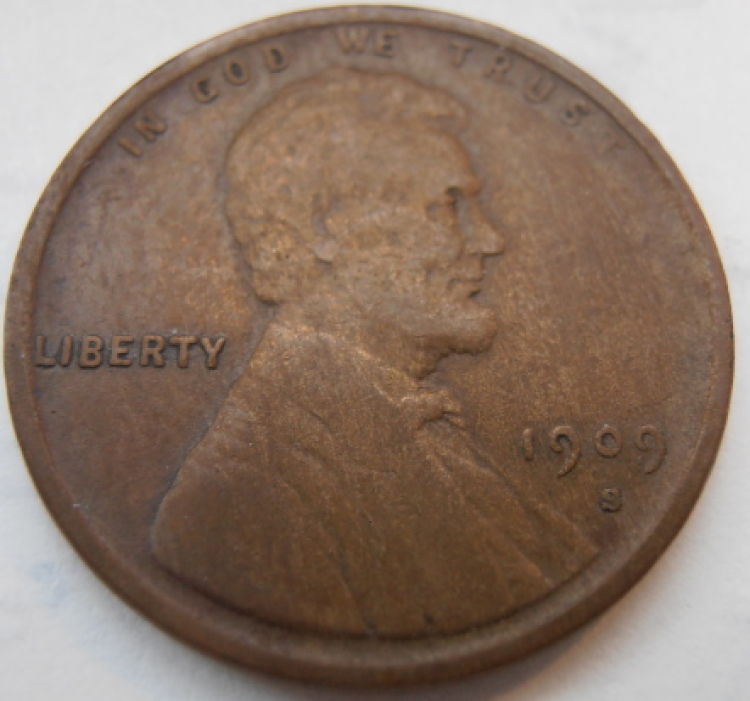 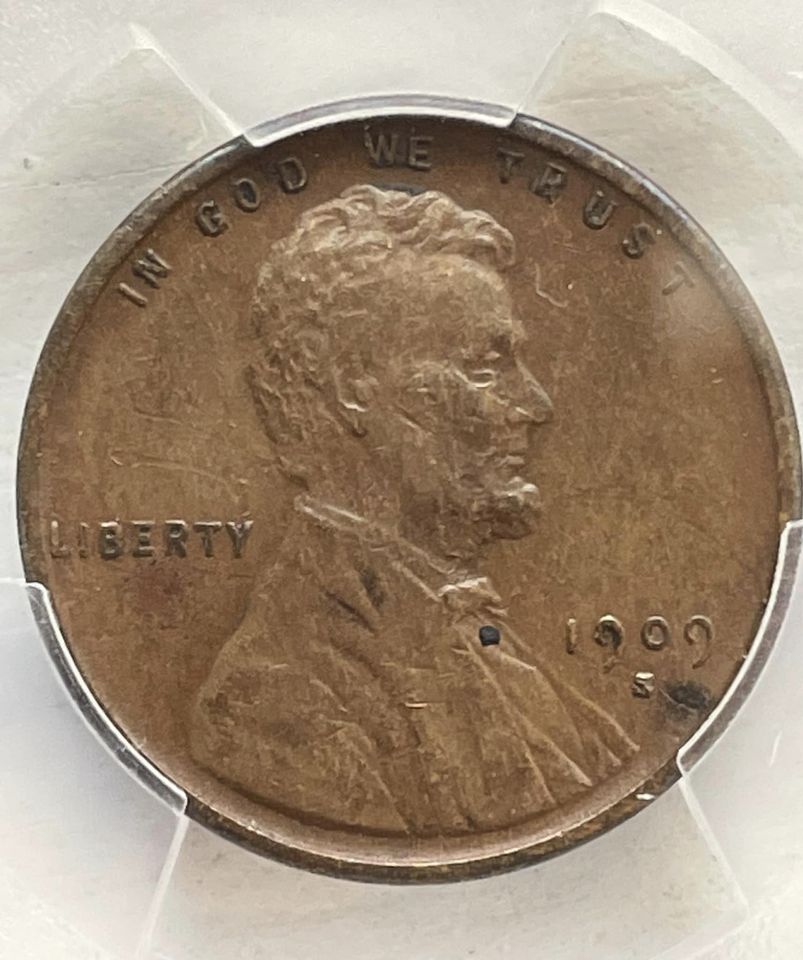 |
|
Bedrock of the Community
United States
94367 Posts |
The MM positions suggest these are diffferent coins.  Edited by Coinfrog
05/31/2024 09:02 am
|
|
Pillar of the Community
United States
1502 Posts |
Quote:
The MM positions suggest these are diffferent coins A lot more than just the mm |
|
Moderator
United States
196778 Posts |
I think he chose the wrong picture. I looked at his uploads and found this better match. 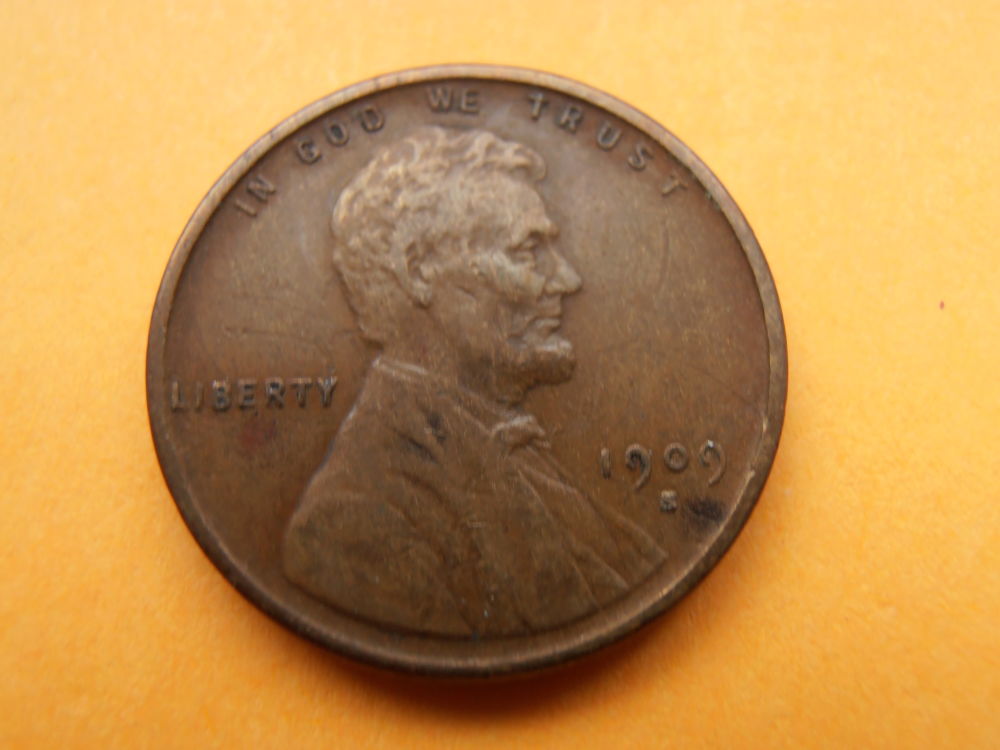 |
|
Bedrock of the Community
United States
94367 Posts |
|
|
Pillar of the Community
Canada
1812 Posts |
 jbuck thanks for the corrected picture. Quote:
The MM positions suggest these are diffferent coins. Edited by Sharks
05/31/2024 2:50 pm
|
|
Valued Member
United States
104 Posts |
Thanks for the replies. I'm going to try a few test runs this weekend.
|
|
Valued Member
 Italy
290 Posts |
Quote:
there was a small scratch on the obv that really was not easily seen as it had toned over nicely after verdicare it stood out enough that PCGS tagged the coin XF genuine I am curious how did that black spot below the bowtie ended up there? it definitely wasn't there before.. |
|
Pillar of the Community
Portugal
732 Posts |
The idea of first soaking in acetone is good. It helps remove the organic dirt. Gently scrubbing it out should help. It will help by exposing all the surface to the verdicare solution.
I must try this in some ancient feluses I have locked with dissecant. They need rescuing. Unfortunately I can not find verdicare for sale here. What is the active chemical in that product? Or do you know some other common chemical that can be used?
|
|
Pillar of the Community
United States
3848 Posts |
I personally don't use acetone on copper. Here is why:
Silver and gold easily clean off. The metals themselves are dense and takes a while to corrode. With metal detecting finds, gold and silver wash of easily, but copper is another ball game. Acetone is good at washing off material and does not dig deep roots, the thin liquid only chips away at the surface grime.
Copper, on the other hand, does not simply wipe off or clean up simply since it is easily environmentally damaged. Deep verdigris or corrosion can't be removed by a basic acetone surface wash, it needs a deep soak in an oil/based material like verdicare, blue ribbon, or olive oil. The verdigris soaks up the oil and breaks itself down deeper than acetone could.
Additionally, copper needs to be protected and handled with greater care with regards to coin storage. Because of this, many collectors place a very thin coat of oil on their copper coins to keep them environmentally sound. Acetone would remove all the oil-based material, thus drying out the coin (working against the verdicare) and leaving the coin without protection.
Suffering from bust half fever. Want to learn how to attribute early half dollars by die variety? Click Here: http://goccf.com/t/434955Shoot me a PM if you are looking to sell bust halves. |
|
Valued Member
Italy
290 Posts |
Quote:
Unfortunately I can not find verdicare for sale here. What is the active chemical in that product? Or do you know some other common chemical that can be used? You may try to get in contact with BadThad (creator of verdicare) through his ebay store for international purchases. I myself bought it in USA and then brought it back here. The actual composition of verdicare is unknown but it contains a compound called ReAcT2 which is probably its main "thing".. Quote:
I personally don't use acetone on copper [..] To summarise, copper will benefit from a sealant (whatever verdicare leaves, microwax, paraloid, etc) as it creates a barrier between the metal and the environment which can be especially bad for copper as it is a highly reactive metal. Though we should note that before that is applied, water, acetone and other solvents/reagents --- if properly applied --- will greatly benefit the conservation efforts if we want to remove dirt/grime or inhibit corrosion, etc. |
| |
Replies: 32 / Views: 2,622 |




 First Page


 Posted 05/26/2024 4:45 pm





