Coin Community Family of Web Sites Join Thousands of Coin, Bullion, & Money Collectors
Coin, Banknote and Medal Collectors's Online Mall Royal Canadian Mint products, Canadian, Polish, American, and world coins and banknotes. Vancouvers #1 Coin and Paper Money Dealer Shop for APMEX Bullion on eBay!Specializing in Modern Numismatics Join Thousands of Coin, Bullion, & Money Collectors 300,000 items to help build your collection!


Username:
Password:
Save Password
Forgot your Password?


This page may contain links that result in small commissions to keep this free site up and running.

Welcome Guest! Registering and/or logging in will remove the anchor (bottom) ads. It's Free!

Mid Size Bronze Ancient Coin Need Help , Chach ?

To participate in the forum you must log in or register.
Author Previous TopicReplies: 6 / Views: 626Next Topic  
Valued Member

Australia
177 Posts
 Posted 05/20/2024  6:48 pm Show Profile   Bookmark this topic Add davidc to your friends list Get a Link to this Message Number of Subscribers
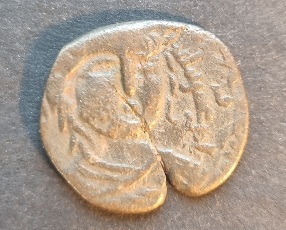
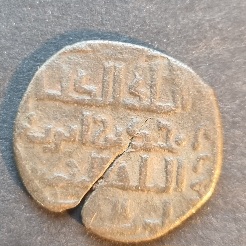
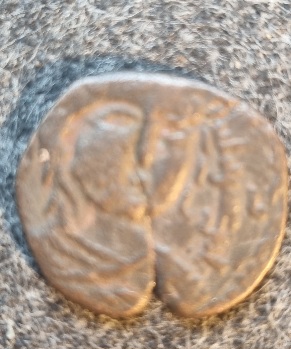
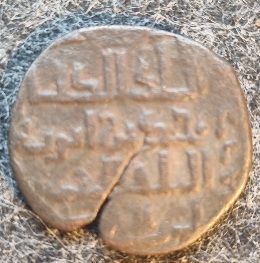
no idea really , closest similiar obverse chach coin , purchased in a bulk lot of 133 coins unknown , 4.31 g , around 19 mm dia . thanks in advance dave ,
Mid-Size-Bronze-Ancient-Coin-Need-Help-,-Chach-?
Pillar of the Community
Russian Federation
5172 Posts
 Posted 05/20/2024  7:16 pm  Show Profile   Bookmark this reply Add january1may to your friends list Get a Link to this Reply
To the best of my knowledge, the "Chach" coinage is mostly pre-Islamic, and this is clearly an Islamic coin, even if it's got a portrait on it.

AFAICT this is one of the many Turkoman figural types, 12th-13th century. I don't know enough about those to identify which specific one (Artuqids and Zangids are common but there's a bunch of other tribes/dynasties that also issued those).
Moderator
Learn More...
Sap's Avatar
Australia
16826 Posts
 Posted 05/20/2024  8:28 pm  Show Profile   Bookmark this reply Add Sap to your friends list Get a Link to this Reply
The three-quarters-turned portrait, in imitation of ancient Greek coins very similar to my avatar at left, was used by several Islamic rulers circa AD 1200. My best guess, based on the portrait and style of script, would be Nasir al-Din Artuq Arslan, the Artuqid ruler of Mardin from AH 597-637 (AD 1200-1239); these portrait-facing-slightly-right coins were struck in AH 618 (AD 1221). This zeno.ru page has several examples of the type: https://www.zeno.ru/showgallery.php?cat=18021
Don't say "infinitely" when you mean "very"; otherwise, you'll have no word left when you want to talk about something really infinite. - C. S. Lewis

Pillar of the Community
United States
1554 Posts
 Posted 05/21/2024  02:08 am  Show Profile   Bookmark this reply Add Kushanshah to your friends list Get a Link to this Reply
I think @Sap is correct. I do want to add that I think it's more than mere coincidence that the coin portraits of the Turkmen rulers of Mardin at the beginning of the 13th century so often resemble those of the Turkmen lords of Chach centuries earlier. Much is made of classical (Greco-Roman) prototypes for the figural Islamic coins but the Turkic tribes did not arrive in the West empty-handed and culturally bereft.
Valued Member
Australia
177 Posts
 Posted 05/22/2024  05:55 am  Show Profile   Bookmark this reply Add davidc to your friends list Get a Link to this Reply
thanks everyone for your replies , riddle solved , look foward to putting another one up regards dave
Moderator
Learn More...
Sap's Avatar
Australia
16826 Posts
 Posted 05/22/2024  9:14 pm  Show Profile   Bookmark this reply Add Sap to your friends list Get a Link to this Reply

Quote:
I do want to add that I think it's more than mere coincidence that the coin portraits of the Turkmen rulers of Mardin at the beginning of the 13th century so often resemble those of the Turkmen lords of Chach centuries earlier. Much is made of classical (Greco-Roman) prototypes for the figural Islamic coins but the Turkic tribes did not arrive in the West empty-handed and culturally bereft.

By the time these coins had started to be made, the Turkic peoples of northern Mesopotamia and central Asia had been Muslim, and therefore anti-graven-images, for 500 years. However rich and varied their pre-Islamic culture may have been, much of that knowledge had been lost or suppressed, replaced by a new culture equally rich and varied - but portrait-less. So there wasn't really a continuous tradition of sculpture and portraiture to fall back on.

It really comes down to which coins are most likely to be sitting around in the ground in south-eastern Turkey and northern Iraq for the locals to dig up and give to the artists to use as models. The Chach bronzes, like most ancient and mediaeval bronze coins, didn't really circulate very far from Tashkent, so aren't likely to be found over 3000 kilometres further down the Silk Road. The Greek silver coins came from much closer to hand and circulated much more broadly, and hoards containing them have been found in Syria and Iraq, as well as western Turkey. The odds seem to favour the "Greek coin" hypothesis.

But whichever model was used, the truly astonishing thing about them is that, once that handful of ancient "idolatrous" coins were dug up back in the 1200s, the local rulers didn't say "Well, these are graven images, better melt them down", but instead said "Hey, these are good, we can find a way to use these". And that's what makes these coins, and the culture they came from, unique in the mediaeval Islamic world.
Don't say "infinitely" when you mean "very"; otherwise, you'll have no word left when you want to talk about something really infinite. - C. S. Lewis

Pillar of the Community
United States
1554 Posts
 Posted 05/22/2024  11:11 pm  Show Profile   Bookmark this reply Add Kushanshah to your friends list Get a Link to this Reply
The Turkmen of Mesopotamia and the Near East were relatively recent arrivals from Central Asia, having converted to Islam only in the early 11th century. The fundamentalist strain of Islam was engrained in the Arab caliphates but not nearly so deeply among Turks fresh from the steppe. That we refer to Anatolia today as "Turkey" obfuscates the fact that the Turks are of Mongolian origin and not indigenous to the Near East. While some Turkmen figural coins have clear classical prototypes, others such as the coin discussed here display portraits of quintessentially Turkic style. That said, the penetration of Hellenistic culture into Central Asia exercised significant influence on art along the Silk Road. Both the coins of Chach and those of the Artuqids show Hellenistic influence underlying a distinctly Turkic style.
Edited by Kushanshah
05/22/2024 11:24 pm
  Previous TopicReplies: 6 / Views: 626Next Topic  

To participate in the forum you must log in or register.


Disclaimer: While a tremendous amount of effort goes into ensuring the accuracy of the information contained in this site, Coin Community assumes no liability for errors. Copyright 2005 - 2026 Coin Community Family- all rights reserved worldwide. Use of any images or content on this website without prior written permission of Coin Community or the original lender is strictly prohibited.
Contact Us  |  Advertise Here  |  Privacy Policy / Terms of Use

Coin Community Forum © 2005 - 2026 Coin Community Forums
It took 0.24 seconds to rattle this change. Forums