If you check most references for US Commemorative Coins, you will likely find US Mint Chief Engraver
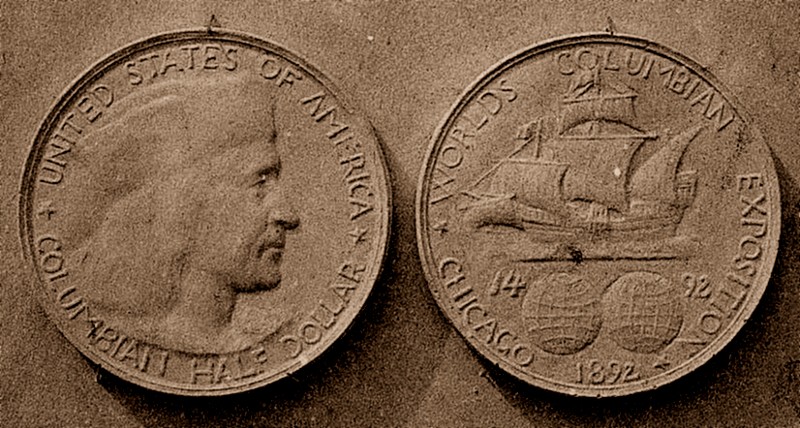
Charles E. Barber listed as the designer of the obverse of the Columbian Exposition Half Dollar with his assistant, George T. Morgan, handling the reverse. This is not entirely accurate.
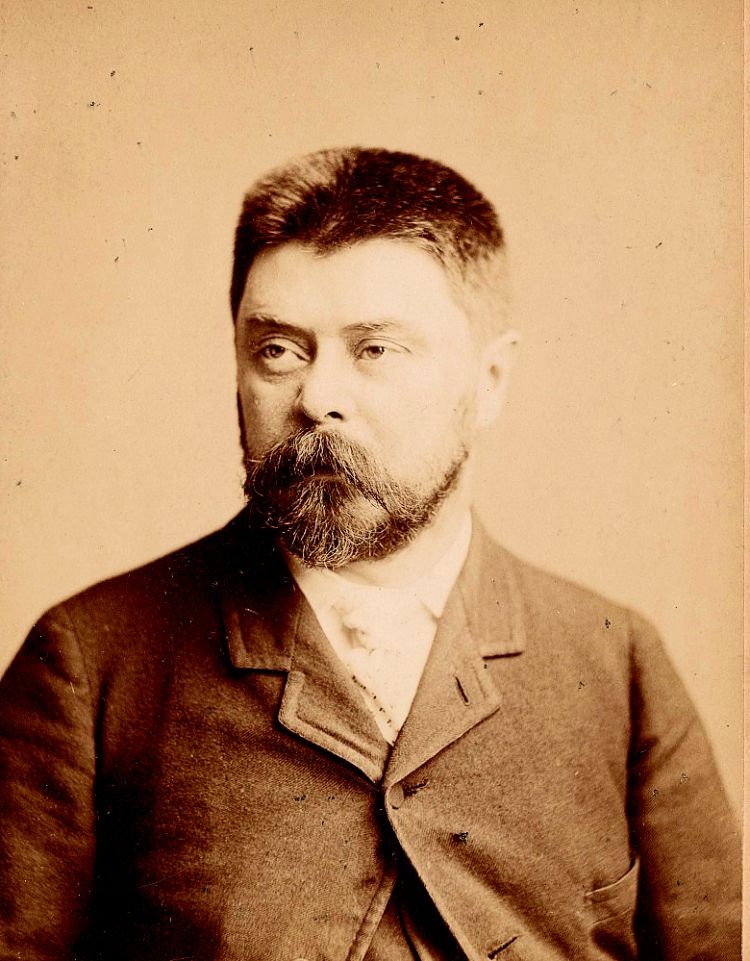
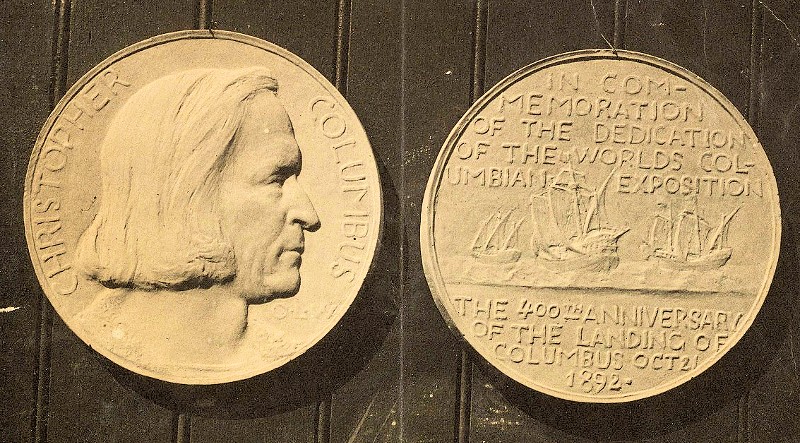
An artist-sculptor by the name of Olin Levi Warner prepared plaster models - obverse and reverse - of a potential World's Columbian Exposition / Christopher Columbus ahead of the Barber/Morgan creation. The half dollar of Barber and Morgan bears an incredible similarity to the Warner designs.
It is possible that Warner modeled his portrait of Columbus after the 1892 medal struck by Ludwig Christoph Lauer, a diesinker of Nuremberg, Germany; the medal was designed by F. Koenig.
Koenig/Lauer Medal of Christopher Columbus - Mirror Image Olin Levi Warner
 Plasters for Proposed Design of Columbian Exposition Half Dollar - Set A
 Plasters for Proposed Design of Columbian Exposition Half Dollar - Set B
 (Side Note: Warner died in 1896 as a result of a bicycle accident; he was born in 1844. He was actively engaged in a commission for the Library of Congress at the time of his accident and was only partially completed with his work. Herbert Adams completed the commission.)
But let's take a step back for a moment. Prior to Olin Warner coming into the picture, Ulric Stonewall Jackson (aka USJ) Dunbar sketched a potential design based on the Lorenzo Lotto portrait of Columbus - a portrait many of the time considered the most accurate, though later proved questionable. (Dunbar was a noted sculptor and was well-known for his life/death masks and accurate/life-like bust sculptures.)
USJ Dunbar with Admiral George Dewey Death Mask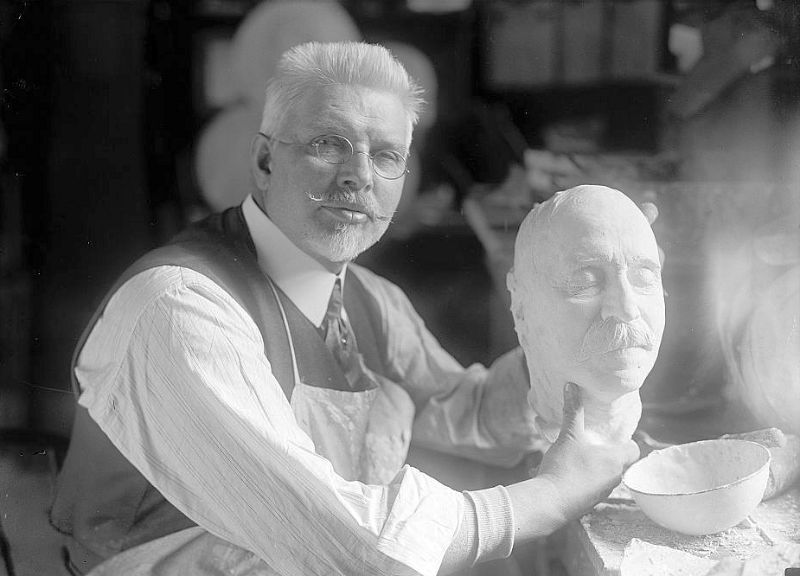 (Image Source: Library of Congress, Prints and Photographs Division. Public Domain.)Proposed Coin Design Sketch Based on Lotto Portrait
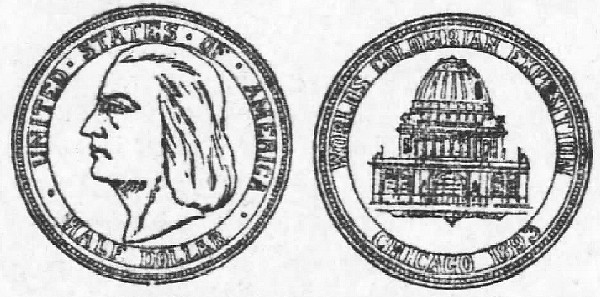 (The Topeka State Journal, August 1892. Public Domain.)(Note: Reverse depicts US Government Building at Exposition.)Lorenzo Lotto Portrait of Christopher Columbus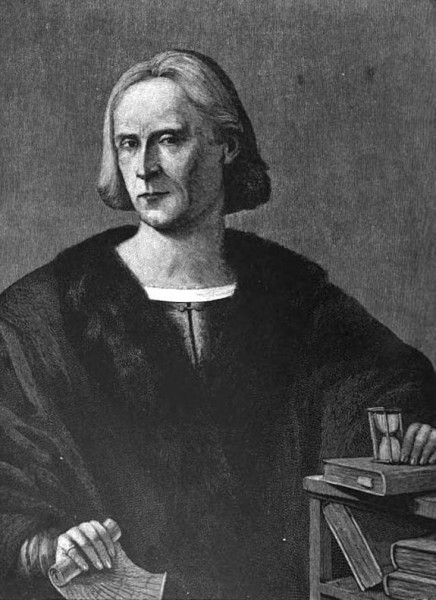
Chief Engraver Barber wasn't interested in having an outside artist design a US coin, so the Dunbar sketches were rejected and Barber took lead on the design project.
Barber may not have liked Dunbar's efforts, but he apparently thought differently of Olin Warner's work. Still not wanting to use the work of a non-Mint artist, he and Morgan adapted Warner's designs for the coin. Warner's hat-less portrait of Columbus was adapted and paired with his a version of Warner's
Santa Maria design, with the obverse inscriptions from the "Columbus with Hat" plaster carried over.
There are obvious differences between Warner's plasters and the struck coins, but I would say that Barber and Morgan borrowed heavily from Warner's work in creating their coin design. Do you agree?
1892 World's Columbian Exposition - Columbus Half Dollar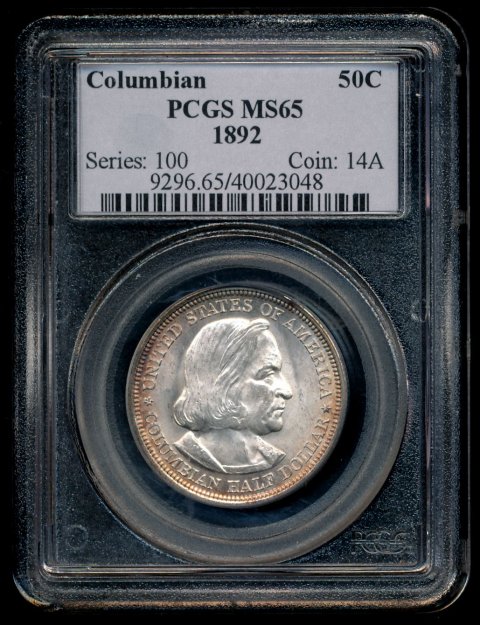
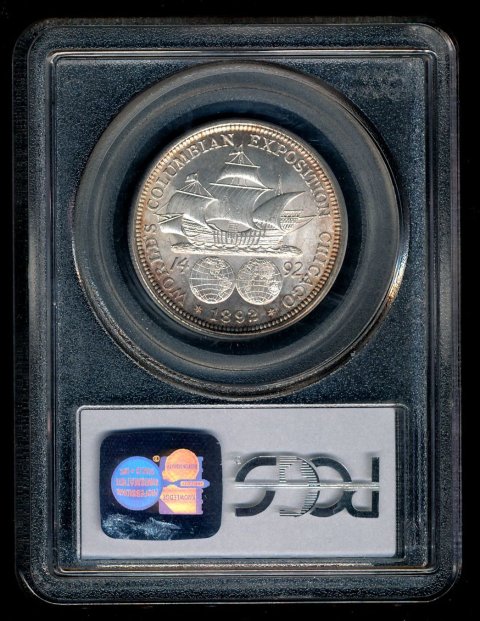
For more of my stories about commemorative coins and medals, including other Columbus half dollar stories, see:
Commems Collection.




 Posted 08/28/2024 12:21 pm





