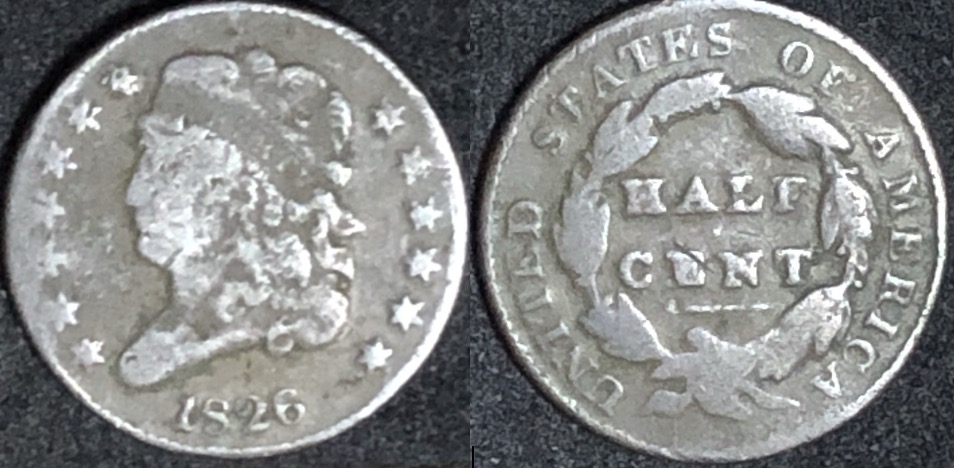
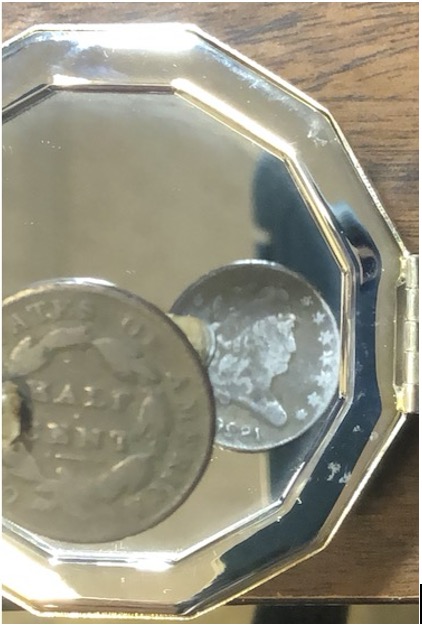
As with most coins, there are collectors who specialize in different types, errors and other anomalies. Among those who do so, there is often competition to attain uncommon pieces; particularly so, the early coppers akin to the subject coin. Even though rotation errors are, generally speaking, fairly common, I can envision a coppers' fanatic being willing to pay somewhat of a premium for this rotated
Half Cent, a.k.a "little sister."
I'd take it to a show and consult with dealers who sell early coppers. If they have a customer who's looking for
Half Cent oddities, they may well offer a premium or even a trade.
Some years ago, I put an early die state, 1799 large cent in an auction. It failed to sell with a $5,500 MB. About a year later, a dealer who had a customer for it gave me $7,500. He had a buyer who wanted one. Funny thing though, he had attended the auction wherein the coin failed to sell for $2k less!
My point in telling this story is that there are likely fewer of these rotated
Half Cents out there than 1799 large cents. Value much depends on finding the right buyer at an opportune time. Furthermore, because one collector doesn't perceive value in a particular piece at a given time doesn't mean another collector will feel likewise.
IMHO, that 1826
Half Cent is a COOL item and worth a premium to the right buyer.
Edited by ExoGuy
10/08/2024 12:44 pm










 Posted 10/07/2024 01:39 am


