











 Posted 05/26/2009 03:55 am


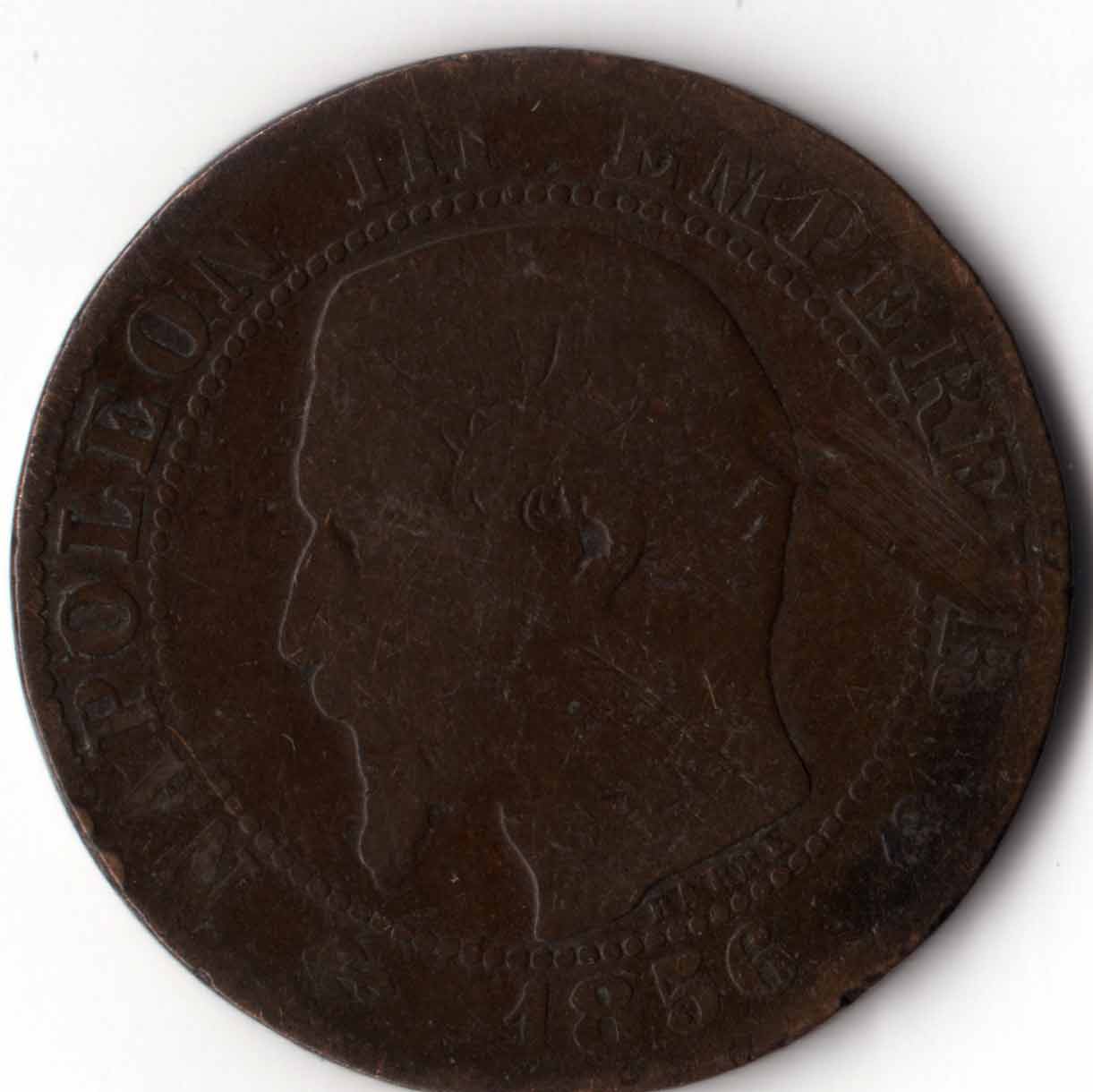
The Second French Empire made several different denominations with this design, identical except for size. The 1 centime was 15mm across, the 2 centime 20mm, the 5 centime 25mm and the 10 centime 30mm. The 5 and 10 centime coins are commonest to be found in Britain and Australia, as they were close in size to the old halfpenny and penny. Here in Australia, during the coinage shortage of the 1850's and 1860's, they would have circulated as such.
That all depends on whether you think you'll enjoy collecting foreign coins generally, and French coins in particular. There are quite a few mintmarks and varieties to pursue in this series, too. France as a whole has a fascinating history, switching numerous times from monarchy to republic to empire, with the various government changes visible on the coinage.
If you can't tell the date and mintmark, it's not going to be too valuable. You can often find worn but identifiable examples of old French coins like this in a dealer's 20¢ scratchtray.
Quote:
Is it worth building on this collection or should I sell and concentrate on Australian varieties?
Is it worth building on this collection or should I sell and concentrate on Australian varieties?
That all depends on whether you think you'll enjoy collecting foreign coins generally, and French coins in particular. There are quite a few mintmarks and varieties to pursue in this series, too. France as a whole has a fascinating history, switching numerous times from monarchy to republic to empire, with the various government changes visible on the coinage.
Quote:
...what is an approx value.
...what is an approx value.
If you can't tell the date and mintmark, it's not going to be too valuable. You can often find worn but identifiable examples of old French coins like this in a dealer's 20¢ scratchtray.
Don't say "infinitely" when you mean "very"; otherwise, you'll have no word left when you want to talk about something really infinite. - C. S. Lewis


