| Author |
 Replies: 11 / Views: 3,247 Replies: 11 / Views: 3,247 |
|
|
New Member
United Arab Emirates
38 Posts |
Hi I need a help about a coin. It is "ANTIOCHEON" city (Now nearly "baþaran-kuyucak-aydýn-Turkey") mint but I couldnt found a coin about this city on databases. i am adding a photo but it is from my phone so coin too better than photo. It is 35mm and 32,46g (so is it a medallion?) Thanks  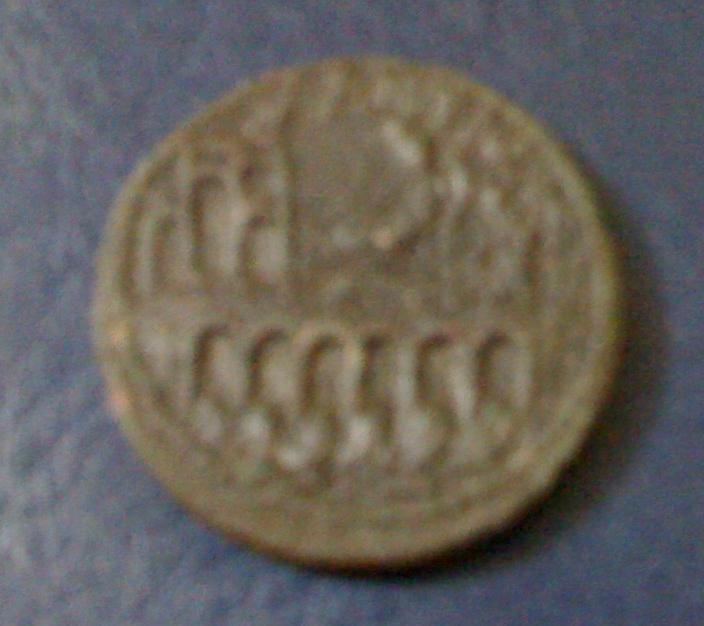 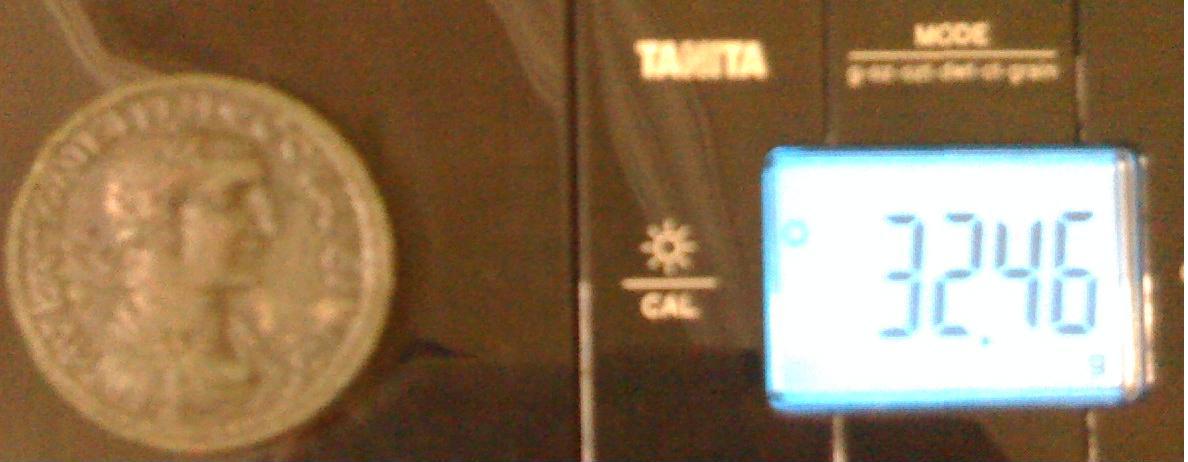 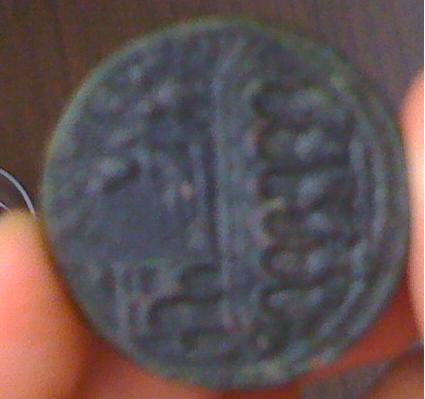 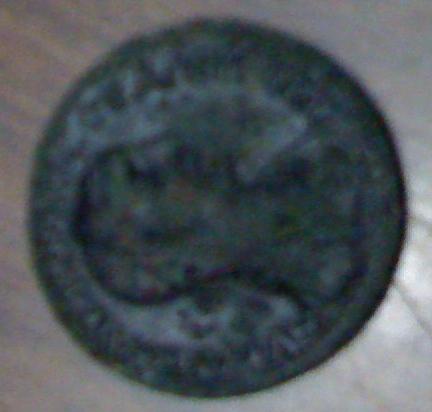 Moved to Ancients forum - Sap Moved to Ancients forum - SapEdited by byzantine
08/05/2009 6:31 pm
|
|
|
|
Moderator
 United States
23731 Posts |
Pictures are too burly to see much of this coin. Need better pictures.
|
|
Moderator
Australia
16991 Posts |
Thwere were several ancient cities named Antioch; this one is known in English as Antioch-on-the-Meander. As it's name implies, it was situated on the Meander River in south-eastern Turkey, in the region of Caria. The nearby bridge across the river was the city's main claim to fame, and it is this bridge that is featured on this coin. The obverse inscription is that of emperor Valerian. I haven't found any references to a coin of this type from this emperor, but in the Sear catalogue of Greek Imperial coins and on the ANS database there's an example of the same reverse from the next emperor, Gallienus, and also on the ANS database there's this one from Trajan Decius. As to the authenticity of your coin, it would be harsh to condemn it from those pictures, but I should point out that the two ANS examples of similar coins (from emperors both before and after yours) are both significantly lighter than yours (21.31 grams and 14.77 grams respectively). I'd have to do some more research to see if such a heavy coin is known to exist from this city, but I'm afraid my gut feeling is I'd have to be skeptical about it. Don't say "infinitely" when you mean "very"; otherwise, you'll have no word left when you want to talk about something really infinite. - C. S. Lewis
|
|
New Member
 United Arab Emirates
38 Posts |
Thanks Sap and Echizento. If you suspect coin is counterfeit dont worry because I've cleaned it with my own hands. And it is not alone I have got 3 coin with it same period and city. 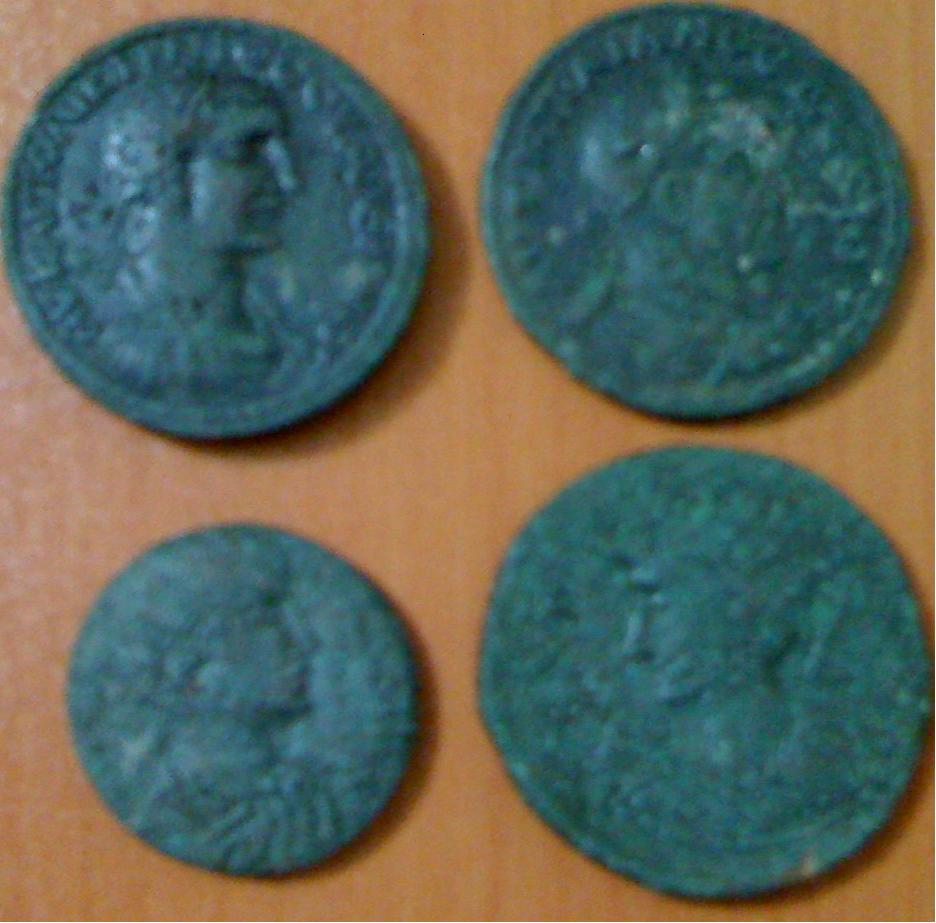 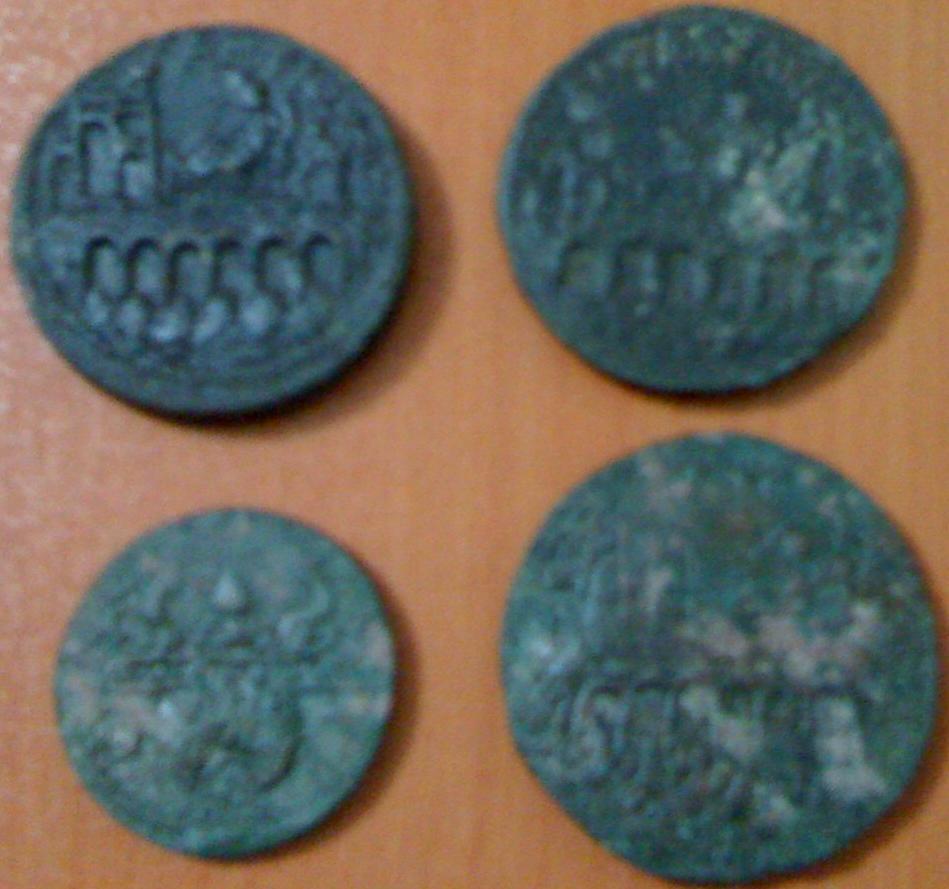 in order of this coins 32,46g 21,73g 12,92g 28,14g I will try to send a better picture |
|
Forum Kid
Kuwait
1523 Posts |
Woohoo. Another Middle Eastern.
OT: The pictures, I feel are too blurred to distinguish.
TheKid!
|
|
New Member
United Arab Emirates
38 Posts |
hi again I finally was able to add large photos Photos are here. 8 pictures, about 30 megabytes sorry for late and thanks again. Edited by byzantine
08/08/2009 03:49 am
|
|
Moderator
Australia
16991 Posts |
I tried to download it, but I couldn't read the format. Sorry.  Don't say "infinitely" when you mean "very"; otherwise, you'll have no word left when you want to talk about something really infinite. - C. S. Lewis
|
|
New Member
United Arab Emirates
38 Posts |
|
|
Pillar of the Community
United States
511 Posts |
|
|
Moderator
Australia
16991 Posts |
Thanks, wheatiefan. I tried it too, but my 5 year old computer kept crashing trying to look at those huge pics.  Now, back to the coins. "Pic numbers" I give below are in order of wheatiefan's post. Unfortunately, the pics are all jumbled up. But using the pics in byzantine's second post, I think I can un-jumble them. The coin with the legends the same as depicted in the OP is the one in pic #1 and pic #6. The obverse legend ends in "OVALERIANOC", not "OVALERIMOC", confirmig this coin is indeed of Valerian. Double-checking the Sear catalogue, I find this coin type is indeed listed there for this emperor; number 4457, the reference given there is "BMC 18. 23, 56". Another coin of a similar type is pic #4 and pic #7: the obverse inscription on this one is AVT K TRAIANOC DEKIOC, Trajan Decius, so this is pretty much the same type as the one I linked to above of that emperor. The third "Meander River Bridge" type is shown in pic #5 and pic #8. The obverse is too corroded to read the legend, but the obverse type, of a helmeted emperor with spear and shield, is an exact match for the one pictured in Sear that I mentioned earlier, of emperor Gallienus, and presumably a match for the Gallienus one on the ANS database I linked to earlier. As I said earlier, this one too is in Sear, No. 4568, reference given is "Von Aulock 2431". The fourth coin (pics #2 and #3) is of a different reverse type, depicting a table with a "prize urn" on it. The obverse legend isn't too clear, but I can read "...LLIHN..." - so it must be Gallienus, too. I'm not sure, however, that it's from this same city, but if they were acquired as a group from the same source, it doesn't sound unreasonable. Finally, as to authenticity: I don't really see anything that should condemn these coins as fakes. Yes, they look "bubbly", but to me it's more "corrosion-bubbly" than "cast-bubbly". I hope this helps. Don't say "infinitely" when you mean "very"; otherwise, you'll have no word left when you want to talk about something really infinite. - C. S. Lewis
|
|
New Member
United Arab Emirates
38 Posts |
Thank you very much Sap for excellent informations.
Do you know how can I find the referance book that British Museum Catalog Volume 18 (caria and the islands). Do you know a link for download?
|
|
Moderator
Australia
16991 Posts |
I don't know if it's been published online; the university where I work has a copy of most of the BMC volumes, but I won't be going back to work for a month now.
Don't say "infinitely" when you mean "very"; otherwise, you'll have no word left when you want to talk about something really infinite. - C. S. Lewis
|
| |
Replies: 11 / Views: 3,247 |
|










 Posted 08/06/2009 03:51 am


