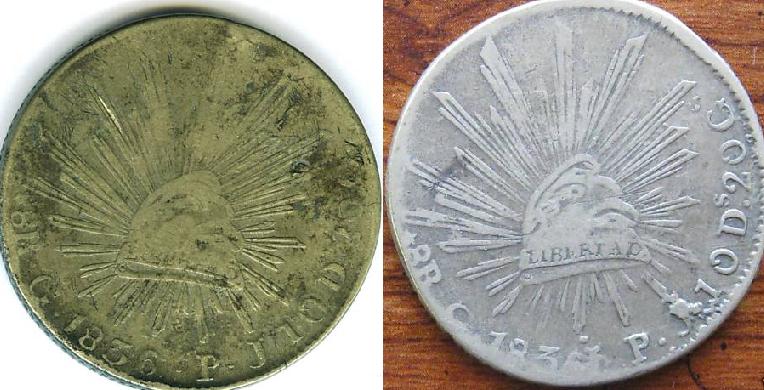
Well, the coin arrived safely today and I have had time to do a preliminary inspection and comparison.
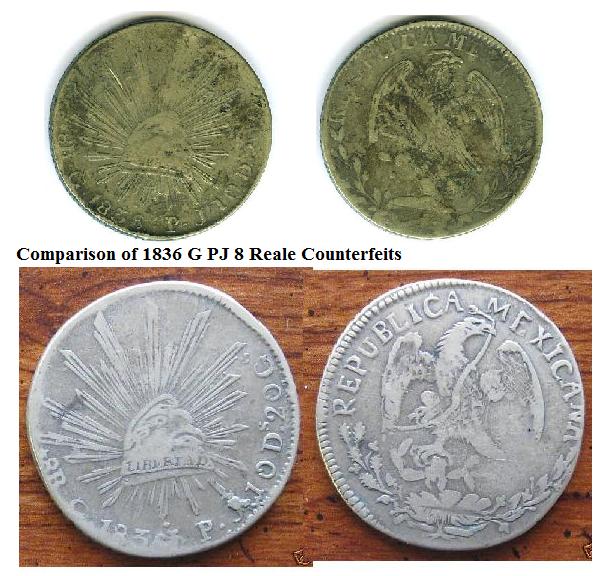
My conjecture was 100% correct. The cap die is the same 1836 G PJ cap die used in combination with a very nice looking Guanajuato bird. The
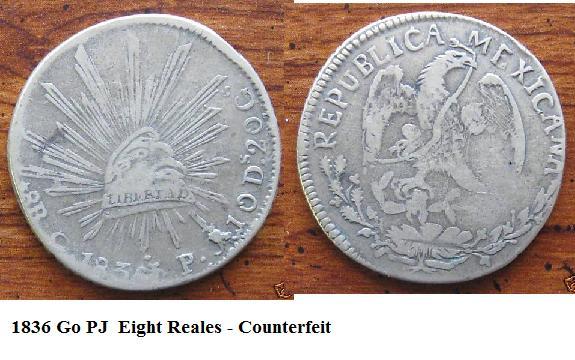
ebay cap die is a much later state proving that the good looking Go style eagle was used before this very crude eagle. That makes perfect sense. There is ample evidence of wear and die chips on the coin that I recently won on
ebay. In fact, the final digit of the date was recut on this copy. A detailed comparison of the cap dies causes me to conclude that they are one and the same die.
The coin is struck on a high copper content German Silver planchet (based on a yellow hue), it weighs 25.6 grams and has a very poor edge consisting of hand applied crescent shapes that were struck into the edge one at a time by hand. The spacing is irregular and the depth of the punch varies crescent to crescent. The crudity of the edge matches the eagle die.
Having the coin in hand, I believe it is an absolute match. I am also looking at another version which may represent a third variation using the same cap die. I have owned that coin for some time but had not made the linkage earlier. Once I can get them side by side and do a microscopic examination, I will take pictures and post the results.
Linking the work of various forgeries together is one of the activities that I get the most personal satisfaction from. It also demonstrates that these forged dies did last beyond one production run and that they were not only altered to extend their lives but that they were remated with other forged dies. I hope that it will also prove that at times counterfeit dies were sold to persons who lacked the expertise to make their own dies.












 Posted 08/13/2009 7:21 pm