| Author |
 Replies: 14 / Views: 3,736 Replies: 14 / Views: 3,736 |
|
|
Valued Member
United States
125 Posts |
Hello all, I received this coin the other day, and it looks like it was cleaned with AJAX (lol). It was so heavily cleaned it looks like it was made with aluminum, which is making me wonder if it is a copy. The coin is a Portuguese-India 1 Rupia KM 27 and should be made of .5 silver. The catalog stated it should have a weight of 12.000g. My scale shows 11.9g (the smallest my scale measures in .1g's), since the coin has been circulated, I would say 11.9g is close enough. My question is, is there any test can I do to check for silver without doing any damage to the coin? I have only done the weight test and checked to see if it was magnetic, which it isn't. Thanks is advance. 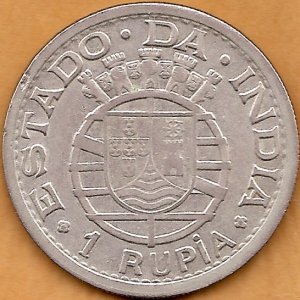  |
|
|
|
Pillar of the Community
United States
2528 Posts |
Specific Gravity test! If you can figure it out! I know it involves suspending your coin from a scale into a dish of water! Good Luck!
|
|
Pillar of the Community
United States
3294 Posts |
yup, you need to find the volume of the coin, then you divide the weight by the volume and get the density. The density will be able to give a hint of what the coin is made of. Obviously, the density of aluminum is far lower then the density of silver.
|
|
Valued Member
 United States
125 Posts |
Thanks for the information. I didn't know you had to be a rocket scientist to be a coin collection - LOL. Guess I have to get to the library and figure all this out.
|
|
Pillar of the Community
United States
2528 Posts |
|
|
Pillar of the Community
Australia
2830 Posts |
G'day, I'm following this thread with great interest
if the weight is right, and the magnetic reactivity is correct, then you've done the easy tests.
Specific Gravity has been discussed on CCF previously: if you sesarch the archives, you'll come up with at least one method. I don't know that it's/they're particularly straightforward.
However, ponder this: if the diameter and weight are correct, only three possibilities remain -
1. you've got the genuine article;
2. you have a dud, with the wrong S.G. - which ought to show as thicker or thinner than correct; or
3. you have a dud, but with the same S.G. as the genuine.
in case 3, measuring S.G. won't reveal anything. for example, Australian florins were 92.55 silver, and later they were 50%; then they were replaced by CuNi 20-cent: same diameter; same weight. And, as far as I can tell, same thickness. So, there's three distinct alloys with the same S.G., but as it happens, all are genuine.
in case 2, measuring thickness might be a short-cut, but it's not a dimension that is routinely available.
Although we often refer to "Specific Gravity", the context in which coin enthusiasts use it is such that "density" would be just as adequate.
Peter in Oz
|
|
Bedrock of the Community
United States
20753 Posts |
If the weight is as close as you say, probably the real thing. I'm not aware of the value of those but unless the value is substantial, why worry about it? You could try dropping it on something to listen for a ringing sound and compare with other similar coins. Take it to a jewler and ask them. And yes it probably was cleaned with Ajax.
|
|
Valued Member
United States
125 Posts |
The coin sells on ebay from $50 to $70. I paid a lot less, needless to say. Using the drop test suggested, it sounds about the same as a 1936 British Florin, which is also .500 silver. I'm just going to enter it into my collection, then maybe someday I'll upgrade it. However, since there are about 200 coins on my want list, this may never happen. |
|
Valued Member
United States
365 Posts |
Just a couple cents' worth on this-- do you know whether anyone's ever found fakes of this coin before? I used to worry about fakes more than I do now, because someone clever once suggested to me that the "they" making fakes are probably going to focus on higher dollar stuff... A coin that's common enough to go for about $50 on ebay in good grades probably isn't going to get much attention from the fakers. Just a thought--. -SCS |
|
Bedrock of the Community
United States
20753 Posts |
One little thing about the drop test. It is usually suggested by someone that is not a Numismatist. Possibly someone just getting into coin collecting. To drop any coin on a hard surface is just dumb. Each dent on a possibly valuable coin is not something that adds value.
|
|
Valued Member
United States
125 Posts |
 Quote:
One little thing about the drop test. It is usually suggested by someone that is not a Numismatist. Possibly someone just getting into coin collecting. Good one Carl. |
|
Pillar of the Community
Canada
598 Posts |
Quote:
One little thing about the drop test. It is usually suggested by someone that is not a Numismatist. Possibly someone just getting into coin collecting.
just carl ouch!... or someone testing scrap  Things I haven't tried from the internet VVV Quote:
1) Simple test for silver:
25 gm potassium dichromate
25 gm nitric acid
Silver= red or reddish brown colour
(only oxide and grease free objects can be tested,one drop is sufficient,rinse well immediately!)
2) Lightly scratch or scuff a small spot which is not seen (like underneath a silver teapot or inside a ring band etc) and apply Nitric Acid to the spot.
If it turns a cloudy grey color it is Sterling Silver. If it turns black it is Coin Silver. What you don't want is for it to turn green which indicates it is plated.
You must ensure you make the scratch deep enough to go beneath any plating though, else it won't react as it has to reach any base metal underneath. This can be a little unsightly so make sure it is in an unobtrusive area.
3) FRENCH'S BRAND YELLOW MUSTARD TEST This first method requires that the tester apply a very small amount of French's brand yellow mustard to the surface of the shiny metal. Ideally the mustard drop should then be heated, either in the sun or with a cigarette lighter. Let me explain; this brand of mustard contains a very high amount of sulfur and when heated the volatile sulfur molecule will ALWAYS combine with pure silver to make the dark black stain known as silver sulfide (which is easily cleaned away with vinegar by the way).
4) THE SULFUR MATCH TEST The second method may attract more attention than desired, especially when attempted inside a store, under a proprietor's watchful gaze. Yet this method is even more effective take a match and press it against the metal surface to be tested and then light it on fire with another match. The sulfur is extremely hot as it combusts and it will certainly combine with pure silver when ignited in this fashion. It will not however mark nickel, steel, or chrome or any other shiny metal the way it marks silver (a black stain). Again this dark metal is silver sulfide it will not wipe away with your finger and must be cleaned off the metal with another agent. Its important to note that both of these tests will not harm the metal and can be easily cleaned away.
A WORD OF CAUTION
Beware of labels that describe types of silver', for example, nickel silver' contains no actual silver. It's just a name for a specific nickel copper alloy. Names like "Mexican Silver", "German Silver," "Indian Silver," "Montana Silver," and even, believe it or not, the word "silver" all by itself do not actually guarantee any silver content. "German Silver" is another name for the alloy of copper, nickel and zinc (it was a derogatory term in the 1800's), and today this blend is called Nickel Silver'. Despite the name, Nickel Silver contains no silver.
5) This is a quick test to see if your coin contains silver. Place a tissue paper (Kleenex) over the coin. If you see white through the tissue where the coin is, it is silver, if you see the shadow or darker outline of the coin it is of another composition.  |
|
Valued Member
United States
106 Posts |
The concept that combining a coin with sulfur isn't going to harm it is kind of hard to believe. Surely it's going to remove the metal that was, uh, sulfidized.
How about using one of those metal detectors that can distinguish between ferrous and non ferrous metals? Can't they distinguish between a nickel and a silver dime?
|
|
Pillar of the Community
United States
3294 Posts |
I was at a trade show and saw a device that would tell you exactly the metal content of a sample you pointed it at. Unfortunately, the guy told me that those things had a $35,000 price tag, so I will not be purchasing one.
|
|
Pillar of the Community
United States
2541 Posts |
nod - let's all chip in and buy one for the forum to use!
|
| |
Replies: 14 / Views: 3,736 |
|










 Posted 09/06/2009 4:49 pm


