| Author |
 Replies: 17 / Views: 6,759 Replies: 17 / Views: 6,759 |
|
New Member
United States
37 Posts |
|
|
|
|
Pillar of the Community
United States
3077 Posts |
it means it has a cameo effect Quote:
Cameo
The term applied to coins, usually Proofs and prooflike coins, that have frosted devices and lettering that contrast with the fields. When this is deep the coins are said to be "black and white" cameos. Occasionally frosty coins have "cameo" devices though they obviously do not contrast as dramatically with the fields as the cameo devices of Proofs do. Specifically applied by PCGS to those 1950 and later Proofs that meet cameo standards (CAM). Edited by yotie
09/29/2009 2:37 pm
|
|
Pillar of the Community
United States
532 Posts |
At first glance I thought you were talking to yourself, Yotie.
But yes, bingo on the "frosty" description as most people use it.
|
|
Pillar of the Community
United States
3077 Posts |
it wouldnt be the first time I talked to myself on another forum I have a post count of 100K
|
|
New Member
 United States
37 Posts |
I know that they're cameos, but are Franklin and Kennedy Cameo Halves normally "frosted," or are the frosted ones more desirable, especially if they have "heavy" frost?
|
|
Bedrock of the Community
United States
12437 Posts |
The frost vs mirrored field is the cameo, without the white/black contrast there is no cameo and it would just be a brilliant proof. A deep cameo(DCAM) is more valuable than a cameo(CAM) and a cameo is more valuable than a brilliant proof. The difference between DCAM and CAM is just a degree of contrast. With post-1968 modern proofs, CAM or DCAM is to be expected as they are specifically designed to have that appearance. Prior to that, DCAMs and CAMs only came from fresh dies with the majority of proofs being brilliant.
Edited by biokemist6
09/29/2009 4:40 pm
|
|
Bedrock of the Community
United States
14454 Posts |
Quote:
are Franklin and Kennedy Cameo Halves normally "frosted," The date has allot to do with that, earlier dates probably not the later dates have a better chance of most of them being frosted |
|
New Member
United States
37 Posts |
Quote:
The frost vs mirrored field is the cameo, without the white/black contrast there is no cameo and it would just be a brilliant proof. A deep cameo(DCAM) is more valuable than a cameo(CAM) and a cameo is more valuable than a brilliant proof. The difference between DCAM and CAM is just a degree of contrast. With post-1968 modern proofs, CAM or DCAM is to be expected as they are specifically designed to have that appearance. Prior to that, DCAMs and CAMs only came from fresh dies with the majority of proofs being brilliant.
OK, so I take it that means pre-1968 cameos are normally frosted, but does "heavy frost" usually make it a deep cameo? Does "heavy frost" add significant value to the coin even if it is not a deep cameo? Edited by noo_mis_muh_tist
09/29/2009 5:08 pm
|
|
Bedrock of the Community
United States
12437 Posts |
Take note of this part that I wrote- With post-1968 modern proofs, CAM or DCAM is to be expected... Prior to that, DCAMs and CAMs only came from fresh dies with the majority of proofs being brilliant.
The "frost" is not the measurement used to describe a proof, it is only part of it. Cameo is determined by the contrast between the devices and fields. The term "cameo" comes from this particular jewelry item-  That is the appearance you want for a DCAM proof- pure white devices with pure black fields, absolute contrast between the two. |
|
Bedrock of the Community
United States
14454 Posts |
68 would probably be a earlier date that would be harder to come by highly frosted I would think but since I don't know the series very well someone else may be able to answer this question better
|
|
Bedrock of the Community
United States
10284 Posts |
Might I add that this also depends on the date and/or denominations. Typically more recent United States coin proofs are almost all cameo. In the 1960's 1950's this is a different story. You cannot go by a rule of earlier is always harder to find either. The best way to check on this (free) would probably be to go to a PCGS page I often use for quick reference. There will be a pop up which you need only close once. Then scroll down for example to Half Dollars and select the Franklin halves. Below the circulation business strikes by date are the proofs. Look at the values for CAM and DCAM You can see that for some dates the values are extremely high for those having cameo and deep cameo quality. Simply because they are harder to find in that state. Although it might be easy to find a proof of that date, a "cameo effect" ( Thanks yotie ) might be the best you can afford or will be able to find. It would be my best guess, even though frosted is not listed, that if the cameo prices are high, the frosted follow suit. Here's the link http://www.pcgs.com/prices/ |
|
New Member
United States
37 Posts |
Quote:
Take note of this part that I wrote-
With post-1968 modern proofs, CAM or DCAM is to be expected... Prior to that, DCAMs and CAMs only came from fresh dies with the majority of proofs being brilliant.
Forgive my lack of understanding, but does that mean that the majority of pre-1968 DCAMs and CAMs are brilliant, or does it mean that the majority of pre-1968 proofs are brilliant and that there are not many DCAMs and CAMs because the majority are "brilliant"? |
|
Bedrock of the Community
United States
12437 Posts |
If a proof coin is described as brilliant, then it has no cameo appearance at all. The majority of pre-1968 proofs would be brilliant, not CAM or DCAM.
|
|
Pillar of the Community
United States
581 Posts |
"Frost" is a popular term used by snake oil salesmen. The proper terms are Cameo and Deep/Ultra Cameo.
If you have "frosted" coins, you can never dispute the claim because there is no numismatic definistion of "frost", but there are standards for cameo, etc.
Another popular term is "BLAZER" and so on and so forth. Just words.
|
|
New Member
United States
37 Posts |
So the terms light frost, mediem frost and heavy frost really have no significance? This is a deep cameo, plain and simple?  Edited by noo_mis_muh_tist
10/01/2009 5:46 pm
|
|
Bedrock of the Community
United States
10284 Posts |
I bought "frosted" special mint set single coins, I consider those more valuable, and I consider them frosted. They might be considered light or medium cameo too. There were no US proof coins for 1965 1966 and 1967 yet these were minted on special polished blanks and the earliest minted still display a cameo effect. The letters and devices are frosted, the field is more mirror like. There are cameo special mint set coins too, but these are the best I can find. I gladly paid a premium. 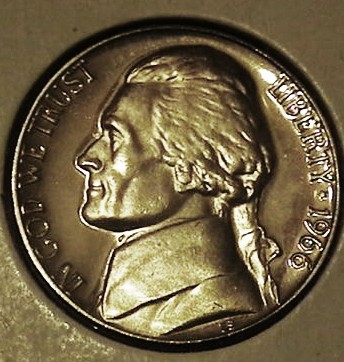 Edited by TNG
10/01/2009 6:24 pm
|
| |
Replies: 17 / Views: 6,759 |




 Posted 09/29/2009 3:09 pm





