Yes, the horizontal feed presses manufactured by Schuler use the reverse die as the hammer (the specific reason, I could not even speculate as to why). Consider this: If both dies have the same relief (depth of engraving), then it would not make any difference which die was the hammer and which was the anvil.
Take for instance a
Morgan dollar though; the obverse is engraved to a greater depth than the reverse die. Now consider this: You will get more bang for your buck with the hammer die, because the planchet acts as a buffer (or pillow) for the anvil die. You will want the die with the highest relief to sink deepest into the planchet for complete design transfer.
This was the rationale of the 19th century mint. I do not know anything at all about the relief factors of modern coinage, maybe things have changed, but I really cannot rationalize this.
I do not know, but it is my belief that this horizontal type of press is used mainly for pennies. It is not, however the only type of press currently being used by the mints. There are a wide variety of presses used, most of them are still the vertical strike type. The Bliss press capable of stamping four coins per strike is still in use, but with a slower strike rate, it's output is roughly the same as the horizontal Schuler, ('about' 800 coins per minute for each style of press).
Over the years, there have been many different types of presses striking
US coinage, from early hand presses to screw presses to the steam powered Morgan & Orr press manufactured during the 1860s & 70s that struck the
Morgan dollars. The Ulhorn press was a very popular press of the Philadelphia mint for striking smaller coins of the same time period. Presses of more recent years include names such as Maypress, Grabener, and Verson.
As for the
Cud thing, I was unaware that
Cuds were more prevalent on one side of a coin than the other. I love
Cuds, and I have about a 50/50 ratio.
A
Retained Cud is actually an area formed by a crack from one point on the edge of the die face to another point on the edge. With repeated striking, this area of the die begins to drift away from the main die face, and cannot maintain the same degree of level as the rest of the die. Due to the lack of level and flushness to the main die face, planchet metal will form on the face of this rogue piece as it bends to the side away from the main die face.
Continued striking will eventually cause this die piece to break away all completely and a full
Cud will form of planchet metal in the void now left by the separated die piece.
I will say this though, no two dies are equal. Each will possess it's own Achilles heel, inherent in it's unique molecular creation. Each will be soft here and brittle there (in varying degrees).
Dies are typically softer in the middle, and harder at the surface and the edges. Over hardening of the die will cause brittleness at it's edges. Repeated striking generates intense heat, and dies crack and break, notably at the edges of the die face.
The notion of the hammer die wearing faster and therefor breaking more often is a very plausible factor as well. If no planchet is in place during strike, the dies will clash; and the weaker die, (be it the hammer or be it the anvil) will very possibly crack or break.
I speak of 19th century alloys and annealing methods; the technology of the 20th and 21st century could well have made what I have just stated to be incorrect (but I doubt it).
Here is a
Retained Cud on an 1867 five cent piece. Notice that the die piece is still intact:
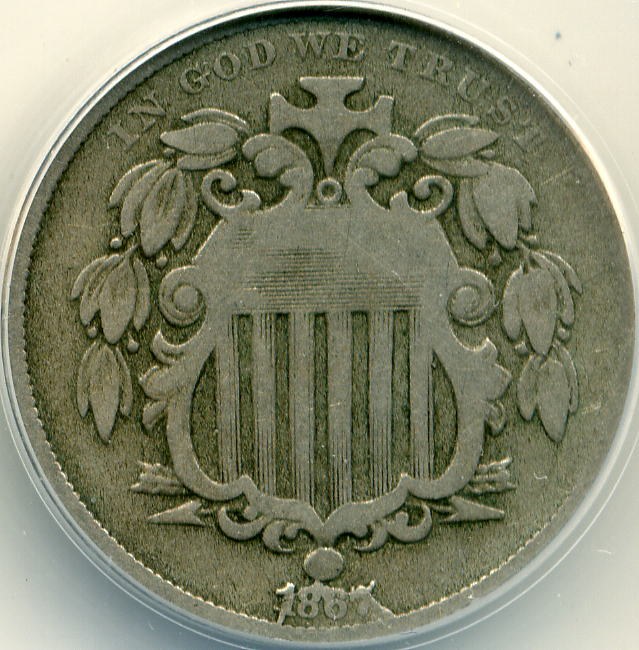
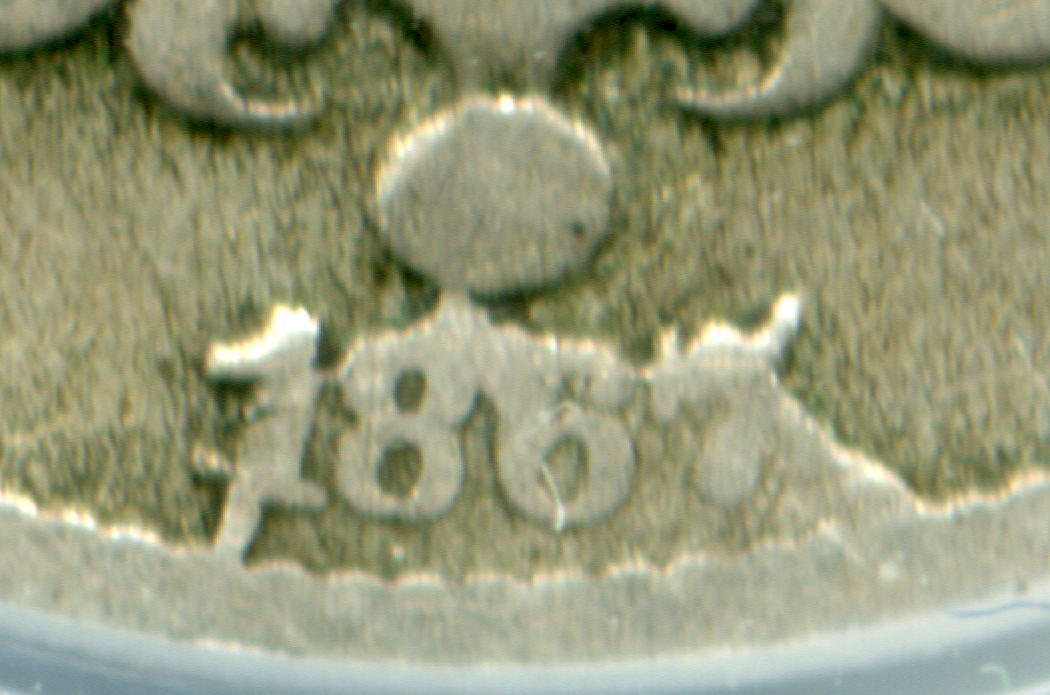
Here is a full
Cud on an 1857 penny. The die piece has completely separated from the die, and planchet metal has filled the void:
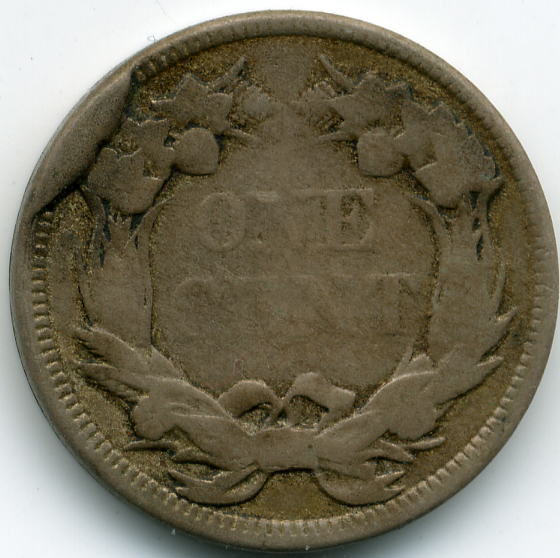
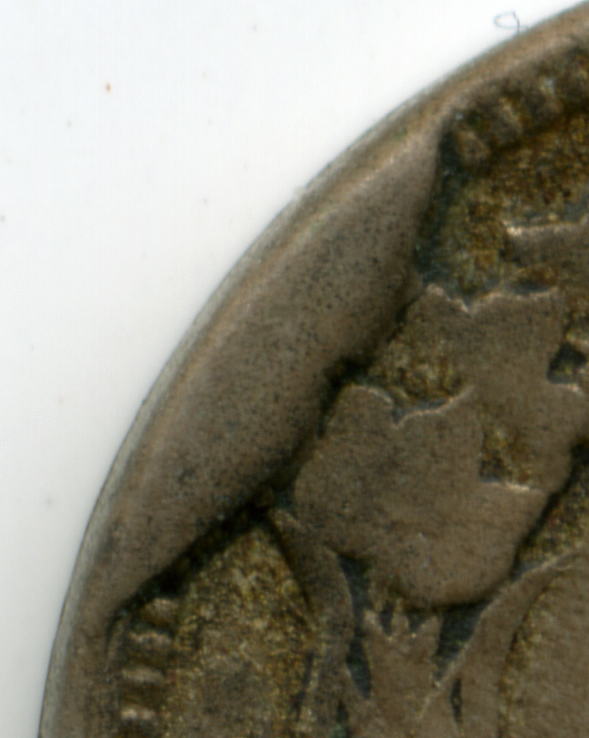







 Posted 01/24/2010 2:39 pm




 Any idea why they switched?


